
Reviewed · COMMUNISM & CEAUȘESCU TOURS
Timisoara: Grand Communism Tour
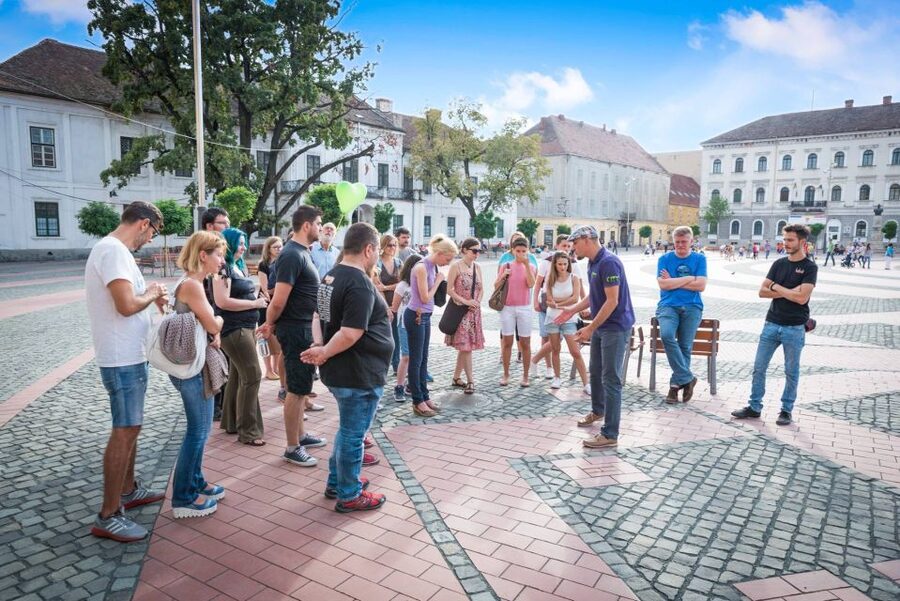
Timișoara’s communist past is not confined to a museum. It happened at a church, in ordinary housing districts, at party offices, and in a cemetery filled with the dead of 1989. This tour connects those places and explains how five decades of political pressure led to Romania’s uprising. I especially like the small group of no more than 10 people and the use of personal family stories, which make a hard subject easier to understand.
I also like that the tour gets outside the prettiest central streets, showing parts of the city where daily life unfolded during communism and where people still live today. Guides including Andrei, Roberta, Sergio, and Sergiu have brought strong language skills and an easy storytelling style to the experience. The main consideration is the subject itself: this is a serious history tour, and the Revolution Memorial costs an additional 20 RON.
Key points to know before you book
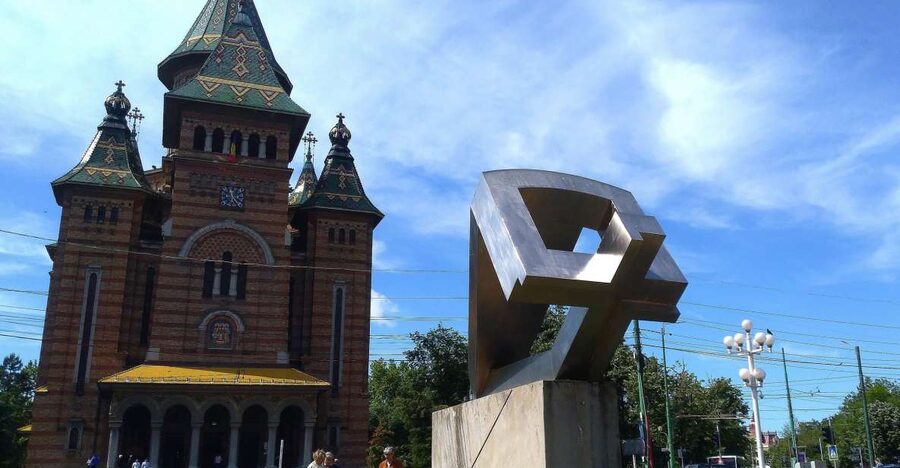
- The route follows real Revolution sites, including the Reformed Hungarian Church, the Communist Party headquarters, the Cemetery of Revolution Heroes, and the Revolution Memorial.
- SCARTZ club gives the tour an unusual starting point, with the Communist Customer Museum in its basement.
- The story reaches beyond Ceausescu, covering resistance to communist rule in the 1950s and 1960s.
- Andrei, Roberta, Sergio, and Sergiu are among the guides associated with the tour, with English and Romanian available.
- Transport between stops is included, useful because this is more than a simple city-center walk.
- The tour lasts 3.5 hours, costs $70 per person, and limits the group to 10 participants.
Why Timișoara is the right place for this story
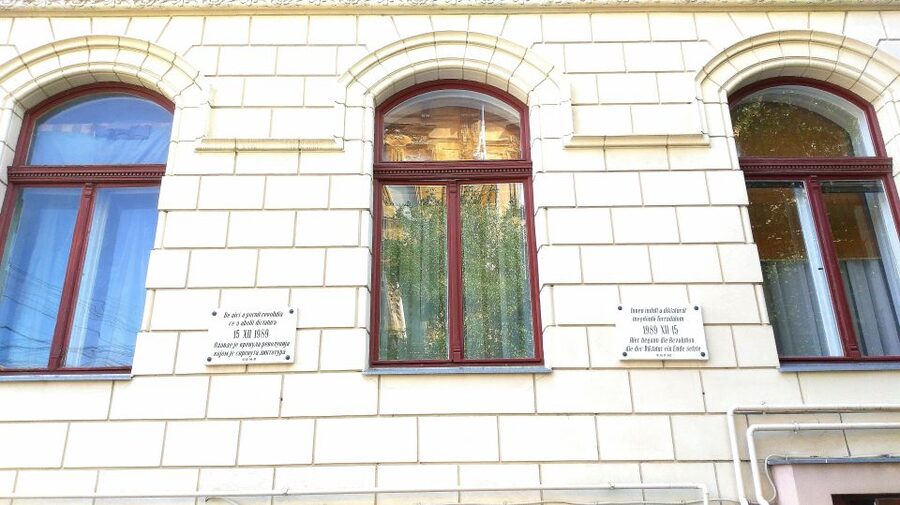
Timișoara is closely tied to the end of Nicolae Ceausescu’s rule. The December 1989 uprising began here before spreading across Romania, and the city’s streets and institutions still provide the setting for that story.
A good communist-era tour needs more than dates and political names. You need to understand how national policy reached into homes, neighborhoods, churches, workplaces, and shops. This route is designed to show that wider picture. You hear about Ceausescu, but you also hear about ordinary life, resistance, fear, and the choices people faced under the regime.
The tour also explains the long road to 1989. It covers roughly 50 years of political and geopolitical change, including the harsh opposition to communism during the 1950s and 1960s. That wider frame matters. Without it, the Revolution can seem like a sudden event. With it, December 1989 becomes the result of decades of pressure and discontent.
More of the communist years around Timisoara:
- The Grand Tour of Communist Ages at Timisoara
★ 5.0 · 17 reviews - Bucharest: Palace of Parliament Tickets and Guide
★ 4.3 · 3,182 reviews - Bucharest: Palace of Parliament Tickets and Guided Tour
★ 4.4 · 1,877 reviews
Beginning at SCARTZ and the Communist Customer Museum
The meeting point is in front of the Orthodox Cathedral. From there, the tour begins at the location of SCARTZ club, a deliberately unusual place for a history lesson. The club is known for its alternative character, and its basement houses the Communist Customer Museum.
The museum focuses on the objects and habits of everyday life under communism. That approach is useful because political history can feel distant when it is told only through speeches, party leaders, and official events. Household goods and consumer culture help you picture what people could buy, what they had to wait for, and how daily routines were shaped by the system.
The stop also introduces Nicolae Ceausescu, Romania’s most notorious communist leader. Your guide explains his place in the country’s political story and sets up the conditions that later produced the Revolution.
The basement setting adds character, but it may not suit someone expecting a large, formal museum. Think of this as a focused collection that supports the guide’s explanation rather than a long museum visit on its own. The real value comes from connecting the objects to the wider story.
Resistance in the 1950s and 1960s
The next stop is the Anti-Communist Resistance Movement Monument. Here, the tour shifts attention away from the final days of Ceausescu and toward the earlier resistance to communist control.
This is an important part of the route. It shows that opposition did not begin in 1989. Romanians resisted the communist system during the 1950s and 1960s, often under harsh conditions. The monument gives the guide a place to explain who resisted, how the regime responded, and why open opposition was so dangerous.
You will get more from this stop if you listen for the human choices behind the political terms. The tour is meant to help you understand how people opposed the system, not simply memorize the names of movements or decades. Guides have also used family stories to explain the period, giving the subject a personal scale without turning the tour into a private family memoir.
This is one of the strongest reasons to choose a small group. With no more than 10 participants, it is easier to follow a detailed explanation and ask about points that are unclear. The tone can remain conversational, which suits a subject that needs care and context.
The Reformed Hungarian Church and the start of the uprising
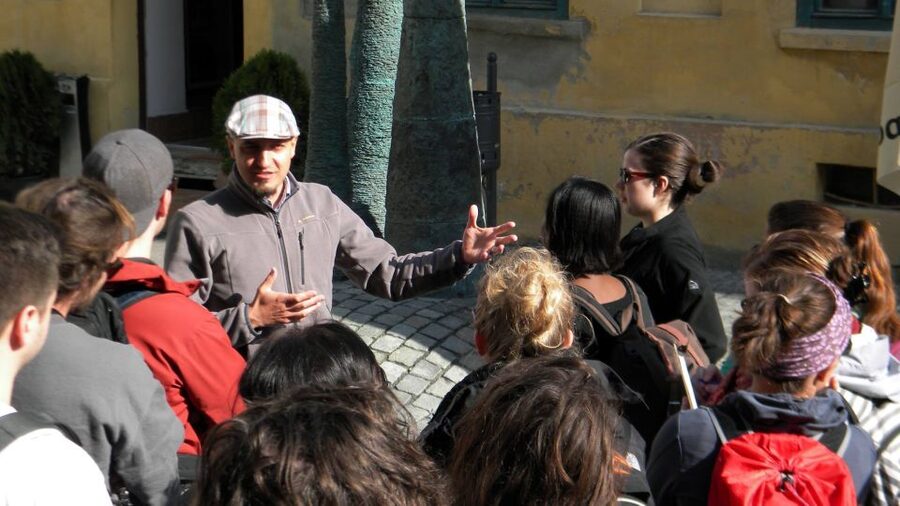
The Reformed Hungarian Church is one of the most important stops on the route because it is identified as the place where the December 1989 uprising began.
This location helps you see how major political change can begin in a very specific local setting. The guide explains the events surrounding the church and how the protest developed. You also learn about the role of the Hungarian community in Timișoara and how events at this site became part of the wider revolt against Ceausescu.
The stop is not just about a building. It is about the chain of events that formed around it. The guide’s storytelling matters here, since the significance of the site comes from what happened there and what followed.
Expect a serious tone. The story involves state control, public danger, and the rapid escalation of events. This is not a photo stop in the usual sightseeing sense. It is a place where you pause, listen, and connect the political story to a physical address.
Same base, a completely different day:
- The Classic Tour of Timisoara
★ 5.0 · 154 reviews - Weekly Guided Tour in English – Tuesday, Thursday, Saturday
★ 5.0 · 84 reviews - Timisoara All in One – Walking and Tram Tour
★ 5.0 · 72 reviews - Timisoara: Guided Walking Tour
★ 4.9 · 38 reviews
The former Communist Party headquarters
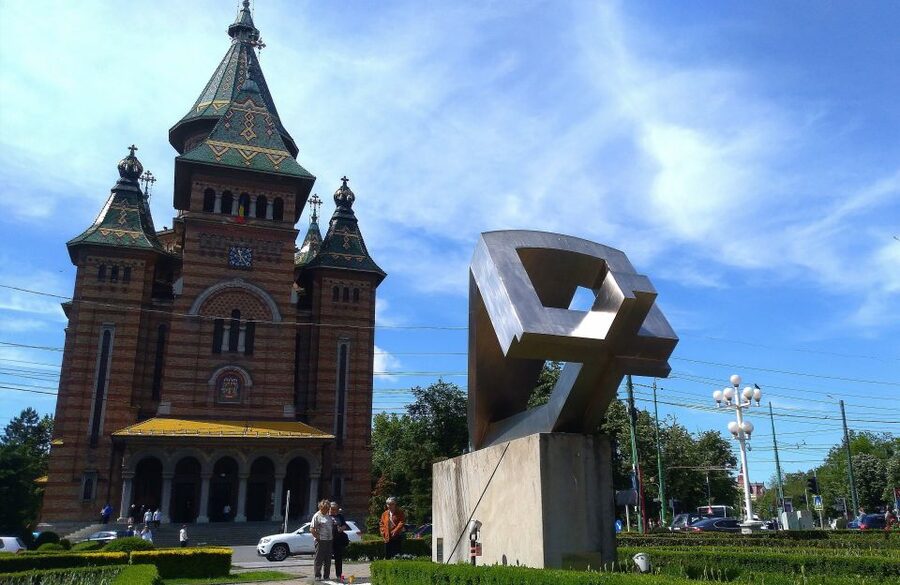
The route continues to the local headquarters of the former Communist Party. This stop provides a clear contrast with the church. One site represents the beginning of public opposition; the other represents the authority that governed the country.
Seeing both locations in one tour helps you understand the geography of power in Timișoara. The guide can explain how the party operated locally and how the city’s institutions fit into the national system. It is also a useful reminder that communism was not only a set of ideas from Bucharest. It was administered through local offices, officials, and systems that affected everyday life.
The headquarters may be less visually dramatic than the Revolution Memorial or the cemetery. Its value is mainly interpretive. You are there to understand what the building represented and how power functioned, so listen closely to the explanation rather than expecting a major interior attraction.
The Cemetery of Revolution Heroes
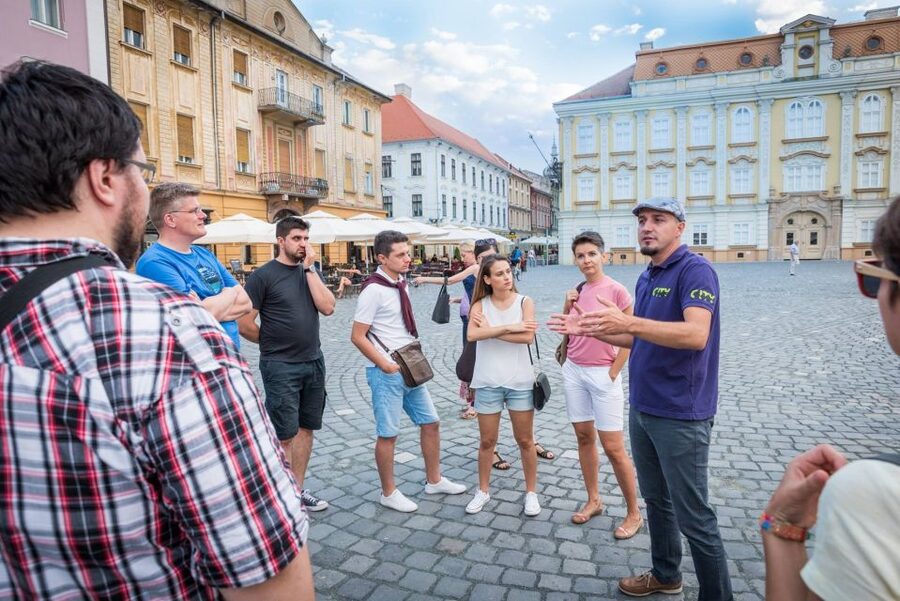
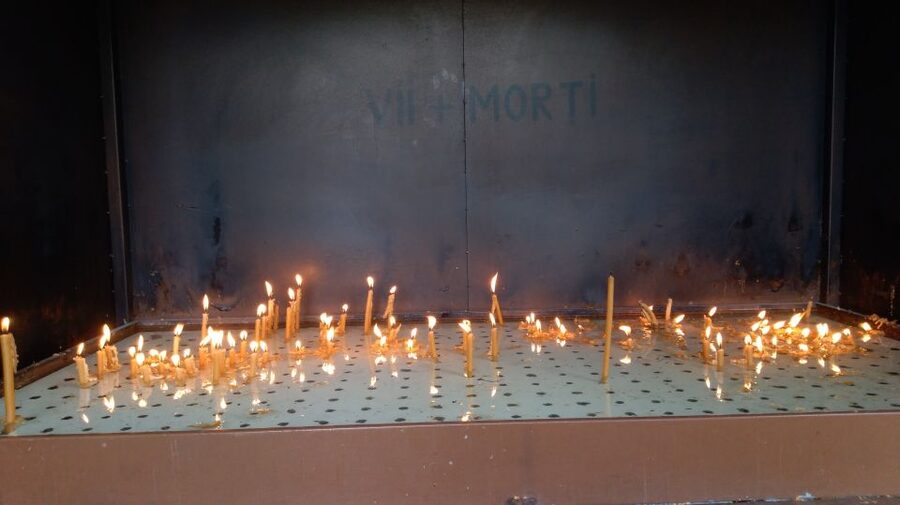
The Cemetery of Revolution Heroes brings the human cost of December 1989 into focus. Here, the guide explains the final events that helped bring down Ceausescu’s regime and tells you about the people who died during the Revolution.
A cemetery can communicate something that a political timeline cannot. It makes the consequences personal and visible. The tour’s discussion of the victims also helps you understand that the end of communism was not a neat political transfer. People paid for change with their lives.
Allow time for the atmosphere of the place. The guide will provide the historical details, but you also have space to take in the setting. This is one of the more solemn sections of the experience, and it may be uncomfortable for visitors who prefer lighter sightseeing.
That seriousness is also the point. The tour does not reduce the Revolution to a cheerful story about liberation. It keeps the victims in view and explains the cost of the events.
Finishing at the Revolution Memorial
The final stop is the Revolution Memorial of Timișoara. This site honors the people who took part in the anti-communist and anti-Ceausescu Revolution, which ultimately led to the end of Ceausescu’s rule in Romania.
The memorial gives the tour a natural ending. You have followed the story from communist daily life and earlier resistance to the first protests, the party system, and the deaths of Revolution heroes. At the memorial, those threads come together.
Entrance to the memorial is not included. You pay an additional 20 RON, so keep a little local currency available or check the current payment arrangements before you go. At $70 per person, the extra fee is small compared with the total cost, but it is still worth knowing in advance.
I would not skip the memorial simply to save the fee. It is the final piece of a route built around the Revolution, and the added visit gives the closing explanation more weight. If your interest is mainly in communist-era consumer life, you could find the museum and street stops sufficient, but the memorial completes the political story.
How the guides shape the experience
The guide is central here. The itinerary includes many difficult subjects, and a flat recitation of dates would not do them justice. The best version of this tour depends on clear explanations, good pacing, and the ability to relate national history to local places.
Andrei has led the tour in fluent English and has used personal family stories to explain what life felt like during the communist period. He has also studied in the Netherlands, which can make conversation easier for international groups with connections there. Roberta has been praised for her strong command of the subject and for explaining communist-era neighborhoods and daily life.
Sergio and Sergiu have also guided the experience, including in Italian. If you need Italian, confirm availability when booking because the stated tour languages are English and Romanian, while particular departures may differ.
The small group makes a real difference. A maximum of 10 participants is large enough for a lively exchange but small enough to hear the guide clearly. It also suits personal questions, especially when you want to understand how a policy affected ordinary families rather than just the government.
What the $70 price includes
The $70 price covers a 3.5-hour guided experience and transportation between stops. That is a fair point to consider because the route is spread across several parts of Timișoara rather than confined to one compact square.
You are paying for interpretation as much as transport. The political background, the personal stories, and the connections between the sites are what turn separate locations into a coherent history lesson. If you visited these places independently, you might see the church, cemetery, or memorial but miss why each one matters.
The price is less attractive if you want only a short orientation to the city or a general sightseeing walk. This tour spends its time on communism, resistance, and the 1989 Revolution. It is a specialist history experience, not a broad introduction to Timișoara.
The 20 RON memorial entrance fee is the only stated extra cost. The booking terms also allow cancellation up to 24 hours before the tour for a full refund, and you can reserve now and pay later. Those options help if your schedule in Timișoara is still changing.
Who should choose this tour
I would choose this tour if you want to understand how Romania moved from communist rule to revolution through local places and personal stories. It suits history lovers, visitors interested in twentieth-century Europe, and anyone who wants to see parts of Timișoara beyond the most polished central streets.
It is also a good choice if you prefer a guide-led experience over reading plaques on your own. The route contains enough political detail that an experienced guide adds real value.
You may want a different activity if you have little interest in political history, if you prefer light sightseeing, or if a three-and-a-half-hour discussion of repression and deaths sounds too heavy for your trip. The experience is informative, but it is not designed as casual entertainment.
Wear comfortable shoes and prepare for a mix of indoor and outdoor stops. Transportation between locations is included, but you will still be moving through several sites and spending time on foot.
Should you book the Grand Communism Tour?
Book it if you want the story of Timișoara’s communist past told through the places where it happened. The route is unusually focused, the group is small, and the guides bring personal and local detail to a subject that can otherwise feel remote.
The strongest parts are the Reformed Hungarian Church, the Cemetery of Revolution Heroes, and the Revolution Memorial, while the Communist Customer Museum adds a useful picture of ordinary life. The extra 20 RON for the memorial is worth budgeting for.
Skip it if you are looking only for landmarks or a quick city introduction. But if you want to understand why Timișoara became the starting point of Romania’s 1989 Revolution, this is a well-targeted use of three and a half hours.
FAQ
How long does the Grand Communism Tour last?
The tour lasts 3.5 hours.
How much does the tour cost?
The price is $70 per person.
Where is the meeting point?
Meet in front of the Orthodox Cathedral in Timișoara.
What languages are available?
The stated tour languages are English and Romanian.
Is transportation included?
Yes. Transportation between the tour stops is included.
Is the Revolution Memorial entrance fee included?
No. Entrance to the Revolution Memorial costs an additional 20 RON.
How large is the group?
The tour is limited to 10 participants.
Just added around Timisoara
- Timisoara Downtown Dream Tour★ 5.0 · 5 reviews
- The Jewish Heritage Tour of Timisoara★ 5.0 · 9 reviews
- The Grand Tour of Communist Ages at Timisoara★ 5.0 · 17 reviews
- Bite your way through Timisoara – Timisoara’s Street Food Tour★ 5.0 · 14 reviews
- Ecumenical Tour of Timisoara★ 5.0 · 15 reviews
- Nera Gorge National Park – Private Day Tour from Timisoara★ 4.5 · 4 reviews
- One Day in Transylvania – Departure from Timisoara★ 5.0 · 16 reviews
- Day Trip to Turda Salt Mine and Corvin Castle from Timisoara★ 5.0 · 10 reviews
Communism & Ceaușescu Tours, compared.


Parliament Senate Entry Tickets and Guided Tour
Read our review →
Bucharest Essential Tour: Old Town, Calea Victoriei & Communism
Read our review →Browse the lists this tour appears in