
Reviewed · COMMUNISM & CEAUȘESCU TOURS
The Grand Tour of Communist Ages at Timisoara
Timisoara’s Communist past is easiest to understand away from the postcard center. This tour takes you into Șagului, through a private collection of everyday Romanian objects, and to the exact streets where the 1989 Revolution began. You do not just hear about political slogans. You see the places, buildings, and bullet holes tied to those events.
I like the small group limit of 10, which gives guides such as Dan and Ludovic room to answer questions. I also like the mix of ordinary life and major events: apartment neighborhoods and household goods matter just as much here as the Reformed Church and Victory Square. The main consideration is timing. Three to four hours is enough for a strong introduction, but the subject is serious and information-packed.
Key details before you book
- See Communist life beyond the city center: Șagului shows how a Timisoara neighborhood functioned during the Communist period.
- Handle the everyday side of history: The Muzeul Consumatorului Comunist displays a private collection of Romanian-made objects from the era.
- Stand where the 1989 Revolution began: The Reformed Church is linked to the events of December 15 and 16.
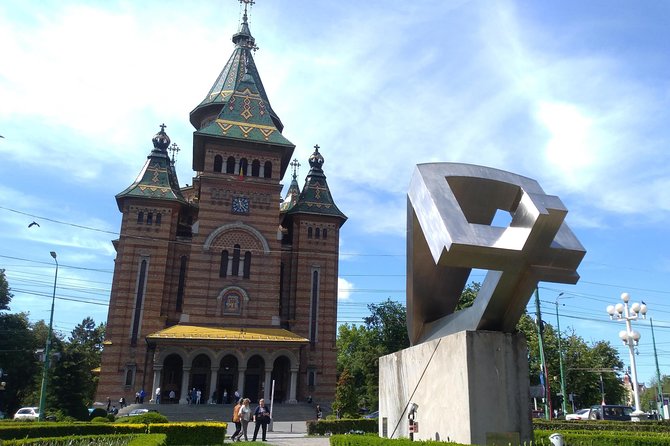
- Spot physical evidence of the uprising: Bullet holes remain around the Orthodox Cathedral and Piața Victoriei.
- Cover more ground by vehicle: The comfortable transport makes it possible to connect at least eight Communist-era and revolutionary locations.
- Expect an English-language tour: The group is capped at 10, and group discounts are available.
Why Timisoara’s Communist story needs more than a city-center walk
Timisoara is famous for its elegant squares, Austro-Hungarian buildings, and café life. Those sights matter, but they can leave out the harder story of daily life under Nicolae Ceausescu and the final days of the Communist regime.
This tour gives you a different city. You see where people lived, what they used, and how fear and frustration built over decades. You also follow the quick-moving events of December 1989, when a local protest grew into a revolution that helped bring down Romania’s Communist government.
I especially like the way the tour links private life to public revolt. A household object made in Romania may seem modest beside a cathedral, but it helps explain shortages, state control, limited choice, and the practical world people knew. Then the route shifts to churches and squares, where those quiet pressures became open resistance.
The guides are an important part of the experience. Dan is described as able to handle detailed questions about the period and the revolution. Ludovic brings a strong interest in the timeline of Communist Romania and the places connected with it. Guide assignments can vary, so you should not assume which one will lead your departure.
More of the communist years around Timisoara:
- Timisoara: Grand Communism Tour
★ 4.9 · 13 reviews - Bucharest: Palace of Parliament Tickets and Guide
★ 4.3 · 3,182 reviews - Bucharest: Palace of Parliament Tickets and Guided Tour
★ 4.4 · 1,877 reviews
Starting at the Metropolitan Cathedral at 3 pm
The meeting point is the Three Holy Hierarchs Metropolitan Cathedral on Bulevardul Regele Ferdinand I. The tour starts at 3 pm and ends in Piața Victoriei, also called Victory Square.
That end point is useful. You finish in one of central Timisoara’s most important public spaces, where you can continue exploring on foot after the tour. Since the start and finish are different, plan your return route before you arrive, especially if you have a dinner booking or need to collect luggage.
The tour uses a vehicle between locations. That matters because the Communist story is spread across the city, not limited to one compact square. You spend less time getting from place to place and more time listening, looking, and asking questions.
A maximum of 10 people keeps the outing fairly personal. It is still a group tour, so you will not have complete control over the pace, but the size should make it easier to hear the guide and raise a question.
Șagului: seeing how Communist life worked
The longest portion of the route is in Șagului, where you spend about two hours. This is the practical heart of the experience.
Instead of treating Communism as a list of leaders and dates, the guide uses the neighborhood to discuss ordinary life. You learn how the area functioned during that period and what daily routines looked like under the regime. The supplied details do not promise entry into private homes or specific apartment interiors, so you should expect an outdoor neighborhood visit rather than a recreated museum setting.
That distinction is important. A neighborhood can tell you about scale and planning, but you may need to listen closely to connect what you see with the guide’s explanation. The value comes from the local context: how people lived, moved, and organized their days, not from dramatic monuments.
This two-hour stop also means the experience is not a quick photo circuit. If you prefer a tour that races from one landmark to another, the pace may feel slow. I see the length as a strength for anyone who wants to understand the social side of the Communist period.
Ask questions here. The time allows you to explore details about work, housing, shopping, and the broader system, but only points supported by the guide’s presentation should be treated as part of the official story. The experience is strongest when you arrive ready to listen rather than simply collect locations.
The Communist Consumer Museum and its household clues
The Muzeul Consumatorului Comunist takes about 30 minutes. Here, the focus shifts to the beginnings of Romania’s Communist regime, how it was installed, and how it developed.
The collection is private and made up of objects produced in Romania during the Communist era. That gives the visit a personal scale. You are not only hearing about state policy. You are looking at the material culture of the period, the things people encountered in homes and shops.
The museum stop is free of an additional admission charge, as are the other listed stops. Still, the main value is not the ticket saving. It is the chance to make an abstract political system easier to picture.
Thirty minutes is a short visit, so do not expect a full museum afternoon. The guide’s explanation will likely shape what you take from the collection. If you enjoy household history and social details, this could be one of the most memorable parts of the route. If you mainly want dramatic revolution sites, it may feel like a pause before the action returns to the streets.
Same base, a completely different day:
- The Classic Tour of Timisoara
★ 5.0 · 154 reviews - Weekly Guided Tour in English – Tuesday, Thursday, Saturday
★ 5.0 · 84 reviews - Timisoara All in One – Walking and Tram Tour
★ 5.0 · 72 reviews - Timisoara: Guided Walking Tour
★ 4.9 · 38 reviews
The Reformed Church and the first spark in December 1989
The Reformed Church, or Biserica Reformata, is presented as the place where the Timisoara uprising began. The visit lasts about 15 minutes, but its importance is much greater than the time suggests.
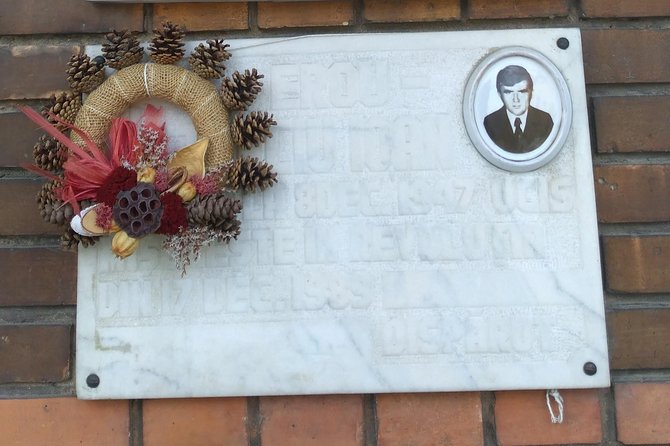
The key dates are December 15 and 16, 1989. In the afternoon of December 16, a young man stopped a tram, and his friend climbed aboard and shouted Down with Ceausescu. The moment captures the sudden move from private frustration to public defiance.
You should listen for the sequence of events here. The church is not simply a backdrop for a famous story. It helps explain how a local dispute and gathering became part of a wider revolt. The guide’s account gives the location its political and human meaning.
The 15-minute stop is necessarily brief. You will not receive every detail of Romania’s modern political history here, and the tour cannot replace a full museum visit or a book-length account. What it does well is put your feet at one of the key starting points, then connect that point to the next stages of the uprising.
The Orthodox Cathedral and visible signs of danger
The Timisoara Orthodox Cathedral is another short stop, about 10 minutes. Here, you hear about young people who died while protesting on the cathedral steps after the Army opened fire without warning.
The building also preserves a physical reminder of that violence: bullet holes. That evidence changes the tone of the visit. A lecture can explain repression, but damage still visible on a building makes the story immediate.
Because the stop is short, you should expect a focused explanation rather than a long architectural visit. The cathedral’s religious and visual importance is part of the setting, but the tour’s purpose here is the events of the revolution and the people caught in them.
Take a moment to look carefully at the surfaces around you. The bullet holes are easy to miss if you are watching only the guide or taking photographs. This is one of those stops where a few quiet minutes can carry more weight than a long list of facts.
Victory Square and the city’s declaration of freedom
The tour ends in Piața Victoriei, or Victory Square. Before 1989, it was known as Opera Square. Its present name recalls December 20, when 150,000 people shouted Victory and Timisoara was proclaimed the first city in Romania free of Communism.
The square also has bullet holes on buildings around it. That combination of public celebration and visible violence gives the final stop a strong sense of place. You are not ending at a generic central plaza. You are standing where a city announced its break with the old system.
The square is a good place to finish because it gathers the tour’s main themes. You have seen an everyday neighborhood, household objects, the church linked to the first protest, and the cathedral connected with deaths during the uprising. Here, those separate pieces become one story.
Ten minutes is enough for the guide to explain the key events, but not enough for every question you may have. If you want more time to take in the buildings or ask follow-up questions, remain in the square after the formal tour ends. The experience finishes here, so you can continue independently.
The $66.08 price and what you receive
At $66.08 per person, this is not the cheapest way to spend an afternoon in Timisoara. The value depends on how much you want the interpretation and transport.
You are paying for roughly three to four hours, an English-speaking guide, vehicle travel between dispersed locations, and a small group capped at 10. The listed stops do not charge separate admission, so the price is mainly for the guide’s time, route planning, transportation, and historical explanation.
For someone already familiar with Romanian Communism, the price may feel high if you want only a few landmarks and photographs. You could see several central sites on your own. But recreating this route, finding the less obvious locations, understanding the sequence of December 1989, and arranging transport would take effort.
The strongest value comes if you want context rather than a checklist. Dan’s ability to answer detailed questions, and Ludovic’s focus on the period and its locations, make the guide a major part of what you are buying. Group discounts may improve the price for larger parties.
The tour is booked, on average, 11 days ahead. That is useful planning information, especially if your Timisoara stay is short. Confirmation is sent within 48 hours, subject to availability.
Who will get the most from this experience
I would choose this tour if you have a real interest in Romanian history, Communist Europe, political change, or the personal cost of dictatorship. It also suits an adult traveling with an older child or teenager who needs more context than a standard sightseeing walk provides.
One particularly good use is a family visit across generations. The tour can help someone who grew up outside Romania understand the world their parent or grandparent knew. It may also reveal details that people who lived through the period did not fully understand at the time, since official information was controlled and distorted.
You should also consider it if you have already seen Timisoara’s central architecture and want a less familiar side of the city. The route moves beyond the usual highlights and ties local places to national events.
I would skip it if you want a light, purely scenic outing. The topic includes state control, protest, deaths, gunfire, and political repression. The mood is serious, even though a good guide can make the material clear and engaging.
Service animals are allowed, the tour is near public transportation, and most people can participate. These details are helpful, but the main practical issue is the three to four-hour commitment and the need to move between stops in a group.
Should you book the Communist Ages tour?
Book it if you want to understand how Timisoara moved from ordinary Communist life to open revolt in December 1989. The tour’s best features are its small group, vehicle-supported route, strong local focus, and physical evidence at the cathedral and Victory Square.
Give it a miss if your main goal is a short architectural tour or if you prefer to explore without a fixed schedule. For everyone else, this is a useful way to see the city through its recent past, not just its handsome façades.
You can cancel for a full refund if you do so at least 24 hours before the 3 pm start. Changes or cancellations made less than 24 hours ahead are not accepted for a refund.
FAQ
Where does the tour start?
It starts at the Three Holy Hierarchs Metropolitan Cathedral on Bulevardul Regele Ferdinand I in Timisoara.
What time does the tour begin?
The tour begins at 3 pm.
Where does the tour end?
It ends in Piața Victoriei, also known as Victory Square.
How long does the experience last?
The tour lasts approximately three to four hours.
What language is the tour offered in?
The tour is offered in English.
How many people can join the tour?
The maximum group size is 10 people.
Is transportation included between locations?
Yes. You travel between locations in a comfortable vehicle.
Are admission tickets included?
The listed stops have no additional admission charge.
Can I cancel for a full refund?
Yes. You can receive a full refund if you cancel at least 24 hours before the experience start time.
Just added around Timisoara
- Timisoara Downtown Dream Tour★ 5.0 · 5 reviews
- The Jewish Heritage Tour of Timisoara★ 5.0 · 9 reviews
- Bite your way through Timisoara – Timisoara’s Street Food Tour★ 5.0 · 14 reviews
- Ecumenical Tour of Timisoara★ 5.0 · 15 reviews
- Nera Gorge National Park – Private Day Tour from Timisoara★ 4.5 · 4 reviews
- One Day in Transylvania – Departure from Timisoara★ 5.0 · 16 reviews
- Day Trip to Turda Salt Mine and Corvin Castle from Timisoara★ 5.0 · 10 reviews
- Timisoara: Private Walking Tour with a Local Guide★ 4.5 · 5 reviews
Communism & Ceaușescu Tours, compared.

Parliament Senate Entry Tickets and Guided Tour
Read our review →
Bucharest Essential Tour: Old Town, Calea Victoriei & Communism
Read our review →Browse the lists this tour appears in