
Reviewed · ALTERNATIVE BUCHAREST TOURS
The Real Story of Gypsies – Slavery in Romania
The former slave market at Piata Amzei gives this Bucharest walk its emotional center. You move from a place tied to the buying and selling of Roma people to sites that explain political memory, public culture, wartime persecution, and Roma craftsmanship today. It is a serious tour, but the route keeps the subject grounded in real streets and landmarks.
I like the small maximum group of 15 people, which should make it easier to hear the guide and ask questions. I also like the clear arc from oppression to living culture, ending at Mesteshukar ButiQ, a shop selling work made by Roma craftsmen. The main consideration is that the tour covers painful subjects, including slavery and the Holocaust, so it may feel heavy rather than lighthearted.
Key points to know before you book
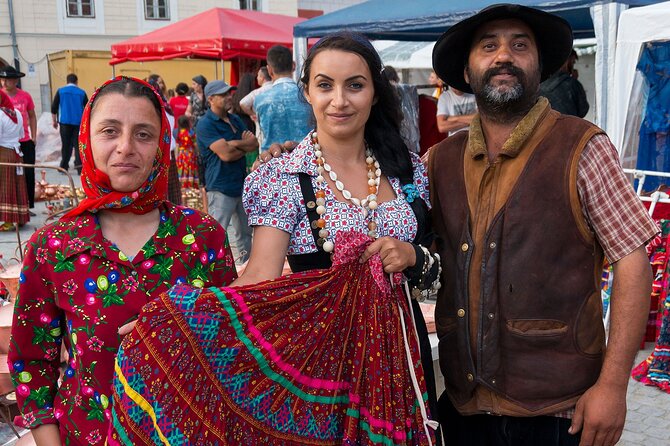
- A former slave market starts the story: The first stop at Platoul Piata Amzei gives the tour a difficult but important focus from the outset.
- Seven stops connect history to modern Bucharest: You pass Palatul Stirbei, the Romanian Athenaeum, Cismigiu Park, the Holocaust Memorial, the Iuliu Maniu statue, and Mesteshukar ButiQ.
- About 1 hour 20 minutes is spent walking: The remaining time is divided among the seven stops and explanations.
- The group is limited to 15 people: That is useful on a city walk built around discussion and questions.
- The final stop supports Roma artisans: Mesteshukar ButiQ sells products made only by Roma craftsmen, giving the tour a present-day ending.
- The price is $30.04 per person: With a three-hour route and an English-speaking guide, the value depends mainly on how much you want historical context rather than sightseeing alone.
Why this Bucharest tour begins with slavery
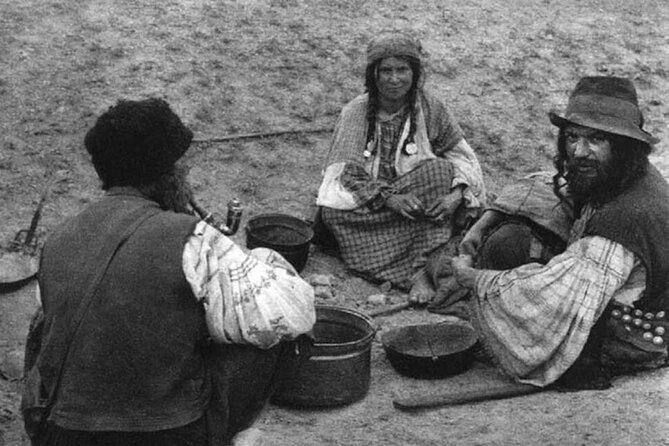
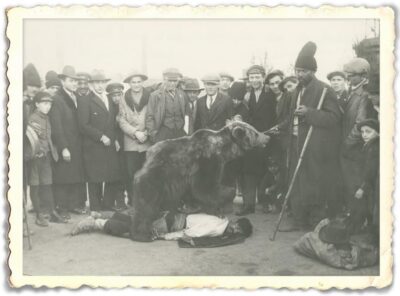
Many city tours begin with grand buildings, royal stories, or famous squares. This one begins with the less comfortable material that often gets left out. At Platoul Piata Amzei, you learn about the former slave market and the system that treated Roma people as property.
The stop lasts about 15 minutes, but its importance goes beyond the clock. It sets up the question that runs through the whole walk: how did centuries of forced servitude shape the way Roma people were viewed, and how did those views continue after slavery ended?
The tour uses the word Gypsies in its title because that term appears in older historical language. You will also hear Roma, the preferred modern term for the ethnic group. That distinction matters. It helps you understand how labels changed over time, and how language can carry both historical meaning and prejudice.
Admission is free at this and all the listed stops. You are paying for the guide’s explanation, the route, and the chance to connect separate sites into one story. If you simply want to see Bucharest’s monuments, you can visit many of them on your own. If you want help understanding how they relate to Roma history, the fee makes more sense.
Other tours off the usual route in Bucharest:
- Bucharest: Alternative Sightseeing 2.5-3h-Hour Guided Tour
★ 4.9 · 80 reviews - Bucharest Alternative Walking Tour
★ 4.9 · 63 reviews - Slavery in Romania,Myths and Truths on Gypsies, Walking Tour
★ 4.9 · 42 reviews
Palatul Stirbei and the people behind the record
The next stop is Palatul Stirbei, a Bucharest palace built in 1835. You spend roughly 10 minutes here, learning about its owner and his connection to an important moment in Roma history in Romania.
This is a short stop, so do not expect an extended palace visit or a full tour of the building’s interior. Its value is historical rather than architectural alone. The palace becomes a place where the guide can connect powerful landowners and political figures to the treatment of Roma people.
That approach gives you a useful way to read Bucharest. Beautiful buildings do not exist outside politics. Wealth, status, and public architecture can also point to systems that harmed people with less power.
The stop should appeal to you if you like history explained through specific people and places. It may feel too brief if you want a detailed architectural tour of Palatul Stirbei. The route is moving through a larger story, not pausing at one building for long.
The Romanian Athenaeum and public ideas about Roma people
At the Romanian Athenaeum, the subject shifts toward national culture and the arts. The building is one of Bucharest’s best-known cultural landmarks, and the stop lasts about 15 minutes.
You will admire the exterior while hearing about how art and public culture helped shape ideas about the Roma community. This is not presented as a concert visit or an interior architecture tour. Instead, the Athenaeum works as a backdrop for asking who gets represented in national stories and who gets pushed to the edge of them.
I like this part of the route because it broadens the subject. Roma history is not only about laws, slavery, and persecution. It is also about visibility, identity, and the way a country presents itself through culture.
You should keep your expectations practical. The stop is a guided discussion beside a landmark, not an admission-based visit to the Athenaeum. Since the tour is conducted in English, you can ask for clarification if a historical term or reference is unfamiliar. One highly praised guide, Mihai, was described as clear in English and generous with time for questions, though the guide assigned to your date may differ.
Cismigiu Park offers space for difficult questions
Cismigiu Park is the route’s gentler physical setting. It is Bucharest’s oldest and largest garden, and the walk here lasts about 15 minutes.
The park gives the group a change of pace after the heavier subjects at the first stops. In a calm public garden, the guide addresses truths and myths about Roma history. That matters because stereotypes often survive in casual stories, jokes, and assumptions, not just in official records.
You will likely find this section less about one event and more about sorting fact from legend. A good question to ask here is how a commonly repeated image of Roma people was formed, and who benefited from repeating it.
The park also helps break up the city walking. The full experience lasts about three hours, with around 1 hour 20 minutes allocated to walking time. Cismigiu is one of the places where you can catch your breath, listen, and let the earlier material settle before the route turns to the Holocaust in Romania.
Same base, a completely different day:
- Bucharest: Dracula’s Castle, Peles Castle, & Brasov Old Town
★ 4.5 · 17,858 reviews - Bucharest: Dracula Castle, Peles Castle & Brasov Old Town
★ 4.6 · 10,891 reviews - Bucharest: Dracula’s Castle, Peleș Castle & Brașov Day Trip
★ 4.5 · 5,919 reviews - Bucharest: Palace of Parliament Tickets and Guide
★ 4.3 · 3,182 reviews
The Holocaust Memorial brings the tour into the 20th century
The Holocaust Memorial is the most solemn stop. You spend about 15 minutes at this landmark, remembering victims of the Holocaust in Romania, including the thousands of Roma people killed through persecution and genocide.
This stop is important because Roma suffering during the Holocaust is often less familiar to visitors than the persecution of Jewish communities. The tour places Roma victims within the wider history of wartime genocide, rather than treating their experience as a footnote.
Expect a quiet and serious section. It is not a photo stop in the usual sightseeing sense. The value comes from taking time to recognize what happened at a place made for public memory.
If you are planning this tour for children or young teenagers, consider how they handle discussions of slavery, persecution, and genocide. The supplied information does not set an age restriction, and most people can participate, but the subject itself requires maturity and attention.
The Iuliu Maniu statue and changing names
The Iuliu Maniu statue marks another point in the story, from a period when Roma people were still commonly called Gypsies. The stop lasts about 15 minutes.
The description of this section is intentionally tied to terminology and historical period. That makes it useful for understanding how Roma people were described in public life, and how older labels remain attached to documents, speeches, and popular accounts.
The statue itself provides a fixed point in central Bucharest. As with the other outdoor stops, you are not paying an entrance fee. You are using the city as a classroom, with monuments and public spaces serving as prompts for discussion.
This part may be especially useful if you have heard the word Gypsy used in different ways during your Romania trip. The guide can help separate historical usage from modern respectful language. You can also ask how the name appears in Romanian records and why Roma is preferred today.
Mesteshukar ButiQ ends the walk with living craftsmanship
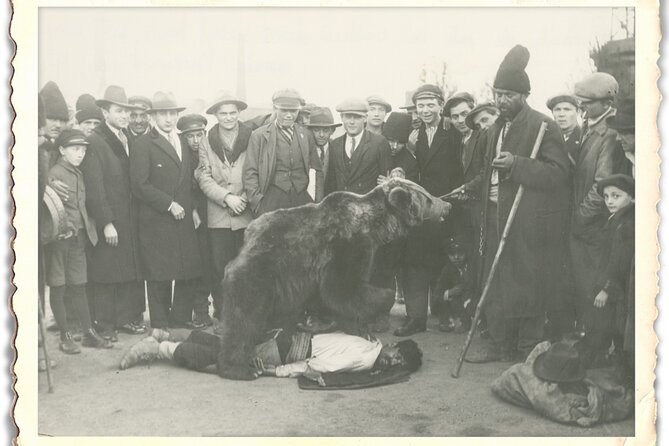
The final stop is Mesteshukar ButiQ, at Bulevardul Mihail Kogălniceanu 12. It is a small shop whose products are made only by Roma craftsmen.
That ending is one of the strongest features of the route. After hearing about enslavement, stereotypes, and genocide, you finish by looking at work made by Roma artisans today. The focus moves from what was done to Roma people to what Roma craftspeople create and preserve.
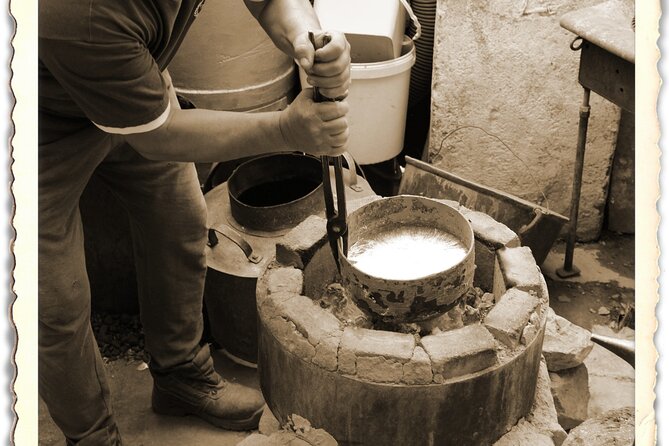
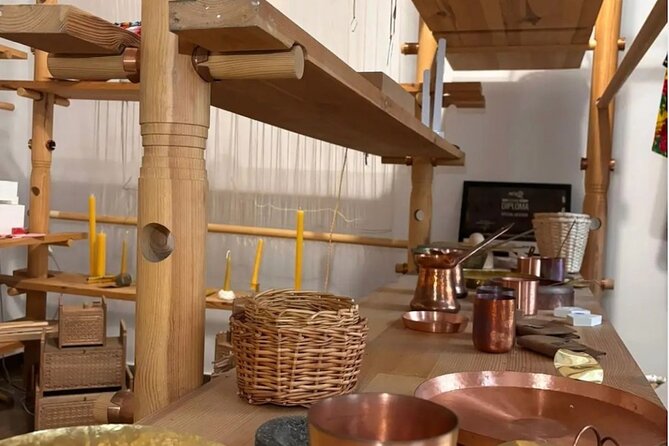
The stop lasts about 15 minutes, so think of it as an introduction rather than a long shopping session or workshop. You get a chance to see copper craftsmanship and learn about traditions that continue in modern form.
You may want to budget extra time after the tour if you are interested in examining the products. The official three-hour experience ends here, and the meeting information describes Mesteshukar ButiQ as a small shop. The provided details do not state prices, payment methods, or shipping arrangements, so ask in the shop if you are considering a purchase.
What the three-hour format means for you
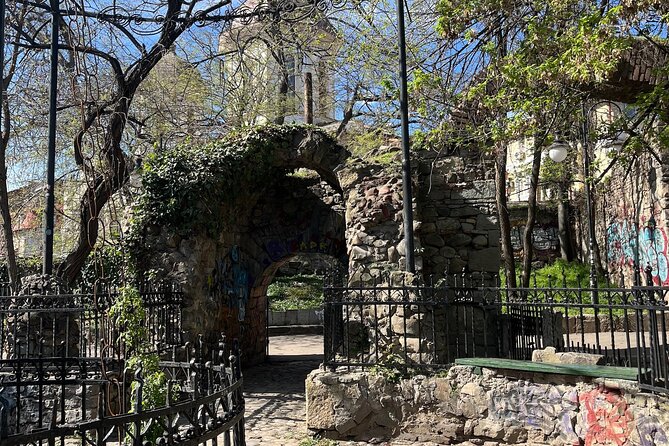
The tour starts at 10:00 a.m. outside Teatrul Ion Creangă, Sala Mare, at Strada Piața Amzei 13. The starting point is near public transportation, which helps if you are staying elsewhere in Bucharest.
The route has seven stops, but the walking between them takes about 1 hour 20 minutes. The rest of the time is used at the landmarks and for the guide’s explanations. That balance suits you if you want context at each place rather than a fast march from one address to another.
Wear comfortable shoes. The supplied details do not give a total distance, pavement conditions, or weather plan, so you should be prepared for an ordinary central Bucharest walking route. Since the experience is offered in English, it is a good choice if you want this subject explained without needing to translate along the way.
A maximum of 15 people keeps the group fairly compact. That matters here because the tour depends on listening and conversation. You are not just following a flag through a crowded square. You should have a reasonable chance to hear the guide and ask questions, though the exact feel depends on the group size on your date.
Is $30.04 a fair price?
At $30.04 per person, this is not the cheapest way to walk through central Bucharest. Several of the locations are public outdoor sites with free admission, so you are not paying for tickets to major attractions.
You are paying for a specialized route and interpretation. The tour links a former slave market, a 19th-century palace, a national cultural landmark, a park, a Holocaust memorial, a political statue, and a Roma craft shop. That connection is difficult to build from a standard city map.
The value is strongest if you have already seen Bucharest’s headline sights and want a more focused subject. It is also useful if you want to understand Roma history in Romania through local places rather than a museum display alone.
The value is weaker if you want interior access, long stops at monuments, or a broad introduction to Bucharest. This tour does not replace a general city walk. It adds a specific historical and cultural layer.
The guide’s role is central. One English-speaking guide, Mihai, was praised for clear explanations, Bucharest knowledge, and taking time with questions. Another account described him as easy to talk with and patient. You cannot assume he will lead every departure, but those details show the kind of guide interaction this format can provide.
Who should book this experience?
I would choose this tour if you want difficult history handled directly and you are willing to spend three hours thinking rather than simply sightseeing. It suits history students, culturally curious visitors, and anyone who wants a fuller picture of Romania beyond royal buildings and old-town streets.
It also suits repeat visitors to Bucharest. The route shows parts of the city through a new frame, even when you have already passed the Athenaeum or Cismigiu Park.
I would think twice if you want a relaxed, cheerful morning. Slavery, genocide, and discrimination are not side notes here. The final craft stop brings warmth and present-day purpose, but the overall mood remains serious.
You can cancel for a full refund up to 24 hours before the 10:00 a.m. start time. Changes or cancellations made less than 24 hours before the start are not accepted for a refund. Confirmation is provided at booking, and mobile tickets are available.
Should you book it?
Book this walk if you want a small-group, English-language look at Roma history that connects Bucharest streets with slavery, public memory, wartime persecution, and modern craftsmanship. The former slave market and Holocaust Memorial give it weight, while Mesteshukar ButiQ prevents the story from ending only in tragedy.
Skip it if you want a general orientation tour or a series of paid interior visits. At $30.04, the fee is fair for focused guiding and discussion, not for admission tickets. For the right reader, this is a thoughtful way to see Bucharest with more honesty and context.
FAQ
Where does the tour start?
It starts at Teatrul Ion Creangă, Sala Mare, Strada Piața Amzei 13 in Bucharest.
What time does the tour begin?
The start time is 10:00 a.m.
Where does the tour end?
It ends at Mesteshukar ButiQ, Bulevardul Mihail Kogălniceanu 12, Bucharest.
How long does the experience last?
The tour lasts approximately three hours.
How much of the tour is spent walking?
About 1 hour and 20 minutes is allocated to walking between the stops.
Is the tour offered in English?
Yes. English is the stated language for the experience.
How many people can join the tour?
The maximum group size is 15 people.
Are entrance tickets included or required at the stops?
The listed stops have free admission. The experience focuses on outdoor sites, explanations, and the visit to Mesteshukar ButiQ.
Can I cancel for a full refund?
Yes. You can cancel at least 24 hours before the local start time for a full refund. Cancellations or changes made less than 24 hours before the start are not refunded.
Just added around Bucharest
- Winery touring & private wine tasting – one day private tour★ 5.0 · 3 reviews
- Village Museum Bucharest Guided Tour★ 5.0 · 6 reviews
- Bucharest: Dealu Mare Winery Private Trip with Wine Tasting★ 4.9 · 6 reviews
- Traditions in Bucharest: Village Museum and Wine Tasting★ 5.0 · 8 reviews
- Transylvania Tour: Dracula’s Castle, Peles Palace & Brasov★ 5.0 · 19 reviews
- Airport Henri Coanda (Otopeni) to Bucharest – Private Transfer – Driver★ 5.0 · 5 reviews
- Gems of Transilvania: Brasov,Sighisoara,Sibiu,Viscri and more★ 5.0 · 6 reviews
- Discover Medieval Transylvania Small Group Tour – 7 days★ 5.0 · 4 reviews
Alternative Bucharest Tours, compared.
Slavery in Romania,Myths and Truths on Gypsies, Walking Tour
Read our review →
Alternative Bucharest: 2.5-3 Hours Walking tour (Small groups)
Read our review →
Troubled – Notorious Neighborhood – area known for social issues
Read our review →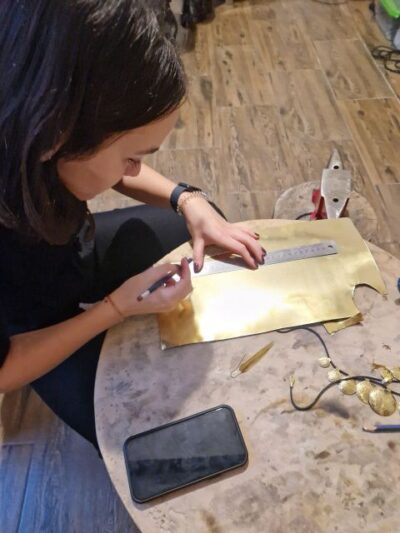
Browse the lists this tour appears in