
Reviewed · ALTERNATIVE BUCHAREST TOURS
Hidden charms of Mahallopolis
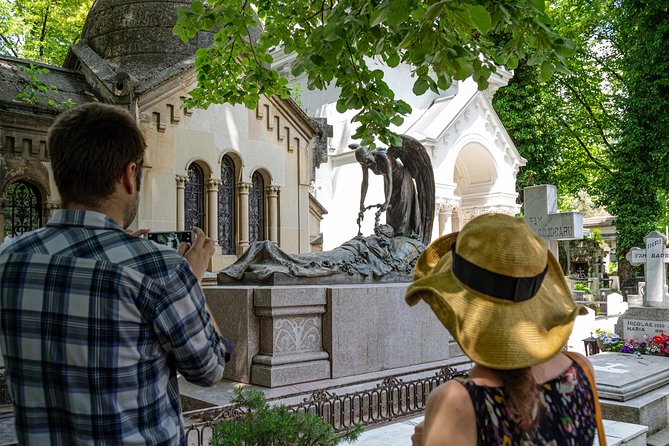
Bucharest reveals its stranger, more human side on this four-hour walk through cemeteries, old neighborhoods, secret stairs, and places most visitors never find. The route begins at the Old Town but quickly leaves its familiar streets behind, heading to Bellu Cemetery, an open-air museum of Romanian memory and sculpture.
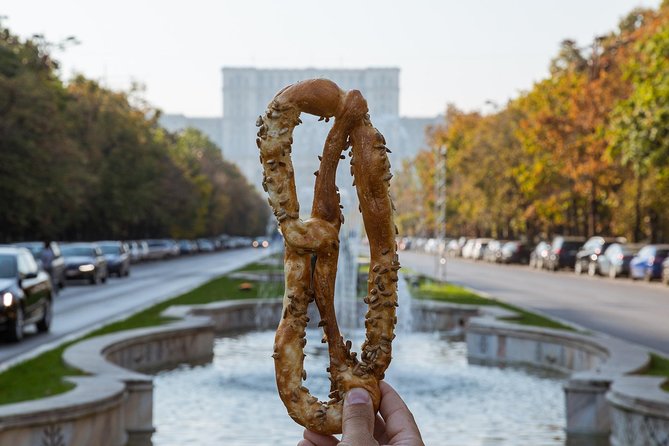
I like the small-group format, limited to 10 people, and the way the tour uses a metro ride and a good deal of walking to connect far-flung places. I also like the built-in food stop, with a covrig or cheese pie, local bites, beer, coffee or tea, and water included.
The main consideration is physical effort. You should be comfortable walking for several hours, handling rolling hills and stairs, and exploring outdoors in good weather. At $137.57 per person, this is not a cheap sightseeing walk, so its value depends on how much you want local stories and unusual places rather than standard landmarks.
Key points to know before you book
- Bellu Cemetery becomes an open-air museum: See one of Bucharest’s oldest and most atmospheric places with context from a local guide.
- The route leaves the tourist center quickly: A subway ride takes you toward neighborhoods rarely included in a first visit.
- You’ll see several layers of Bucharest: The route links a cemetery, park, train station, former KGB headquarters, cultural center, and old Mahalla.
- Food and drinks are part of the experience: A street snack, traditional bites, a 400 ml beer, coffee or tea, and bottled water are included.
- Guides bring a personal connection: Mircea, Tudi, and Alina have led this experience, using humor, local stories, and forgotten details.
- Walking matters: Expect a moderate level of fitness, hills, stairs, and a route that lasts about four hours.
Why this route shows you a different Bucharest
Bucharest is easy to approach through its Old Town, grand boulevards, and monumental buildings. Those places have their value, but they can also give you a polished and incomplete picture of the city.
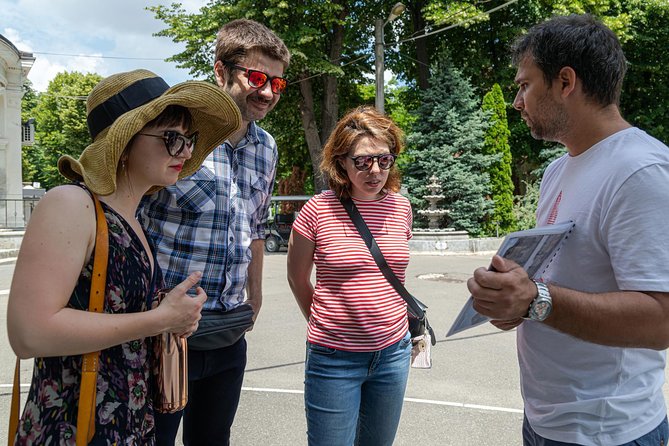
This experience takes the opposite approach. You start at Piața Sfântul Anton at 11:00 am, close to the Old Town, then use the metro to reach parts of Bucharest that feel less arranged for sightseeing. From there, you move on foot through a series of places linked by local memory rather than by a single theme.
That loose structure is part of the appeal. You are not simply ticking off famous buildings. You are following a guide through the city’s edges, contradictions, forgotten corners, and changing neighborhoods.
The route has also worked well for people who already know Bucharest. A local guide can point out details that are easy to pass without noticing, then explain how they connect to the city’s past. If you have already seen the main center, this is a useful way to spend an afternoon.
Other tours off the usual route in Bucharest:
- Bucharest: Alternative Sightseeing 2.5-3h-Hour Guided Tour
★ 4.9 · 80 reviews - Bucharest Alternative Walking Tour
★ 4.9 · 63 reviews - Slavery in Romania,Myths and Truths on Gypsies, Walking Tour
★ 4.9 · 42 reviews
Bellu Cemetery, Bucharest’s open-air museum
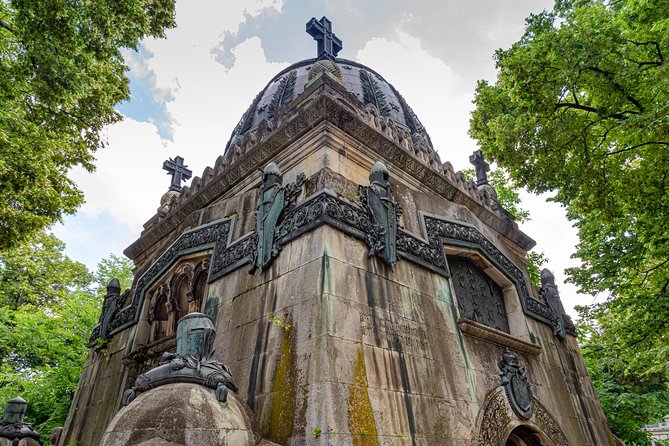
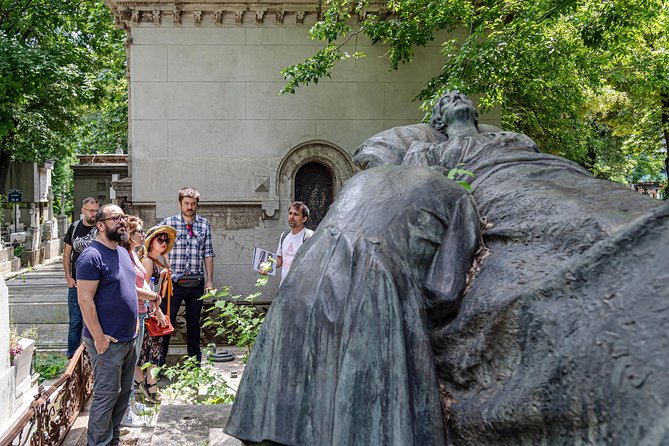
The first major stop is Bellu Cemetery, described as the oldest, largest, and most beautiful cemetery in Eastern Europe. Comparisons with Père Lachaise in Paris give you a rough idea of its role: this is not just a place for graves, but a setting filled with sculpture, monuments, names, and stories.
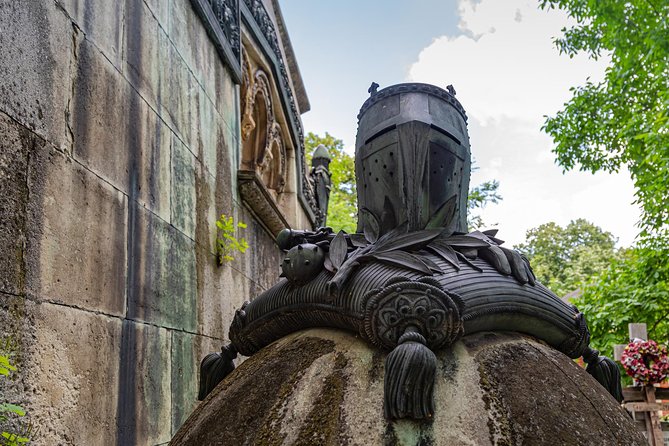
A cemetery visit may sound unusual for a city tour. That is precisely why it works. Here, you can see how Bucharest remembers its writers, artists, public figures, and other important people. The stonework and memorials turn the grounds into an open-air museum, while the guide helps you make sense of what you are seeing.
I would give this stop time and attention rather than treating it as a quick photo break. The interest lies in the details, and the point of having a local guide is to learn why certain memorials matter.
The mood is thoughtful, not gloomy. Still, you should know that this is a working cemetery and a place of remembrance. Keep your behavior respectful, and expect the guide to focus on stories, architecture, and local memory rather than entertainment at every moment.
For many people, this will be the strongest part of the tour. It offers a side of Bucharest that you will not get from a standard central walking route, and it gives the rest of the afternoon a useful sense of place.
A local park and Bucharest’s quieter hills
After the cemetery, the route continues through a lively park that is little known to tourists but valued by local residents. The exact character of a park changes with the season and the day, but the purpose of this stop is clear: you get a pause from major sights and a look at how Bucharest residents use their city.
The route also includes rolling hills, secret stairs, and what is described as the highest altitude in town. Bucharest is often imagined as a flat city, so these slopes and stairways add surprise. They also make the walk more physical than a level stroll through the Old Town.
I like this part because it slows the pace. You have room to look around, catch your breath, and notice the city as a place where people live rather than a string of attractions. If you visit in warm weather, the park stop can be a welcome chance to cool off and recharge.
The drawback is simple: uneven streets, hills, and stairs can be tiring. Good walking shoes will help, even though they are not specifically required. The tour asks for moderate physical fitness, and you should take that seriously.
Romania’s oldest train station
The next stop takes you inside the oldest train station in Romania. This is the kind of site that can be easy to overlook if you are only following a guidebook’s main sights, yet railway stations often reveal a great deal about a city.
A station is a place of movement, change, and connection. It can show how Bucharest grew, how people entered and left the city, and how older transport routes still fit into present-day life. The guide’s role here is especially useful, since the building may not explain its importance on its own.
You should not expect a long museum visit with a formal exhibit. This is one stop on a walking route, and the appeal comes from seeing the station in context. The tour links it with nearby places that reflect other periods in Bucharest’s past.
That mix keeps the afternoon from becoming too focused on one era. You move from memorial culture to public space, then to transport and urban change.
Same base, a completely different day:
- Bucharest: Dracula’s Castle, Peles Castle, & Brasov Old Town
★ 4.5 · 17,858 reviews - Bucharest: Dracula Castle, Peles Castle & Brasov Old Town
★ 4.6 · 10,891 reviews - Bucharest: Dracula’s Castle, Peleș Castle & Brașov Day Trip
★ 4.5 · 5,919 reviews - Bucharest: Palace of Parliament Tickets and Guide
★ 4.3 · 3,182 reviews
The former KGB headquarters and difficult history
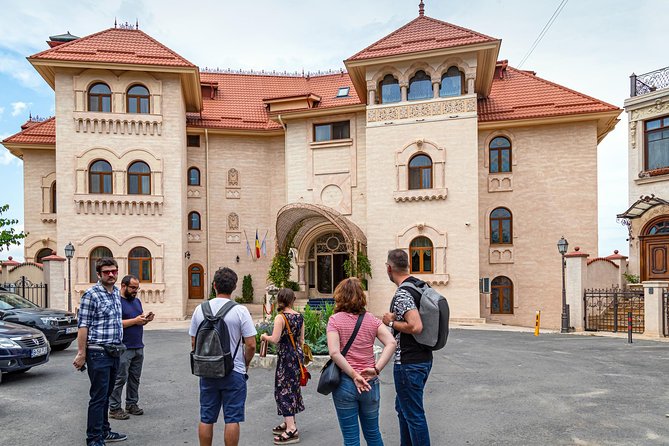
Close to the station, the route points out a former KGB headquarters. The site adds a more serious political layer to the experience, especially after the cemetery’s focus on personal and national memory.
You will not be getting a full political history course in one afternoon. Instead, this stop gives the guide a chance to connect a physical building with the complicated story of power, surveillance, and foreign influence in the region.
This is where a local voice matters most. Buildings associated with political repression can look ordinary from the outside. Without explanation, you might walk past without knowing what happened there or why it remains significant.
The subject may also make the tour feel heavier for a while. That is not a flaw, but it is worth knowing. The experience is not only about pretty views and quirky streets. It asks you to think about the forces that shaped Bucharest and the people who lived through them.
Refreshments at a former factory turned cultural hub
The route then stops at an old factory that has been turned into a cultural and alternative hub. This is the tour’s most relaxed pause, and it is where the included refreshments become useful.
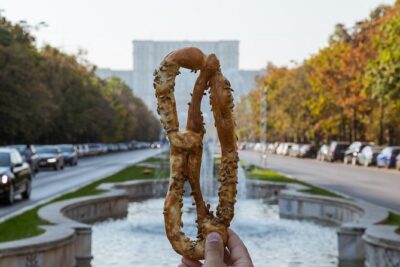
You receive one street snack, either a covrig or cheese pie, along with traditional local bites. The package also includes one 400 ml beer, coffee or tea, and bottled water. Additional food, drinks, souvenirs, and personal shopping cost extra.
I like the way this stop supports the tour rather than interrupting it. You are not being taken to a generic restaurant for a long meal. Instead, you get a quick taste of local food and time to sit, talk, and look around a reused industrial space.
The setting also fits the route’s theme. Bucharest has many old places that have been given new purposes, and a former factory used for culture shows how the city keeps changing without erasing every trace of its past.
Do not book this expecting a full meal. The food is a snack and tasting break, not lunch. If you need a larger meal, plan to eat before or after the tour. You should also budget for extra drinks or shopping if the cultural center catches your interest.
The secret passage into an old Mahalla
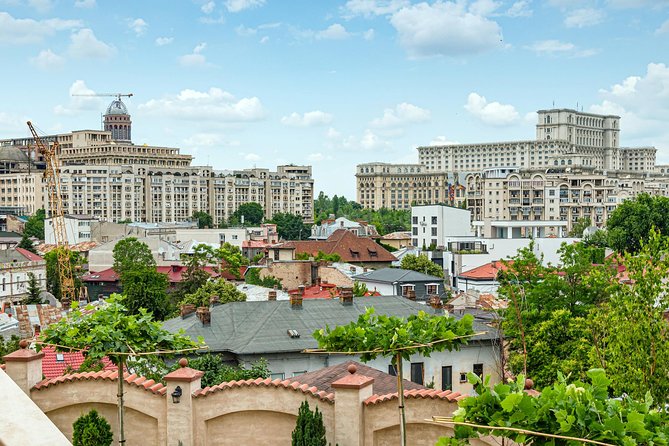
The final major idea is the old Mahalla. The word refers to a neighborhood, with oriental roots, and the guide uses a secret passage to lead you into one of these older areas.
This is a fitting end. After the grander subjects of cemeteries, railways, and political history, you finish with the texture of everyday neighborhood life. The passage and old streets help you see Bucharest at a smaller scale, where the story is found in routes, homes, walls, and local habits.
The name Mahallopolis points to this focus on neighborhoods. You are not only looking at Bucharest as a capital city. You are seeing it as a collection of communities, each with its own memories and character.
The exact feeling of this section will depend on the guide and the conditions on the day. That is part of the nature of a route built around lesser-known places. It is less predictable than a major museum, but also more personal.
The guides and the tone of the afternoon
Mircea has led this experience with a strong sense of humor, passion for Bucharest, and interest in complicated historical stories. Tudi and Alina have also guided versions of the route. The guide you meet may vary, so you should treat the names as examples rather than a guarantee.
The tone is informal and personal. You can expect storytelling, local food, and time for conversation rather than a formal lecture. The guides aim to show places through a local point of view, including corners that people who grew up in Bucharest may have passed without noticing.
That approach has clear advantages. It makes the tour feel less like a checklist and gives you a chance to ask questions. It also means the experience may depend more on the individual guide than a tightly scripted sightseeing product would.
I would choose this tour if you enjoy stories, urban oddities, and a guide who is comfortable moving between humor and serious history. If you want a polished tour built around famous monuments, you may find the route too loose or unconventional.
Is $137.57 a fair price?
At $137.57 per person, the tour is expensive for a four-hour activity in Bucharest. The included snacks and drinks help, but they do not account for the full price.
You are mainly paying for access to a small group, a local guide, the route planning, and the stories that connect these scattered places. A group limit of 10 is important here. In a large coach group, a cemetery, narrow stairs, or old neighborhood would be harder to handle. A small group also gives you more room to ask questions and hear the guide.
The one-way subway fare is included, and you finish at Piața Unirii. The route is described as involving walking back toward the Old Town area, so ask the guide about the exact end point if your onward plans are tight.
For someone who wants only the lowest-cost way to see Bucharest, this will not be the best buy. For someone who values local context and would struggle to find these places alone, the price can make sense.
Who should book this experience?
You should consider it if you have already seen Bucharest’s central sights, or if you want your first visit to include more than the Old Town. It suits curious adults who enjoy cemeteries, old buildings, political history, neighborhood walks, and unexpected city views.
It is also a good match for returning visitors and Bucharest residents. Several people who knew the city well still found new stories and overlooked places along the route. That tells you something useful: the tour is not built only for first-time visitors.
You should think twice if you dislike walking, stairs, outdoor conditions, or serious historical subjects. The tour requires moderate fitness, and poor weather can lead to cancellation or a change of date.
The group size is capped at 10, service animals are allowed, and the route is near public transportation. Confirmation is sent within 48 hours of booking, subject to availability. You can cancel for a full refund up to 24 hours before the 11:00 am start, but weather and minimum group requirements can affect whether the tour runs.
My verdict on Hidden charms of Mahallopolis
I would book this if you want Bucharest to feel less packaged and more personal. The cemetery, old train station, former KGB headquarters, factory cultural center, and Mahalla create an unusual route with a good range of subjects.
The best parts are the local storytelling, the small group, and the chance to see places you would probably miss on your own. The main weakness is the price, especially for a four-hour walk with modest food included.
Choose it for access and insight, not for a bargain. If you have comfortable shoes, a curious mind, and room in your budget, this is a strong way to meet the less familiar side of Bucharest.
FAQ
Where does the tour start?
The tour starts at Piața Sfântul Anton in Bucharest at 11:00 am.
Where does the tour end?
The tour ends at Piața Unirii in Bucharest.
How long does the experience last?
The tour lasts approximately four hours.
What food and drinks are included?
You receive one street snack, either a covrig or cheese pie, plus local traditional bites, one 400 ml beer, coffee or tea, and bottled water.
Is transportation included?
One-way subway fare is included. The route uses the metro to reach the first area, and the return toward the Old Town is on foot.
How many people can join the tour?
The maximum group size is 10 people.
How physically demanding is the route?
You need a moderate level of physical fitness. The experience includes walking, rolling hills, and stairs.
Can I cancel for a refund?
You can cancel up to 24 hours before the start time for a full refund. Cancellations or changes made less than 24 hours before the start are not refunded or accepted.
Just added around Bucharest
- Winery touring & private wine tasting – one day private tour★ 5.0 · 3 reviews
- Village Museum Bucharest Guided Tour★ 5.0 · 6 reviews
- Bucharest: Dealu Mare Winery Private Trip with Wine Tasting★ 4.9 · 6 reviews
- Traditions in Bucharest: Village Museum and Wine Tasting★ 5.0 · 8 reviews
- Transylvania Tour: Dracula’s Castle, Peles Palace & Brasov★ 5.0 · 19 reviews
- Airport Henri Coanda (Otopeni) to Bucharest – Private Transfer – Driver★ 5.0 · 5 reviews
- Gems of Transilvania: Brasov,Sighisoara,Sibiu,Viscri and more★ 5.0 · 6 reviews
- Discover Medieval Transylvania Small Group Tour – 7 days★ 5.0 · 4 reviews
Alternative Bucharest Tours, compared.
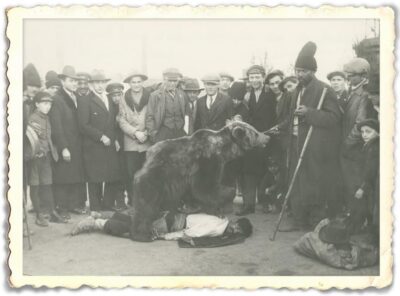
Slavery in Romania,Myths and Truths on Gypsies, Walking Tour
Read our review →
Alternative Bucharest: 2.5-3 Hours Walking tour (Small groups)
Read our review →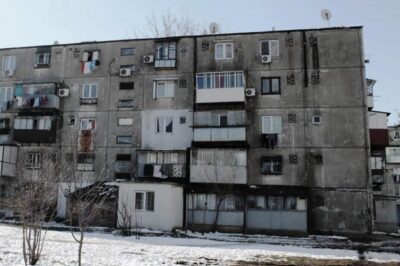
Troubled – Notorious Neighborhood – area known for social issues
Read our review →

Slavery in Romania Myths and Truths About Gypsies
Read our review →Browse the lists this tour appears in