
Reviewed · ALTERNATIVE BUCHAREST TOURS
Slavery in Romania Myths and Truths About Gypsies
Bucharest’s grand buildings tell only part of the story. This walking tour connects the history of Roma enslavement with Romanian politics, education, World War II persecution, and living craft traditions. Guide Mihai brings the subject to places you might otherwise pass without much thought.
I like the route’s mix of major landmarks and quieter social history, especially the stop at the Holocaust Memorial. I also like that the walk ends at Mesteshukar ButiQ, where Roma-made jewelry and crafts give the subject a present-day human face. The main drawback is the price: $127.37 is a serious sum for a three-hour walk with no admission tickets included.
Key points to know before booking
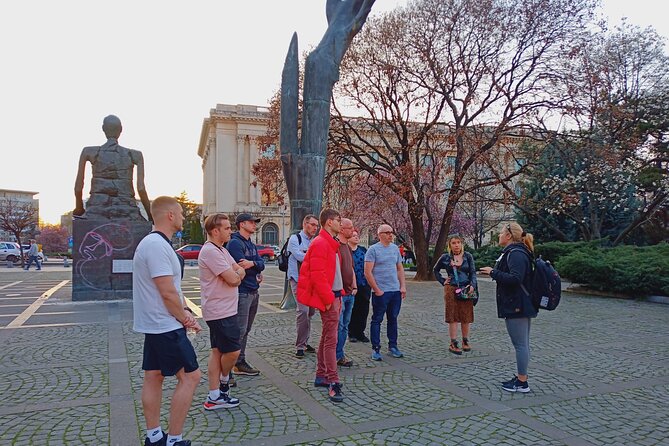
- Roma history in central Bucharest: The tour uses the Athenaeum, Stirbei Palace, Cismigiu Park, and other city landmarks to explain a story often left out of standard sightseeing.
- A thoughtful wartime stop: The Holocaust Memorial provides time to learn about the persecution of Roma during World War II and what is called the Forgotten Holocaust.
- Guide Mihai leads the walk: The experience is offered in English and has a maximum of 15 people, making discussion easier than on a large coach tour.
- Mostly outdoors and on foot: The route lasts about three hours, with walking between stops and a moderate fitness level required.
- A craft-shop finish: Mesteshukar ButiQ displays handmade pieces created by Roma craftspeople and gives the tour a practical connection to present-day culture.
- Free cancellation with a deadline: You can receive a full refund if you cancel at least 24 hours before the local start time.
Why this Bucharest walk tells a different story
Many first visits to Bucharest focus on grand architecture, royal connections, communist-era buildings, and lively streets. This tour uses some of those same places, but asks different questions. Who lived under forced servitude? Which politicians wrote about Roma communities? How did education shape modern Romania? What happened to Roma people during World War II? What does Roma culture look like today?
That approach gives the walk a clear purpose. You are not simply checking off eight sights. You are following a historical thread across central Bucharest, from political power and social prejudice to memory, education, and skilled handwork.
The subject is serious, but the format is not a museum lecture. You walk through public spaces, pause at monuments and buildings, and have time to look around. The route also includes Cismigiu Park, which offers a welcome change of pace between the more difficult historical stops.
Other tours off the usual route in Bucharest:
- Bucharest: Alternative Sightseeing 2.5-3h-Hour Guided Tour
★ 4.9 · 80 reviews - Bucharest Alternative Walking Tour
★ 4.9 · 63 reviews - Slavery in Romania,Myths and Truths on Gypsies, Walking Tour
★ 4.9 · 42 reviews
Starting near Piața Amzei and the Romanian Athenaeum
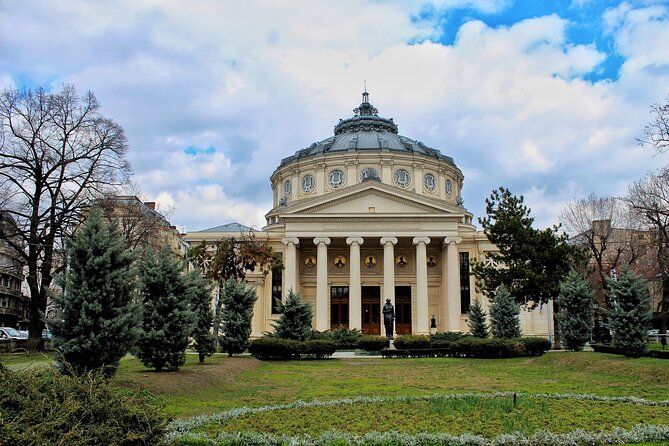
The meeting point is Teatrul Ion Creangă, Sala Mare, at Strada Piața Amzei 13. The walk begins at 10:00 a.m., and the first stop is the Romanian Athenaeum.
The Athenaeum is known as Romania’s House of Art and houses the National Romanian Philharmonic. Its grand setting makes a useful opening point because it places the discussion inside the cultural and political center of Bucharest. The tour uses the building to show that every national story has an artistic and public side, including the story of Roma people.
You have about 20 minutes here, and admission is free. That does not mean you enter every site on the route, so think of the Athenaeum as an exterior or area-based stop unless the guide says otherwise. Its value comes from the explanation around it, not from a paid interior visit.
I like beginning here because the setting is familiar to many city visitors, yet the subject is not the usual architectural commentary. You get a major Bucharest landmark while learning how national identity can leave some groups out of the main version of history.
Iuliu Maniu, Barbu Stirbey, and the politics around Roma life
The next stops shift toward political history. At the Iuliu Maniu statue, you meet an important figure in Romania’s political life. The tour connects Maniu to both the Roma story and the development of modern Romania.
This is a short 20-minute stop, but it helps show that Roma history is not separate from the country’s wider political history. Laws, public attitudes, and ideas about citizenship were shaped by people and institutions like these. A statue that might otherwise receive only a passing glance becomes a prompt for a much wider discussion.
Palatul Stirbei follows, with another 20-minute stop. The palace was the home of Barbu Stirbey, one of the rulers of Wallachia. This section reaches back into the 19th century and adds a ruling-class setting to the tour’s story.
The contrast matters. You move from a public political figure to a residence associated with Wallachian power. The tour’s focus on Roma enslavement becomes easier to place when you see how the lives of rulers, politicians, and marginalized communities were connected within the same society.
You should expect these stops to be explanation-heavy rather than activity-heavy. There is no entrance fee listed, and the tour is not built around entering grand interiors. If you want a history walk that makes Bucharest’s streets function as a classroom, that is a strength. If you want several indoor attractions, you may find the format limited.
Cismigiu Park gives the walk room to breathe
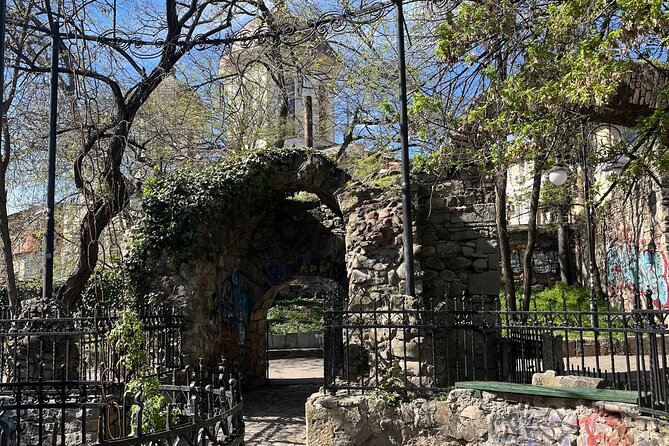
After the political and aristocratic settings, the route moves into Cismigiu Park for about 30 minutes. It is described as Bucharest’s largest and most beautiful garden, and the park gives you a more relaxed stretch of walking.
The guide makes several stops here. These include a famous high school, the ruins of an old monastery, a viewpoint over the park, and other points connected to the tour’s subject. The park is not just a scenic break. It helps show how education, religion, public space, and memory fit into the larger story.
The pacing should feel more varied here. You are walking rather than standing at one monument after another, and the garden provides a chance to reset before the Holocaust Memorial. I like that the route does not keep the difficult material in one unbroken block.
You should wear comfortable shoes. The tour lasts about three hours, and the time between the listed stops is used for walking. The description calls for a moderate physical fitness level, so this is not the best pick if you need a seated or vehicle-based experience.
Same base, a completely different day:
- Bucharest: Dracula’s Castle, Peles Castle, & Brasov Old Town
★ 4.5 · 17,858 reviews - Bucharest: Dracula Castle, Peles Castle & Brasov Old Town
★ 4.6 · 10,891 reviews - Bucharest: Dracula’s Castle, Peleș Castle & Brașov Day Trip
★ 4.5 · 5,919 reviews - Bucharest: Palace of Parliament Tickets and Guide
★ 4.3 · 3,182 reviews
Education at Gheorghe Lazăr National College
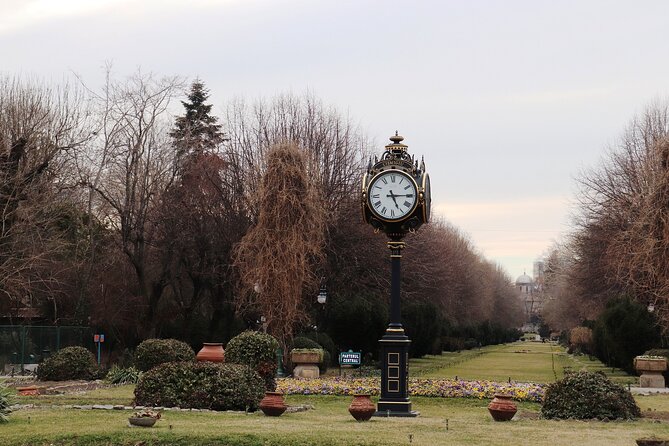
At the entrance to Cismigiu Park, the walk pauses for 15 minutes at Gheorghe Lazăr National College. The school is described as one of the best-quoted high schools in Bucharest, and the guide uses it to make a simple point: education can change what is possible for individuals and communities.
This stop is brief, but it gives the tour an important present and future focus. The earlier stops deal with rulers, politicians, and historical suffering. Here, the subject becomes access to learning and the role education can play in improving lives.
The school also works well in the route because it is not an isolated museum display. It is part of the city’s active public space, right by the park entrance. You see how history and daily life sit close together in Bucharest.
Do not expect a school visit or a classroom presentation. The value is in the connection the guide makes between the building and the wider idea of education as a key to social change.
The Holocaust Memorial and the Forgotten Holocaust
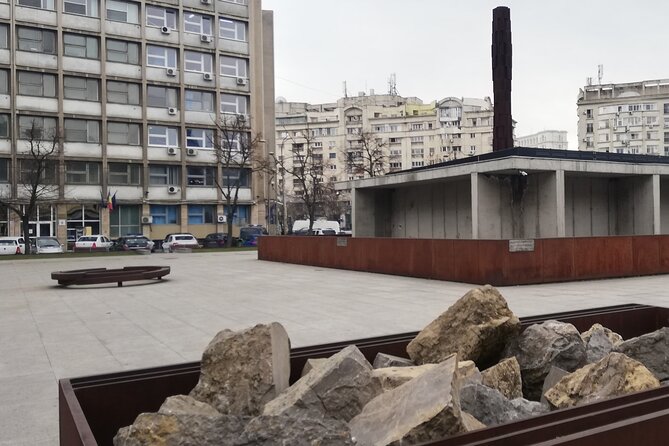
The most serious part of the tour comes at the Holocaust Memorial. You spend about 15 minutes learning about the persecution of Roma people during World War II and the subject known as the Forgotten Holocaust.
The memorial is described as the most significant monument built in memory of the Holocaust victims in Romania. That makes this more than another historical marker. It is a place to stop, look, and consider how public memory is built, and whose suffering receives attention.
I consider this one of the most valuable stops because it prevents the tour from treating Roma history only as a distant issue involving slavery and old political structures. The Roma experience during World War II shows that discrimination and mass violence continued into the modern era.
The time here is short, especially given the weight of the subject. Still, the stop has a clear place in the route. If you want to spend a long period at the memorial, you may need to return on your own after the tour. The walk gives you an introduction and historical context rather than an extended memorial visit.
Mihail Kogălniceanu and the written record
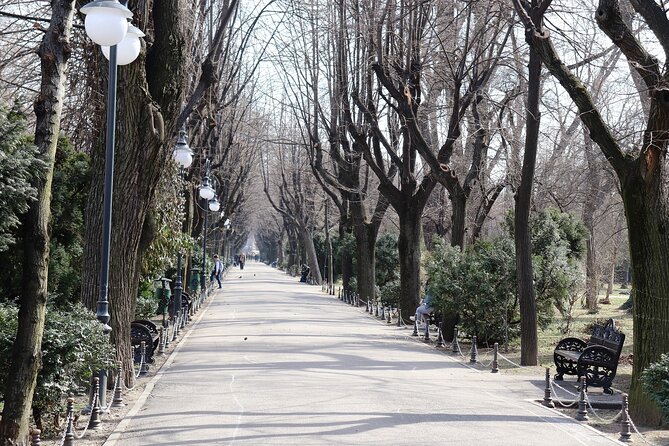
At Piața Mihail Kogălniceanu, you spend about 10 minutes considering Mihail Kogălniceanu, a major Romanian politician and writer. He is also identified as the first person to write about Romanian Roma people.
This is the shortest scheduled stop, but it adds an important layer. The story is not only about monuments, rulers, and persecution. It is also about who recorded events and how Roma people appeared in Romanian political and literary writing.
A short pause here can help you pay attention to the power of words. Historical writing can preserve information, shape public opinion, or leave communities at the edge of the national story. The guide uses Kogălniceanu to place written history inside the tour’s larger argument.
Since the walk has eight stops, short visits are necessary. You should expect the guide to keep the group moving rather than spend a long time at every location.
Finishing at Mesteshukar ButiQ
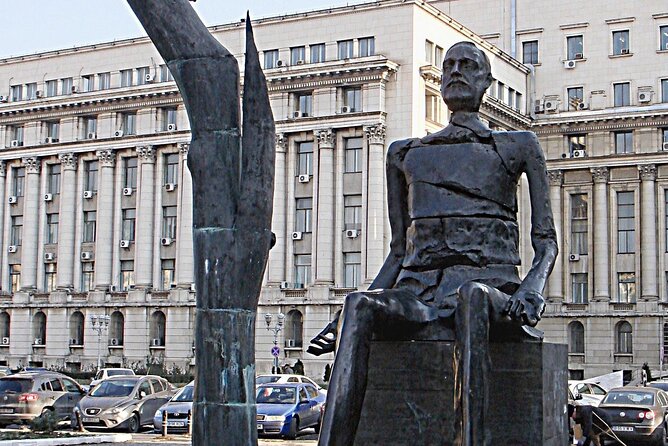
The final stop is Mesteshukar ButiQ, a small shop at Bulevardul Mihail Kogălniceanu 12. The tour ends here after about 20 minutes at the shop, and this is one of its most distinctive features.
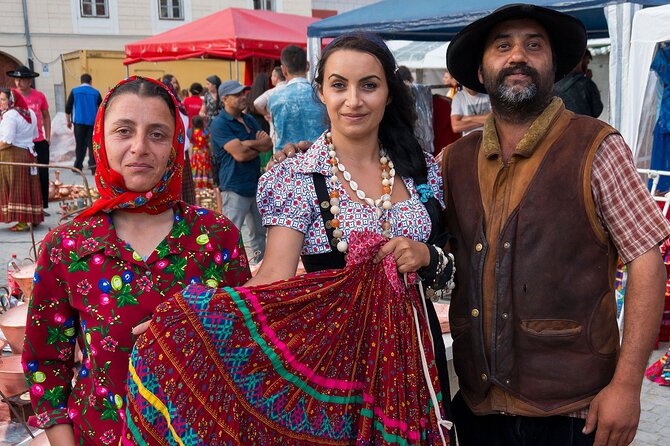
Mesteshukar ButiQ presents authentic handmade pieces made by Roma craftspeople. You can see jewelry and other crafted items, and the stop gives you a direct connection to Roma skill, tradition, and work in the present day.
This ending is smart. After hearing about enslavement, political exclusion, and wartime suffering, you finish with creativity and economic activity. The Roma story is not frozen in the past. It includes working artists and craftspeople producing items today.
The shop also gives you a more tangible memory of the walk. You may not remember every political name, but you are likely to remember seeing the quality and character of handmade pieces in a place connected to Roma makers.
The tour does not state that a purchase is required or included. If you want to buy something, plan for that as a separate expense. The stop is still worthwhile if you only browse and listen.
What the $127.37 price really covers
At $127.37 per person, this is an expensive walking tour by ordinary Bucharest sightseeing standards. There are no admission tickets included because the listed stops are free, and coffee or tea during the short break is also at your own expense.
So what are you paying for? Mainly, you are paying for a specialized three-hour history walk in English, a small maximum group of 15, a professional guide, and a subject that is difficult to explore through standard sightseeing. The included cake snack is a small extra, not the main reason to book.
The value depends on your interest. If you want a broad introduction to Bucharest’s main attractions, the price may feel too high. You can see many of these places independently. If you want a focused discussion of Roma history, slavery, World War II persecution, and cultural identity, the guide’s interpretation is the central product.
The small group size helps here. Fifteen people is not private-tour intimacy, but it is manageable for a walking discussion. It also makes it easier to hear the guide and ask questions than it would be in a large group.
Who will get the most from this experience
I would choose this tour if you enjoy social history, public memory, and city walks that go beyond famous buildings. It suits you especially well if you want to understand Romania through the experience of a minority community rather than through royal or communist history alone.
It is also a good fit for visitors who have already seen some central Bucharest sights. The Athenaeum, Cismigiu Park, and the central squares will be more meaningful when you hear the connections between them.
You may want to skip it if you prefer a relaxed sightseeing stroll with little serious discussion. The subject includes enslavement, Holocaust persecution, and discrimination, so the tone is not light throughout. The walking itself is moderate, but standing and moving between several stops for three hours requires suitable shoes and reasonable mobility.
The experience is offered in English. Service animals are allowed, and the route is near public transportation. Confirmation is provided at booking. For cancellation, you can receive a full refund if you cancel at least 24 hours before the 10:00 a.m. start time. Changes or cancellations inside that window are not accepted for a refund.
Should you book this Roma history walk?
Book it if you want a focused, human-centered history of Bucharest and are willing to pay for specialist guiding rather than entry tickets. The strongest parts are the thoughtful route, the Holocaust Memorial, the education theme, and the final stop at Mesteshukar ButiQ.
The price is the key question. You are not buying a museum pass or a private guide. You are buying a compact English-language lesson in Roma history, delivered while you walk through central Bucharest. For the right audience, that focus makes the cost reasonable. For a first-time visitor seeking a standard city overview, it probably does not.
FAQ
How long does the tour last?
The tour lasts approximately three hours, including walking between the listed stops.
What time and where does the tour begin?
It begins at 10:00 a.m. at Teatrul Ion Creangă, Sala Mare, Strada Piața Amzei 13, Bucharest.
Where does the tour finish?
The tour ends at Mesteshukar ButiQ, Bulevardul Mihail Kogălniceanu 12, Bucharest.
Is the tour offered in English?
Yes. The experience includes a professional English-speaking guide.
What is included in the price?
A professional English-speaking guide and a cake snack are included.
Are coffee and tea included?
No. The tour includes a short stop where you may purchase coffee or tea, but those drinks are not included.
How many people can join the tour?
The group can include a maximum of 15 people.
Just added around Bucharest
- Winery touring & private wine tasting – one day private tour★ 5.0 · 3 reviews
- Village Museum Bucharest Guided Tour★ 5.0 · 6 reviews
- Bucharest: Dealu Mare Winery Private Trip with Wine Tasting★ 4.9 · 6 reviews
- Traditions in Bucharest: Village Museum and Wine Tasting★ 5.0 · 8 reviews
- Transylvania Tour: Dracula’s Castle, Peles Palace & Brasov★ 5.0 · 19 reviews
- Airport Henri Coanda (Otopeni) to Bucharest – Private Transfer – Driver★ 5.0 · 5 reviews
- Gems of Transilvania: Brasov,Sighisoara,Sibiu,Viscri and more★ 5.0 · 6 reviews
- Discover Medieval Transylvania Small Group Tour – 7 days★ 5.0 · 4 reviews
Alternative Bucharest Tours, compared.
Slavery in Romania,Myths and Truths on Gypsies, Walking Tour
Read our review →
Alternative Bucharest: 2.5-3 Hours Walking tour (Small groups)
Read our review →
Troubled – Notorious Neighborhood – area known for social issues
Read our review →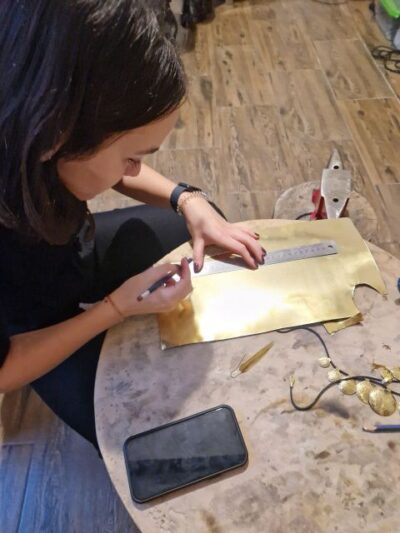
Browse the lists this tour appears in