
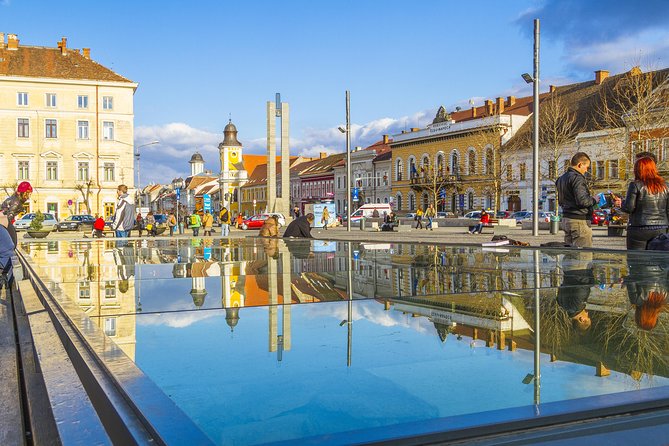
Reviewed · WALKING TOURS
Cluj-Napoca Walking City Tour
Cluj-Napoca reveals itself best on foot, where Gothic stonework, Baroque facades, and busy city streets sit close together. This two-hour walk gives you a useful first look at the city, with a guide explaining how Romanian, Hungarian, and Saxon influences shaped its center.
I like the small group of up to 10 and the way the route moves through several periods instead of treating Cluj as a row of disconnected sights. I also like the viewpoint at the end, which helps you understand the city’s layout. The main consideration is that this is a walking tour with no meal or attraction fees included, and it is not suitable for wheelchair users.
Key points at a glance
- Museum Square sets the scene: Begin near the Franciscan Church and the Art Museum in one of Cluj’s most atmospheric historic spaces.
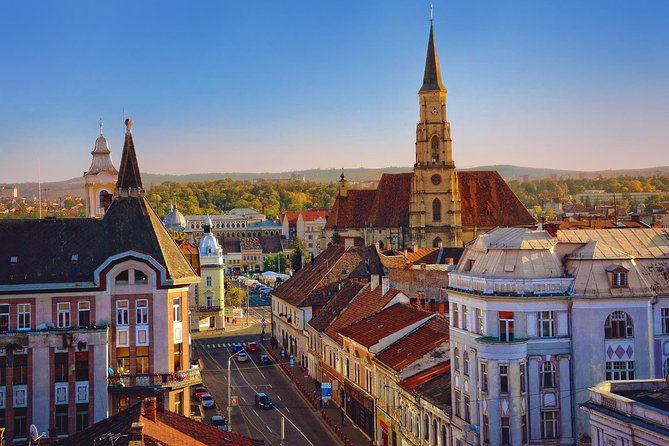
- St. Michael’s Church is the visual centerpiece: See the Gothic church in Union Square and hear how it fits into the city’s changing story.
- Banffy Palace adds Baroque grandeur: The palace now houses the National Art Museum, linking architecture with Cluj’s cultural life.
- The route connects many influences: Romanian, Hungarian, and Saxon details appear in the buildings, streets, and stories.
- Guides bring the city to life: Adrian and Catalin have been praised for clear explanations, humor, local detail, and thoughtful answers.
- The final view gives useful perspective: The route ends at a location overlooking the city, with the Fireman Tower specifically praised as a memorable stop.
Starting at Museum Square
The tour begins in front of the Obelisk, a practical meeting point in the historic center. From there, you move into Museum Square, where the Franciscan Church and the building that houses the National Art Museum establish the tone right away.
This is a good starting place because it gives you more than a quick photo stop. The square brings together religious, artistic, and civic parts of Cluj’s past. Your guide uses the setting to explain how the city grew and how different cultural groups left their mark on its streets.
I like tours that start with context rather than rushing to the biggest monument. Here, the opening section helps you read the rest of the city. Once you understand why the center contains several architectural styles side by side, later stops become easier to appreciate.
The guide also uses visual material during the walk. That can be useful when discussing earlier versions of buildings or people connected with them. You are not expected to absorb a long lecture while standing in the street. Instead, the images help connect the present-day city with earlier periods.
Other guided walks in Cluj Napoca:
- Cluj-Napoca: 2.5-Hour Guided Walking Tour
★ 4.8 · 104 reviews - Cluj-Napoca: 2.5-Hour Guided Walking Tour
★ 4.5 · 29 reviews - Cluj-Napoca Walking City Tour
★ 4.5 · 16 reviews
Banffy Palace and Cluj’s art scene
Banffy Palace is one of the tour’s major architectural stops. Its Baroque design gives you a clear contrast with the Gothic lines of St. Michael’s Church, and the palace now houses the National Art Museum.
You should not expect a full museum visit as part of the two-hour experience. The tour focuses on the building and its place in Cluj’s cultural story. Photography fees are not included, and meals are not part of the booking, so this is best viewed as an outdoor city walk rather than a museum package.
Still, the stop matters. Banffy Palace shows how Cluj’s center changed over time, as grand civic and cultural buildings joined older religious structures. A good guide can make that shift easy to see, especially when pointing out details you might otherwise walk past.
The palace also gives the tour a useful balance. You are not only hearing about medieval churches and old streets. You are also seeing how art and public culture became part of the city’s identity.
St. Michael’s Church in Union Square
St. Michael’s Church is likely to be the visual high point of the central section. Its Gothic form gives Union Square a strong sense of place, and the church helps explain why Cluj’s historic core cannot be reduced to one national or architectural story.
The tour places the church within a wider timeline. Rather than simply admiring the facade, you hear how later cultural layers were added around it. That approach is valuable because Cluj can look confusing at first glance. A Gothic church, a Baroque palace, and later public buildings may seem like unrelated sights until someone shows you the sequence.
You will want comfortable shoes here and throughout the walk. The distance is not described as strenuous, but the experience takes place entirely on foot and moves through old streets and public squares. This is not the right choice if you need a wheelchair-accessible route.
The English-speaking guide also leaves room for questions. Catalin was praised for clear explanations, amusing historical stories, and a friendly manner. Adrian was described as offering an engaging introduction to Cluj’s cultural and historical setting while also noticing small local details. Since the guide may vary, you should treat those names as examples rather than a guarantee.
Walking through Romanian, Hungarian, and Saxon Cluj
The old town is where the tour’s theme becomes clearest. As you move through the streets, the guide points out Romanian, Hungarian, and Saxon influences in both architecture and local culture.
This is one of the strongest reasons to book a guided walk instead of exploring only with a map. A map can show you where the major buildings are. It cannot easily explain why the center feels layered, or how different communities shaped the same streets over time.
The stories also seem to be a major part of the experience. The guide does not only recite dates. The route includes anecdotes about people from Cluj’s past and present, along with details that make ordinary corners easier to remember. The best moments on a city walk often come when a guide turns an overlooked doorway, tower, or street plan into part of a larger story.
You should expect a lively introduction, but not an exhaustive study of the city. Two hours is enough to get your bearings and understand the main themes. It is not enough to cover every neighborhood, museum, or historical period in detail.
That limit is actually useful for a first visit. You finish with a clear sense of what deserves more of your time, rather than spending your whole day inside a single historical explanation.
Same base, a completely different day:
- Curly Tour – Day trip from Cluj 🙂
★ 5.0 · 330 reviews - Cluj: Turda Salt Mine, Corvin Castle, Alba Carolina Tour
★ 4.8 · 184 reviews - From Cluj: Turda Salt Mine, Gorge, and Remetea Full-Day Trip
★ 5.0 · 84 reviews - Turda salt mine 4h tour from Cluj
★ 5.0 · 73 reviews
The Cluj National Theatre and later city layers
The route also includes the Baroque-style Cluj National Theatre. This stop adds another period to the walk and shows how the city continued to develop beyond its medieval center.
The theater is important in the tour’s chronological structure. You begin with older religious and civic landmarks, then see how later cultural institutions added new purpose to the city. That progression helps you understand Cluj as a living place, not a preserved museum district.
I appreciate this kind of route because it avoids a common problem with short city tours. Many simply list famous buildings and move on. Here, the guide aims to explain how one layer followed another, and why the center contains such a broad mix of styles.
The theater also helps broaden the experience beyond churches and palaces. Cluj’s identity is tied to education, art, performance, and public life, and the route makes room for those subjects.
Finishing with a view over the city
The walk ends at a location with a notable view of Cluj-Napoca. One particularly praised stop is the Fireman Tower, where you can look down over the city from above.
A viewpoint is a smart way to finish. After walking through compact squares and narrow streets, you get a chance to see how the center fits together. The view can help you place the landmarks you have just visited and decide which areas you want to explore next.
The Fireman Tower was described as a memorable highlight, giving a bird’s-eye view of the city. The available information does not state that every departure uses the exact same final stop, so you may want to confirm the planned viewpoint when booking or meeting your guide.
This final perspective also makes the tour feel more complete. You begin at street level with individual buildings and finish by seeing the city as a whole. It is a practical ending for anyone arriving in Cluj without a firm sense of direction.
What the guide adds to the experience
The guide is the main reason to choose this walk over a self-guided circuit. The route itself covers well-known sights, but the value comes from the explanations between them.
Adrian has been praised for giving a thoughtful introduction to Cluj’s cultural and historical setting while drawing attention to small local features. Catalin has been praised for being clear, approachable, and willing to answer personal questions. He also uses humor and anecdotes, which can make a difficult or unsettled period of history easier to follow.
One useful feature is the guide’s ability to discuss Romania’s complicated past without reducing it to a few simple slogans. You hear about the country and its history while also seeing how Cluj remains current and active. That combination helps correct the outdated idea that historic Romanian cities are only quiet relics.
The group limit of 10 participants should make it easier to hear the guide and ask questions. It also gives the walk a more personal feel than a large coach-based tour. The tradeoff is that the experience depends heavily on the individual guide’s style and on the pace of the group.
Is $62 a fair price?
At $62 per person, this is not the cheapest way to see Cluj’s center. The booking covers a two-hour guided walk with a professional English-speaking guide, but it does not include food, museum admission, or photography fees.
I would judge the price by what you want from the first two hours of your visit. If you only need a list of landmarks and are happy to read about them yourself, the cost may feel high. If you want a compact explanation of Cluj’s mixed cultural background, a small group, and a guide who can answer questions, the price is easier to justify.
The strongest value comes from the route’s range. In two hours, you see Museum Square, the Franciscan Church, Banffy Palace, St. Michael’s Church, Union Square, the National Theatre, old streets, and a city viewpoint. You also get a framework for understanding the architecture rather than simply photographing it.
There are a few practical limits. You will need to pay separately for any meals or applicable photography charges. The tour does not promise extensive interior visits, so you should not book it expecting a museum tour or a series of private admissions.
For a first morning or afternoon in Cluj, I think the price can work, especially if you value a small group and a strong English-language explanation.
Who should book this walking tour?
I would recommend it most strongly to first-time visitors who want to understand Cluj quickly. It also suits people interested in architecture, Central and Eastern European history, cultural mixing, and urban stories that do not fit neatly into one national label.
The walk is a good fit if you enjoy asking questions. The guides have been praised for responding to individual interests, and the group size should support that. It also works well for visitors with only a short stay who want an introduction before choosing which museums or neighborhoods to explore alone.
You should think twice if you dislike walking, need step-free access, or want a tour built around food. Pets are not allowed, and wheelchair users are specifically advised against booking.
It may also be less suitable if you want a highly detailed museum experience. The National Art Museum appears as part of the route through Banffy Palace, but the focus is on the city streets, buildings, and stories rather than a full art collection visit.
Practical advice before you go
Wear comfortable shoes. That is the one item specifically recommended, and it matters because the tour moves continuously through the historic center.
Meet the guide in front of the Obelisk. Check the available starting times before booking, since the activity lasts two hours and departure times can vary.
Because there are no meals included, plan to eat before or after the walk. You may also want to allow extra time after the tour for the National Art Museum or another sight that catches your attention, but any admission would be separate.
The cancellation policy is flexible: you can cancel up to 24 hours in advance for a full refund. You can also reserve now and pay later, which helps if your schedule in Romania is still changing.
Final verdict: book it for context, not just monuments
I would book the Cluj-Napoca Walking City Tour if I wanted a clear first look at the city and a guide who could explain its mixed cultural identity. The combination of Museum Square, Banffy Palace, St. Michael’s Church, the National Theatre, old streets, and a final viewpoint gives you a useful two-hour outline.
The main reason to choose it is the guide-led storytelling. Adrian and Catalin have both been praised for clarity, humor, local detail, and an openness to questions. Just remember that this is a walking introduction, not a meal tour, museum visit, or wheelchair-accessible excursion.
If $62 fits your budget and you are comfortable on foot, this is a sensible way to get oriented before exploring Cluj on your own.
FAQ
How long is the Cluj-Napoca Walking City Tour?
The tour lasts two hours.
What language is the tour conducted in?
The tour is conducted in English by a live English-speaking guide.
Where does the tour meet?
You meet the guide in front of the Obelisk.
What sights are included on the route?
The route includes Museum Square, the Franciscan Church, Banffy Palace, St. Michael’s Church, Union Square, the Cluj National Theatre, historic streets, and a location with a city view.
Is the National Art Museum included?
Banffy Palace, which houses the National Art Museum, is part of the walking route. The provided information does not state that museum admission is included.
How many people are in the group?
The group is limited to 10 participants.
What does the $62 price include?
The price includes a professional English-speaking guide. Meals and photography fees are not included.
What should I bring?
Bring comfortable shoes for walking through the historic center.
Can I cancel the booking?
Yes. You can cancel up to 24 hours in advance for a full refund. You can also reserve now and pay later.
Just added around Cluj Napoca
- Turda Salt Mine, Gorge & Rimetea Village (private from Cluj)★ 5.0 · 5 reviews
- Private tour to Turda Salt Mine, Rimetea and Alba Iulia★ 4.8 · 5 reviews
- Turda salt mine and Corvin Castle day tour from Cluj★ 5.0 · 9 reviews
- Two days tour to Bucovina & UNESCO Painted Monasteries★ 5.0 · 3 reviews
- Transylvania: Dracula’s Castle and Birthplace Tour★ 4.5 · 28 reviews
- Turda Gorge, salt mine and Rimetea village private tour★ 5.0 · 12 reviews
- Turda salt mine, Rimetea village and Alba Iulia, from Cluj★ 5.0 · 11 reviews
- Sighisoara, UNESCO & wine tasting (1 day, from Cluj)★ 5.0 · 4 reviews
Walking Tours, compared.
Ghost Stories & Romanian Mythology Walking Tour
Read our review →
Walking Tour- Delightful Bucharest (Highlights, Stories, Sights)
Read our review →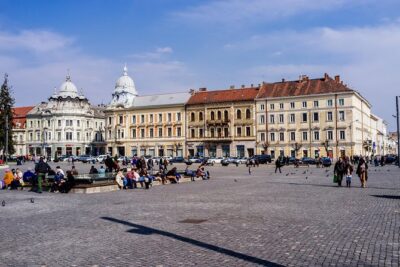
Browse the lists this tour appears in