
Reviewed · MEDIEVAL TOWNS & FORTIFIED CHURCHES
Sighisoara, UNESCO & wine tasting (1 day, from Cluj)
Sighisoara gives you one of Transylvania’s best medieval scenes in a single, walkable citadel: colored houses, defensive towers, a covered stairway, and the tall Clock Tower watching over it all. Biertan adds a fortified church and a closer look at the Saxon communities that shaped this part of Romania. The day ends with three local wines from the Tarnava region.
I like the small group limit of seven people, which makes a long day in a minibus feel more personal and leaves room for questions. I also like the mix of famous sights and local detail, from Vlad the Impaler legends to the ingenious lock on Biertan’s sacristy door. The main drawback is the pace: about 12 hours on the road and up to 500 stairs, with lunch and the Sighisoara Clock Tower ticket costing extra.
Key points to know before booking
- Sighisoara is the main event: Explore a remarkably preserved medieval citadel, climb the Covered Staircase, and see the Clock Tower from outside or above.
- Biertan adds real historical depth: Its fortified church reveals how Transylvanian Saxons worshipped, defended their villages, made wine, and handled marriage customs.
- The wine stop is focused and local: Taste three aromatic white wines from the Tarnava area, including styles made from Feteasca Alba, Feteasca Regala, and Riesling.
- The group stays small: The maximum is seven people, a useful advantage on a full-day road trip.
- Walking is not optional: Expect cobblestones, hills, uneven surfaces, standing, and as many as 500 stairs, many without handrails.
- The guides shape the experience: Joseph and Geta are specifically associated with warm, flexible guiding and strong knowledge of Romanian and European history.
Why this Cluj day trip works
Cluj-Napoca is a good base for exploring Transylvania, but some of the region’s most memorable places sit well beyond the city center. Sighisoara and Biertan give you two very different views of the past. One is a living medieval town with towers and narrow lanes. The other is a village dominated by a church built to withstand attack.
The day lasts roughly 12 hours and begins at 8:30 a.m. You travel by private vehicle or minibus, with fuel, road taxes, and parking covered. The small group size matters here. You are not just being moved between stops. You have a guide who can explain why the buildings look the way they do and how Romanian, Saxon, and medieval European stories overlap.
I would book this for a first visit to Transylvania if you want the major sights without arranging several separate trips. It is less suitable if you prefer a slow morning, long museum visits, or a great deal of free time in each town.
Other medieval town trips in Cluj Napoca:
- Transylvania Gems: Sighisoara, Medias, Biertan & Gypsy life
★ 4.9 · 29 reviews - Sighisoara and Biertan: UNESCO in Transylvania
★ 5.0 · 27 reviews - Transylvania Gems: Sighisoara, Medias, Biertan & Gypsy Encounter
★ 4.5 · 14 reviews
Sighisoara’s citadel and its nine surviving towers
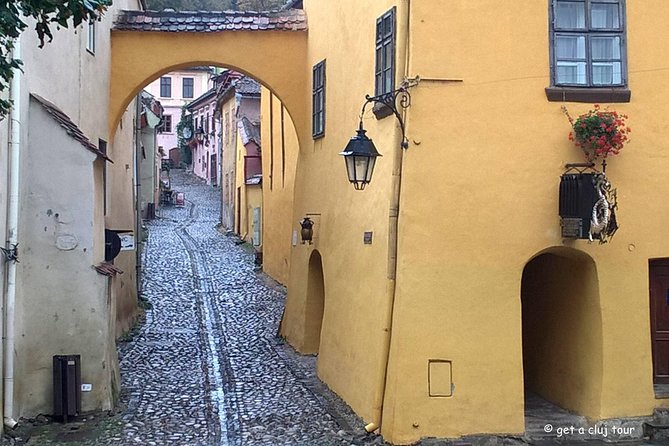
The first major stop is Sighisoara’s historic center, a fortified hilltop citadel that is still inhabited. Nine of the original fourteen defense towers remain, giving the town a strong sense of place without turning it into an open-air ruin.
You will walk through colored medieval streets and pass houses that still feel like part of a working town. The attraction is not one single monument. It is the way the walls, towers, homes, stairways, and church fit together.
The guide adds useful context about medieval Transylvania and the dangers that shaped these defenses. Fortified towns and churches were not built for decoration. They were practical refuges in a region that faced repeated conflict, including Mongol invasions and later attacks.
Sighisoara also carries the Dracula connection. Vlad the Impaler, the historical figure linked to the Dracula legend, was born in the town, though the modern vampire story is much larger than the historical record. A good guide can keep the folklore entertaining without letting it replace the actual history.
You have about two hours here. That is enough to see the main sights and walk the old streets, but not enough for every museum, side lane, and tower. Keep your expectations realistic. This is a guided overview with time for the strongest sights, not a full day in Sighisoara.
The Covered Staircase and Church on the Hill
One of the most distinctive parts of the visit is the Covered Staircase, a timber-roofed passage leading uphill to the Church on the Hill. The staircase protects walkers from bad weather and makes the climb feel like a small medieval ritual.
It also makes the physical demands of the tour clear. The complete day includes two to three hours of moderate walking, plus stairs and periods of standing. Surfaces range from paved paths to cobblestones and uneven or slippery sections. Some city hills are steep, and many stairs have no handrail.
You can skip some steps if needed, but that may limit access to certain sights. If you want to climb the Clock Tower or reach every part of the citadel, comfortable shoes and steady footing will help. The tour is not designed for someone who wants to avoid hills and stairs.
The Church on the Hill gives the route a clear destination and helps you see how Sighisoara grew around its high defensive position. Even if you choose not to climb every available stair, the streets and lower sections of the citadel still offer plenty to see.
The Clock Tower and the price of the view
The Clock Tower is Sighisoara’s signature landmark. From its upper levels, you can look over the rooftops, towers, and surrounding countryside. Medieval guards once used the tower as a lookout, and today it provides the best high view of the citadel.
Admission is not included, so treat the climb as an optional extra rather than a guaranteed part of the package. The tower is closed on Mondays, which is important when choosing your date. If the panoramic view is a priority, check the day of the week before booking.
The tour does not include every entry ticket in Sighisoara. Biertan’s fortified church admission is included, but the Clock Tower is not. That arrangement keeps the basic price clear, though you should carry some extra money for optional admission, lunch, drinks, and personal expenses.
Other medieval towns and Saxon churches from Cluj Napoca:
- Saxon Heritage in Transylvania: Day Trip from Cluj-Napoca
★ 4.5 · 6 reviews - Sighisoara & wine tasting (from Cluj)
★ 5.0 · 4 reviews - CJ05 – Mysteries of Transylvania: Bran Castle & Sighisoara
★ 4.8 · 3 reviews - Peles Castle, Dracula’s Castle and Medieval Town of Brasov in one day
★ 4.5 · 241 reviews
Biertan’s fortified church and Saxon traditions
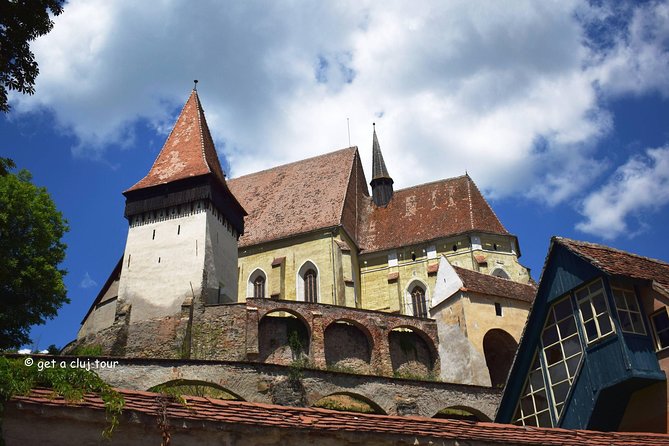
After Sighisoara, the route continues to Biertan, a village crowned by a fortified church. The church is a UNESCO World Heritage Site and served as the seat of the Transylvanian Evangelical bishop for almost 300 years.
This stop gives the day more substance than a simple photo visit. You learn about the Transylvanian Saxons, German-speaking settlers who helped shape local towns, farming, defense, architecture, and winemaking. The church’s walls and towers show how religious buildings also served as places of refuge.
Biertan is especially good for understanding how daily life and defense were tied together. Villages needed places where families could shelter during danger, store supplies, and maintain community traditions. The fortified church gives those ideas a physical form that is easy to understand as you walk through it.
Look for the 16th-century sacristy door, known for its intricate locking system. It is a small detail, but it captures the practical skill behind the building. This is the sort of feature that can disappear if you visit without a guide or rush through the grounds.
The guide also covers local customs, including winemaking and marriage traditions. Those details help connect the church to ordinary life rather than treating it only as an old monument.
Lunch is taken at a local restaurant after the Sighisoara visit and before Biertan. Your meal and drinks are not included, so budget separately. The exact length of the meal can affect the day’s timing, especially when traffic or personal interests stretch the schedule.
The Tarnava wine tasting
The final stop takes you through Transylvanian plains and villages toward the Tarnava wine area. The region has a cool climate, rolling hills, and conditions suited to crisp, aromatic white wines.
The tasting includes three varieties and palate cleansers. The wines may include Feteasca Alba, Feteasca Regala, and Riesling, all associated with fresh, high-acid styles and floral or fruity notes. This is not presented as a grand winery production tour. It is a compact tasting that gives you a way to connect the region’s farming traditions with the older Saxon influence on viticulture.
I like this addition because it changes the rhythm of the day. After stone walls, stairs, and medieval stories, you get a quieter way to experience the area. The tasting also gives you a better sense of why wine belongs in the story of Transylvania, rather than feeling like a random extra.
The tasting is for adults aged 18 and over. It can be skipped on private tours, which may suit families or anyone who would rather spend more time at the historic stops. The duration listed for the wine stop is about two hours, though the full tour length remains approximate.
Transport, group size, and guide style
The tour uses a private vehicle or minibus, with transport costs included. The maximum group size is seven, a strong point for a long day involving several stops. A small group makes it easier to hear the guide, ask about details, and adjust the pace when possible.
Hotel pickup and drop-off are included only for private tours. For the standard arrangement, confirm the meeting point when booking. The activity begins at 8:30 a.m. and ends back at the meeting point.
The guide can make a major difference. Joseph is associated with clear explanations of Romanian and European medieval history. Geta is described as friendly and flexible, including help for a last-minute booking and extra sightseeing in Cluj after returning to the city. Those details suggest that the guiding style can be responsive rather than rigid, although added stops should never be assumed as part of every departure.
Traffic affects the schedule, and the duration is approximate. You should keep the evening reasonably open instead of booking a fixed dinner reservation immediately after the stated end time.
What the $156.17 price includes
At $156.17 per person, this is not the cheapest way to see Sighisoara. But the comparison should include the driving distance, a full day of transport, an English-speaking guide, parking, road taxes, the Biertan admission, and the three-wine tasting.
The value is strongest if you are staying in Cluj and do not want to arrange a car, navigate rural roads, or piece together separate transport. The guide’s historical explanations are also central to the price. Without them, you would still see attractive buildings, but you would miss much of the meaning behind the fortified churches and Saxon settlements.
The price is less appealing if you already have a car, prefer independent sightseeing, or want to spend most of the day in one place. Lunch, other drinks, the Clock Tower ticket, and personal expenses are extra. Group discounts may be available, so check the final booking price if you are traveling with friends or family.
The tour is often booked well ahead, with an average lead time of about 92 days. That does not mean you cannot find a last-minute place. One guest booked only two days ahead and was accommodated, while another booked four days before arrival and ended up as the only participant. Still, advance booking is sensible during busy periods.
Who should book this experience
I would recommend it to first-time visitors who want a strong introduction to medieval Transylvania in one day. It suits couples, friends, and solo visitors who value historical explanation and do not want to drive.
It also works well for solo travelers. A small group can make a long day feel less isolated, and the guide may be able to tailor explanations more closely. The past solo departures suggest flexibility, but the tour still depends on its minimum number of participants.
You should think twice if you have limited mobility, dislike uneven ground, or cannot manage repeated climbs. Up to 500 steps are possible, many without handrails, and avoiding them can mean missing the Clock Tower or parts of the citadel.
Wine lovers will appreciate the final tasting, while families should note the 18-and-over rule for that portion. If you book a private tour, the wine tasting can be skipped.
Should you book the Sighisoara and Biertan tour?
Book it if you want two major Transylvanian sights plus a local wine tasting without renting a car. The combination is well chosen: Sighisoara supplies the medieval streets and Dracula-era legends, Biertan explains Saxon church life and defense, and Tarnava adds a taste of the countryside.
Skip it if your ideal day has little walking, no stairs, or long unscheduled breaks. Also remember that the Clock Tower ticket and lunch are extra, and Monday visitors cannot climb the tower.
For most active visitors based in Cluj, this is a useful and well-balanced day trip. The strongest reason to choose it is not simply the scenery. It is the chance to understand how Transylvania’s towns, churches, people, and wine traditions fit together.
FAQ
How long is the tour from Cluj?
The tour lasts approximately 12 hours and begins at 8:30 a.m. The exact duration can change with traffic and the amount of time spent at the wine tasting or other stops.
What places does the tour visit?
The main stops are Sighisoara’s historic citadel, the fortified church in Biertan, and a vineyard in the Tarnava region.
Is the Clock Tower admission included?
No. Admission to Sighisoara’s Clock Tower is not included. The tower is closed on Mondays.
Is lunch included in the price?
No. Lunch and drinks other than the included wine tasting are not included. Lunch takes place at a local restaurant between the Sighisoara and Biertan visits.
How much walking and climbing should I expect?
The tour includes about two to three hours of moderate walking on paved paths, cobblestones, uneven or slippery surfaces, and hills. You may encounter up to 500 stairs, many without handrails.
Who can take part in the wine tasting?
The wine tasting is available only to participants aged 18 or older. It includes three wine varieties and palate cleansers, and it can be skipped on private tours.
More wine tours in Cluj Napoca
- Wine Tasting in Bucharest
★ 5.0 · 183 reviews - Peles & Cantacuzino Castles: Gourmet Wine & Cultural Day trip
★ 4.5 · 67 reviews - Private Tour to Salt Mine, Lunch at Winery and Dracula Grave
★ 5.0 · 60 reviews - Half-Day Private Food and Wine Walking Tour Oradea Romania
★ 5.0 · 55 reviews
Just added around Cluj Napoca
- Turda Salt Mine, Gorge & Rimetea Village (private from Cluj)★ 5.0 · 5 reviews
- Private tour to Turda Salt Mine, Rimetea and Alba Iulia★ 4.8 · 5 reviews
- Turda salt mine and Corvin Castle day tour from Cluj★ 5.0 · 9 reviews
- Two days tour to Bucovina & UNESCO Painted Monasteries★ 5.0 · 3 reviews
- Transylvania: Dracula’s Castle and Birthplace Tour★ 4.5 · 28 reviews
- Turda Gorge, salt mine and Rimetea village private tour★ 5.0 · 12 reviews
- Snowshoeing Fun Tour from Cluj Napoca★ 4.5 · 7 reviews
- Turda salt mine, Rimetea village and Alba Iulia, from Cluj★ 5.0 · 11 reviews
Medieval Towns & Fortified Churches, compared.
Peles Castle, Dracula’s Castle and Medieval Town of Brasov in one day
Read our review →
Small Group Tour to Viscri Church Sighisoara Town Rupea Fortress
Read our review →
2-Day Medieval Transylvania with Brasov,Sibiu and Sighisoara Tour from Bucharest
Read our review →
City Tour Sighisoara Legends & Landmarks A Walk Through Time
Read our review →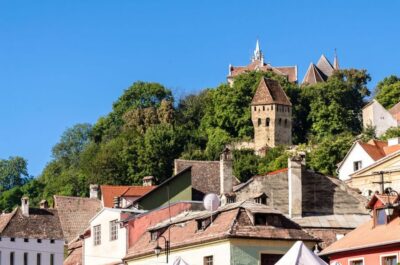
Browse the lists this tour appears in