
Reviewed · ALTERNATIVE BUCHAREST TOURS
Bucharest: The Italian emigration in Romania
Bucharest’s Italian story is easy to miss behind the grand facades, busy streets, and Communist-era scars. This two-hour walk brings that thread into focus, taking you from the Dambovita River along Victory Road to the old town, with stops tied to Italian immigration from the late eighteenth and early nineteenth centuries.
I like the route for two clear reasons: it links major Bucharest landmarks rather than treating immigration as an isolated subject, and it is delivered in Italian by a local guide. The stops at the CEC Palace, Revolution Square, the Athenaeum, and the Italian Church give the story plenty of real-world detail.
The main drawback is practical rather than historical. The meeting point can be confusing, with the office on Bulevardul Natiunile Unite 4 and the actual meeting place in Piata Natiunile Unite about 100 meters away. One booking also reported finding the office without staff or clear signs, so confirm the meeting details before setting out.
Key points to know before booking
- Italian immigration is the central theme: You follow the people and influences that helped shape Bucharest in the late eighteenth and early nineteenth centuries.
- Victory Road is the main stage: The route connects the National History Museum, CEC Palace, Revolution Square, Athenaeum, Italian Church, and old town.
- The tour lasts two hours: It is a focused city walk, not a full-day sightseeing program.
- The guide speaks Italian: Daniel received especially strong praise for his explanations, punctuality, humor, and willingness to adjust the route.
- The meeting point needs care: Meet in Piata Natiunile Unite, 100 meters from the Transylvanian Wonders office.
- The price is $34 per person: That is fair if you want context and conversation, but less attractive if you only want a quick photo walk.
Why Bucharest’s Italian connection makes a good walking theme
Bucharest is often introduced through its grand boulevards, royal buildings, Orthodox churches, and twentieth-century upheavals. Those subjects matter, but they can make the city feel like a collection of unrelated chapters.
This tour offers a narrower lens. You look at Bucharest through the role of Italian immigrants and Italian influence during a period when the city was developing its public buildings, streets, institutions, and cultural identity. That gives the walk a useful sense of purpose: each facade becomes part of a question about who helped build the city and how outside communities shaped Romanian life.
I like tours with a clear subject because they make familiar sights easier to remember. Instead of simply seeing a handsome bank, a square, or a church, you hear why Italian connections matter at that particular place. The subject also gives your guide room to explain Bucharest beyond the usual headlines.
The history is introduced as part of the city’s troubled past, so you should expect more than architecture. The route connects immigration with the broader political and social changes that affected Romania and its capital. In two hours, the treatment will be selective, but it should give you a useful framework for exploring more on your own.
Other tours off the usual route in Bucharest:
- Bucharest: Alternative Sightseeing 2.5-3h-Hour Guided Tour
★ 4.9 · 80 reviews - Bucharest Alternative Walking Tour
★ 4.9 · 63 reviews - Slavery in Romania,Myths and Truths on Gypsies, Walking Tour
★ 4.9 · 42 reviews
Starting beside the Dambovita River
The walk begins in Piata Natiunile Unite, close to the Dambovita River. You meet the guide there before crossing the river and heading toward Victory Road.
This is a sensible starting point. The river helps you get oriented, and the opening movement from the square toward the avenue creates a clear transition from modern Bucharest into the older central district. You are not simply dropped in front of the first monument. You begin by placing the city’s streets and waterways in relation to one another.
The official meeting information names the Transylvanian Wonders office at Bulevardul Natiunile Unite 4, Bloc 107/A, but also says the meeting is in Piata Natiunile Unite, 100 meters from the office. Pay close attention to that difference. The office may be a reference point rather than the exact place where the guide waits.
I would arrive early and have the activity details open on your phone. The office reportedly has limited or unclear signage, and one booking failed because nobody was found there. That appears to be an isolated but serious problem, so do not assume the building entrance will make the meeting point obvious.
Walking onto Bucharest’s Victory Road
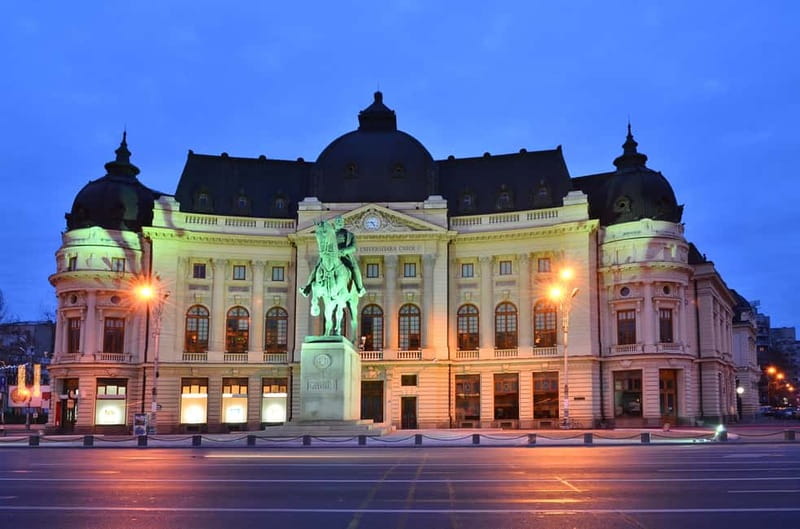
Victory Road, or Calea Victoriei, is the backbone of the tour. The avenue brings together public buildings, cultural institutions, historic squares, and some of Bucharest’s best-known architecture.
Here, the Italian immigration story becomes easier to understand because you can connect it to the city’s physical growth. Your guide points out places where Italian people and ideas left a mark on Bucharest’s development. The emphasis is not just on one immigrant neighborhood. It is on influence spread through the capital’s institutions and built environment.
The walk is also a good introduction to Bucharest’s mixed character. On the same route, you encounter old financial buildings, political landmarks, cultural sites, and reminders of national upheaval. That variety keeps a two-hour walk from feeling like a single-subject lecture.
You should wear comfortable shoes. The route is on foot, and the tour includes several stops along a central avenue before reaching the old town. Weather-appropriate clothing is also listed as essential, since the experience is outdoors.
The Palace of Justice and the Dambovita setting
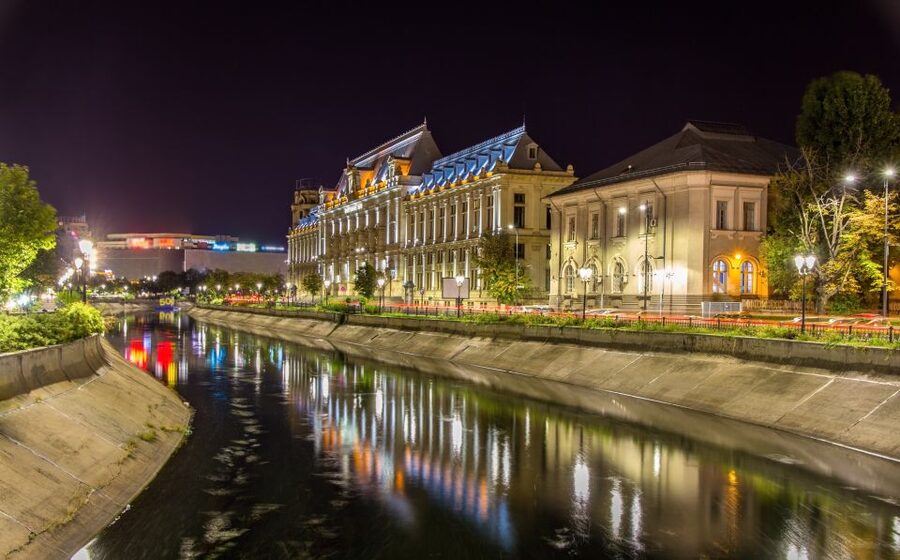
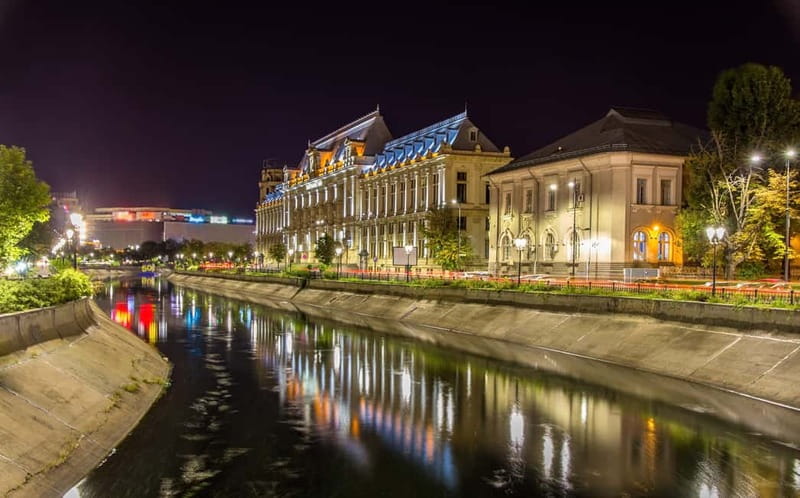
The Palace of Justice is one of the early highlights, positioned along the Dambovita River. Its location gives your guide a chance to connect architecture with the city’s civic life.
The building matters here not only as a photograph. It helps establish the kind of capital Bucharest was trying to become: a city with formal legal, financial, and administrative institutions. Through the tour’s Italian focus, you learn how immigrant communities contributed to that changing urban environment.
The riverfront also gives the route a little breathing room before you move into the denser sequence of landmarks along Victory Road. I appreciate that the tour begins with a major civic building rather than rushing straight to the most famous square. It gives the story a foundation.
Do not expect an extended interior visit. The experience is described as a walking tour, and the advertised highlights concern buildings and places encountered along the route. The value comes from the guide’s explanation and the way the sites fit together, not from access to museum rooms or restricted interiors.
Same base, a completely different day:
- Bucharest: Dracula’s Castle, Peles Castle, & Brasov Old Town
★ 4.5 · 17,858 reviews - Bucharest: Dracula Castle, Peles Castle & Brasov Old Town
★ 4.6 · 10,891 reviews - Bucharest: Dracula’s Castle, Peleș Castle & Brașov Day Trip
★ 4.5 · 5,919 reviews - Bucharest: Palace of Parliament Tickets and Guide
★ 4.3 · 3,182 reviews
CEC Palace and the National History Museum
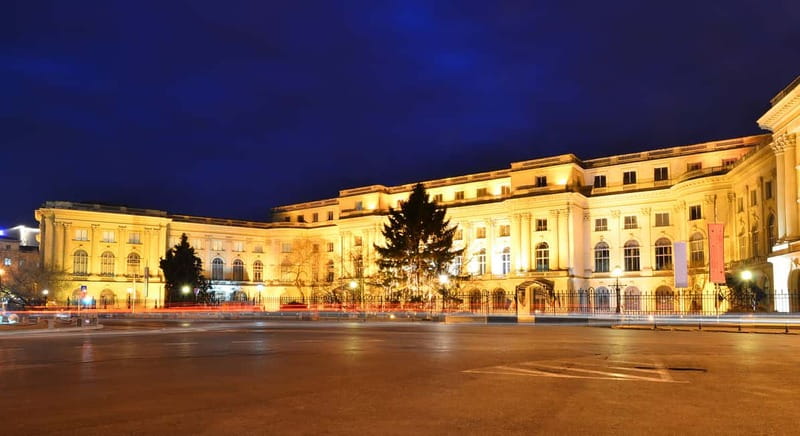
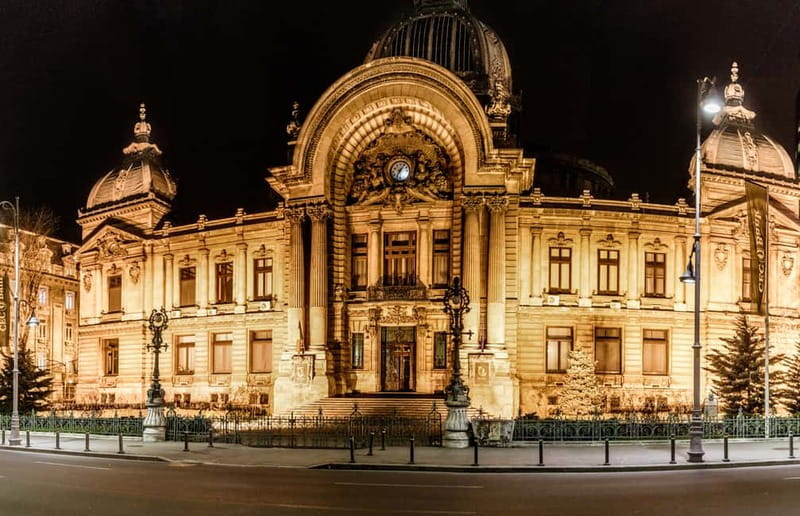
The National History Museum and CEC Palace are among the most important stops on Victory Road. They provide two different ways to read Bucharest’s past.
The museum points toward national memory and the official telling of Romania’s story. CEC Palace, with its distinctive architecture, brings in the world of banking, commerce, and urban ambition. As you walk between them, you can see how a capital city expresses its identity through public institutions.
For this tour, these buildings are useful because they move the Italian theme beyond church life or personal migration. Italian influence is presented as part of the work and expertise that helped shape the city’s buildings and public face.
You will likely spend more time hearing context than entering each attraction. That makes the tour best for someone who wants an informed outdoor overview before deciding which places deserve a separate visit. If your priority is a long museum visit, this walk will not replace one.
Revolution Square and the old Senate house
Revolution Square introduces the political side of Bucharest. The old Senate house is also included among the places you see, giving the route another link to Romania’s government and modern upheavals.
This is where the tour’s broader historical promise becomes important. Italian immigration is not treated as a detached footnote. It is placed beside the political history of the capital, including the changes that shaped the square and its surroundings.
Revolution Square can be visually impressive, but it carries serious historical weight. A guide adds value here by helping you understand why the place matters rather than leaving you with a few photographs and a name.
The exact amount of time at each stop is not specified, so expect the guide to balance several sites within the two-hour limit. That is a strength if you want a broad introduction. It is a limitation if you prefer long pauses at individual landmarks.
The Athenaeum and the Italian Church
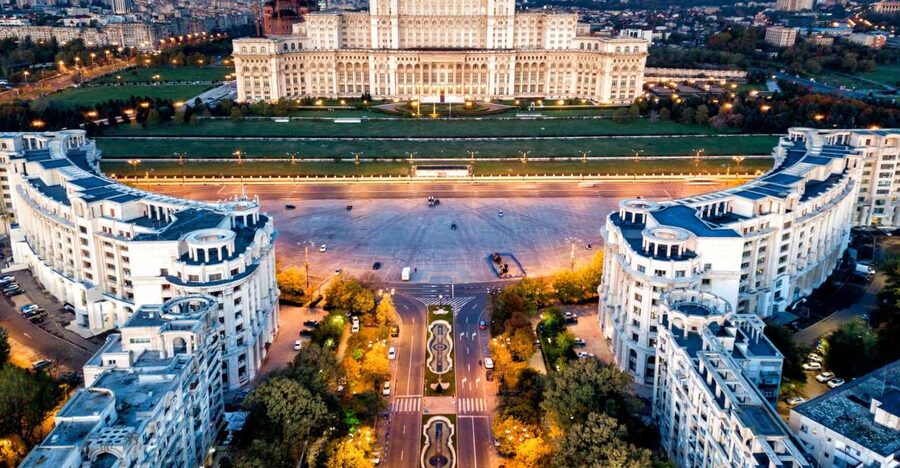
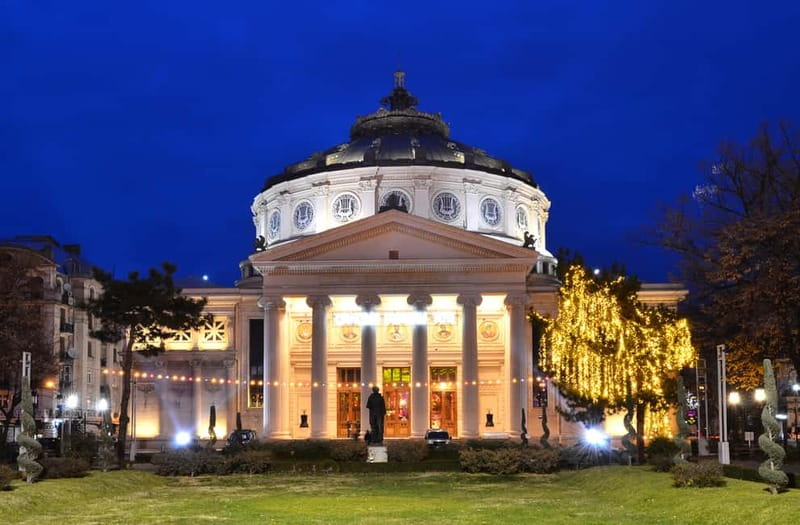
The Athenaeum adds a cultural note to the route. It represents Bucharest’s artistic and intellectual life, while the Italian Church gives the immigration story a more direct and personal focus.
The contrast between the two stops is one of the route’s best features. The Athenaeum helps you see how a capital presents its cultural ambitions. The Italian Church points toward the community itself and the lasting presence of Italian people in Romania.
This pairing should help you understand that immigration shapes a city in more than one way. It can affect construction, public institutions, religion, culture, and daily life. The tour uses the sites along Victory Road to show those connections without sending you across the city.
The Italian Church is especially relevant to the tour’s central subject, but the provided information does not specify interior access or a long visit inside. Plan on seeing it as part of the walking route and hearing its place in the story from your guide.
Finishing in Bucharest’s old town
The tour ends back at the meeting point according to the activity details, while the route description says it finishes in Bucharest’s old town with a short recap. These details do not line up perfectly, so clarify the exact ending point with the provider when you book.
Either way, the final section gives the walk a logical close. After following Italian connections along Victory Road, you finish with a short review of why that immigration mattered to Bucharest and Romania.
The old town is a useful place to end because it gives you an immediate setting for further exploring. You can continue on foot afterward, though no extra stop or restaurant visit is included in the tour. The activity itself ends with the historical recap rather than a separate meal or attraction.
One useful detail comes from Daniel, a guide who received especially positive feedback. He was described as punctual, friendly, informative, and able to answer questions. He also arranged to begin at a hotel and adjusted the route for specific stop requests. That does not guarantee the same arrangement for every booking, but it is worth asking about special meeting or stop requests before the day of the tour.
What $34 gets you
At $34 per person, this is priced as a guided specialist walk rather than a basic orientation stroll. You are paying for two hours of live explanation in Italian, a planned route through several important sites, and a subject that most general city walks may not cover.
I consider the price reasonable if you care about the Italian-language format or want a guide to connect immigration with architecture and politics. The value is strongest for someone who would otherwise walk along Victory Road without understanding the links between the buildings.
The value is weaker if you mainly want landmark photographs. Most of the appeal comes from interpretation, questions, and connections between stops. If you do not need an Italian-speaking guide or a focused historical topic, a broader city walk may suit you better.
The booking terms also offer some flexibility. You can cancel up to 24 hours before the tour for a full refund, and you can reserve now and pay later. Those options matter if your Bucharest plans are still shifting.
Who will enjoy this two-hour walk
I would choose this tour if you speak Italian and want to learn about Bucharest through a specific cultural connection. It also suits repeat visitors who have already seen the main avenue and want a less familiar angle on it.
History-minded visitors should find the format useful, especially those interested in migration, architecture, public institutions, and Romania’s political past. The route also works for anyone who wants a compact introduction before spending more time in the old town or returning to individual buildings.
The tour may not suit you if you need a fully scripted, highly formal operation. The unclear office signage and one failed meeting experience suggest you should take responsibility for confirming the exact meeting spot.
It is also not suitable for people over 95, according to the activity information. No special accessibility details are provided, so anyone with mobility concerns should ask the provider directly before booking.
Practical advice for a smoother experience
Bring comfortable shoes and clothing suited to the weather. The walk is outdoors and includes several landmarks spread along central streets.
Use Piata Natiunile Unite as your main meeting reference, not just the office address. The office is at Bulevardul Natiunile Unite 4, Bloc 107/A, but the meeting point is described as 100 meters away in the square.
Arrive with enough time to locate the guide. Because the signage may be limited, do not leave this until the last minute. Keep the provider’s contact details available in case you need help finding the group.
The tour is conducted in Italian. If you need another language, this activity may not be the right choice, since Italian is the only language specified.
Should you book this Bucharest Italian heritage tour?
Book it if you want a focused Italian-language walk that connects the Palace of Justice, CEC Palace, Revolution Square, Athenaeum, Italian Church, and old town into one story. At $34, it offers fair value for a guide-led historical introduction, especially if you enjoy asking questions and looking beyond the usual sightseeing checklist.
I would be more cautious if meeting-point reliability is your top concern or if you want extensive interior visits. Confirm the exact place in Piata Natiunile Unite, ask whether a hotel start is possible, and allow time to find the guide.
For the right visitor, this is a smart way to see Bucharest’s central avenue with a fresh purpose. You come away not just knowing what the buildings are, but why Italian people and influences belong in the story of the Romanian capital.
FAQ
Where does the tour start?
Meet your guide in Piata Natiunile Unite, about 100 meters from the Transylvanian Wonders office at Bulevardul Natiunile Unite 4, Bloc 107/A.
How long does the tour last?
The walking tour lasts two hours.
What language is the tour conducted in?
The live tour guide speaks Italian.
What is the price?
The price is $34 per person.
What landmarks are included?
The route includes the Palace of Justice, CEC Palace, Victory Road, the National History Museum, Revolution Square, the old Senate house, the Athenaeum, the Italian Church, and Bucharest’s old town.
Where does the activity end?
The activity information says it ends back at the meeting point, while the route description says the tour finishes in the old town after a short recap. Confirm the exact ending point with the provider.
Can I cancel for a full refund?
Yes. You can cancel up to 24 hours in advance for a full refund.
What should I bring?
Bring comfortable shoes and clothing suitable for the weather. Alcohol and drugs, audio recording, and bare feet are not allowed.
Just added around Bucharest
- Winery touring & private wine tasting – one day private tour★ 5.0 · 3 reviews
- Village Museum Bucharest Guided Tour★ 5.0 · 6 reviews
- Bucharest: Dealu Mare Winery Private Trip with Wine Tasting★ 4.9 · 6 reviews
- Traditions in Bucharest: Village Museum and Wine Tasting★ 5.0 · 8 reviews
- Transylvania Tour: Dracula’s Castle, Peles Palace & Brasov★ 5.0 · 19 reviews
- Airport Henri Coanda (Otopeni) to Bucharest – Private Transfer – Driver★ 5.0 · 5 reviews
- Gems of Transilvania: Brasov,Sighisoara,Sibiu,Viscri and more★ 5.0 · 6 reviews
- Discover Medieval Transylvania Small Group Tour – 7 days★ 5.0 · 4 reviews
Alternative Bucharest Tours, compared.
Slavery in Romania,Myths and Truths on Gypsies, Walking Tour
Read our review →
Alternative Bucharest: 2.5-3 Hours Walking tour (Small groups)
Read our review →
Troubled – Notorious Neighborhood – area known for social issues
Read our review →
Browse the lists this tour appears in