
Reviewed · TRANSFĂGĂRĂȘAN & CARPATHIAN ROAD TRIPS
Transfagarasan Road & Balea Lake – Private Tour from Bucharest
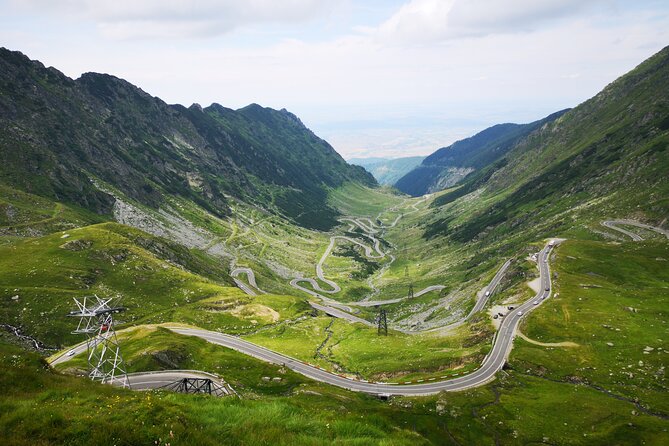
The Transfagarasan is the star here: a high mountain road cut through Romania’s Fagaras Mountains, climbing to 2,042 meters near Balea Lake. This private day trip adds the real Dracula story at Poienari Fortress, the vast Vidraru Dam, and Capra Waterfall, so you get more than a scenic drive.
I like the private format, which lets you move at your group’s pace, and I like the practical comfort of hotel pickup, an air-conditioned vehicle, and onboard Wi-Fi. The drawback is the long day from Bucharest, about 12 hours, and mountain weather can change the feel of the trip. Snow has made the road unexpectedly difficult even for an excellent driver such as Alin.
Key points to know before booking
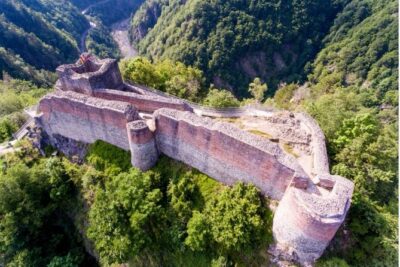
- Poienari Fortress gives you the real Vlad connection: These cliff-top ruins were one of Vlad the Impaler’s main strongholds.
- The Transfagarasan is an engineering spectacle: The 90-kilometer road used 6,500 tons of dynamite to cross Romania’s highest mountains.
- Balea Lake is the high point: The road reaches 2,042 meters near this mountain lake.
- Vidraru Dam adds serious scale: The dam took six years to build and created a lake stretching more than 10 kilometers.
- A private vehicle matters on a 12-hour outing: Pickup, drop-off, Wi-Fi, and a flexible schedule make the long ride easier.
- Weather is a real factor: Snow and mountain conditions can affect the road, scenery, and pace.
Why the Transfagarasan makes such a strong day trip
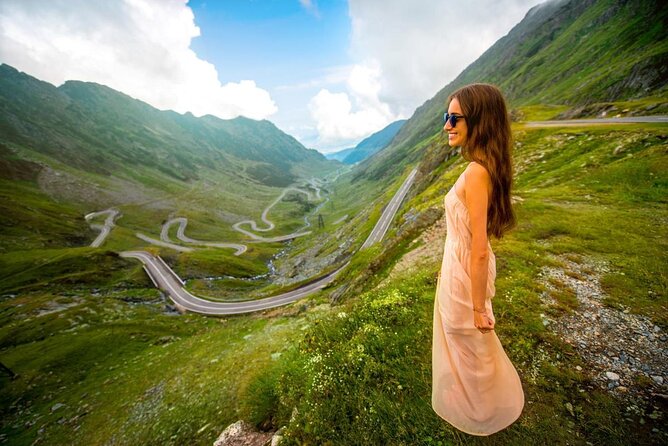
Romania’s Transfagarasan Road is not just a pretty mountain route. It was a major communist-era construction project, built between 1970 and 1974 to connect southern Romania with Transylvania through the Fagaras Mountains.
The road runs for about 90 kilometers and climbs to 2,042 meters near Balea Lake. That makes it Romania’s second-highest road, behind Transalpina at 2,145 meters. On a clear day, you get sweeping mountain views, sharp bends, rock walls, and high-altitude scenery.
I like that this tour gives the road a historical frame. You are not simply driven to a viewpoint, handed a few minutes for photographs, and rushed back to Bucharest. The stops connect the route to Romania’s medieval rulers, communist industry, and modern tourism.
The private arrangement is especially useful here. A 12-hour trip leaves plenty of time in the vehicle, so your comfort matters. Air conditioning, hotel pickup, and Wi-Fi are small details that become valuable when you are spending most of a day on the road.
The main caution is simple: this is a long outing. Bucharest is not close to the Transfagarasan’s high section, and the road’s appeal depends heavily on mountain conditions. If snow, weather, or road access affects the route, the experience may feel different from the sunny summer drive you imagined.
Other mountain road trips out of Bucharest:
- Small-group max 7 – Top Gear Road – Transfăgărăşan Highway
★ 5.0 · 391 reviews - Bucharest: Top Gear Road Transfagarasan Day Trip
★ 4.8 · 293 reviews - From Bucharest: Top Gear Road – Transfăgărășan Highway Day Trip
★ 4.0 · 68 reviews
Poienari Fortress and the real Dracula story
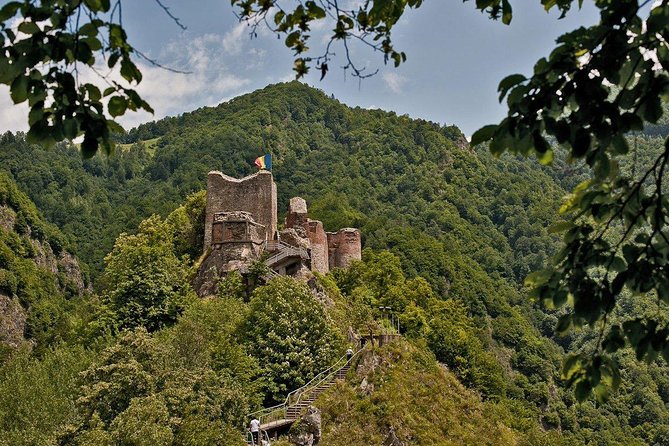
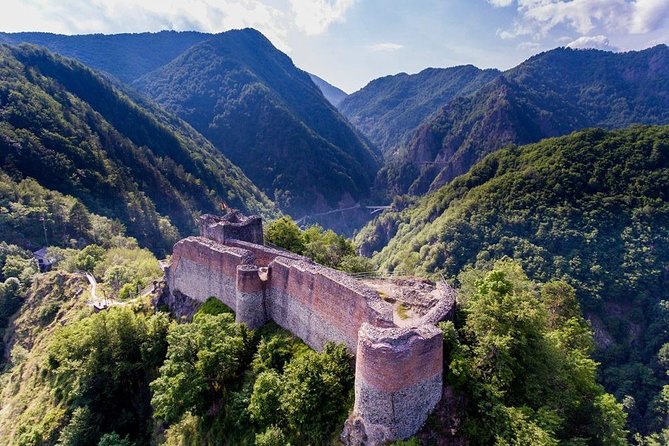
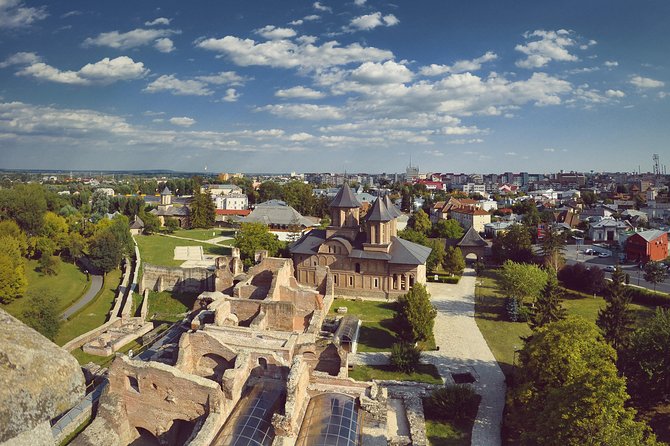
Poienari Fortress is the tour’s most important stop for anyone interested in Vlad the Impaler. It is also where you get away from the better-known Dracula image created by fiction and see a place tied to the actual medieval ruler.
The ruins sit high on a cliff above the Arges River, near the foothills of the Carpathian Mountains. The original structure was built at the beginning of the 13th century by Walachian rulers. It changed names and occupants over the years before Vlad Tepes recognized its defensive value.
After taking the throne, Vlad ordered the fortress repaired and strengthened. It became one of his main strongholds. When Ottoman forces attacked in 1462 and captured the castle, Vlad escaped through a secret passage leading north into the mountains.
That story gives the site a sharper edge than a standard castle visit. You are looking at a ruined fortress with a direct connection to Vlad’s rule, not a building designed mainly to serve later Dracula tourism.
The fortress was used for years after Vlad’s death in 1476, then abandoned again in the first half of the 16th century. Weather and time did the rest. A major landslide in 1888 destroyed part of the castle, sending the fallen section down toward the river.
The planned stop is about 15 minutes, with no admission charge listed. That is enough for a quick look and an explanation from your guide, but not a long archaeological visit. If you want extended time at the ruins, ask about the pace before departure. The schedule includes several major stops, and the day has to fit within roughly 12 hours.
Poienari is a good example of why a private guide can improve this outing. The ruins alone may not tell you much. The story of Vlad, the fortress repairs, the Ottoman attack, and the escape route give the site meaning.
Vidraru Dam brings the road’s modern history into view
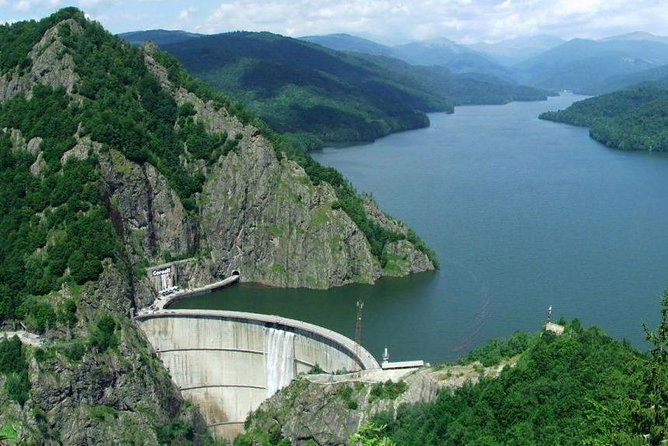
After the medieval setting of Poienari, Vidraru Dam changes the mood completely. Built from 1960 to 1966, the dam was designed for electricity production, irrigation, and flood prevention. Today, it also serves as a recreation and sightseeing area.
The numbers are striking. The dam is about 166 meters high, with a crest length of 307 meters. Vidraru Lake covers 893 hectares, stretches 10.3 kilometers, and reaches a maximum depth of 155 meters near the dam. Its water volume is about 465 million cubic meters.
Those figures help you grasp the scale of the project. This is not a small roadside photo stop. It is a huge piece of infrastructure pressed into a mountain setting.
Construction required thousands of meters of underground galleries, about 42 kilometers of them in total. Workers excavated one million cubic meters of underground rock and poured almost one million cubic meters of concrete. The project also cost more than 80 lives, a difficult fact that should not be glossed over when discussing the dam’s achievement.
The tour allows about 30 minutes here. That gives you time to take in the dam, lake, and surrounding mountains without turning the stop into a full engineering visit. There is also a bungee-jumping attraction associated with the site, though the tour information does not say that the activity is included or offered during your visit.
I like this stop because it adds balance. The Transfagarasan is often sold as a road adventure, but Vidraru shows the political and industrial ambition behind Romania’s mountain projects. You see how the road and dam belong to different eras, yet both reflect a desire to force a route through difficult terrain.
Three hours on the Transfagarasan Highway
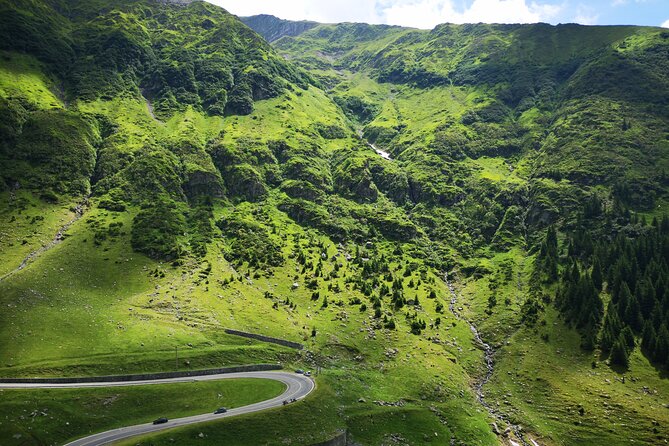
The longest part of the outing is the road itself, with about three hours allocated to the Transfagarasan Highway. That time includes the mountain drive and the scenic sections near Balea Lake and Capra Waterfall.
The road was built using 6,500 tons of dynamite to break through the Fagaras Mountains, Romania’s highest mountain range. It reaches 2,042 meters at its upper section, where Balea Lake becomes the main high-altitude landmark.
You can expect the road to be the emotional center of the day. Its bends, climbs, and high mountain views offer far more than a simple transfer between Bucharest and a lake. The route is also a piece of recent Romanian history, shaped by the communist government’s taste for giant infrastructure schemes.
The private vehicle is useful on this section. You can ask for a pause in the schedule, spend more time at a view, or keep moving if the weather turns unpleasant. The tour promises flexibility around pace and itinerary, though the exact number of photo stops is not specified.
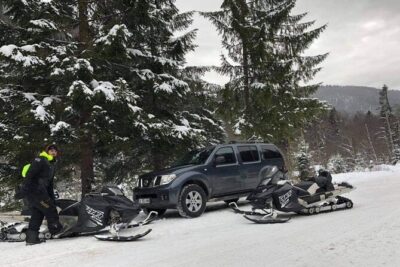
Do not treat the road as guaranteed sunshine. One account of the trip describes Alin handling unexpectedly snowy roads, which is a useful warning. Snow can make the drive more dramatic, but it can also limit views and make the road slower. A skilled driver matters, particularly when conditions change.
The route’s reputation can also create unrealistic expectations. A famous road is still a road. You will spend long periods seated in a vehicle, and the appeal comes from the changing views, the engineering, and the mountain setting rather than from a single attraction you can explore for hours.
Still, three hours is a sensible amount of time for this part of the day. It gives the road room to breathe while leaving space for Poienari, Vidraru, and Capra Waterfall.
Other private tours around Bucharest:
- Castles of Transylvania: Private Day Trip from Bucharest
★ 4.5 · 248 reviews - Dracula’s Castle, Peles Castle and Brasov – Private Day Trip from Bucharest
★ 5.0 · 211 reviews - Best of Bucharest | Private Walking Tour
★ 5.0 · 199 reviews - Bucharest Panoramic Sightseeing – Private City Tour
★ 5.0 · 128 reviews
Capra Waterfall adds a short mountain pause
Capra Waterfall sits beside the Transfagarasan at an altitude of about 1,650 meters. The waterfall drops roughly 35 meters, making it an easy landmark to pair with the road.
The planned stop is about 15 minutes. That is short, but it fits the nature of the place. Capra Waterfall is a roadside scenic pause, not a long walking excursion or a full nature visit.
I would use this stop to stretch your legs, take photographs, and look at how the water and rock fit into the high mountain setting. Since the waterfall is beside the highway, you do not need to spend time reaching it from a distant parking area, at least according to the supplied description.
Its value comes from variety. After the historic ruins, massive dam, and long drive, Capra gives you a quick natural feature with no admission charge listed. The stop will feel more rewarding in clear weather, but even poor conditions can underline the wild nature of the road.
Balea Lake is the high-altitude payoff
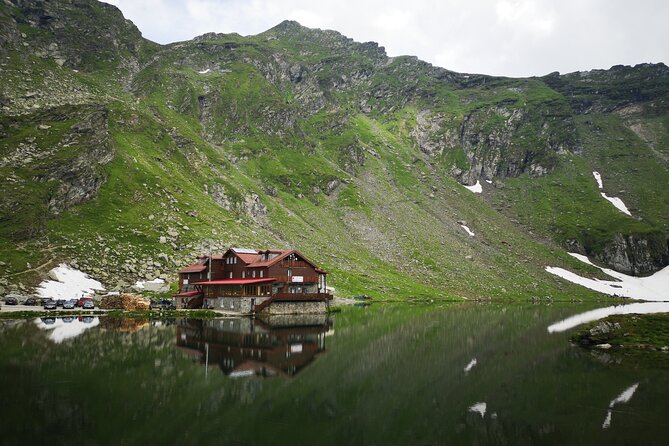
Balea Lake is the destination that gives the Transfagarasan its strongest sense of altitude. The road reaches its highest point near the lake at 2,042 meters, placing you well above the lower sections around Vidraru.
The lake is not listed as a separate timed stop in the schedule, but it is part of the Transfagarasan experience and the main high mountain draw. You should ask your guide how much time is planned there, especially if seeing the lake is your main reason for booking.
This is also where weather matters most. Clear conditions can open up the mountain views. Snow, cloud, or changing conditions can make the setting feel more severe and may affect the pace of the drive.
The tour does not include lunch, so plan for that gap. The supplied information does not name a restaurant or meal stop. Ask about the day’s food arrangements when booking, and bring whatever you need for a long drive if that suits you.
What the private format is really worth
The listed price is $215.54 per person. That is not the cheapest way to reach the Transfagarasan, but price comparisons should account for what is included.
You receive pickup and drop-off at your accommodation, transport in an air-conditioned car or minivan, free Wi-Fi, and a private group experience. The guide can adjust the pace and itinerary around your group rather than following a fixed public schedule.
That matters more on this particular route than it would on a compact city tour. Bucharest to the high Transfagarasan is a long outing, and much of the experience takes place in the vehicle. Private transport means you are not sharing a bus with a large group, and you have a direct person to ask about Vlad, the dam, the road, and Romanian culture.
The price makes the most sense for couples, families, or friends who value privacy and convenience. It is less attractive if you mainly want the lowest-cost transfer or if you dislike full-day road trips.
The tour is offered in English. Alin is specifically praised for being a good driver on snowy roads and for making the day pleasant. The available information identifies him by name, but it does not guarantee that Alin will lead every departure, so ask about your guide if that matters to you.
The average booking lead time is about 159 days. That suggests this experience can fill well ahead of the travel date, particularly during the months when the high road is most appealing. Book early if your Romania schedule depends on this specific day.
Who will enjoy this Bucharest day trip most
I would recommend this tour to you if you want several sides of Romania in one demanding day:
- You want the real Vlad the Impaler connection at Poienari rather than a fictional Dracula theme.
- You enjoy mountain roads, engineering projects, and scenic stops.
- You prefer a private car to a shared coach.
- You value hotel pickup and a flexible pace.
- You are comfortable spending about 12 hours on an excursion.
- You want an English-language guide to explain the history and culture along the way.
I would think twice if you want a relaxed schedule, a long hike, or a guaranteed view from Balea Lake. The route is ambitious, the stops are relatively brief, and mountain weather can alter the experience.
Most travelers can participate, and the tour is near public transportation, though pickup from your accommodation is offered. No lunch is included, so that is one practical item to settle before you set out.
Cancellation is flexible up to 24 hours before the start time for a full refund. Changes or cancellations inside that 24-hour window are not accepted for a refund.
Should you book the Transfagarasan private tour?
Book it if the idea of combining Poienari Fortress, Vidraru Dam, and Balea Lake appeals to you more than spending the day on a single attraction. The route offers a useful mix of medieval history, communist-era engineering, and high mountain scenery.
The strongest reason to choose this version is the private setup. You get pickup, Wi-Fi, an air-conditioned vehicle, and room to adjust the pace during a long day. The main risk is not poor value, but the distance and the weather.
For a first visit to Romania, this is a practical way to see a major part of the country beyond Bucharest. Just book with realistic expectations: it is a road-focused day, not a leisurely mountain holiday, and Balea Lake conditions may not match the picture in your head.
FAQ
How long does the Transfagarasan and Balea Lake tour last?
The tour lasts approximately 12 hours.
Where does the tour begin and end?
Pickup and drop-off are offered from your accommodation in Bucharest.
Is this a private tour?
Yes. Only your group participates in the private activity.
What language is the tour offered in?
The tour is offered in English.
Is lunch included?
No. Lunch is not included in the tour price.
Is transportation included?
Yes. Transport is provided in an air-conditioned car or minivan.
Is Wi-Fi available during the trip?
Yes. Free onboard Wi-Fi is included.
Can the tour be canceled for a full refund?
Yes. You can cancel at least 24 hours before the experience start time for a full refund. Cancellations or changes made less than 24 hours before the start time are not accepted for a refund.
Just added around Bucharest
- Winery touring & private wine tasting – one day private tour★ 5.0 · 3 reviews
- Village Museum Bucharest Guided Tour★ 5.0 · 6 reviews
- Bucharest: Dealu Mare Winery Private Trip with Wine Tasting★ 4.9 · 6 reviews
- Traditions in Bucharest: Village Museum and Wine Tasting★ 5.0 · 8 reviews
- Transylvania Tour: Dracula’s Castle, Peles Palace & Brasov★ 5.0 · 19 reviews
- Airport Henri Coanda (Otopeni) to Bucharest – Private Transfer – Driver★ 5.0 · 5 reviews
- Gems of Transilvania: Brasov,Sighisoara,Sibiu,Viscri and more★ 5.0 · 6 reviews
- Discover Medieval Transylvania Small Group Tour – 7 days★ 5.0 · 4 reviews
Transfăgărășan & Carpathian Road Trips, compared.

Carpathian Wilderness: A Wildlife Experience from Brașov
Read our review →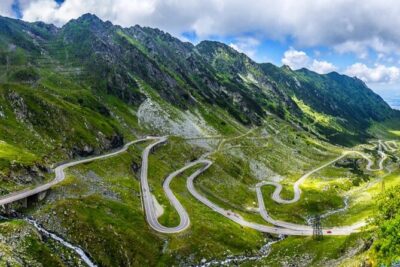
Small-group max 7 – Top Gear Road – Transfăgărăşan Highway
Read our review →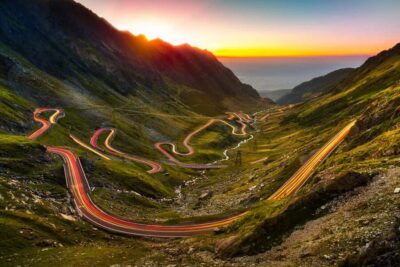
Brown Bear Watching in the Carpathian Mountains
Read our review →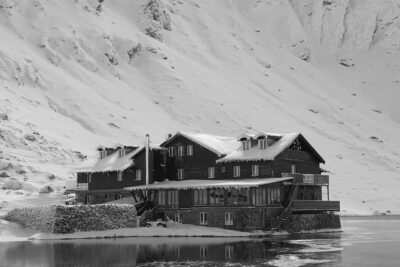
Brasov Private Tour: Transfagarasan road & Poienari Fortress
Read our review →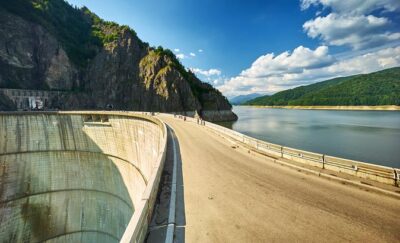
Small group max 7, Transfăgărășan the Top Gear Road
Read our review →Browse the lists this tour appears in