
Reviewed · MEDIEVAL TOWNS & FORTIFIED CHURCHES
The essence of Saxon Transylvania – 3-day tour of its citadels
Transylvania’s best-known citadels fit into one busy, rewarding loop on this private three-day tour. You’ll see Sibiu, Sighisoara, and Brasov, then add Bran Castle, Peles Castle, Biertan’s fortified church, and Saxon villages that still feel tied to farm life rather than Dracula marketing.
I like the route for two clear reasons: private transport keeps the schedule flexible, and the guides, especially Gelu and Vlad, bring the past to life with strong English and well-told anecdotes. The main drawback is pace. You cover a lot of ground in three days, and meals are not included, so this is better for focused sightseeing than slow village wandering.
Key points at a glance
- Cozia Monastery opens the story: Begin with a 14th-century Wallachian monastery linked to Mircea the Elder, Vlad the Impaler’s grandfather.
- Three medieval cities in one route: Walk the old centers of Sibiu, Sighisoara, and Brasov, each with a different look and feel.
- Biertan explains Saxon defense: See why a Lutheran bishop’s church needed walls, towers, and serious protection.
- Dracula meets documented history: Visit Sighisoara, Vlad the Impaler’s birthplace, and Bran Castle, the building tied most closely to the Dracula legend.
- Peles changes the mood: End at a lavish 19th-century royal castle that feels very different from the medieval fortresses.
- Private touring has real value: An air-conditioned vehicle, two hotel nights, breakfast, entrance fees, and pickup are included.
Why this three-day route works
This tour gives you a compact introduction to the part of Transylvania shaped by Saxon settlers, Wallachian princes, royal ambition, Lutheran faith, and competition between larger powers. You are not simply collecting castle photos. You are seeing why churches were fortified, why towns were built behind walls, and how a modern Romanian city grew from a medieval trading center.
The private format matters. Only your group takes part, and transport is provided in an air-conditioned vehicle. That removes the strain of managing trains, rural bus connections, and several separate admissions. Pickup is offered from your Bucharest hotel or the airport, which is useful if this is your first stop in Romania.
The price is listed at $914.51 per person. That is a serious outlay, but it includes private transportation, two nights in a superior three-star hotel or guesthouse, breakfast, entrance fees, and taxes. Meals, photo fees, and flights are extra. For a solo visitor, the cost may feel high. For a couple or small private group that values a guide and door-to-door transport, the package can make practical sense.
Other medieval town trips in Bucharest:
- Peles Castle, Dracula’s Castle and Medieval Town of Brasov in one day
★ 4.5 · 241 reviews - 2-Day Medieval Transylvania with Brasov,Sibiu and Sighisoara Tour from Bucharest
★ 4.5 · 145 reviews - Day Trip to Medieval Bulgaria- Small group tour
★ 3.5 · 75 reviews
Day one from Cozia Monastery to Sibiu
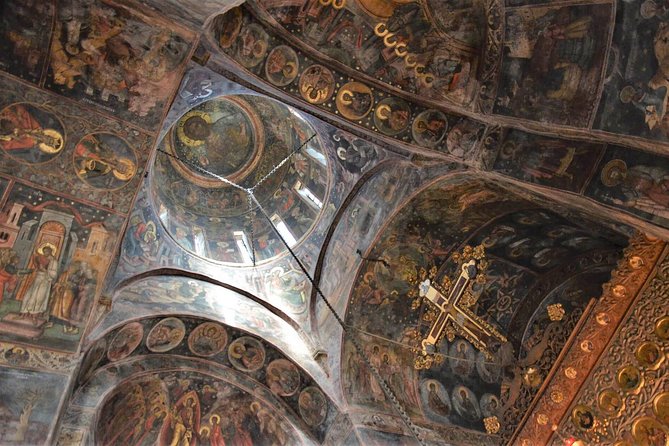
The first day follows the Olt River Valley, one of the more scenic approaches from Bucharest into central Romania. Your first stop is Cozia Monastery, founded in 1388 by Mircea the Elder.
This is a useful opening stop because it places the later Dracula story in a real political family. Mircea was the grandfather of Vlad the Impaler, the historical ruler whose reputation helped inspire the fictional Count Dracula. At Cozia, you begin with Wallachian medieval power before moving into the Saxon towns of Transylvania.
You have about 30 minutes here. That is enough for a look at the monastery and its setting, but not enough for a long, unhurried visit. Admission is included at no extra charge.
Afterward, the route continues to Sibiu. Lunch is described as a quick stop, but you pay for meals yourself. Keep that in mind if you prefer a particular kind of food or need extra time to eat. The schedule is built around seeing the cities, not sitting through long lunches.
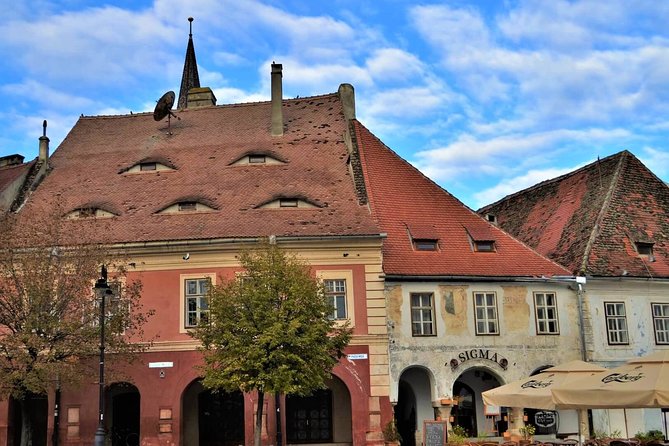
Sibiu’s squares, towers, and churches
Sibiu is one of the strongest city stops on the tour. The old center is arranged around the Grand Square, Small Square, and Albert Huet Square, the oldest of the three and dating from the 12th century.
The climb up the medieval stairs of the Council Tower rewards you with a broad view over the rooftops and squares. This is one of the tour’s most useful moments for getting your bearings. You can see how the old city fits together rather than viewing each building as an isolated monument.
The walking tour also includes Sibiu’s Orthodox Cathedral and its impressive interior, with similarities to Saint Sofia’s Basilica in Constantinople. The Evangelical Church adds another layer, showing the strong German Saxon and Lutheran influence that shaped the city.
You have about two hours for the guided visit. That is enough to see the main sights and hear the connections between them, but you will not have unlimited time for museums, shopping, or a long café stop. If Sibiu is especially important to you, make a note of places you may want to return to later.
Day two through Biertan and Sighisoara
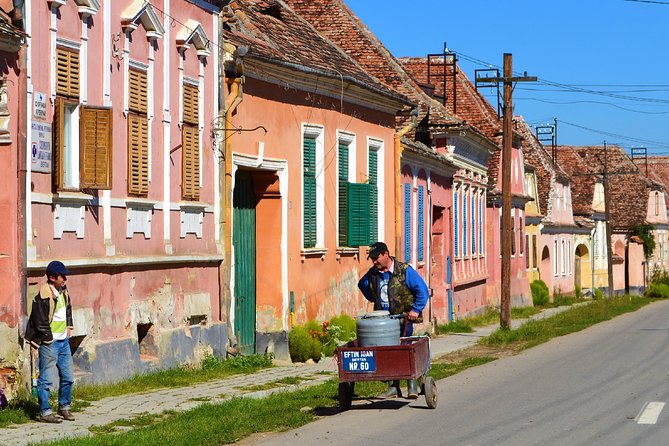
Day two trades major roads for the Hartibaciu Valley route. You pass old Saxon villages and forests on the way from Sibiu toward Sighisoara. This road section matters because it gives you a glimpse of ordinary rural Transylvania, not just the polished centers visited by most short-term sightseers.
You are looking at villages connected to the same German-speaking communities that built fortified churches and organized their towns around defense, trade, and religion. The tour only passes through these places, so do not expect a village walking tour or extended time with residents. Still, the view from the vehicle helps explain why Biertan and the other fortified churches are scattered across the countryside.
Other medieval towns and Saxon churches from Bucharest:
- 2-Day Transylvania from Bucharest: Brasov, Bran, Sighisoara
★ 5.0 · 60 reviews - Visit Bulgaria – Veliko Tarnovo Medieval Fortress – Private tour from Bucharest
★ 5.0 · 51 reviews - Private Tour: Transylvanian Castles and Brasov’s Medieval Old Town
★ 5.0 · 42 reviews - Day trip to Dracula’s Castle, Peles Castle and Medieval Brasov
★ 4.5 · 41 reviews
Biertan’s fortified church
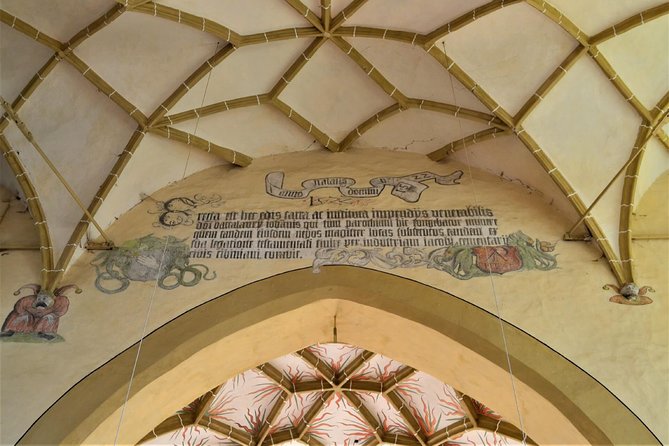
Biertan is one of the most important stops for understanding Saxon Transylvania. Its church was built between 1486 and 1524, when religious buildings in exposed communities could also serve as defensive strongholds.
The site served for centuries as the seat of the Lutheran bishopric. Its walls were not decorative. They protected the church and the community, and the fortifications remain the reason Biertan feels so different from a normal village church.
Inside, you can see the church nave, the ceiling, and a collection of tombstones belonging to former bishops and local notables. The tour allows about an hour, with admission included.
I would give Biertan your full attention. It is less famous than Bran Castle, but it may tell you more about how local people actually lived, worshipped, and protected themselves. The limitation is simple: one hour passes quickly, especially if you want photographs and time to study the details.
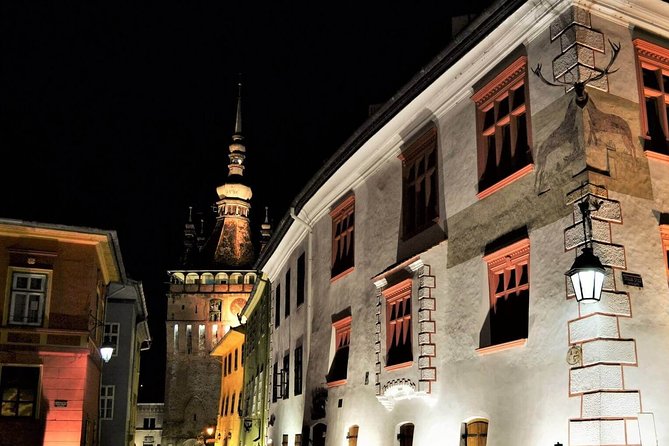
Sighisoara’s clock tower and hilltop church
Sighisoara is the tour’s clearest medieval citadel. Its historic center is a UNESCO World Heritage site, and two hours are set aside for the main visit.
You’ll see the Clock Tower, the Church on the Hill, the covered stairs, the fortifications, and the defensive towers. The climb to the Church on the Hill takes effort, but it gives the citadel a strong sense of place. The route is not just a flat old-town stroll, so comfortable shoes are sensible.
Sighisoara also connects directly to the Vlad story. Vlad the Impaler was born here, linking this city with Cozia Monastery, where his grandfather founded the monastery visited the previous day. That connection is more interesting than simply calling every old building a Dracula site. It separates the historical ruler from the later fictional character.
Lunch follows the visit and is not included. Afterward, you leave for Brasov. The schedule lets you see the core of Sighisoara, but people who enjoy towers, architecture, and local museums may want more time than the standard stop provides.
Saschiz and Rupea from the road
Between Sighisoara and Brasov, the route includes views of Saschiz fortified church and Rupea fortress. These are sightseeing stops from the vehicle rather than full visits.
Saschiz’s church dates from the end of the 15th century, and its tower recalls Sighisoara’s Clock Tower. Rupea is one of Romania’s oldest fortifications, built over earlier Roman and Dacian positions. You get useful visual context, but do not plan your day around walking through either site.
Brasov’s Black Church and narrow Rope Street
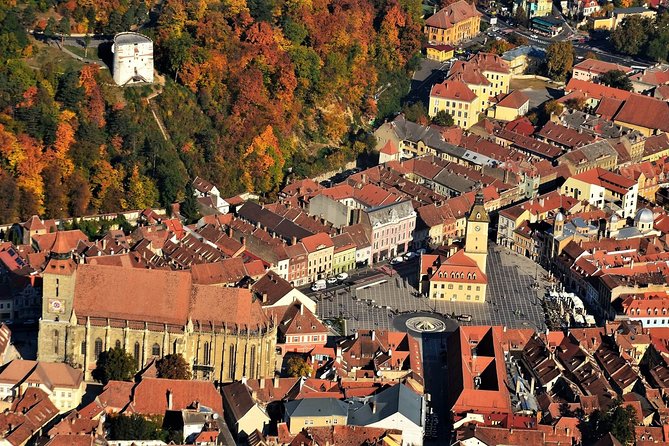
After checking in, you explore Brasov’s historic center for about two hours. Brasov began around a fortress established in 1211 by the Teutonic Knights, then grew after German settlers took a major role in the town’s development.
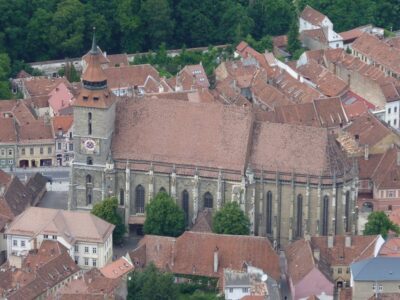
The Black Church is the main architectural prize. This 14th-century Gothic monument gives the center a powerful focal point, while the old fortifications, bastions, and towers show how the city protected its wealth and trade.
Rope Street adds a lighter moment. It is famously narrow, and the tour presents it as possibly one of the narrowest streets in the world. You can enjoy it as a quick curiosity, but the larger lesson is how tightly medieval urban life was packed inside defensive walls.
Brasov later became a major industrial center and drew people from across Romania. That gives it a different character from Sighisoara. Sighisoara feels like a preserved citadel; Brasov feels like a living city with a medieval core.
Day three from Rasnov and Bran to Peles
The final day links two very different castles. On the way from Brasov to Bran, you see Rasnov Fortress from a distance. The fortress dates from the 13th century and may have been built during the Teutonic Knights’ short period of control around Brasov from 1211 to 1225.
Again, this is a passing view, not a full fortress visit. The route then reaches Bran Castle, the stop most closely tied to popular Dracula culture.
Bran Castle and the Dracula question
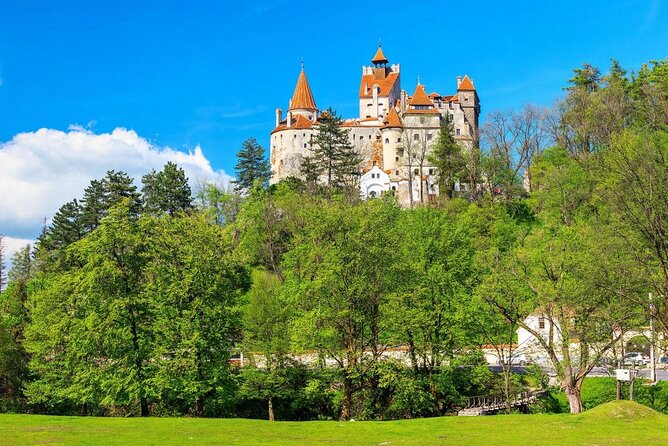
Bran Castle was built in the 14th century to guard a strategic trade route between Wallachia and Transylvania. Its rocky position made it easy to defend, with steep drops on several sides.
The castle later became associated with Count Dracula, even though the fictional character and the historical Vlad the Impaler are not the same thing. The tour handles the connection by placing Bran within the broader story of Vlad, trade routes, and medieval power rather than treating the legend as the whole truth.
You have two hours here, and admission is included. That gives you time to move through the castle and take in its setting. Bran is one of the more popular names on the route, so visitors who dislike heavily promoted legend-based attractions should keep expectations in check. You are paying for a real medieval castle with a famous literary association, not proof that Dracula lived there.
Peles Castle and royal Romania
Peles Castle shifts the tour into the late 19th century. You arrive in Sinaia in the early afternoon to visit this lavish royal residence, built at the end of the 1800s.
Its style contrasts sharply with the older fortifications. The founder, Carol I of Hohenzollern-Sigmaringen, was Romania’s first king and came from German origins. He ruled for 48 years and devoted himself to modernizing the country. His wife, Queen Elisabeth, joked that he wore the crown even while sleeping, a small detail that gives personality to an otherwise formal royal story.
The two-hour visit lets you compare royal comfort with medieval defense. Peles is not an austere fortress. It is flamboyant, polished, and tied to the formation of modern Romania. That contrast is one of the best design choices in the route.
The provided schedule ends at Peles Castle. Confirm your onward transport arrangements before booking, since the tour information specifies pickup from Bucharest but does not state the final drop-off point.
Guides, transport, and pace
The tour has been led by Gelu, with Vlad also serving as a guide. Gelu’s English, command of local history, and gift for anecdotes receive the strongest praise in the available feedback. That matters here because the route contains many churches, towers, rulers, and military powers that can blur together without a clear explanation.
Private transport is another major advantage. You avoid changing vehicles between Bucharest, the Olt Valley, Sibiu, Sighisoara, Brasov, Bran, and Sinaia. The air-conditioned vehicle should make the long road sections easier, especially on a full sightseeing schedule.
The tradeoff is that the days are full. You see the main sights, but some places are viewed only from the road, and major cities receive about two hours each. I would choose this tour if you want a strong first look at the region. I would choose a slower, longer stay if your priority is village walks, museums, hiking, or lingering over meals.
Most people can take part, and service animals are allowed. The tour operates privately for your group, and group discounts are offered. Confirmation is received at booking. Cancellation gives a full refund if you cancel at least six full days before the start, 50 percent if you cancel two to six full days ahead, and no refund within two days.
Who should book this tour?
Book it if you have three days, are starting in Bucharest, and want the major Transylvanian sights handled in one private trip. It suits couples, families, and small groups who value a dedicated guide, included admissions, and a hotel base rather than a series of day trips.
It is also a good choice if the history behind the Dracula story interests you. Cozia, Sighisoara, Bran, Biertan, and the Saxon towns show how the legend sits on top of older political and religious stories.
Think twice if you want generous free time. The route is efficient, not leisurely. Meals are extra, several places are viewed from the road, and the price is easier to justify when shared by two or more people.
FAQ
Where does the tour begin?
Pickup is offered from your hotel in Bucharest or from the airport.
How long does the experience last?
The tour lasts approximately three days and includes two nights of accommodation.
Is this a private tour?
Yes. Only your group participates.
Which cities are visited?
The itinerary includes Sibiu, Sighisoara, and Brasov.
Which castles are included?
The tour includes Bran Castle and Peles Castle. Rasnov Fortress is viewed from a distance.
Is Biertan included?
Yes. You visit Biertan fortified church, a UNESCO World Heritage site, and admission is included.
Is accommodation included?
Yes. Two nights in a double room are included in a superior three-star hotel or guesthouse, with breakfast.
Are meals included?
No. Meals are not included, so you pay for lunch and other food during the tour.
Is transportation included?
Yes. The tour provides private transportation in an air-conditioned vehicle.
What is the cancellation policy?
You receive a full refund if you cancel at least six full days before the start. Cancellation two to six full days ahead receives a 50 percent refund. Cancellations within two days are not refunded.
More Transylvania day trips around Bucharest
- Transylvania and Dracula Castle Full Day Tour from Bucharest
★ 4.5 · 1,589 reviews - Castles of Transylvania: Private Day Trip from Bucharest
★ 4.5 · 248 reviews - Transylvania: Cultural Full-Day Trip by Minivan
★ 4.8 · 57 reviews - 4-Day Private Tour in Transylvania from Bucharest
★ 5.0 · 48 reviews
Just added around Bucharest
- Winery touring & private wine tasting – one day private tour★ 5.0 · 3 reviews
- Village Museum Bucharest Guided Tour★ 5.0 · 6 reviews
- Bucharest: Dealu Mare Winery Private Trip with Wine Tasting★ 4.9 · 6 reviews
- Traditions in Bucharest: Village Museum and Wine Tasting★ 5.0 · 8 reviews
- Transylvania Tour: Dracula’s Castle, Peles Palace & Brasov★ 5.0 · 19 reviews
- Airport Henri Coanda (Otopeni) to Bucharest – Private Transfer – Driver★ 5.0 · 5 reviews
- Bucharest Airport Transfer To Constanta Mamaia★ 5.0 · 3 reviews
- Gems of Transilvania: Brasov,Sighisoara,Sibiu,Viscri and more★ 5.0 · 6 reviews
Medieval Towns & Fortified Churches, compared.
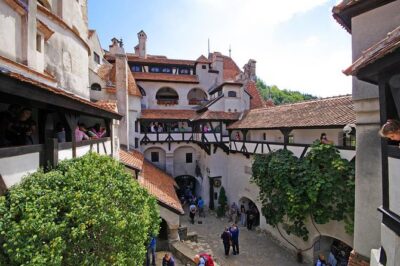
Peles Castle, Dracula’s Castle and Medieval Town of Brasov in one day
Read our review →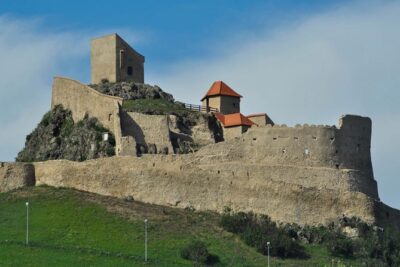
Small Group Tour to Viscri Church Sighisoara Town Rupea Fortress
Read our review →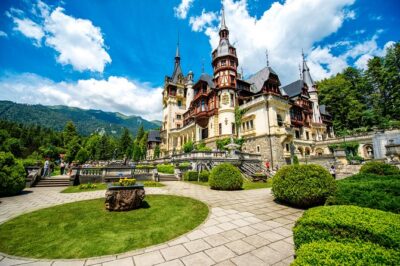
2-Day Medieval Transylvania with Brasov,Sibiu and Sighisoara Tour from Bucharest
Read our review →
City Tour Sighisoara Legends & Landmarks A Walk Through Time
Read our review →
Browse the lists this tour appears in