
Reviewed · PELEȘ CASTLE TOURS
Sinaia – from the Bandits’ Nest to the Cradle of the Romanian Dynasty
Sinaia tells a surprisingly complete Romanian story in a compact mountain town. In a few hours, you move from bandit country and monastery caves to royal trains, casino fortunes, and Peleș Castle, the grand residence King Carol I built as the home of his dynasty.
I like the clear royal focus, especially the time spent at Peleș Castle, and I like that Adriana Chirau connects each stop instead of treating the town as a string of unrelated sights. Her explanations cover the Romanian royal family, political conflicts, railway history, and small local details. The main drawback is practical: private transportation is not included, and several stops have no admission included, so you need to handle the route and extra costs yourself.
Key points at a glance
- A private tour with Adriana Chirau: Your group receives the guide’s full attention rather than joining a large shared party.
- Peleș Castle is the main event: One hour is set aside for the castle, with admission included.
- Sinaia’s railway past gets real attention: See the steam locomotive and hear about the royal station, the Blue Train, and the Orient Express.
- The town’s story begins with rougher roots: Sinaia Monastery provides the link between bandits, monks, caves, and the later royal resort.
- Pelișor adds a different royal mood: Queen Maria’s smaller home offers a contrast to the more formal Peleș Castle.
- Plan for walking and extra fees: The tour requires moderate fitness, and transport plus some entrance tickets are separate.
Why Sinaia makes such a strong half-day stop
Sinaia sits at the foot of the Bucegi Mountains, where thick forests and high peaks frame a town built around the Romanian royal family. Its nickname, the Pearl of the Carpathians, makes sense once you see how closely the natural setting and elegant buildings fit together.
The town’s appeal is not only visual. Sinaia brings several eras into one short route. You hear about medieval bandits hiding in the forests, monks seeking shelter in caves, princes arriving by luxury train, and King Carol I choosing this mountain setting as the cradle of his dynasty.
That combination gives the tour a useful shape. You are not simply visiting a castle and then heading home. You are following the rise of Sinaia from a remote and dangerous place to a royal retreat with rail links to Europe.
The experience lasts roughly three to five hours. That is enough time for a guided overview, though not so long that the royal story becomes exhausting. Since it is a private activity, the pace belongs to your group, within the planned stops and opening hours.
Other trips to the royal palace from Sinaia:
- From Braşov: Bran Castle Peles Pelisor Cantacuzino & Sinaia
★ 4.9 · 128 reviews - Bucharest: Peles Castle, Bran Castle & Brașov Day Tour
★ 4.5 · 52 reviews - Sinaia: Peleș Castle Tour with An Expert Guide
★ 4.7 · 36 reviews
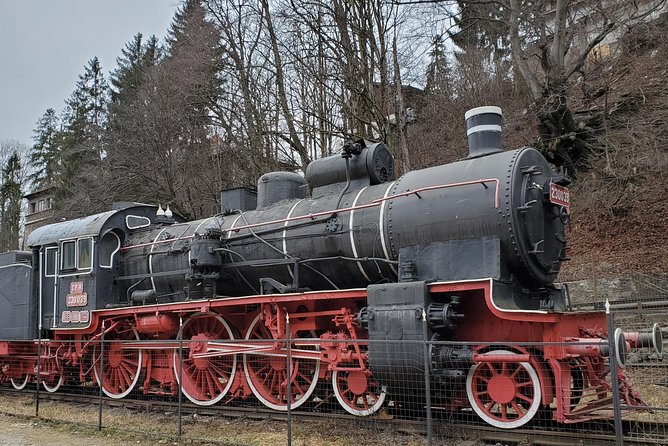
Starting with Sinaia’s steam locomotive
The first stop is the old steam locomotive, with about 15 minutes devoted to the railway story. This may sound like a small opening stop, but it sets up much of what follows.
Adriana explains the history of the King’s train station, the Blue Train, and the Orient Express. These details show how Sinaia became connected to royal travel and international visitors. The Orient Express is not just a famous name here. It helps explain how princes and wealthy visitors reached this mountain resort in an age when rail travel carried status and ceremony.
The locomotive itself uses water vapor, a reminder of the technology that helped turn Sinaia into a destination. You should treat this as a short introduction rather than a major museum visit. Admission is not included, and the stop is limited to around 15 minutes, so the value comes mainly from the explanation and the link to the royal story.
If railway history interests you, listen closely here. The information gives more meaning to the station, the casino, and the royal residences later in the walk.
The casino and the fortunes brought by train
The tour next reaches Cazinoul Sinaia for about 15 minutes. The focus is on the princes and other high-ranking visitors who came to try their luck, including people arriving on the Orient Express.
This is one of the more entertaining chapters in the route. Royal resorts were not built only for quiet mountain air. They also needed grand social spaces where wealthy visitors could spend money, meet one another, and chase a little excitement. The casino helps you picture Sinaia as a fashionable resort rather than only a castle town.
Adriana’s explanation also brings a cautionary edge. Some visitors arrived with fortunes and left without them. That small detail gives the building a human story, and it keeps the tour from becoming a dry procession of dates and names.
Admission is not included at this stop. The scheduled time is brief, so you should not expect a long casino visit or an extended interior tour. Instead, the casino works as a compact history lesson about privilege, leisure, and the social world surrounding the Romanian court.
Sinaia Monastery and the town’s rough beginnings
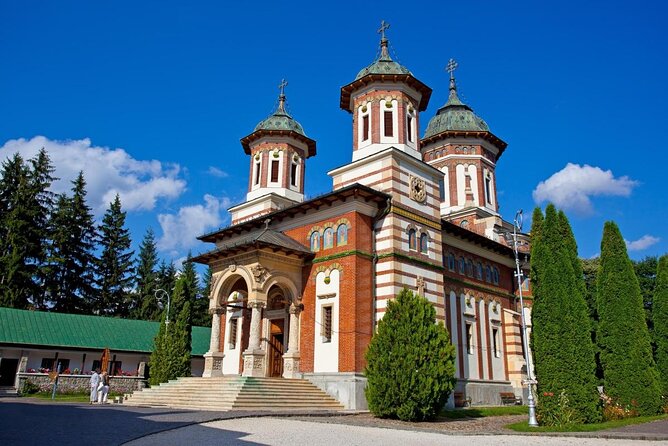
Sinaia Monastery gets around 20 minutes and provides the strongest contrast with the royal buildings. Here the story reaches back to a time when the area was associated with bandits hiding in the forests.
The monastery later became a refuge for monks who sought shelter in caves. That shift, from danger to religious retreat, helps explain how Sinaia gained its identity before the royal family transformed it. The mountain setting was not simply pretty. It offered isolation, protection, and a place apart from the pressures of the lowlands.
Admission is free, which makes this a useful stop for understanding local history without adding another ticket to your budget. It also breaks up the grand royal theme. You see that Sinaia did not begin with Peleș Castle. The royal story grew out of an older religious and mountain setting.
The time here is still fairly short. You will receive the main historical explanation, but you may want additional personal time if monasteries are a major interest. The tour’s purpose is to connect the monastery with Sinaia’s wider story, not to make it the central attraction.
Same base, a completely different day:
- Minivan 8: Peles & Dracula’s Castle and Brasov Full-Day Trip
★ 4.6 · 29 reviews - From Bucharest: Bran, Peles Castle & Brasov Private Day Tour
★ 5.0 · 19 reviews - Brasov: Bran, Peles and Cantacuzino Castles Day Tour
★ 4.9 · 16 reviews - From Brasov 3 castles : Peles , Bran , Cantacuzino
★ 4.7 · 15 reviews
Peleș Castle, the royal centerpiece
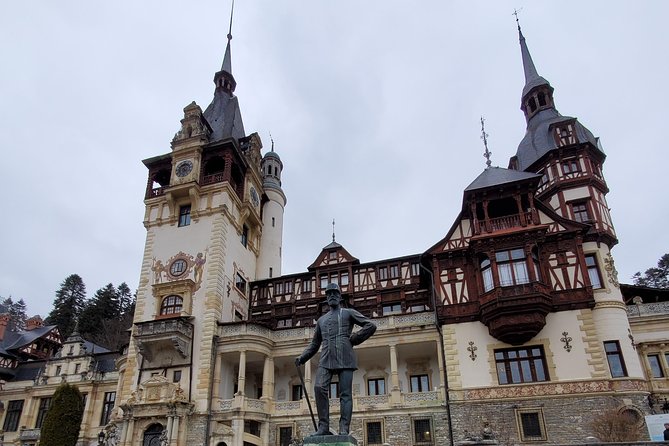
Peleș Castle receives about one hour, and this is the stop that carries the most weight. King Carol I fell in love with Sinaia and chose it as the cradle of his dynasty. He wanted a residence that matched the setting and gave the Romanian monarchy a lasting home.
The castle is presented as one of the most modern and elegant residences of its time. That description matters because Peleș was not only a pretty summer house. It expressed the ambitions of a king building a European-style monarchy in Romania.
An hour gives the guide enough time to explain what made the castle special, while still keeping the overall activity within a half-day. Admission is included here, which improves the value of the $58.18 price. This is the one major interior visit built into the cost.
I would pay close attention to how Adriana explains the royal family and the political setting around the castle. Her tour is not limited to architecture. It also covers Romania’s conflicts and the development of the dynasty, giving the rooms a wider meaning.
The castle stop may feel short if you want a slow, room-by-room visit. The full activity also includes several other locations, so the schedule has to keep moving. Still, the one-hour allocation is sensible for a guided overview and makes Peleș the clear anchor of the day.
Pelișor Castle and Queen Maria’s personal style
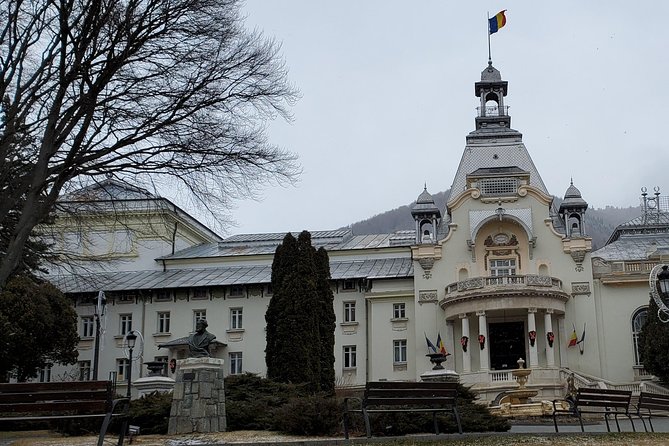
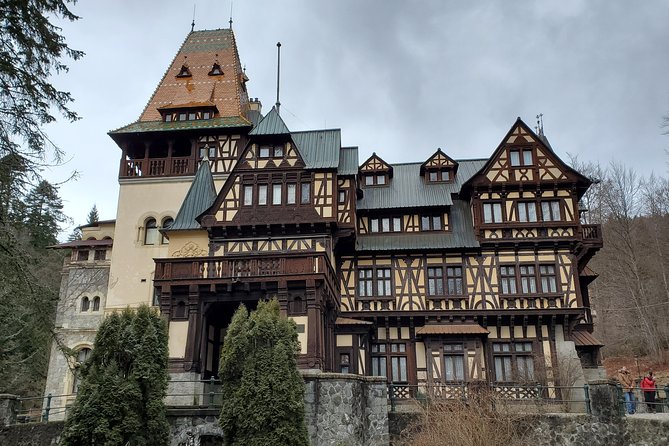
Pelișor Castle follows Peleș and receives around 10 minutes of explanation. This smaller royal residence was wanted by Queen Maria of Romania for her large family and offered a less solemn setting than the main castle.
That contrast is the reason to pay attention here. Peleș represents King Carol I’s formal vision for a dynasty. Pelișor gives you a glimpse of a more domestic royal world, shaped around family life rather than ceremony alone.
The stop is brief, and admission is not included. You should see it as an introduction rather than a full visit. If Queen Maria is your main interest, you will need to check the separate entry arrangements and allow for additional time beyond the guided schedule.
Even with only 10 minutes, Pelișor completes the royal story well. It shows that the Sinaia court was not one single style or personality. King Carol I and Queen Maria wanted different kinds of spaces, and the two residences make that clear.
What the $58.18 price really covers
At $58.18 per person, this is not a budget stroll, but it can be a fair price for a private experience. You are paying for a dedicated guide, a route that joins several parts of Sinaia’s story, and admission to Peleș Castle.
The private format matters most for small groups. You can ask about the royal family, the railway, local conflicts, or the monastery without waiting for a large group to catch up. Adriana’s role is especially important because the tour depends on clear storytelling rather than on a long list of sights.
The price does not cover private transportation. It also does not include admission at the steam locomotive, casino, or Pelișor Castle. That means you should budget for possible extra tickets and arrange how you will reach the starting point in Sinaia.
Group discounts are available, which may improve the cost for larger parties. The activity ends back at the meeting point, so it is useful for visitors who already have a base in Sinaia and want a guided town experience without arranging a separate transfer.
The tour is booked, on average, 59 days ahead. That suggests you should reserve early if your Romania schedule is fixed, especially since it runs only Wednesday through Saturday during the stated operating period.
Timing, fitness, and the shape of the day
The published operating hours are 9:30 a.m. to 2:30 p.m., Wednesday through Saturday, from November 1, 2021 through June 16, 2026. The experience itself lasts about three to five hours, so confirm the exact start time when you book.
You need a moderate level of physical fitness. The route includes walking between historical sites and moving through a mountain town, so it is not designed as a seated sightseeing trip. The supplied information does not promise private transport, hotel pickup, or a low-mobility option.
The tour is private, but that does not mean every detail is flexible. The castle, monastery, casino, and railway stops still need to fit within the available time and opening conditions. Ask about the exact meeting arrangements if you need to coordinate trains, buses, or another activity afterward.
The tour requires good weather. If poor weather causes cancellation, you are offered another date or a full refund. You also receive a full refund if you cancel at least 24 hours before the start time. Changes or cancellations inside that 24-hour window are not accepted for a refund.
Adriana Chirau’s guiding style
The guide is Adriana Chirau, and her biggest strength is the way she makes Sinaia’s history conversational. The feedback connected with the experience repeatedly points to her professionalism, clear answers, and ability to keep the walk entertaining.
She also speaks Spanish fluently, which is a real advantage for Spanish-speaking visitors. One Spanish-language account specifically praised her explanations of Romanian history, national conflicts, and Peleș Castle.
That matters because this tour covers several subjects that can blur together: medieval bandits, monks, the railway, the casino, King Carol I, Queen Maria, and the broader royal family. A guide who can answer questions and keep the links clear adds much more value than a guide who simply points at buildings.
The format suits people who prefer conversation over a fixed audio script. You can ask about the details that interest you most, though the total time means you should tell Adriana early if one subject deserves extra attention.
Who will get the most from this tour
I would choose this experience if you want a first look at Sinaia and prefer a guide to explain the connections. It is especially useful if you care about the Romanian royal family, Peleș Castle, railway history, or the way religious and political events shaped the town.
It also suits small groups that want a private pace. Families, couples, and friends can ask questions without competing with a large party. Spanish-speaking visitors have an added reason to consider it because Adriana can guide in Spanish.
You may want a different plan if you only want a long, unhurried castle visit. The schedule spreads its time across five stops, and some are short. You may also prefer another option if you need included transportation or want all entrance fees covered.
The activity is not aimed at anyone seeking a strenuous mountain outing. The scenery comes as a setting for history, while the main work is walking through town and visiting cultural sites.
Should you book the Sinaia royal history tour?
Book it if you want the royal story explained in context rather than seeing Peleș Castle alone. The strongest reasons are the private format, Adriana Chirau’s lively and well-informed guiding, the included Peleș admission, and the unusual range of subjects covered in a single half-day.
Before booking, check three things: your group’s walking ability, the cost of extra admissions, and how you will get to Sinaia since private transport is not included. If those points work for you, the $58.18 price buys a well-focused introduction to the town’s royal, religious, railway, and mountain past.
FAQ
How long does the Sinaia tour last?
The experience lasts approximately three to five hours.
Where does the tour start?
The tour starts in Sinaia, Romania, at the stated meeting point in Sinaia 106100.
Where does the tour finish?
The activity ends back at the meeting point.
Is transportation included?
No. Private transportation is not included in the tour price.
Is admission to Peleș Castle included?
Yes. Admission to Peleș Castle is included.
Are all entrance fees included?
No. Admission is not included for the steam locomotive, Cazinoul Sinaia, or Pelișor Castle. Admission to Sinaia Monastery is free.
Is this a private tour?
Yes. Only your group participates in the activity.
Can I cancel for a full refund?
Yes, if you cancel at least 24 hours before the experience start time. Cancellations made less than 24 hours before the start time are not refunded.
Just added around Sinaia
- Peles Castle Skip-The-Line Guided Tour★ 5.0 · 13 reviews
- Peleș Castle, Bran Castles and Brasov City – Private Tour★ 5.0 · 6 reviews
- PREMIUM TOUR (6 Pax) Bucharest, Peles&Bran Castles & Brasov★ 5.0 · 8 reviews
- From Bucharest: Largest Salt Mine In Europe and Peles Castle★ 5.0 · 5 reviews
- From Bucharest: Dracula, Wednesday, and Peles Castles Tour★ 4.9 · 10 reviews
- From Bucharest: 2-Day Tour to Brasov and Sighisoara★ 5.0 · 4 reviews
- From Bucharest: Day Trip to Peles, Dracula’s Castle, Brasov★ 4.3 · 12 reviews
- From Brasov 3 castles : Peles , Bran , Cantacuzino★ 4.7 · 15 reviews
Peleș Castle Tours, compared.
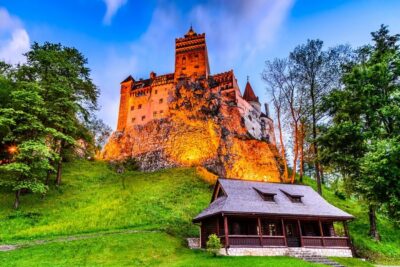
Dracula’s Castle, Peles Castle, & Brasov Old Town
Read our review →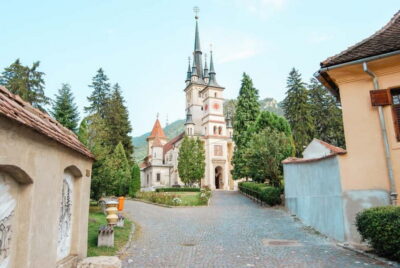
Dracula’s Castle, Peleș Castle & Brașov Day Trip
Read our review →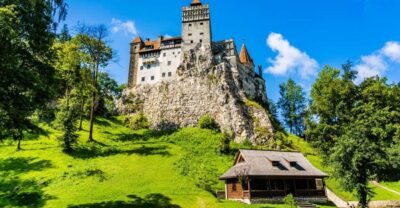
Day Trip to Dracula Castle, Peles Castle & Brașov
Read our review →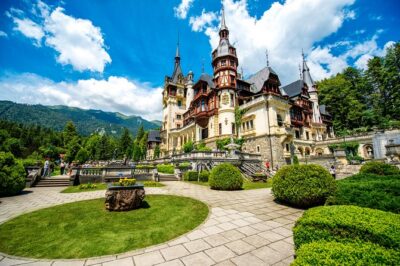
Bucharest to Dracula Castle, Peles Castle and Brasov Guided Tour
Read our review →
Dracula’s Castle, Peles Castle and Brasov Day Trip from Bucharest
Read our review →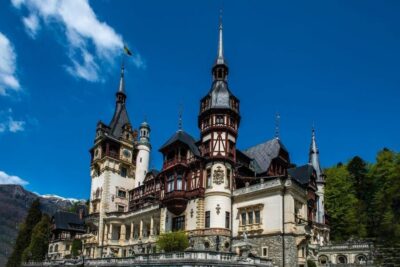
Peles Castle, Bran Castle, & Brasov Old Town Tour
Read our review →
Small-group tour Bran, Rasnov, and Peles Castles
Read our review →Browse the lists this tour appears in