
Reviewed · COMMUNISM & CEAUȘESCU TOURS
Private Walking Tour of Communist Bucharest
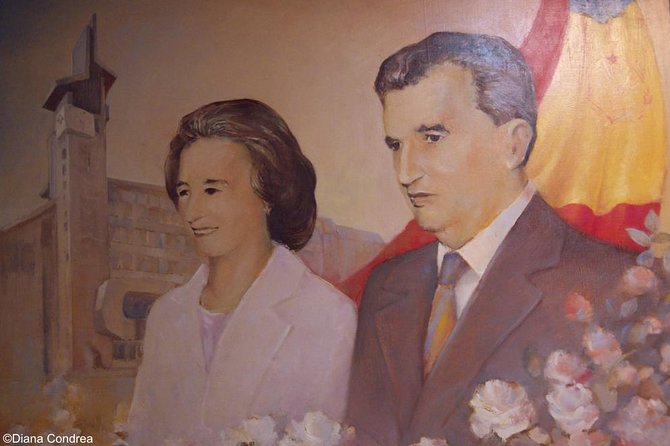
Bucharest’s Communist past is easiest to understand when you see its scale. This private tour takes you from the street battles of December 1989 to Nicolae Ceaușescu’s former home and the enormous Palace of Parliament, where marble and political ambition fill more than 1,000 rooms. Laura and Diana are among the guides who lead the experience, and both bring strong local and political background.
I like the private format, since you can adjust the pace and focus. I also like the way the tour connects grand buildings with human stories, including churches that were moved to escape demolition. The main drawback is the length: seven hours, several stops, and a moderate amount of walking can feel tiring, especially if you also spend time inside the Palace of Parliament.
Key points to know before booking
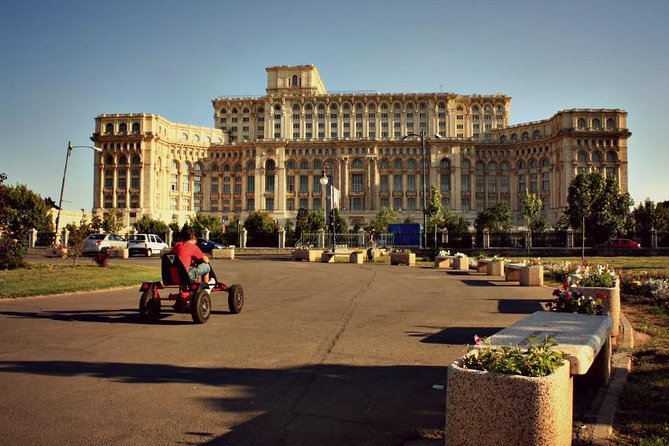
- See Communist Bucharest at full scale: The Palace of Parliament and Constitution Square show how radically the old city was reshaped.
- Meet the Revolution where it happened: University Square and Revolution Square explain the violent events of December 1989.
- Visit Ceaușescu’s private world: His former mansion offers a more intimate look at dictatorship than the huge civic buildings do.
- Travel privately: The group is limited to your party, with a private vehicle used for parts of the route.
- Get room to customize: You can discuss your interests and adjust the day with your guide.
- Plan for extra costs: Lunch, food, drinks, taxes, and admission to the Atheneum and Palace of Parliament are not included.
Why this tour works for understanding Bucharest
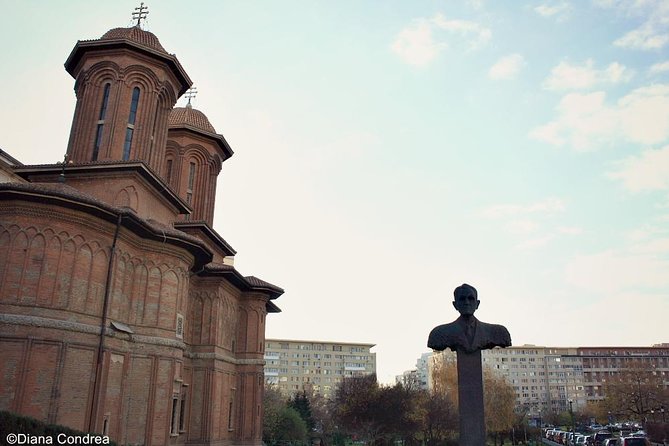
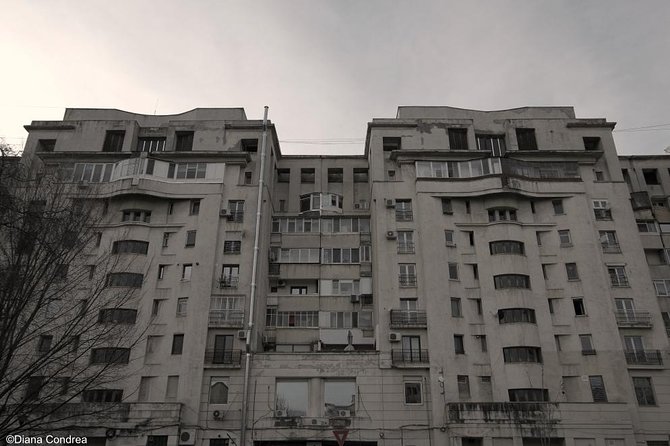
Bucharest can feel confusing at first. Royal buildings, Orthodox churches, Communist apartment blocks, broad ceremonial avenues, and modern traffic all occupy the same city. A normal sightseeing walk may show you the pieces without explaining how they fit together.
This tour gives you a clear thread. You begin with the late Communist period and the fall of the regime, then move through royal and cultural landmarks before reaching Ceaușescu’s private residence and the huge civic center built under his rule. The final churches add an important human scale to a story often told through concrete and marble.
The guide’s background also matters. The tour is led by someone with degrees in political science and tourism, so you can expect more than dates and building names. You can ask about the rise of the Communist Party, Ceaușescu’s rule, the events of 1989, and the impact of Communist planning on daily life.
Because this is a private activity, you do not have to follow a fixed group pace. If Revolution Square matters most to you, you can ask for more explanation there. If architecture is your main interest, you can spend more time on the Palace of Parliament and the Atheneum. That flexibility is one of the strongest reasons to choose this tour over a standard city sightseeing outing.
Other guided walks in Bucharest:
- Bucharest: City Highlights Guided Walking Tour
★ 4.9 · 1,482 reviews - Bucharest Highlights Walking Tour
★ 5.0 · 469 reviews - Bucharest: Ghost Stories & Romanian Mythology Walking Tour
★ 4.9 · 287 reviews
University Square and the street battles of 1989
University Square is a good opening because it places you close to the events that ended Communist rule in Romania. It is one of the city’s important memorial spaces connected with the violent December 1989 revolution.
You spend about 30 minutes here, with no admission charge. That is enough time for the guide to explain the location and set up the political story before you move on. The square is not presented simply as another city center stop. It helps you understand where public resistance and confrontation became visible.
I find this kind of beginning useful because it starts with people rather than buildings. The later Palace of Parliament can seem like an isolated giant, but University Square reminds you that the regime’s collapse was tied to public protest, fear, and bloodshed in real city streets.
You should expect an outdoor stop, so dress for the weather. The tour begins at 8:30 a.m., and starting early gives you a practical chance to cover the full route without rushing every visit.
Revolution Square, where two eras meet
Revolution Square continues the story with another 30-minute stop. This is one of the most important places in Bucharest for understanding the final days of Communist rule, but it also contains reminders of the country’s royal past.
That clash is what makes the square interesting. The setting brings together different chapters of Romania’s political life: monarchy, dictatorship, revolution, and the years that followed. Your guide can help you read the buildings and open space as part of that story rather than as isolated sights.
I would pay close attention here if you want to understand why Bucharest can feel historically layered. A palace or public building may carry one meaning from the royal period, another from the Communist era, and yet another after 1989. The guide’s political background is useful because these changes are not always obvious from the street.
There is no admission fee for this stop. The visit is short, so ask questions while you are here if you want more detail about the revolution or the political transition.
The Romanian Atheneum and the city’s cultural side
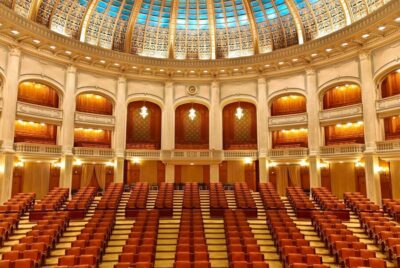
The Romanian Atheneum gives the day a welcome change of tone. This 19th-century concert hall is one of Bucharest’s major landmarks and reflects the country’s love of classical music.
The building is known for its impressive concert hall and a 75-meter fresco. The visit is scheduled for about 30 minutes, but admission is not included, so you should be prepared to pay the entrance fee separately if you go inside.
Even if your main interest is political history, the Atheneum matters because it shows the Bucharest that existed before Communist rule. The city was not created by Ceaușescu, and this stop helps correct the common mistake of seeing every grand Bucharest building through a Communist lens.
The stop also breaks up the heavier political material. After two locations tied closely to revolution and dictatorship, the Atheneum brings you into music, architecture, and civic culture. If you like buildings, this may be one of the day’s most attractive pauses.
More of the communist years around Bucharest:
- Bucharest: Palace of Parliament Tickets and Guide
★ 4.3 · 3,182 reviews - Bucharest: Palace of Parliament Tickets and Guided Tour
★ 4.4 · 1,877 reviews - Bucharest: Parliament Palace Skip-the-line Ticket
★ 4.2 · 1,518 reviews - The Real tour of Communism
★ 5.0 · 666 reviews
Ceaușescu’s mansion and the private face of power
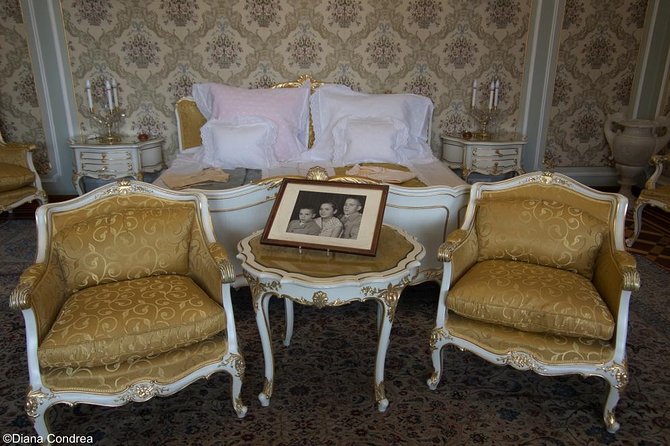
The former residence of Nicolae Ceaușescu offers a sharp contrast to the public scale of the Palace of Parliament. Here, you look at the private residence of Romania’s Communist dictator rather than the monumental buildings created for the state.
You have about an hour at the mansion, with no admission fee listed for this tour. That longer visit gives you time to consider how a leader’s personal surroundings differed from the lives of ordinary Romanians during the same period.
The mansion is especially useful if you want a more personal angle on the dictatorship. The Palace of Parliament tells you about power projected outward, through size, ceremony, and expensive materials. The residence turns the subject inward, toward the household and lifestyle of the ruling family.
I would not treat this as a light sightseeing stop. The value comes from placing personal privilege beside the wider political system. Your guide can help connect the residence to the larger story of Ceaușescu’s rise and fall.
The Palace of Parliament, Bucharest’s largest political statement
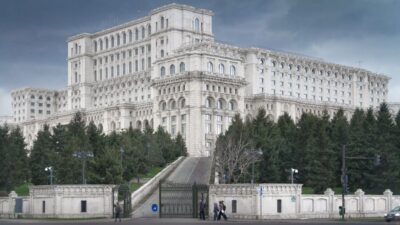
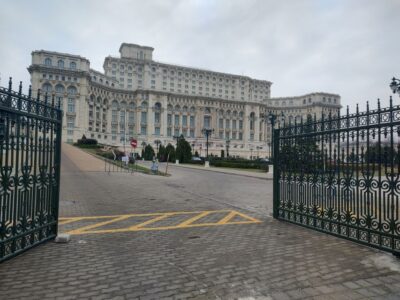
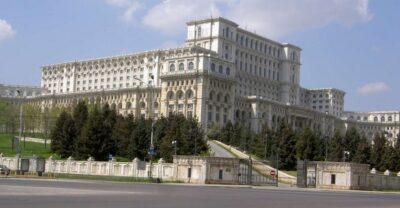
The Palace of Parliament is the day’s major stop and the clearest symbol of Communist Bucharest. Locally called the House of the People, it is described as the second-largest administrative building in the world and contains more than 1,000 rooms.
The figures are hard to grasp until you are there. The building uses roughly 1 million cubic meters of marble and 3.5 tonnes of crystal, with handmade decoration and costly materials throughout. The scale is not just architectural. It shows the enormous resources directed toward one political project.
You have about 90 minutes here. Admission is not included, and you should also carry a current valid passport, which is required on the day of the tour. That passport rule is important, so do not leave your identification at the hotel.
For me, the Palace is most useful when you resist seeing it only as an oddity. Its size reflects the Communist leadership’s desire to reshape Bucharest around a grand civic center. Entire parts of the city were altered to make room for the project, and the building remains a powerful example of how government can change the physical character of a capital.
The scale can also be overwhelming. If you prefer small museums, intimate streets, and local food stops, this part of the tour may feel heavy. If you want to understand Ceaușescu’s ambition, however, it is difficult to find a clearer example.
Since the tour lasts seven hours and lunch is not included, ask your guide about the midday break at a city center restaurant. Food and drinks are your responsibility, but stopping for lunch gives you a needed pause before or after the largest indoor visit.
Constitution Square and the Communist civic center
Constitution Square sits at the heart of the old Communist civic center. The stop lasts about 20 minutes and has no admission fee.
This is where the Palace of Parliament makes the most sense as part of a wider plan. You are not simply looking at one oversized building. You are seeing the broad public space designed to support state ceremonies, official display, and the projection of authority.
The square also helps you judge the proportions of the project from outside. Inside the Palace, materials and rooms dominate your attention. Outside, the open civic area shows how the surrounding city was arranged to frame the building and support its political purpose.
Because the stop is brief, use it to ask about the neighborhood and the changes made during Communist redevelopment. The square is one of the better places to connect architecture with urban planning.
Antim and Mihai Vodă, churches that survived demolition
The final church visits add nuance to the day. Antim Monastery and Mihai Vodă Monastery are both described as churches saved from Communist demolition after being moved from their original locations.
Each visit lasts about 20 minutes. These stops may not have the visual weight of the Palace of Parliament, but they are among the most revealing parts of the route. They show that urban destruction was not total, and that some historic religious buildings survived through relocation rather than simple preservation in place.
I like ending with these monasteries because they bring the story back to a human scale. After the grand civic center, you see the cost of redevelopment in a different way. A church can remain standing, yet still lose its original setting and relationship with the surrounding neighborhood.
The visits are short, so do not expect a long religious tour. Their main value is historical and urban: they show what was threatened, what survived, and how much the city changed.
Private transport, pickup, and the pace of the day
This is a private tour, so only your group participates. Private transport is provided on some parts of the route, which matters because the stops are spread across Bucharest rather than packed into one walkable district.
Hotel pickup is included for groups of up to three people. The listed start point is in Bucharest, and the activity returns to the meeting point at the end. If your group is larger than three, confirm the pickup arrangements before booking rather than assuming hotel pickup applies.
You should have moderate physical fitness. The day includes walking and several extended visits, including about 90 minutes at the Palace of Parliament. It is not described as a fully accessible or fully seated experience, so plan for a normal sightseeing day with time on your feet.
The 8:30 a.m. start is sensible for a seven-hour route. It gives you time to cover the main political sites, take a lunch break, and still finish back in the city. The tradeoff is that this is not a lazy morning activity.
Is the $92.19 price good value?
At $92.19 per person, the price makes the most sense for a small group that values a private guide and a full day of context. You are paying for roughly seven hours, local guiding, private participation, transport on parts of the route, and the ability to adjust the itinerary.
The total cost will be higher because lunch, drinks, taxes, and admission fees are not included. The Romanian Atheneum and Palace of Parliament require separate admission payments, so budget for those on top of the advertised price.
For one person or a couple, the cost may feel substantial. For three or more people sharing a private experience, the value improves, particularly if you want to ask questions and shape the day around politics, architecture, or the 1989 revolution.
I would choose this tour if you want an informed explanation of Communist Bucharest rather than a quick photo stop at the Palace of Parliament. I would skip it if your priority is nightlife, shopping, or a relaxed food-focused day.
Who should book this private Bucharest tour?
This experience suits you best if you:
- Want the Communist period explained in political and personal terms
- Prefer a private guide to a large group
- Have a full day available in Bucharest
- Are interested in the 1989 revolution
- Want to see both grand state buildings and threatened churches
- Appreciate flexibility in the schedule
- Can manage a moderate amount of walking and sightseeing
The tour also works well for first-time visitors who want orientation. You see central squares, a major concert hall, a dictator’s residence, the civic center, and historic monasteries in one day.
It may be less suitable if you want a short walking tour, a low-cost activity with no added admission fees, or a route built mainly around cafés and local neighborhoods.
Practical details before you go
Confirmation is sent within 48 hours of booking, subject to availability. A current valid passport is required on the day of travel, especially for the Palace of Parliament visit.
The tour offers free cancellation if you cancel at least 24 hours before the start time. Cancellations or changes made less than 24 hours in advance are not accepted for a refund.
Bring identification, allow extra money for lunch and entry fees, and wear shoes suitable for a day with moderate walking. If you have a particular interest, such as the revolution, architecture, or religious buildings, tell your guide early so the private format can work in your favor.
Should you book it?
Book this tour if you want Bucharest’s Communist period explained through places you can actually see. The strongest parts are the political setting at University Square and Revolution Square, the private view of Ceaușescu’s mansion, and the sheer scale of the Palace of Parliament.
The day is long, and the advertised price does not cover food, drinks, taxes, or all admission fees. Still, the private guide, transport on parts of the route, and freedom to adjust the focus make the cost reasonable for a small group with a serious interest in Romanian history.
If you have only one full day in Bucharest and want to understand why the city looks the way it does, this is a useful choice. Just bring your passport, expect a full schedule, and save room in the budget for the stops that charge admission.
FAQ
How long does the tour last?
The tour lasts approximately seven hours and begins at 8:30 a.m.
Is this a private tour?
Yes. Only your group participates in the activity.
Is hotel pickup included?
Hotel pickup is included for groups of up to three people. The tour also has a meeting point in Bucharest and ends back at the meeting point.
What is included in the price?
The price includes a professional guide and transport by private vehicle on some parts of the route. Food, drinks, taxes, and certain admission fees are not included.
Do I need to bring a passport?
Yes. A current valid passport is required on the day of the tour.
Can I cancel for a full refund?
Yes, if you cancel at least 24 hours before the experience starts. Cancellations or changes made less than 24 hours before the start time are not accepted for a refund.
More walking tours in Bucharest
- Bucharest: Guided Walking Tour with Romanian Snack
★ 4.9 · 228 reviews - Best of Bucharest | Private Walking Tour
★ 5.0 · 199 reviews - Walking Tour- Delightful Bucharest (Highlights, Stories, Sights)
★ 5.0 · 145 reviews - 4h Bucharest Private Tour (2h by Car and 2h Walking in Old Town)
★ 5.0 · 90 reviews
Just added around Bucharest
- Winery touring & private wine tasting – one day private tour★ 5.0 · 3 reviews
- Village Museum Bucharest Guided Tour★ 5.0 · 6 reviews
- Bucharest: Dealu Mare Winery Private Trip with Wine Tasting★ 4.9 · 6 reviews
- Transylvania Tour: Dracula’s Castle, Peles Palace & Brasov★ 5.0 · 19 reviews
- Traditions in Bucharest: Village Museum and Wine Tasting★ 5.0 · 8 reviews
- Airport Henri Coanda (Otopeni) to Bucharest – Private Transfer – Driver★ 5.0 · 5 reviews
- Gems of Transilvania: Brasov,Sighisoara,Sibiu,Viscri and more★ 5.0 · 6 reviews
- Discover Medieval Transylvania Small Group Tour – 7 days★ 5.0 · 4 reviews
Communism & Ceaușescu Tours, compared.
Parliament Senate Entry Tickets and Guided Tour
Read our review →
Bucharest Essential Tour: Old Town, Calea Victoriei & Communism
Read our review →Browse the lists this tour appears in