
Reviewed · TRANSYLVANIA DAY TRIPS
Bucovina Painted Monasteries & Transylvania Tour: 4-Day Private
The real prize here is Bucovina’s painted monasteries, where entire church walls carry centuries-old biblical scenes in blue, red, gold, and ochre. Voroneț is the star, but Sucevița and Moldovița give you a fuller picture of the art, faith, and politics behind these remarkable buildings.
I like the private transport, which matters on a four-day route covering a large part of northern Romania. I also like the chance to travel with guides such as Toni or Marius, who bring strong personal care and clear explanations to the trip. The main caution is the pace: this is a lot of Romania in four days, and several days involve long road journeys.
Key things to know before you book
- The painted monasteries are the heart of the trip: Sucevița, Moldovița, and Voroneț are covered in mural art inside and out.
- The route reaches beyond Bucovina: You also see Sighișoara, Viscri, Brașov, the Black Church, and Peleș Castle.
- Private travel gives you flexibility: Only your own group takes part, with pickup anywhere in Bucharest.
- Toni and Marius have led this experience: Both are praised for their care, storytelling, and practical help.
- The price includes hotels and breakfast, not every admission: Confirm the current entrance-fee arrangement before paying.
- Modest dress is important: Long trousers or a long skirt are needed at monastery grounds, and photography rules can vary.
Why the painted monasteries are worth the long road
Romania’s northern Moldavia region rewards patience. The monasteries are not quick photo stops with a single decorated chapel. Their walls are covered with scenes from the Bible, created when religious art also served as a teaching tool for people who could not read.
The colors and condition are extraordinary. At Voroneț, the famous blue gives the church its nickname, the Sistine Chapel of the East. That comparison is grand, but the place earns attention on its own terms. You can study rows of saints, scenes of judgment, and carefully arranged figures across the exterior walls.
Sucevița offers a different mood. Byzantine and Gothic details meet local Moldavian design, and the murals cover both the inside and outside of the church. Moldovița, built in 1532 by Petru Rareș, was also meant to serve as a protective religious center in an age when Ottoman power threatened the region.
The tour gives you two hours at each of these three major monasteries. That is generous enough to look closely instead of rushing through the grounds. Still, you should expect a full day. Three large sites, plus road time, can be tiring, especially if you want to pay attention to the art rather than simply collect photographs.
Other monasteries and painted churches from Bucharest:
- Princely Court of Târgoviște and Curtea de Argeș Monastery
★ 4.5 · 50 reviews - Small Group Tour to Mogosoaia Palace & Snagov Monastery
★ 4.4 · 41 reviews - Sacred Monasteries Private Tour: Snagov, Țigănești & Căldărușani
★ 5.0 · 32 reviews
Agapia and Văratec: living monasteries, not empty monuments
The first day begins with two major nunneries in Neamț County. Agapia Monastery was built between 1641 and 1643 by Gavriil Coci, the brother of Moldavian ruler Vasile Lupu. The church was later painted by Nicolae Grigorescu between 1858 and 1861, giving the visit an important link to one of Romania’s best-known artists.
Agapia remains a working Orthodox religious community. Around 300 to 400 nuns live there, making it one of Romania’s largest nunneries. You have about an hour to see the church and grounds, so listen closely to your guide and leave time for quiet observation.
Văratec is even larger, with more than 400 nuns. The hour here helps you compare the two communities. You are not simply visiting two old churches. You are seeing places where religious life continues, with monasteries functioning as homes and spiritual centers rather than museum displays.
Dress respectfully. Long trousers or a long skirt are required to enter the grounds, according to practical guidance from the experience. Head coverings were not required in the information provided, but local customs can change, so modest clothing is the safe choice.
Photography may also involve a small fee or restrictions. At one monastery, outside photography was reported to require a receipt costing 10 lei, while interior photography was not allowed. Carry a little local currency and ask before raising your camera.
Sucevița, Moldovița, and Voroneț in one full day
Day two is the artistic high point. Sucevița receives about two hours, giving you time to appreciate its fortified appearance and layered mural program. The church combines Byzantine and Gothic elements, while the paintings show scenes from both the Old and New Testaments.
Moldovița follows with another two-hour visit. Founded by Petru Rareș in 1532, it was built partly as a defensive religious outpost. That detail helps explain why these monasteries can feel both devotional and fortified. Their walls were not only meant to inspire worship. They also reflected the uncertain politics of the region.
Voroneț completes the day. Stephen the Great built the monastery in 1488, reportedly in only three months and three weeks, to mark a victory at Vaslui. Its painted exterior is the famous one, with the intense shade known as Voroneț blue.
I would not treat these monasteries as interchangeable. Each has its own color scheme, design, and visual emphasis. A good guide helps you notice those differences instead of repeating the same basic explanation at every stop.
Marius has been praised for explaining the art, religion, and history while keeping the day manageable. That balance matters here. You want enough context to understand what you are seeing, but not so much information that the paintings blur together.
The route has also included a painted egg museum on some versions of the experience, but that stop is not listed in the supplied four-day schedule. Do not assume it is part of your departure. Ask the operator if it matters to you.
Sighișoara and Viscri bring you into Saxon Transylvania
Day three changes the subject. After the monasteries of Bucovina, you move into Transylvania and its medieval Saxon towns.
Sighișoara’s historic center is a walled citadel and a UNESCO World Heritage Site. You have two hours here, enough for a walk through the old town and time to absorb its medieval character. The appeal is the setting itself: streets, walls, and preserved buildings that make the citadel feel like a place with a long civic life, not just a collection of isolated sights.
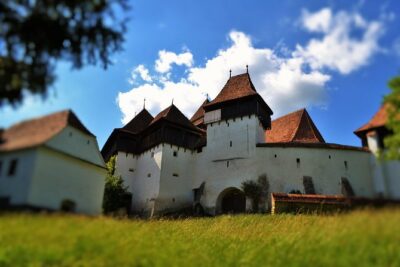
Viscri offers a quieter stop. Its fortified church is also listed by UNESCO and gives you a look at Saxon religious architecture in a rural setting. The admission charge is not included, so keep some money available for this visit.
The hour at Viscri is short. If you like old churches and village history, you may wish for more time. On the other hand, the stop breaks up the drive and adds a type of Transylvanian experience that a city visit cannot provide.
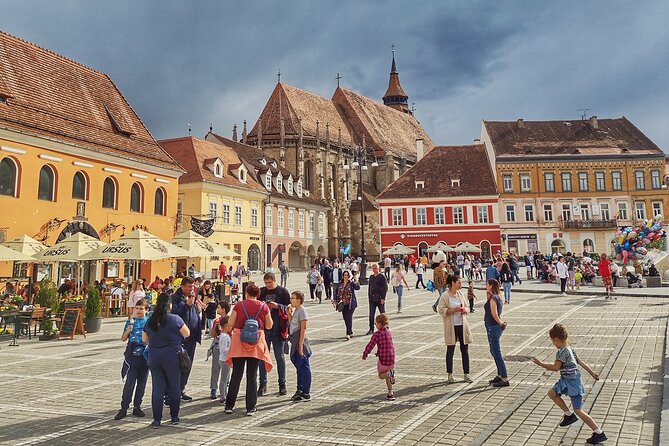
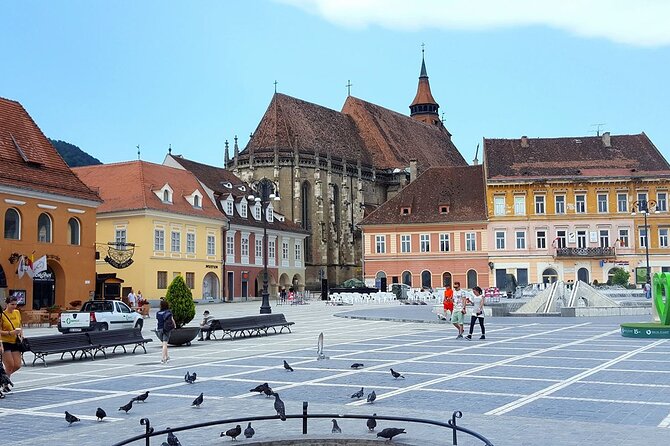
Brasov follows with two hours in the historic center. The city was once the regional capital of the Transylvanian Saxons and occupied an important position on trade routes between East and West. Its historic center gives you a lively contrast to the monastery grounds and the smaller scale of Viscri.
This is a busy day of contrasts: fortified village, medieval citadel, and large historic city. Private transport makes the sequence easier because you are not dealing with public connections between scattered places.
Other days across Transylvania from Bucharest:
- Transylvania and Dracula Castle Full Day Tour from Bucharest
★ 4.5 · 1,589 reviews - Castles of Transylvania: Private Day Trip from Bucharest
★ 4.5 · 248 reviews - 2-Day Medieval Transylvania with Brasov,Sibiu and Sighisoara Tour from Bucharest
★ 4.5 · 145 reviews - 2-Day Transylvania from Bucharest: Brasov, Bran, Sighisoara
★ 5.0 · 60 reviews
The Black Church and Peleș Castle close the trip
Day four begins at the Black Church in Brasov. Built by the city’s German community, it is Romania’s main Gothic monument and one of the region’s most important Lutheran churches.
One hour is set aside for the church. Admission is not included, so plan for an extra charge. The visit is especially useful if you want to understand the German Saxon influence that also shaped Brasov and the surrounding area.
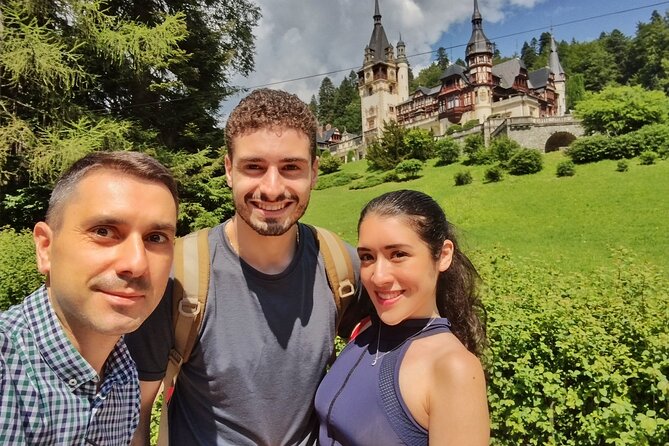
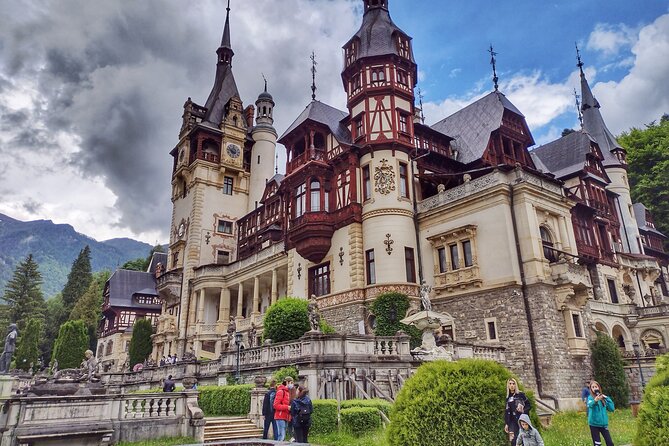
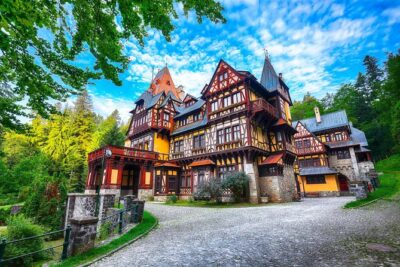
Peleș Castle is the final major stop. Built between 1873 and 1914 for King Carol I, it served as a summer royal residence in the Carpathian Mountains near Sinaia. The castle’s Neo-Renaissance design makes it a sharp change from both the Orthodox monasteries and the medieval Saxon towns.
You have about an hour at Peleș. That allows time to see the exterior and visit the interior if you purchase admission, but it is not a leisurely castle day. Inside visits are not included, and the supplied details indicate that tickets can be purchased on site.
The castle sits along a historic route between Transylvania and Wallachia, which helps tie the trip together. You begin with Moldavian religious art, pass through Saxon Transylvania, and finish with Romania’s modern royal past.
Private transport is the main practical advantage
This tour covers a large distance. A private vehicle saves you from piecing together trains, buses, and local taxis, especially around Bucovina and Viscri. Pickup and drop-off can be arranged anywhere in Bucharest, with a scheduled start at 9:00 a.m.
The transport has been described as a comfortable, spacious, air-conditioned van. That is useful on long road days, though comfort does not remove the distance. You should be ready for several hours on the road and bring water, snacks, and anything you need for a full day outside the hotel.
Because this is a private tour, only your group participates. That gives you one-on-one access to the guide and makes it easier to pause for questions or practical needs. It also means the quality of the experience depends heavily on the guide assigned to your departure.
Toni and Marius are the names connected with this route. Toni has been praised for making Romanian history understandable and for creating a warm, easy travel atmosphere. Marius has been praised for handling practical problems calmly, including helping a sick passenger reach medical care. Those are useful qualities on a multi-day private trip.
The guides have also helped with restaurant choices and local arrangements. Meals are not included, so this kind of local advice can improve the value of the trip without forcing you into a fixed dining plan.
Hotels, meals, and the real cost
The advertised price is $1,356.43 per person. It includes three nights in three-star hotels, three breakfasts, private transport, hotel pickup and drop-off, and the private guiding service.
That price is not cheap, but the route is ambitious. You are paying for a private vehicle, a dedicated guide, several long transfers, and accommodation across three nights. For a solo visitor or a small group that values convenience, the cost can make sense. Group discounts may also be available.
The accommodation category is three-star, so set expectations accordingly. Some lodging used on similar trips has been described as especially comfortable, but you should not assume every hotel will feel like a luxury property.
Lunches, dinners, drinks, and snacks are extra. Entrance fees also need careful checking. The highlights describe included entrance fees, while the detailed inclusions say inside visits are not included and mention approximately EUR 25 to EUR 30 per person. Viscri, the Black Church, and Peleș Castle are specifically marked as not included.
I would ask Crafted Tours Romania for a written breakdown of current admission costs before booking. This is the one pricing detail that needs clarification.
Who will enjoy this four-day route
I would choose this experience if you want Romania’s major cultural sights without managing the transport yourself. It suits people who enjoy churches, medieval towns, royal architecture, and countryside drives more than people seeking a slow resort break.
It is also a strong fit for a private family group or friends who want to travel at their own pace. The guide can give your group direct attention, and the private vehicle avoids the awkward transfers that come with a scattered route.
You need moderate physical fitness. The tour includes walking around monastery grounds, historic centers, fortified sites, and castle areas. The schedule is full, and road time can be long.
I would hesitate if you want deep time at every stop. Sighișoara, Viscri, Brasov, and Peleș Castle each deserve more than a quick look, while the three major painted monasteries also reward careful attention. Four days gives you breadth, not a slow study of each place.
Cancellation is flexible only if handled early. A full refund requires cancellation at least six full days before departure. Cancellation two to six full days ahead receives 50 percent, while cancellations less than two full days ahead are not refunded. Poor weather can lead to a new date or a full refund.
Should you book the Bucovina and Transylvania tour?
Book it if you want a strong first look at northern Romania and prefer private convenience over independent planning. The painted monasteries alone justify the journey, and the additions of Sighișoara, Viscri, Brasov, the Black Church, and Peleș Castle give you a useful view of Romania’s religious, Saxon, and royal past.
Before paying, confirm the assigned guide, exact hotels, current entrance fees, and how much driving to expect each day. If you are comfortable with an active schedule and long transfers, this is an efficient and thoughtful way to see a difficult region on your own. If you want unhurried visits, consider adding extra nights.
FAQ
Where does the tour begin and end?
The tour begins in Bucharest and returns to Bucharest. Hotel pickup and drop-off can be arranged anywhere in Bucharest.
What time does the tour start?
The scheduled start time is 9:00 a.m.
Is this a private tour?
Yes. Only your own group participates in the activity.
Is an English-speaking guide provided?
Yes. The tour is offered in English. Guides associated with this route include Toni and Marius.
How many nights of accommodation are included?
Three nights of accommodation are included, in three-star hotels.
Are breakfasts included?
Yes. Three breakfasts are included.
Are lunch and dinner included?
No. Other meals, drinks, and snacks are not included.
Are entrance fees included?
The supplied details are inconsistent. The highlights refer to included entrance fees, but the detailed inclusions say inside visits are not included, and several stops are specifically marked as requiring separate admission. Confirm the current policy and expected total before booking.
Is the Black Church admission included?
No. The Black Church is marked as not including admission.
Is Peleș Castle admission included?
No. Admission to Peleș Castle is marked as not included. Tickets can be purchased on site.
What clothing should I wear at the monasteries?
You should wear long trousers or a long skirt to enter the monastery grounds. Head covering requirements were not specified.
Is photography allowed inside the monasteries?
Photography rules vary. At least one monastery allows outside photography for a small fee but does not allow photography inside. Ask locally before taking pictures.
What level of fitness is needed?
A moderate level of physical fitness is recommended.
What happens if the weather is poor?
The experience requires good weather. If it is canceled because of poor weather, you will be offered another date or a full refund.
Just added around Bucharest
- Winery touring & private wine tasting – one day private tour★ 5.0 · 3 reviews
- Village Museum Bucharest Guided Tour★ 5.0 · 6 reviews
- Bucharest: Dealu Mare Winery Private Trip with Wine Tasting★ 4.9 · 6 reviews
- Traditions in Bucharest: Village Museum and Wine Tasting★ 5.0 · 8 reviews
- Transylvania Tour: Dracula’s Castle, Peles Palace & Brasov★ 5.0 · 19 reviews
- Airport Henri Coanda (Otopeni) to Bucharest – Private Transfer – Driver★ 5.0 · 5 reviews
- Gems of Transilvania: Brasov,Sighisoara,Sibiu,Viscri and more★ 5.0 · 6 reviews
- Discover Medieval Transylvania Small Group Tour – 7 days★ 5.0 · 4 reviews
Transylvania Day Trips, compared.
Transylvania and Dracula Castle Full Day Tour from Bucharest
Read our review →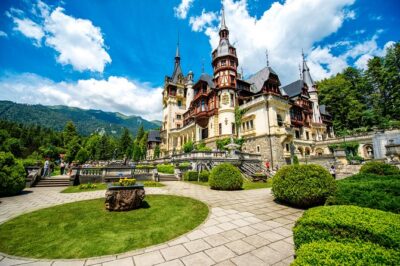
2-Day Medieval Transylvania with Brasov,Sibiu and Sighisoara Tour from Bucharest
Read our review →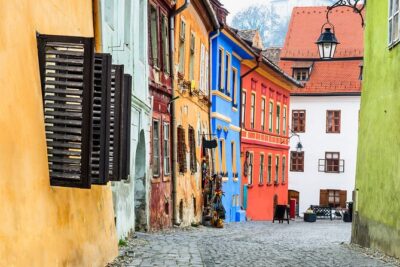
SB01 – City Tour Sibiu: Exploring the Heart of Transylvania
Read our review →
Day trips and excursions in nature, cities in Transylvania, Brasov!
Read our review →
2-Day Transylvania from Bucharest: Brasov, Bran, Sighisoara
Read our review →
4-Day Private Tour in Transylvania from Bucharest
Read our review →Browse the lists this tour appears in