
Reviewed · COMMUNISM & CEAUȘESCU TOURS
Bucharest: The “Last Days of Communism” Tour
Bucharest’s communist past is easiest to understand when you see the buildings that shaped it. This five-hour tour takes you from the grand public spaces of Ceausescu’s Romania to the places tied to the 1989 Revolution, with visits inside the Palace of Parliament and Primaverii Palace when open. I like the mix of sweeping city sights and personal history. I also like that hotel pickup and transport save you from piecing together far-flung locations on your own.
The main caution is that the two interior visits are not guaranteed. Meetings and conferences can close the institutions, and weekend visits to the Palace of Parliament require a group of at least 10. Check the schedule before booking, especially if those interiors are the main reason you want to go.
Key points to know before booking
- See the balcony tied to Ceausescu’s final speech: Revolution Square gives the political story a real setting.
- Enter the Palace of Parliament when available: The building is the tour’s grandest stop, but entry depends on opening conditions and group size.
- Visit Primaverii Palace: The former home of Nicolae and Elena Ceausescu offers a more personal look at life at the top of the regime.
- Cover a wide stretch of Bucharest: The route can include Free Press Square, the Arch of Triumph, several major squares, and Calea Victoriei.
- Use hotel pickup to save time: A car or minibus makes sense for a route spread across central Bucharest.
- Bring your original passport or ID card: You need it for the institutional visits.
Why Bucharest’s communist story works best as a city tour
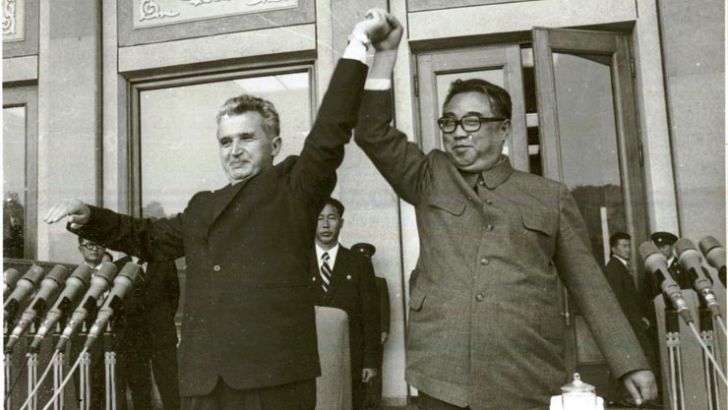
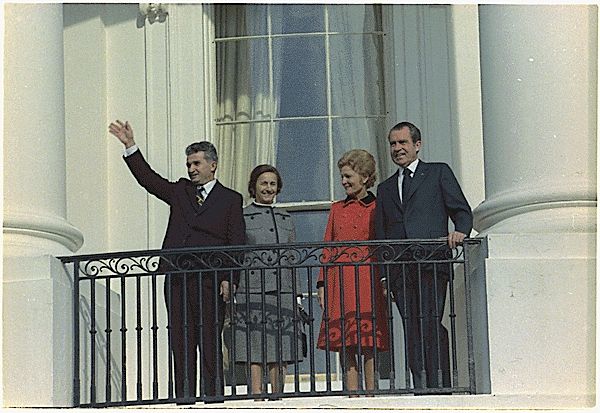
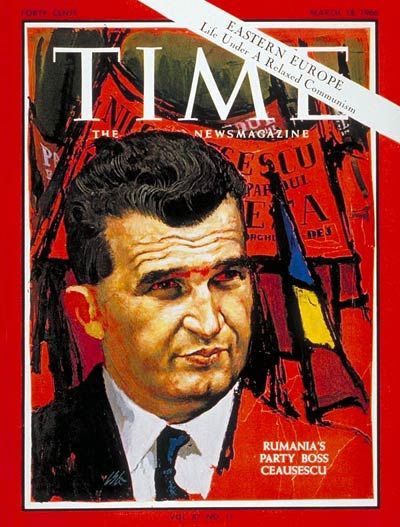
Romania lived under communist rule from 1948 until December 1989. Nicolae Ceausescu became head of the Romanian Communist Party in 1965 and president in 1974. Fifteen years later, a violent uprising removed him from power, and he was executed with Elena Ceausescu in December 1989.
That timeline can sound neat on paper. Bucharest makes it physical. You see the public buildings created to project state power, the boulevards altered for political display, and the squares where ordinary people confronted the regime. The tour is useful because it connects those places instead of treating them as isolated photo stops.
I would not choose this experience if you only want a general introduction to Bucharest. It has a clear subject, and that subject is Romania’s communist period, especially the final years of Ceausescu’s rule. If you are interested in modern European history, architecture, or the way political power reshapes a capital city, the focus is a strong advantage.
The English-speaking guide is central to the experience. A guide named Boogie is specifically associated with a passionate, personal presentation of communist and modern Romania. Your guide will determine how much context you get at each stop, so it is worth asking questions about daily life, not just dates and buildings.
More of the communist years around Bucharest:
- Bucharest: Palace of Parliament Tickets and Guide
★ 4.3 · 3,182 reviews - Bucharest: Palace of Parliament Tickets and Guided Tour
★ 4.4 · 1,877 reviews - Bucharest: Parliament Palace Skip-the-line Ticket
★ 4.2 · 1,518 reviews
Free Press Square and the first communist face of Bucharest
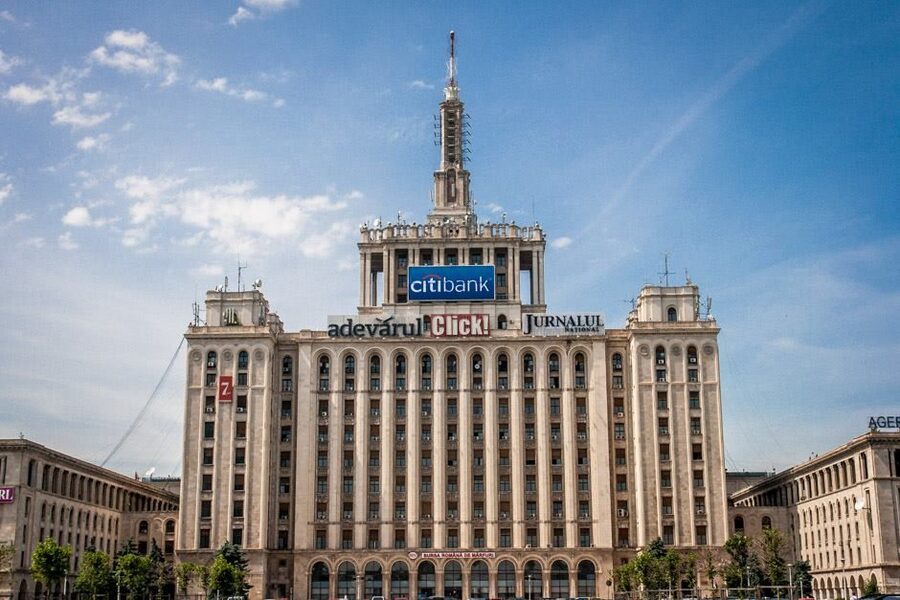
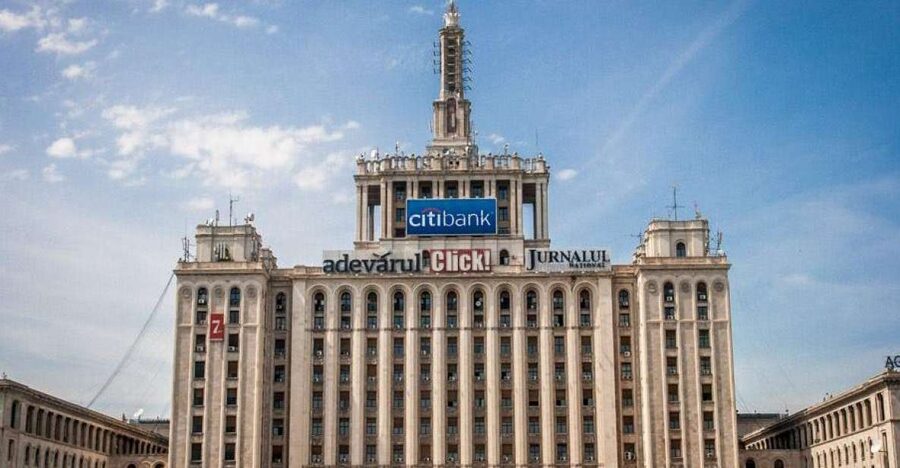
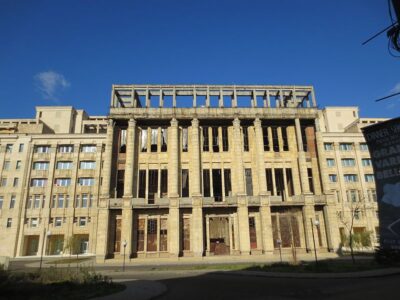
The tour may begin at Free Press Square, known in Romanian as Piata Presei Libere. This is one of the clearest places to discuss how the communist state controlled information and used architecture to display its authority.
The square is associated with the House of the Free Press, a major communist-era building. It was among the first large communist buildings in Bucharest, making it an important starting point for the story. Here, you can begin to see how the regime wanted public architecture to communicate order, scale, and permanence.
Do not expect this stop to work like a museum visit. The value is in looking at the building as evidence of a political system. Your guide can explain why such a structure mattered and how the state used newspapers and official media to shape public life.
The stop also helps you read later buildings. After seeing Free Press Square, the much larger Palace of Parliament feels less like an isolated oddity and more like part of a deliberate program of state display.
The Arch of Triumph and Bucharest’s grand avenues
The route can continue past the Arch of Triumph, or Arcul de Triumf, one of Bucharest’s most recognizable monuments. The arch itself is not a communist building, but its location fits the tour’s wider look at ceremony, national identity, and the way governments use major roads and public spaces.
This is a passing stop rather than the main interior visit, so you may have limited time to study it. Still, it adds variety to the route and places the communist period within a longer story of Romanian public symbolism.
Charles de Gaulle Square, or Piata Charles de Gaulle, may also be included. Along with the Arch of Triumph, it shows how the tour moves beyond one small central district. That wider route is one reason the included car or minibus matters. Walking between every location would take much longer and would leave less time for the key visits.
Revolution Square and the end of Ceausescu’s rule
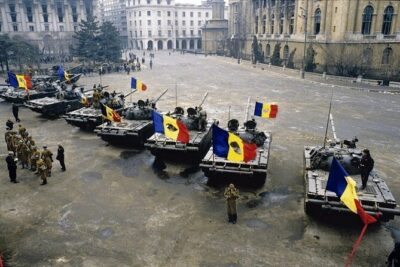
Revolution Square is the emotional center of the tour. Here you can see the balcony from which Ceausescu delivered his last public speech before the regime collapsed. The setting gives you a sharp sense of how quickly authority can disappear.
Calea Victoriei runs through this part of the city, and the route may also point out the Romanian Athenaeum and the Revolution Memorial. These sites help place the 1989 events within Bucharest’s formal civic center rather than in a remote historical setting.
The square is worth slowing down for. Look at the spaces around the memorial and imagine the tension of December 1989, when public protest turned into a revolution. Your guide’s explanation matters here because the architecture alone cannot tell you what happened or why this moment became so important.
This stop also keeps the tour from becoming a simple parade of communist buildings. The subject is not only what Ceausescu built. It is also how people responded when the costs of the system became impossible to ignore.
Same base, a completely different day:
- Bucharest: Dracula’s Castle, Peles Castle, & Brasov Old Town
★ 4.5 · 17,858 reviews - Bucharest: Dracula Castle, Peles Castle & Brasov Old Town
★ 4.6 · 10,891 reviews - Bucharest: Dracula’s Castle, Peleș Castle & Brașov Day Trip
★ 4.5 · 5,919 reviews - Bucharest: Day Trip to Dracula Castle, Peles Castle & Brașov
★ 4.4 · 3,049 reviews
The Palace of Parliament, a giant political statement
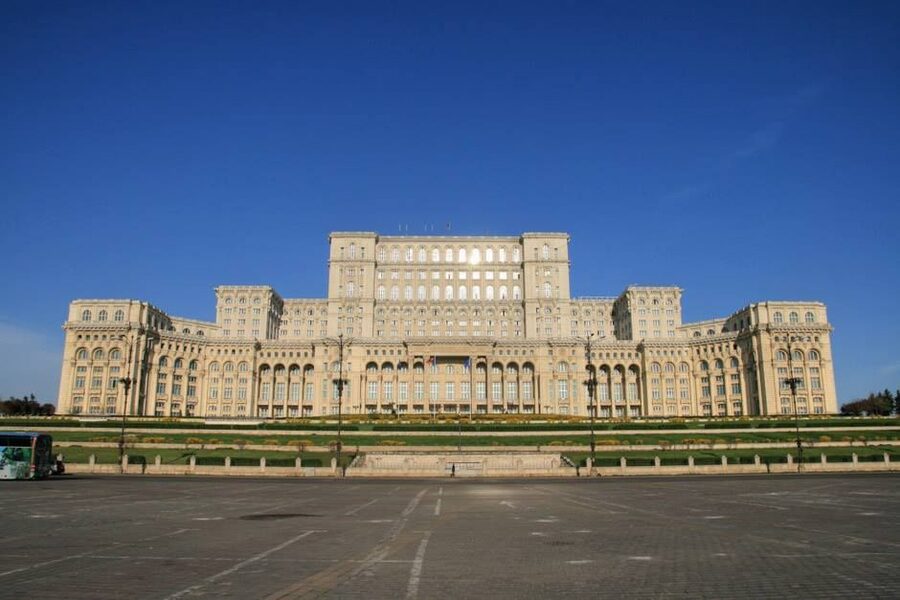
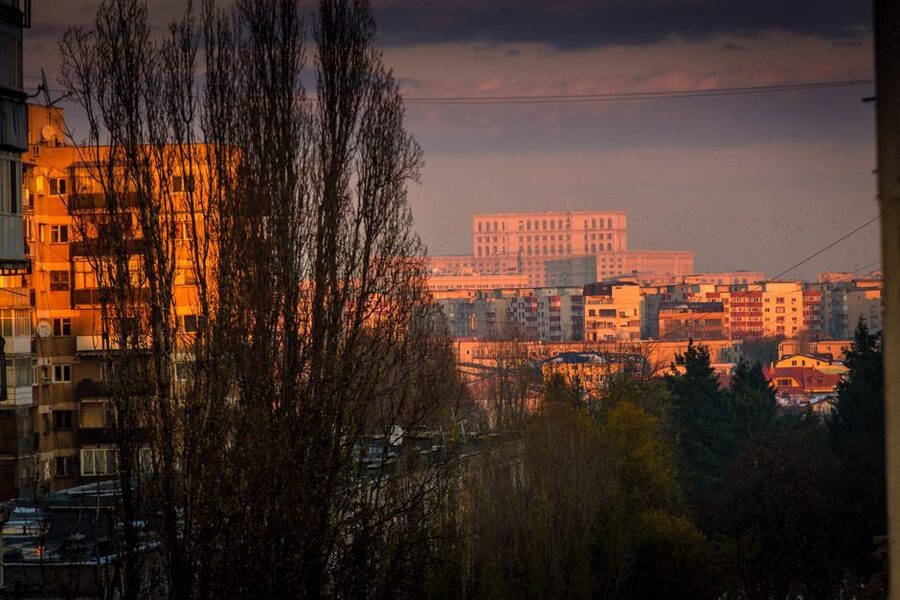
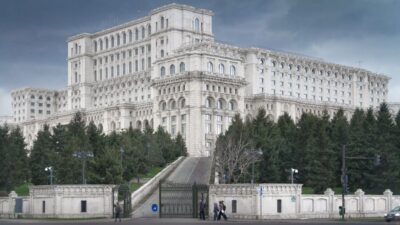
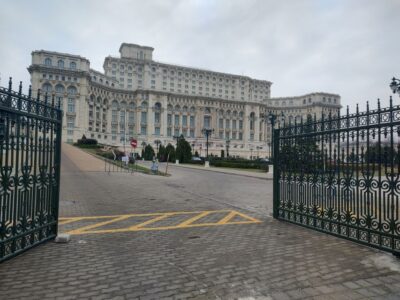
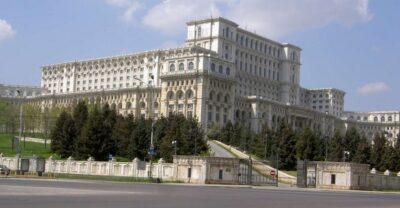
The Palace of Parliament, once called the House of the People, is the tour’s biggest visual experience. It is massive, formal, and difficult to understand from a single photograph. Seeing it in person gives you a better sense of the scale of Ceausescu’s building program.
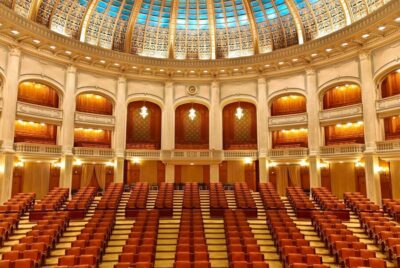
The interior visit is included in the planned route, but the entrance fee is not included in the tour price. You should also know that admission may be blocked by meetings or conferences. On weekends, smaller groups cannot count on visiting the palace. Weekend entry is available only for groups of 10 or more, and smaller groups may receive an alternative attraction or a guided walk in the Old Town instead.
That restriction is important. If the Palace of Parliament is your top priority, do not assume that a weekend booking guarantees entry. Ask about the operating plan before you commit, and bring your original passport or ID card as required.
The building’s size is part of the story. It reflects the regime’s desire to create a seat of power that would dominate Bucharest physically and symbolically. The tour gives that ambition a human and political context, rather than treating the palace as an impressive photo backdrop.
The Palace can also be tiring if you are hoping for a light sightseeing morning. It is a serious historical stop, and the content is tied to political control, forced urban change, and the final period of Ceausescu’s rule. I would give it your full attention rather than rushing through for pictures.
Primaverii Palace and the private life of the ruling couple
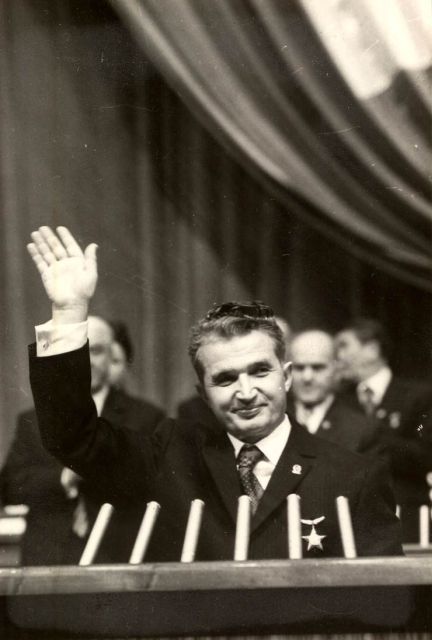
Primaverii Palace offers a different view of the same period. This was the former residence of Nicolae and Elena Ceausescu, so the focus shifts from monumental public construction to the private setting of the presidential couple.
That contrast is useful. The Palace of Parliament shows what the state wanted the public to see. Primaverii Palace can help you think about how the country’s rulers lived behind closed doors. The two visits belong together because one is about official power and the other is about personal privilege.
The interior visit is not guaranteed, just like the Parliament visit. Institutions can close for meetings and conferences, and the schedule may change. If Primaverii Palace is unavailable, your guide can still explain its place in the story, but the experience will be less complete without entering.
I especially like this part of the itinerary for travelers who want more than political slogans. A former home can make history feel more concrete. You are not simply hearing that the ruling couple occupied a special position. You are seeing the setting connected to that position.
University Square, Union Square, and the city between the landmarks
The itinerary can include University Square, Union Square, and Romana Square. These stops widen the story from presidential buildings to the ordinary urban spaces where Bucharest moves, gathers, and remembers.
University Square is especially relevant to the events of 1989 and the transition that followed. It also helps show how central Bucharest is organized around major roads, institutions, and open civic spaces. Your guide can connect the square to the broader changes Romania faced after communism ended.
Union Square gives the route a different scale again. It is a major Bucharest junction, and passing through it helps you understand how the tour links the city’s historic core with the monumental avenues created or reshaped during the communist period.
Romana Square and Victoriei Square may also appear in the route. They are not all equal as sightseeing stops, and some may be viewed from the vehicle rather than explored on foot. That is a fair trade for covering more ground in one morning.
If you want long walks and time in each square, this is not the ideal format. If you want a clear overview of how communist-era decisions affected the center of Bucharest, the driving route is practical.
What the five-hour schedule feels like
The experience lasts five hours, with a planned sightseeing route of about four hours. The extra time allows for hotel pickup, driving between districts, and the pace of the interior visits.
Pickup is included from your hotel in Bucharest, but you need to provide the hotel details when booking. The vehicle may be a car or minibus. That keeps the tour personal enough for questions while making the broad route possible.
The exact order depends on where your hotel is located. The route may include Free Press Square, the Arch of Triumph, Victoriei Square, Calea Victoriei, Revolution Square, the Palace of Parliament, Union Square, University Square, Romana Square, and Charles de Gaulle Square.
That is a lot for one outing. You should expect a mix of short stops, views from the vehicle, and time at the two interior attractions when they are open. The guide’s commentary is what ties the pieces together.
The tour runs with a minimum group size that changes by season. From March through October, and from December 16 through January 6, at least four people are required. From January 7 through February 29, and from November 1 through December 15, at least two people are required.
If the minimum is not met, you are offered another date or a full refund. This is worth checking before you build your whole day around the booking.
Is the $69 price good value?
At $69 per person, the price is reasonable for a five-hour guided tour with hotel pickup, transport, and an English-speaking guide. The value is strongest if you want to visit both the Palace of Parliament and Primaverii Palace, since arranging transport between the locations on your own would take time and planning.
The price does not include entrance fees to either palace. That means your final cost will be higher, and you should budget for those tickets separately. The tour still offers useful value because the route covers several widely separated landmarks in a single morning.
I would compare it with the cost of hiring a private car and guide for half a day. The included pickup and citywide route make this more than a simple transfer service. You are paying for historical explanation as well as transportation.
The value drops if the Palace of Parliament is the only sight you care about and your date is a weekend. In that case, the group-size rule creates a real risk of substitution. For a broader communist-history tour, the other stops give the booking a stronger safety net.
Who will enjoy this tour most?
This is a good choice for you if you:
- Want a focused introduction to Romania’s communist period.
- Prefer a guide to explain political events and buildings.
- Have limited time in Bucharest.
- Want hotel pickup instead of arranging several taxis.
- Are interested in both monumental architecture and personal history.
- Can accept that institutional visits may change.
It is less suitable if you want a slow walking tour, a museum-heavy experience, or guaranteed access to both interiors. It also may not suit you if you have no interest in Ceausescu, the 1989 Revolution, or the architecture of state power.
The tour works particularly well early in a Bucharest visit. Afterward, you will recognize the city’s major squares and understand why certain buildings matter. You can then return to places that caught your attention with a better sense of their political background.
Practical details that matter
Bring your original passport or ID card. This is not just a suggestion, since the identification requirement applies to the institutional visits.
Pets are not allowed. The activity is offered in English, and the guide drives or accompanies you during the route.
You can cancel up to 24 hours before the experience for a full refund, and you can reserve now while paying later. Those terms help if your Bucharest plans are still shifting, especially because opening schedules and minimum group rules can affect the final arrangement.
Ask about the Palace of Parliament and Primaverii Palace before the day of the tour. The operator makes clear that these visits can be replaced or omitted if institutions close. That is normal for official buildings, but it is better to know the plan than to arrive with fixed expectations.
Should you book the Last Days of Communism Tour?
Book it if you want Bucharest’s recent past explained through the actual places where it unfolded. The combination of Revolution Square, the Palace of Parliament, Primaverii Palace, Free Press Square, and the central squares gives you more than a collection of photo stops.
The strongest reasons to go are the wide city route, the included pickup, and the chance to compare a public monument of power with the former home of the ruling couple. A passionate guide, including the guide named Boogie when assigned, can make the political story personal and clear.
Book with caution if you are visiting on a weekend or if entry to the Palace of Parliament is non-negotiable. Check the date, group-size rule, and interior access first. If those conditions work for you, this is a useful and well-focused half-day introduction to the part of Bucharest that many visitors find hardest to understand on their own.
FAQ
How long does the Bucharest communist history tour last?
The tour lasts five hours. The planned sightseeing route takes about four hours, with the remaining time allowing for hotel pickup and transport between locations.
What attractions are included in the route?
The route can include Free Press Square, the Arch of Triumph, Victoriei Square, Calea Victoriei, Revolution Square, the Palace of Parliament, Union Square, University Square, Romana Square, and Charles de Gaulle Square.
Are entrance fees included in the $69 price?
No. Entrance fees for the Palace of Parliament and Primaverii Palace are not included.
Is hotel pickup available?
Yes. Pickup is included from your hotel in Bucharest. You need to provide your hotel details when booking.
Is entry to the Palace of Parliament guaranteed?
No. Visits can be affected by meetings and conferences. On weekends, Palace of Parliament visits are available only for groups of 10 or more. Smaller groups may receive an alternative attraction or a guided walk in the Old Town.
What identification should I bring?
Bring your original passport or ID card. You should also know that pets are not allowed on the tour.
Just added around Bucharest
- Winery touring & private wine tasting – one day private tour★ 5.0 · 3 reviews
- Village Museum Bucharest Guided Tour★ 5.0 · 6 reviews
- Bucharest: Dealu Mare Winery Private Trip with Wine Tasting★ 4.9 · 6 reviews
- Traditions in Bucharest: Village Museum and Wine Tasting★ 5.0 · 8 reviews
- Transylvania Tour: Dracula’s Castle, Peles Palace & Brasov★ 5.0 · 19 reviews
- Airport Henri Coanda (Otopeni) to Bucharest – Private Transfer – Driver★ 5.0 · 5 reviews
- Gems of Transilvania: Brasov,Sighisoara,Sibiu,Viscri and more★ 5.0 · 6 reviews
- Discover Medieval Transylvania Small Group Tour – 7 days★ 5.0 · 4 reviews
Communism & Ceaușescu Tours, compared.
Parliament Senate Entry Tickets and Guided Tour
Read our review →
Bucharest Essential Tour: Old Town, Calea Victoriei & Communism
Read our review →Browse the lists this tour appears in