
Reviewed · DRACULA & BRAN CASTLE TOURS
Bucharest Private Tour with Dracula’s Grave and Ceaușescu Mansion
Dracula’s reported grave sits on an island outside Bucharest, but this tour gives you much more than a spooky stop. In about six hours, you move from traditional village houses to the dictator’s private home, then into the streets where Romania’s 1989 revolution began. The contrast is the real story.
I like the private car and flexible schedule, especially if you have limited time or want to avoid a long 12-hour outing. I also like the human scale: guides such as Dan and Nicu can adjust the day instead of marching you through a fixed group program. The main drawback is that the $174.53 per-person price does not include entrance fees, food, or drinks, and the Snagov drive takes a sizable piece of a six-hour day.
Key points to know before booking
- Dracula’s reported tomb is on an island at Snagov Monastery, about 40 minutes outside Bucharest.
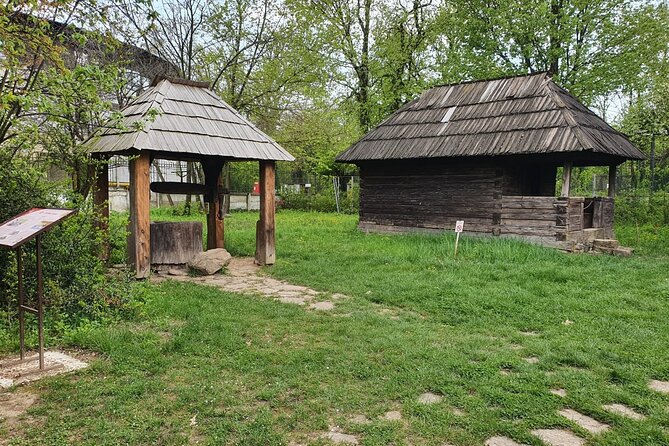
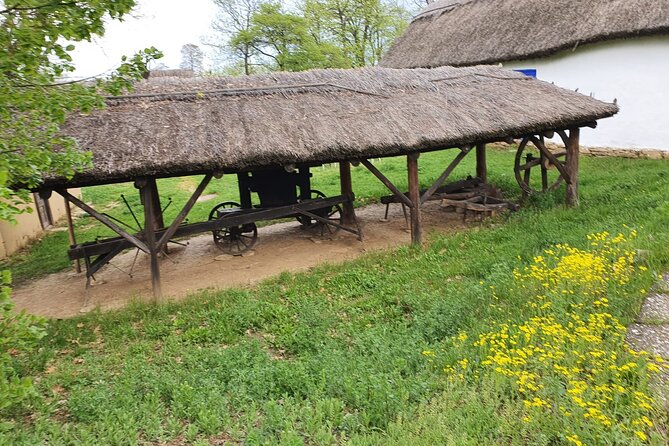
- The Village Museum gives you a fast look at rural Romania, with wooden and adobe homes, mills, and a wooden church.
- The Ceaușescu Mansion shows private life under communism, far from the public image of austerity.
- Calea Victoriei and Revolution Square connect royal Bucharest with the 1989 uprising.
- Your group gets a private vehicle and English-speaking guide, with fuel, parking, and road tolls included.
- The six-hour format works well for a short visit, but admission fees are extra and the schedule is still fairly full.
Why this six-hour route works
Bucharest can feel scattered. Its grand avenues, communist buildings, old churches, museums, and outer suburbs do not all sit within an easy walking route. A private vehicle solves that problem, letting you see several very different sides of the city without spending your day figuring out taxis or public transport.
This is not simply a city highlights tour. It is built around sharp changes in mood and setting. You begin with rural traditions, head out to a monastery tied to the Dracula legend, return to a polished communist-era mansion, and finish among the central streets linked to Romania’s royal past and 1989 revolution.
The private format matters here. You can ask for more time at the Ceaușescu Mansion, move faster through a stop that interests you less, or adjust the route after the tour begins. That flexibility helped make the experience work well for Martin, who already had some overlap with a river cruise program and used the private guide to see less typical sights instead.
At $174.53 per person, the value depends heavily on group size. For one or two people, it is a significant spend. For a small group sharing a private car, the cost becomes easier to justify because transportation, guiding, fuel, parking, and road tolls are bundled together. You still need to budget for entrance fees separately.
Other Dracula castle trips in Bucharest:
- Bucharest: Dracula’s Castle, Peles Castle, & Brasov Old Town
★ 4.5 · 17,858 reviews - Bucharest: Dracula Castle, Peles Castle & Brasov Old Town
★ 4.6 · 10,891 reviews - Bucharest: Dracula’s Castle, Peleș Castle & Brașov Day Trip
★ 4.5 · 5,919 reviews
The Village Museum: Romania in one open-air stop
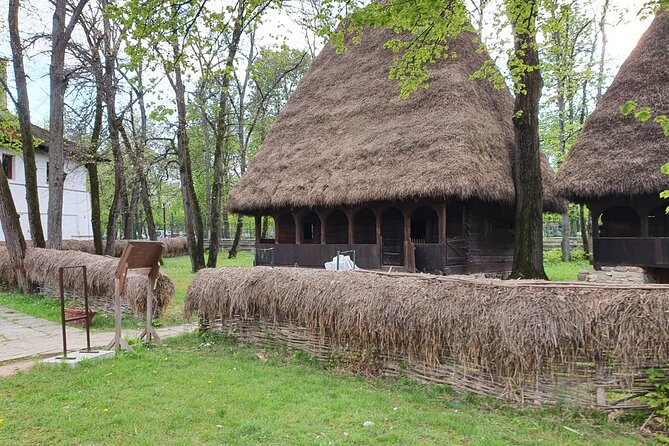
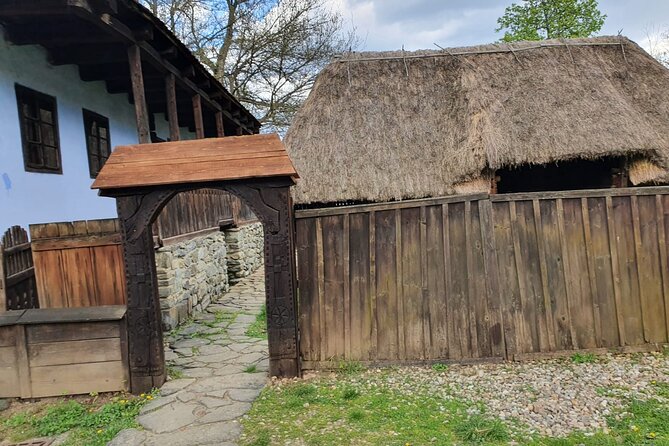
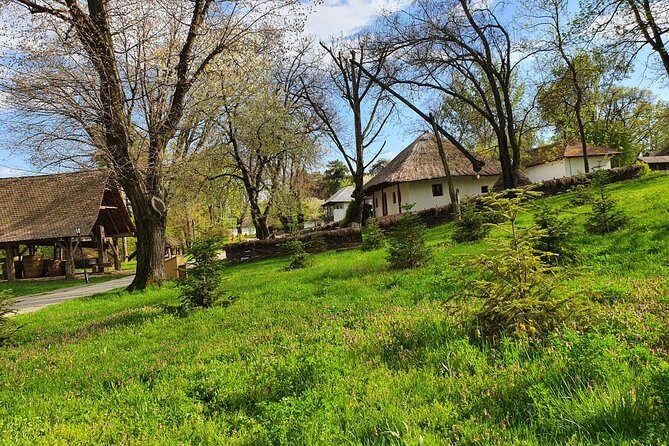
The National Village Museum, officially the Muzeul Național al Satului Dimitrie Gusti, is a useful first stop because it gives you context for the country beyond Bucharest. Instead of seeing only city streets, you get a compact look at traditional homes brought together from different parts of Romania.
Expect houses made from wood, adobe, stone, and other local materials. The collection also includes examples of rural structures such as mills and a wooden church. The value is not just visual. Your guide can explain how villagers organized daily life around local materials, farming, faith, and the practical need to make a home work with its surroundings.
You will have about an hour here. That is enough for an overview, but not enough for every building or display. If you are fascinated by architecture or village life, you may wish the visit were longer. If you have only one day in Bucharest, the short stop gives you a worthwhile sample without taking over the entire tour.
Admission is not included, so check the entrance cost before you go. The museum is also one of the more accessible stops in terms of what it offers: you do not need much background to appreciate the simple shapes of the houses, the woodwork, or the contrast between different regions.
I would pay attention to the building materials and layout rather than rushing from house to house. The point is to see how varied rural Romania was, and how modest homes, religious buildings, and work structures formed a complete community.
Snagov Monastery and the Dracula connection
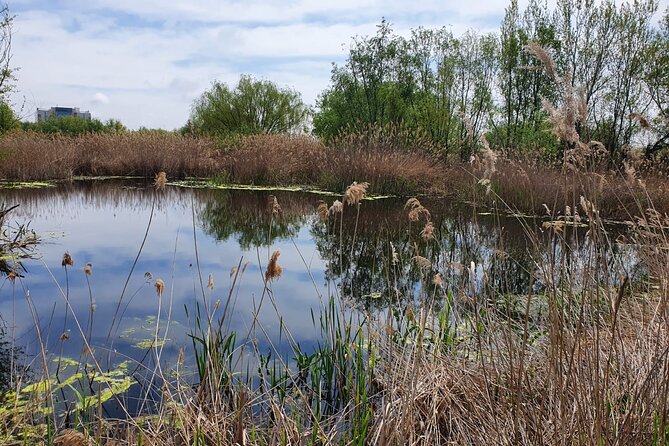
The tour’s most unusual stop is Snagov Monastery, reached after a drive of roughly 40 minutes outside Bucharest. The monastery is on an island, which gives the visit a strong sense of place before the Dracula story even enters the picture.
The grave associated with Dracula is here. More precisely, the attraction is tied to the belief that Vlad the Impaler, the historical figure linked to the Dracula legend, was buried at Snagov. The tour presents the site as Dracula’s tomb, but you should treat the claim as part of a long-running historical and popular tradition rather than a simple proven fact.
You have about two hours allocated for this stop, making it the longest single visit of the day. That extra time allows for the drive, the island setting, and a more thoughtful look at the monastery. Admission is separate, and the tour information does not specify the exact fee.
This is the stop that most clearly separates the tour from a standard central Bucharest circuit. It takes you away from the capital and adds a legendary figure to a day otherwise focused on Romanian society and 20th-century politics. If you enjoy unusual historical sites, it is a strong reason to book.
There is one practical tradeoff. A round trip of about 40 minutes each way uses a large portion of your available time. If you care mainly about Bucharest’s central architecture, you might prefer a city-only tour. If Dracula, monasteries, and places with disputed stories appeal to you, the drive is part of the fun.
Ask your guide to explain what is known, what is believed, and what has been shaped by the Dracula legend. That distinction makes the stop more interesting, not less.
The Ceaușescu Mansion: private luxury behind a public ideology
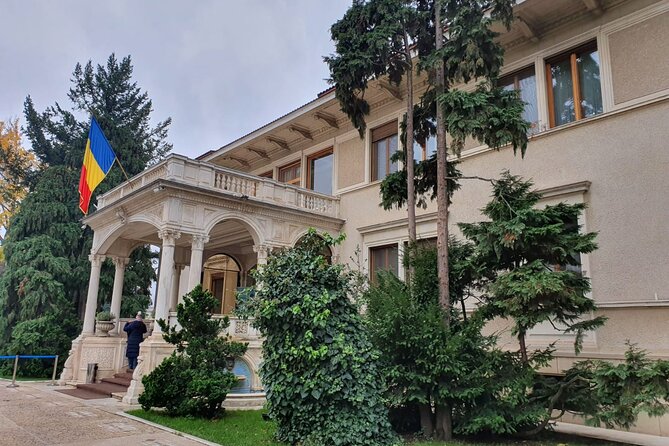
The Ceaușescu Mansion, also called Spring Palace, gives you a close look at the private residence of Nicolae and Elena Ceaușescu and their children. The family lived here from 1965 until 1989, the year the communist regime fell.
The mansion was built in the mid-1960s and enlarged between 1970 and 1972. Its design was associated with Aron Grimberg-Solari, while architect Robert Woll worked on the grounds and much of the furniture design. Those details matter because the house was not just a residence. It was a carefully planned setting that reflected the family’s status and taste.
You get about an hour and a half here. That is a good amount of time for a guided visit, though entrance is not included in the tour price. Bring an open mind. The building can be read as a record of comfort and privilege, but it should also be understood in the context of a country where ordinary life was far more restricted.
The mansion is especially useful after the Village Museum. At the museum, you see practical rural homes shaped by local materials and modest needs. At Spring Palace, you see a protected private world created for a ruling family. Placing the two stops in one day makes the social gap easier to grasp.
This is likely the most substantial indoor stop on the route, so it may appeal to you if you prefer architecture, interiors, and political history over folklore. The schedule gives it more time than the central city stops, and that feels right. A rushed visit would reduce the mansion to a collection of rooms, while the guided explanation helps connect the setting to Ceaușescu’s rule.
Other trips to Dracula's castle from Bucharest:
- Bucharest: Day Trip to Dracula Castle, Peles Castle & Brașov
★ 4.4 · 3,049 reviews - Bucharest to Dracula Castle, Peles Castle and Brasov Guided Tour
★ 4.5 · 2,933 reviews - Dracula’s Castle, Peles Castle and Brasov Day Trip from Bucharest
★ 4.5 · 1,804 reviews - Transylvania and Dracula Castle Full Day Tour from Bucharest
★ 4.5 · 1,589 reviews
Calea Victoriei: Bucharest’s grand urban contrast
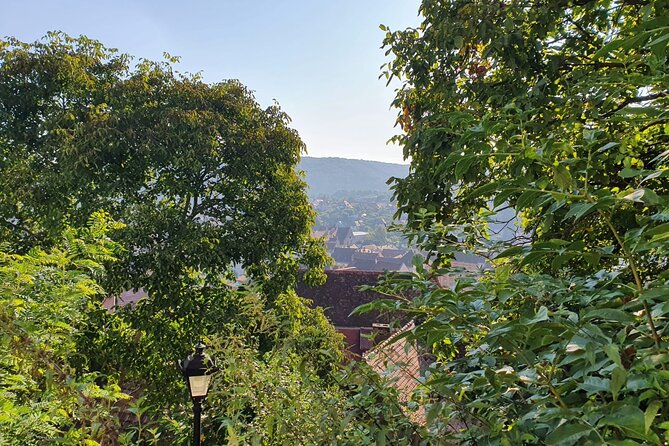
Back in central Bucharest, Calea Victoriei shows why the city is often best understood through contrasts. This historic avenue brings together royal buildings, churches, museums, theaters, shops, restaurants, and reminders of communist power.
Your guide points out places connected to several eras of Romanian life. These include the Royal Palace, the National History Museum, the Romanian Athenaeum, and the CEC Palace. You may also pass old Orthodox churches, retail shops, gift stores, tea shops, music stores, and restaurants.
The route also places the former Central Committee of the Romanian Communist Party near buildings linked with the monarchy. That visual tension is one of the strongest parts of the tour. Bucharest does not present its past in neat chapters. Royal ambition, religious tradition, cultural life, communism, and modern commerce share the same streets.
You have about 45 minutes here, and the stop is free of admission charges. That makes it more of a guided orientation than a museum visit. You will not have time to enter every building, but you can learn what to return to later if you have another day in the city.
I like this part of the tour because the guide can help you read the street instead of merely naming buildings. If you know little about Bucharest, the short stop offers a useful map of the city’s central identity. If you already have explored Calea Victoriei, the private format lets you request a different emphasis.
Revolution Square and the end of Ceaușescu’s rule
The final stop, Revolution Square, brings the Ceaușescu story into public space. Here you see the former Central Committee building, now associated with the Romanian Senate, where the December 1989 revolution began.
This is the place connected with Ceaușescu’s final public appearance and his flight from power by helicopter. The tour also touches on the questions that followed, including his fortune, the role of the state security service, and claims about offshore accounts.
You have about 30 minutes here. That is enough for an explanation and an outside look, but not a full study of every monument or nearby building. The stop works best as a focused history lesson rather than a long sightseeing session.
For me, the square gives the day its strongest finish. The Village Museum showed how ordinary communities lived. The mansion showed how the ruling family lived. Revolution Square shows how that system ended through protest, force, and sacrifice.
Because the subject is politically charged, the quality of the guide matters. A good guide should help you separate established events from disputed claims and explain why December 1989 remains such an important turning point in Romania. Nicu and Dan are two guide names associated with this experience, and both are described as friendly and well informed in the supplied details.
Guides, private transport, and the pace of the day
You travel in a private tourism car or minibus used only by your group. A licensed English-speaking guide and driver remains with you throughout the tour. Fuel, parking, and road tolls are included, which removes several small costs that can otherwise complicate a day outside the city.
The private setup is a major advantage if your party has different interests. You can spend more time at the mansion, ask for extra explanation at Revolution Square, or shift attention toward less typical sights. The itinerary can be changed even after the tour starts, subject to what the day allows.
The experience is not designed around long walks. You will still walk around the museum, monastery, mansion, and central stops, but the car handles the gaps between them. Most people can participate, and the pickup arrangement plus access to public transportation makes the tour practical for many visitors.
The six-hour length is the sweet spot for people who cannot manage a full-day excursion. Kimberly booked this shorter option at the last minute because many comparable programs run for 12 hours, and the shorter format suited her schedule. That is useful advice: do not assume a long tour is automatically better. A six-hour day you can enjoy may be wiser than a marathon you have to endure.
The tradeoff is that the route remains busy. You cover both Bucharest and Snagov, with five distinct stops and driving time included. You will get an informed overview, not a slow, unhurried study of each place.
What the $174.53 price really buys
The listed price is $174.53 per person. It includes a private vehicle, a private English-speaking guide and driver, fuel, parking, and road tolls. It does not include food, drinks, or entrance fees.
The price makes the most sense for a small group that values privacy and door-to-door movement. A shared tour may cost less, but it will normally offer less control over the schedule. Here, you are paying for time saved, a dedicated guide, and the ability to tailor the day.
For a solo visitor or couple, the cost requires more thought. You might prefer a standard Bucharest sightseeing tour and visit fewer sites independently. For friends or family sharing the vehicle, the private arrangement becomes more attractive, especially if you are arriving from a river cruise or have only one free day.
Admission costs deserve attention. The Village Museum, Snagov Monastery, and Ceaușescu Mansion list entrance fees separately, but the exact amounts are not provided here. Ask for the current fees before departure so the total cost does not surprise you.
Free cancellation is available if you cancel at least 24 hours before the start time. Changes or cancellations inside that window are not accepted for a refund.
Who should book this tour?
I would recommend it if you want three things in one day: a taste of traditional Romania, a Dracula-related site outside Bucharest, and a clear explanation of Ceaușescu’s rise and fall.
It suits first-time visitors who want a broad introduction without committing to a 12-hour program. It also suits families and small groups that value a private vehicle, flexible pacing, and one guide for the whole day.
I would think twice if you want long museum visits, a relaxed lunch, or extensive time on foot along Calea Victoriei. The schedule is full, and food is not included. You should also confirm the admission costs and ask how much time you will have at each site if one stop matters more to you than the others.
Should you book the Bucharest private tour?
Book it if the mix of Dracula legend, communist-era politics, royal Bucharest, and rural tradition sounds more appealing than a simple city drive. The strongest feature is the contrast between stops, supported by a private guide who can adapt the day to your interests.
The experience is not the cheapest way to see Bucharest, and the entrance fees add to the bill. But for a small group with limited time, the combination of private transport, Snagov Monastery, the Ceaușescu Mansion, and Revolution Square offers a lot in six hours.
Choose this tour for range and context. Skip it if you prefer to stay entirely in central Bucharest or spend a full day at fewer sites.
FAQ
How long does the Bucharest private tour last?
The tour lasts approximately six hours, including the scheduled visits and transportation between Bucharest and Snagov Monastery.
Is Snagov Monastery included in the route?
Yes. Snagov Monastery is one of the main stops, and it is located on an island about 40 minutes outside Bucharest. The site is associated with Dracula’s grave.
Are entrance fees included in the tour price?
No. Entrance fees for the stops listed on the route are not included. Food and drinks are also separate.
Is transportation private?
Yes. The tour provides a private car or minibus used only by your group. Fuel, parking, and road tolls are included.
Is an English-speaking guide provided?
Yes. A licensed English-speaking guide and driver is available throughout the experience. Dan and Nicu are names associated with the guiding service.
Can the tour be canceled for a full refund?
Yes, if you cancel at least 24 hours before the scheduled start time. Cancellations or changes made less than 24 hours before the start time are not refunded.
More communism tours in Bucharest
- Bucharest: Palace of Parliament Tickets and Guide
★ 4.3 · 3,182 reviews - Bucharest: Palace of Parliament Tickets and Guided Tour
★ 4.4 · 1,877 reviews - Bucharest: Parliament Palace Skip-the-line Ticket
★ 4.2 · 1,518 reviews - The Real tour of Communism
★ 5.0 · 666 reviews
Just added around Bucharest
- Winery touring & private wine tasting – one day private tour★ 5.0 · 3 reviews
- Village Museum Bucharest Guided Tour★ 5.0 · 6 reviews
- Bucharest: Dealu Mare Winery Private Trip with Wine Tasting★ 4.9 · 6 reviews
- Traditions in Bucharest: Village Museum and Wine Tasting★ 5.0 · 8 reviews
- Transylvania Tour: Dracula’s Castle, Peles Palace & Brasov★ 5.0 · 19 reviews
- Airport Henri Coanda (Otopeni) to Bucharest – Private Transfer – Driver★ 5.0 · 5 reviews
- Gems of Transilvania: Brasov,Sighisoara,Sibiu,Viscri and more★ 5.0 · 6 reviews
- Discover Medieval Transylvania Small Group Tour – 7 days★ 5.0 · 4 reviews
Dracula & Bran Castle Tours, compared.
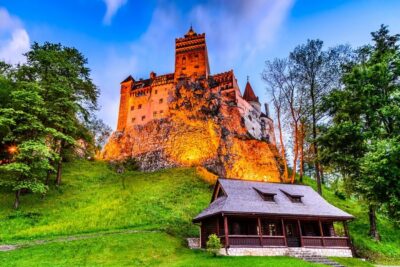
Dracula’s Castle, Peles Castle, & Brasov Old Town
Read our review →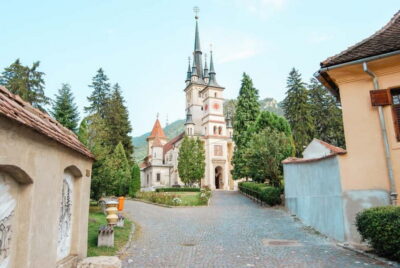
Dracula’s Castle, Peleș Castle & Brașov Day Trip
Read our review →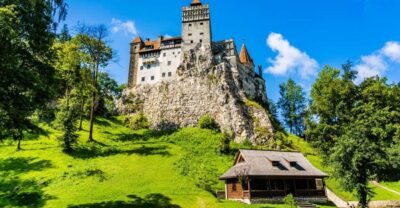
Day Trip to Dracula Castle, Peles Castle & Brașov
Read our review →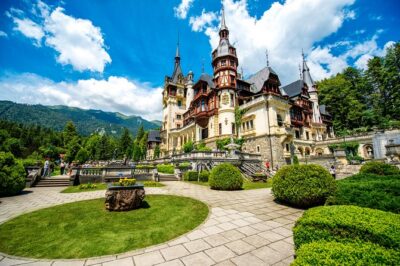
Bucharest to Dracula Castle, Peles Castle and Brasov Guided Tour
Read our review →
Dracula’s Castle, Peles Castle and Brasov Day Trip from Bucharest
Read our review →
Transylvania and Dracula Castle Full Day Tour from Bucharest
Read our review →
Peles Castle, Bran Castle, & Brasov Old Town Tour
Read our review →Browse the lists this tour appears in