
Reviewed · COMMUNISM & CEAUȘESCU TOURS
Bucharest: Private Communist Tour in a Romanian Vintage Car
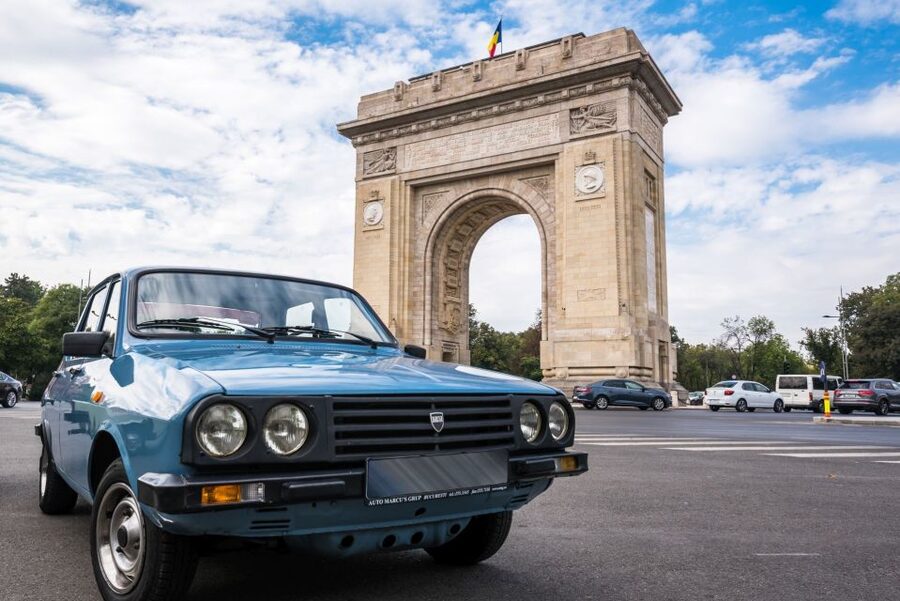
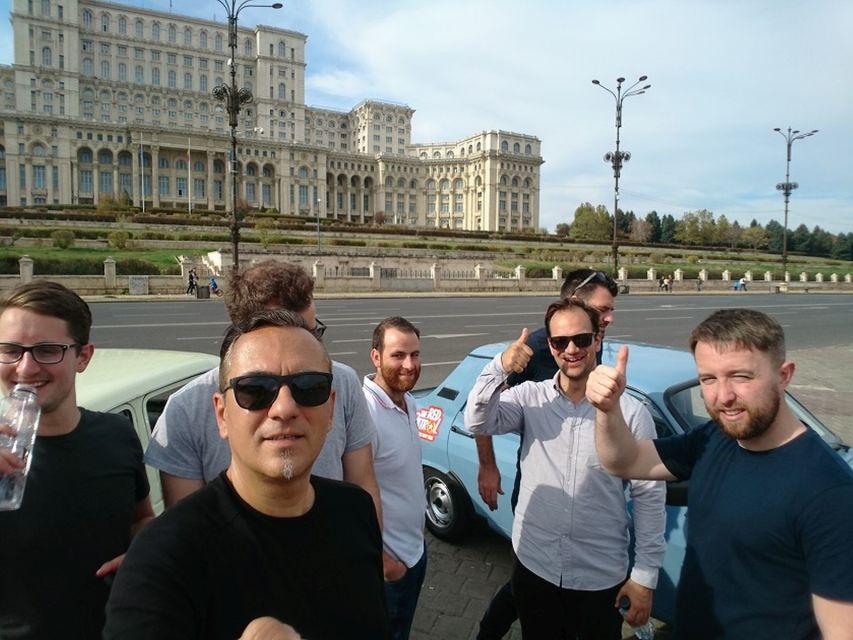
Bucharest is much more fun to understand from the front seat of a 35-year-old Dacia 1310 than from behind a bus window. This private circuit links the city’s grand communist boulevards with personal stories about daily life under Nicolae Ceaușescu. You’ll stop for photographs, walk around key sites, and attract plenty of waves from people on the street.
I like the unusual car and the fact that you can drive yourself or hire a private driver. I also like the human side of the tour. Guides such as Cătălin, Dan, and Șerban explain what the buildings meant and what ordinary life felt like, rather than simply naming monuments.
The main drawback is comfort and pace. A vintage car is part of the fun, but it is still an old car, and the tour is not suitable for children under 10, pregnant women, people with back problems, or wheelchair users.
Key points before you book
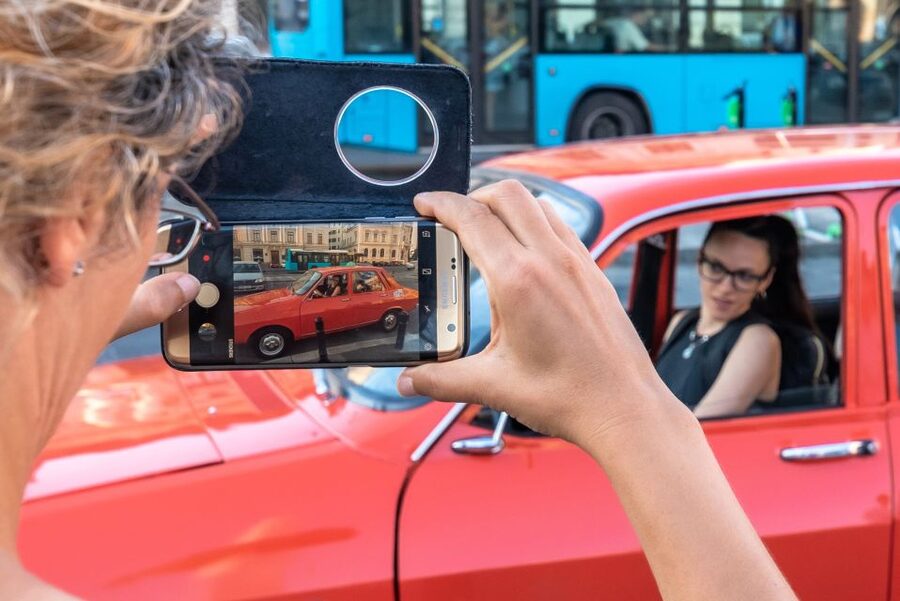
- You ride in a restored Romanian Dacia 1310, a car closely tied to everyday life in communist Romania.
- The 30-kilometre route covers major symbols of the era, including the Palace of Parliament, Revolution Square, Casa Radio, Casa Presei, and Casa Ceaușescu.
- The tour is private, with up to three people per car and hotel pickup and drop-off in Bucharest.
- You can choose self-driving or a private driver, but self-driving requires a valid license on the day.
- The guides add first-hand perspective, with Cătălin, Dan, and Șerban praised for explaining both national history and ordinary routines.
- The experience lasts about 200 minutes, with scheduled departures at 10:00 a.m., 2:00 p.m., and 8:00 p.m.
Why a Dacia 1310 changes the way you see Bucharest
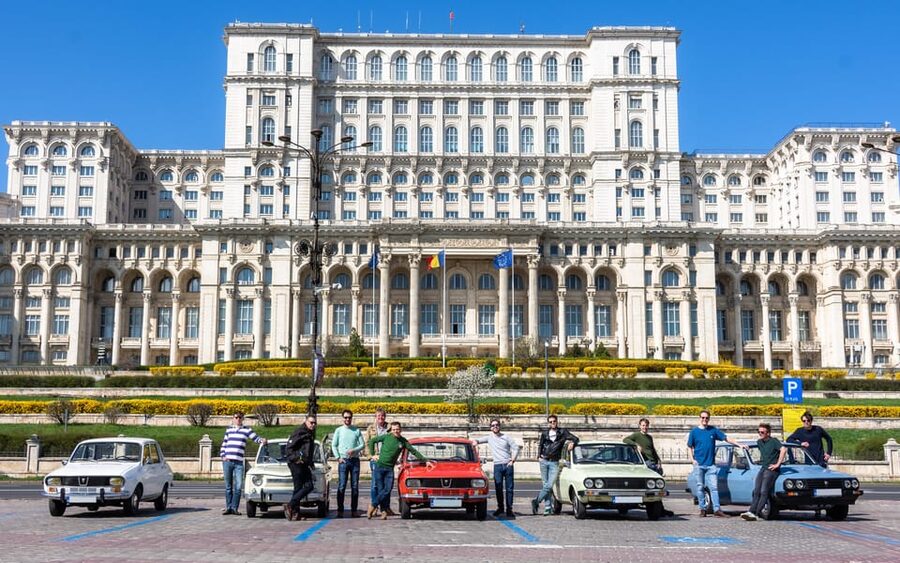
The Dacia 1310 was not a luxury car. It was a familiar Romanian car, and that is exactly why it works so well here. You are not simply touring communist Bucharest in a modern vehicle while looking at old buildings. You are sitting inside an object that belongs to the period being discussed.
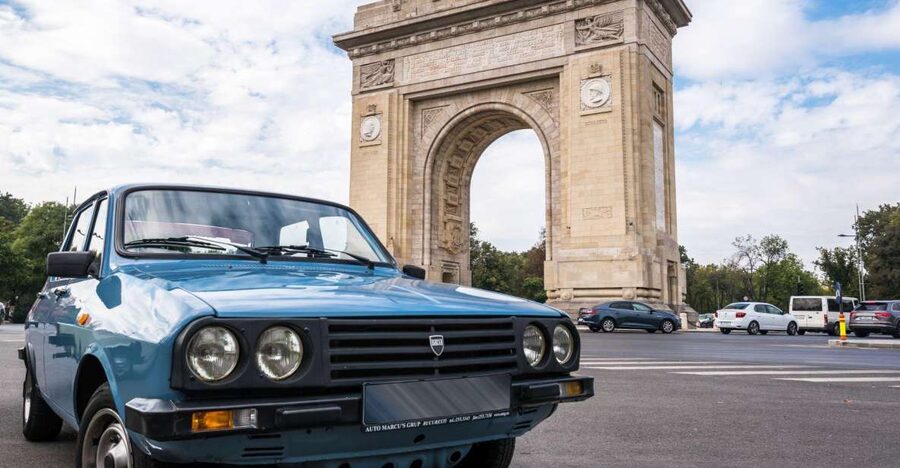
The car dates from the 1970s or 1980s and has been fully restored. The experience provider calls this the only Romanian vintage car tour of Bucharest, and the route is built around that local connection. You might find people waving, staring, or taking a second look as you pass. That attention is not a staged part of the tour, but it adds a playful touch to the ride.
Inside, the Dacia is said to be more comfortable than its plain appearance suggests. Still, keep your expectations sensible. This is an old Romanian saloon, not a modern touring vehicle with generous space and soft suspension. If you have back trouble, the tour’s restrictions matter.
Each car carries three people. That makes the experience intimate and gives you a good chance to talk with your guide. It also means you should consider how comfortable your party will be sharing a compact vintage car for several hours.
More of the communist years around Bucharest:
- Bucharest: Palace of Parliament Tickets and Guide
★ 4.3 · 3,182 reviews - Bucharest: Palace of Parliament Tickets and Guided Tour
★ 4.4 · 1,877 reviews - Bucharest: Parliament Palace Skip-the-line Ticket
★ 4.2 · 1,518 reviews
Revolution Square and the memory of 1989
The first major stop is Revolution Square, with about 30 minutes for a guided visit and photographs. This is one of the most important places on the route because it connects the grand official image of communist Romania with the collapse of Ceaușescu’s rule.
Your guide can help you read the square as more than an open space surrounded by impressive buildings. It was tied to state power, public speeches, and the events of the 1989 Romanian Revolution. The stop gives you time to get out of the car, look around, and ask questions before continuing.
I would pay close attention here to the guide’s explanation of how the city changed before, during, and after communism. Dan, one of the guides associated with the tour, has been praised for making this period easy to picture through stories about Bucharest life. Cătălin has also been described as giving a broad account of Romania’s history, not just a narrow account of the communist years.
Because this is a photo stop and guided visit rather than a long museum visit, you will not get every detail of the revolution. The value is in setting the scene and connecting the square to the rest of the circuit.
Casa Radio and the unfinished side of socialism
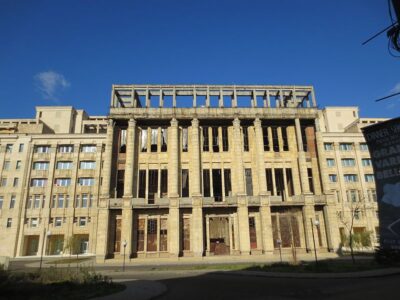
The stop at Casa Radio lasts about 10 minutes. The building is one of the route’s reminders that communist Bucharest was not only about grand finished monuments. Large projects, changing plans, and unfinished structures also shaped the city.
This is a quick stop, so it works best if you want a broad picture of the period rather than a long architectural study. Ask your guide why the building matters and how it fits into Ceaușescu’s plans for Bucharest.
A modern sightseeing tour could easily rush past a place like this. The vintage-car format makes it easier to pause at sites that explain the city’s political and planning history, even when they are less familiar than the Palace of Parliament.
Fountains, boulevards, and the official city
The itinerary includes a 10-minute stop at a fountain and a 15-minute visit near the Romanian Academy. These shorter breaks help show the formal side of Bucharest, where broad avenues, state institutions, and carefully planned public spaces were meant to project order and power.
You will spend much of the circuit moving along the city’s grand boulevards. The route includes Victoria Socialismului Boulevard, described as Ceaușescu’s version of the Champs-Élysées. The comparison tells you something about the ambition of the project: the boulevard was meant to provide a monumental approach to the center of power.
From the car, the scale of the streets becomes part of the lesson. You see how much space was cleared and how the city was reshaped for official ceremonies and state display. Then you step out at selected points for photographs and a closer look.
The stops at the fountain and Romanian Academy are not the main reason to book the tour. They are useful links between the better-known landmarks, giving the route a wider view of how communist planning affected Bucharest.
Other private tours around Bucharest:
- Castles of Transylvania: Private Day Trip from Bucharest
★ 4.5 · 248 reviews - Dracula’s Castle, Peles Castle and Brasov – Private Day Trip from Bucharest
★ 5.0 · 211 reviews - Best of Bucharest | Private Walking Tour
★ 5.0 · 199 reviews - Bucharest Panoramic Sightseeing – Private City Tour
★ 5.0 · 128 reviews
The Palace of Parliament: scale with a cost
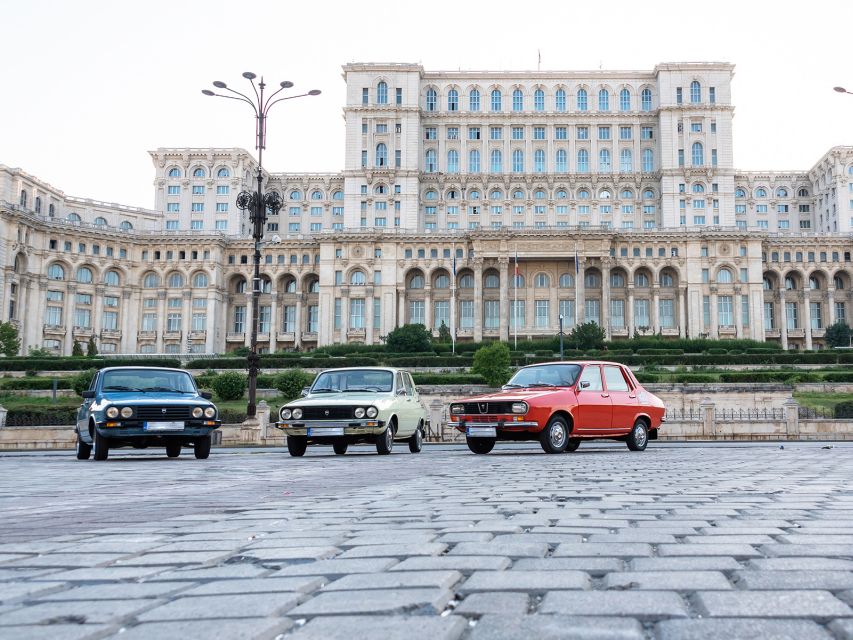
The Palace of Parliament receives about 20 minutes. You will have time for photographs and an explanation from your guide, but this tour does not include a full interior visit based on the information provided.
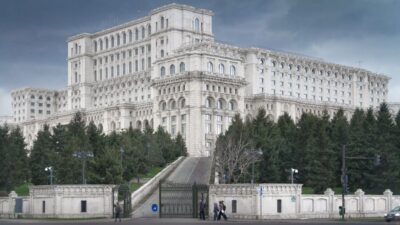
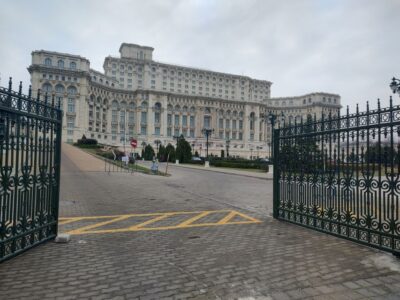
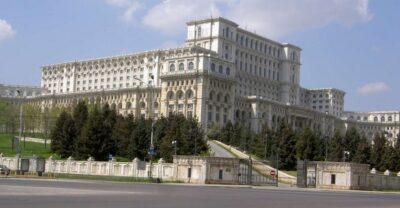
The building, also known as Casa Poporului, is the route’s biggest symbol of Ceaușescu’s ambition. Its size is difficult to grasp from a single photograph. Seeing it from the vintage car, then stopping to look at it, gives you a better sense of the broad avenues and open spaces designed to frame it.
The important point is not simply that the palace is huge. Its construction involved major changes to central Bucharest and represents the heavy cost of the regime’s grand plans. Your guide can place the building in the wider story of forced urban change, state power, and the contrast between official luxury and ordinary shortages.
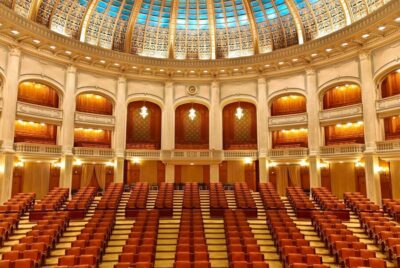
Twenty minutes is enough for an introduction and photographs. If you want to tour the interior, check separately because that is not part of the stated experience. I would treat this stop as a strong overview rather than a full palace visit.
Casa Ceaușescu and the private world behind the public image

The 25-minute break at Casa Ceaușescu gives the tour a more personal angle. After seeing official buildings and enormous public spaces, you get a chance to consider the private setting of Romania’s ruling family.
This stop is useful because it shifts the question from how the regime presented itself to how its leaders lived. The tour’s broader theme is the gap between public slogans and private reality, and Casa Ceaușescu helps make that gap easier to understand.
You should expect time for a guided explanation, photographs, and a short break. The supplied information does not promise a full interior museum visit or admission to every room, so check the exact arrangements when booking if that is important to you.
For me, this is one of the more valuable stops because it balances the monumental architecture. You see the state’s official face at the palace, then a more domestic setting connected to the family at the center of power.
Casa Presei and the machinery of official information
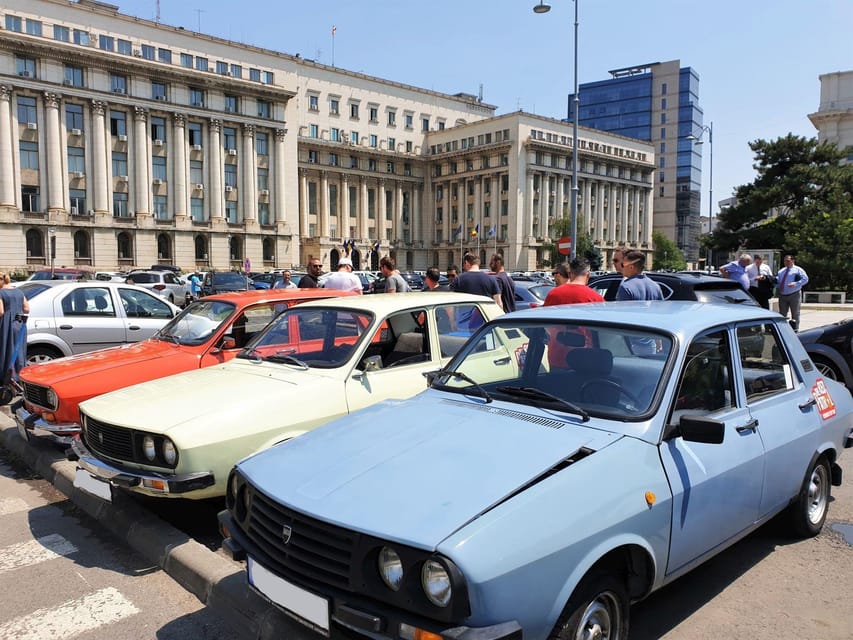
The final major stop is Casa Presei, or the House of the Free Press, with about 20 minutes for sightseeing and a guided visit. The name itself carries an obvious tension. A building associated with the press stood within a system where newspapers and broadcasting were tightly controlled.
That tension gives your guide a useful opening to discuss censorship, propaganda, and the role of information under communism. The building also fits the route’s visual pattern: large, formal, state-directed architecture set along broad streets.
The stop is long enough for photographs and a focused explanation. It also rounds out the tour well. Revolution Square shows political change, the Palace of Parliament shows state ambition, Casa Ceaușescu shows private privilege, and Casa Presei points toward control of public information.
What the guides add to the drive
The strongest part of this experience is not just the route. It is the way the guides connect buildings to real life.
Cătălin has been described as offering personal accounts of communism and adding traditional Romanian food on one booking. That food element is not listed as a standard inclusion, so do not book expecting a meal or tasting. Still, it suggests that the guide may bring the period to life through more than dates and political names.
Dan has been praised for speaking about Romanian history before, during, and after communism, and for making the tour comfortable and easy to follow. Șerban, the owner, has also guided the experience and has been involved in welcoming visitors personally.
Guide availability can change, and the advertised language is English. If you need a different language, do not assume it is available. The key thing is to expect conversation and explanation, not a recorded commentary.
You receive a tour newspaper and a personalized gift, with water in the car. These are small extras, but they fit the experience well. The newspaper gives you something to read or keep, while the gift makes the outing feel more personal than a standard city transfer.
Self-driving or sitting beside the guide
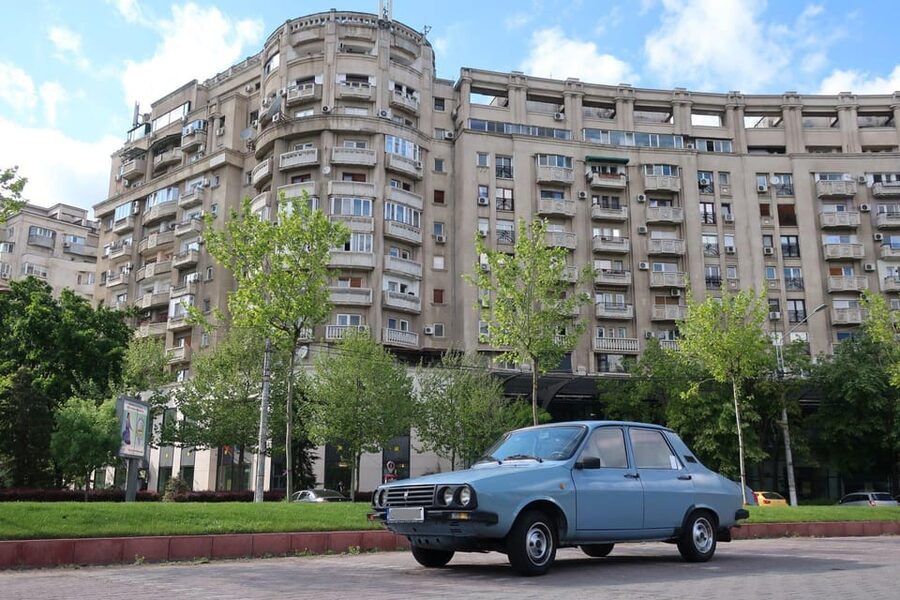
The option to drive the Dacia is a major reason to choose this tour. If you enjoy old cars, being behind the wheel turns a sightseeing circuit into a hands-on activity. You will need to provide a valid driving license on the day, and you should be comfortable driving a vintage Romanian car through Bucharest.
A private driver is the easier choice if you want to focus on photographs and conversation. It also lets you pay closer attention to the guide’s stories instead of traffic and road signs.
I would choose self-driving only if operating an older car sounds like part of the fun. Choose the driver option if your priority is learning about Bucharest. The experience remains private either way, so you are not giving up the personal format by sitting back.
The route covers about 30 kilometres, and the total activity is listed as 200 minutes, or about three hours and 20 minutes. The description also refers to a 3.5-hour tour and roughly 2.5 to 3 hours of guided driving, with time outside the car at the stops. Allow the full stated duration, since timing can vary with traffic and the length of each visit.
Is $124 per person fair value?
At $124 per person, this costs more than a basic city sightseeing ride. The price makes more sense when you consider what is bundled together: hotel pickup and drop-off in Bucharest, a private guide, a restored Romanian car, a multi-stop route, water, a tour newspaper, and a personalized gift.
The value is strongest for two or three people sharing the car. You are paying for a private experience rather than a seat on a large group bus. If you are alone, the per-person cost may feel high, although the personal attention and unusual vehicle still make it distinctive.
You are also paying for interpretation. The palace, revolution square, and Casa Presei can be seen independently, but the car and guide provide the link between them. The tour explains how these places fit into the same political project and how that project affected ordinary people.
It is less suitable if you want a low-cost introduction to Bucharest or a standard architecture tour. You may prefer a regular walking tour if your main goal is the old town or a slower look at central streets. This excursion is focused on communist-era Bucharest and the experience of riding in the Dacia.
Timing, comfort, and practical points
Departures are scheduled daily at 10:00 a.m., 2:00 p.m., and 8:00 p.m. The evening departure could give the boulevards a different feel, while the daytime options make it easier to photograph buildings clearly.
Book at least 48 hours in advance. Hotel pickup and drop-off are included within Bucharest, which removes the need to arrange a separate meeting point. Confirmation is provided at booking.
You can cancel up to 24 hours before departure for a full refund, and the reserve-now-pay-later option keeps payment flexible. Food and drinks are not included, although water is provided in the car.
Bring your driver’s license if you selected self-driving. The tour is not suitable for children under 10, pregnant women, people with back problems, or wheelchair users. Since you will get in and out of the car at several stops, wear practical clothing and shoes.
Who will enjoy this Bucharest tour most?
I would recommend it most to you if you have a clear interest in twentieth-century European history, old cars, or personal stories about life under a former communist government.
It also works well for first-time visitors who want to cover several major Bucharest sights in one outing. The hotel pickup saves time, and the private format lets you ask questions about places that catch your attention.
Couples, families with older children, and small groups of friends should find the three-person car arrangement convenient. Solo visitors can also enjoy the close contact with the guide, though the price may feel less favorable when there is no one to share the car with.
I would think twice if you need a very smooth ride, have mobility concerns, or want to spend a long time inside each attraction. This is a moving city circuit with short guided stops, not a full museum day.
Should you book the Dacia tour?
Book it if you want Bucharest explained through its communist past and experienced from inside an authentic Romanian car. The restored Dacia, private format, hotel pickup, and guides with personal connections to the period make this far more distinctive than a routine sightseeing loop.
Choose the private-driver option for the best balance of comfort, conversation, and photographs. Choose self-driving if the car itself is the main attraction and you hold a valid license.
Skip it if you are looking for a cheap way to see the city, a full interior tour of the Palace of Parliament, or a wheelchair-friendly activity. For everyone else, especially visitors curious about how grand political decisions affected daily life, this is an unusual and worthwhile Bucharest experience.
FAQ
How long does the Bucharest vintage car tour last?
The activity lasts 200 minutes, or about three hours and 20 minutes. It is also described as a 3.5-hour tour, including driving, guided stops, and time for photographs.
How many people can ride in each car?
Each car accommodates up to three people. The tour is arranged as a private group experience.
Can I drive the Dacia myself?
Yes. A self-driving option is available, but you must bring a valid driving license on the day of the tour.
What landmarks does the route visit?
The route includes Revolution Square, Casa Radio, a fountain, the Romanian Academy, the Palace of Parliament, Casa Ceaușescu, and Casa Presei. It also passes along major communist-era boulevards, including Victoria Socialismului Boulevard.
Is hotel pickup included?
Yes. Pickup and drop-off are included from hotels in Bucharest.
Is the tour suitable for children and wheelchair users?
The activity is not suitable for children under 10, pregnant women, people with back problems, or wheelchair users.
Just added around Bucharest
- Winery touring & private wine tasting – one day private tour★ 5.0 · 3 reviews
- Village Museum Bucharest Guided Tour★ 5.0 · 6 reviews
- Bucharest: Dealu Mare Winery Private Trip with Wine Tasting★ 4.9 · 6 reviews
- Traditions in Bucharest: Village Museum and Wine Tasting★ 5.0 · 8 reviews
- Transylvania Tour: Dracula’s Castle, Peles Palace & Brasov★ 5.0 · 19 reviews
- Airport Henri Coanda (Otopeni) to Bucharest – Private Transfer – Driver★ 5.0 · 5 reviews
- Gems of Transilvania: Brasov,Sighisoara,Sibiu,Viscri and more★ 5.0 · 6 reviews
- Discover Medieval Transylvania Small Group Tour – 7 days★ 5.0 · 4 reviews
Communism & Ceaușescu Tours, compared.

Parliament Senate Entry Tickets and Guided Tour
Read our review →
Bucharest Essential Tour: Old Town, Calea Victoriei & Communism
Read our review →Browse the lists this tour appears in