
Reviewed · CITY TOURS
Bucharest City Tour 4h
The Palace of Parliament gives this tour its sharpest edge. You see an enormous government building, then hear how Nicolae Ceausescu’s communist regime reshaped Bucharest around power, fear, and excess. I like that the tour pairs this difficult history with the National Village Museum, where wooden churches, mills, and traditional homes show a very different Romania. I also like the private car, especially if you want hotel pickup, air conditioning, Wi-Fi, and a guide focused only on your group.
The main drawback is time. Four hours is enough for a strong first look, but not enough for a slow museum visit or long stops everywhere. Entrance fees are extra, some sights charge small photography fees, and the Palace of Parliament visit may need to fit the building’s visiting schedule.
Key points to know before booking
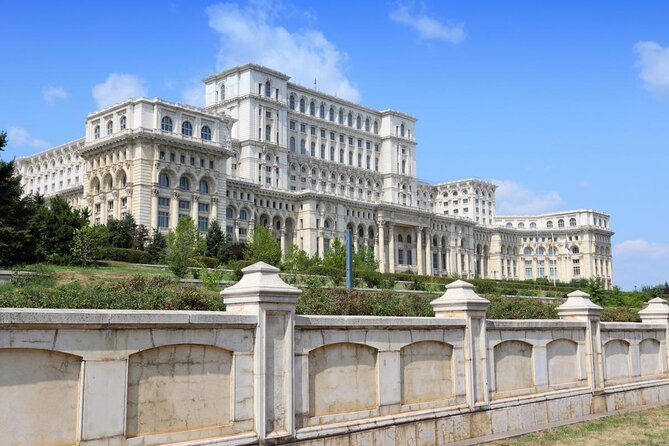
- The communist story is central: Palace of Parliament and Revolution Square explain Ceausescu’s rule and the December 1989 uprising.
- The National Village Museum changes the pace: Open-air homes, mills, and a wooden church reveal rural Romanian life beyond the capital.
- Nicolas is the named guide associated with the tour: He also drives, speaks several languages, and uses a traditional map to explain the city.
- You get a private vehicle and flexible routing: Hotel pickup, fuel, parking, tolls, and Wi-Fi are included.
- The tour covers major sights quickly: Expect a mix of guided walks, photo stops, drive-by views, and short visits.
- Plan for extra costs: Meals, drinks, entry tickets, and some photo permissions are not included.
What four hours in Bucharest can realistically cover
This is a compact city orientation with a strong historical thread. You move between major Bucharest landmarks by private car, with short walks and guided explanations at each stop.
The private format matters here. Bucharest has a wide spread of sights, and a car lets you cover the Palace of Parliament, the village museum, central avenues, Revolution Square, the Athenaeum, and Old Town without spending the whole morning figuring out public transport or hailing taxis. You can also ask to adjust the order or emphasis after the tour begins.
Your guide is both driver and historian. Nicolas is the named guide connected with this experience, and the tour is also offered in Romanian, English, Italian, Spanish, and French. A previous Spanish-language booking was handled in fluent Spanish, which is useful if you prefer history explained in a language other than English.
The schedule is busy but not frantic on paper: about 90 minutes at the Palace of Parliament, an hour at the National Village Museum, and shorter 30-minute sections for Calea Victoriei, Revolution Square, the Romanian Athenaeum, and Old Town. A final break or photo stop is also built into the four-hour outing.
Other ways to see the whole city in Bucharest:
- Bucharest: City Highlights Guided Walking Tour
★ 4.9 · 1,482 reviews - Bucharest: 2-Hour City Highlights Bike Tour
★ 4.8 · 269 reviews - Best of Bucharest | Private Walking Tour
★ 5.0 · 199 reviews
Palace of Parliament: power on a gigantic scale
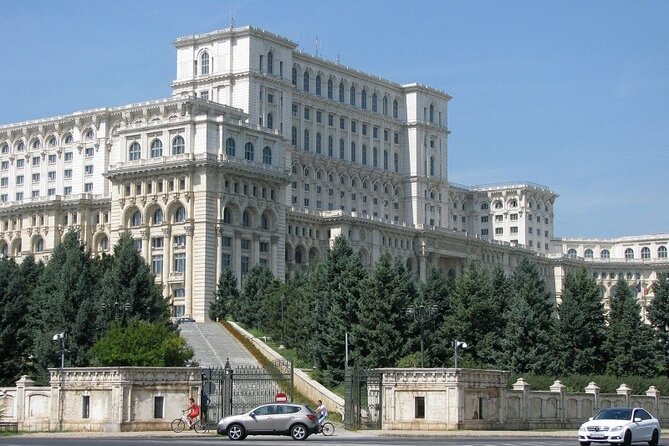
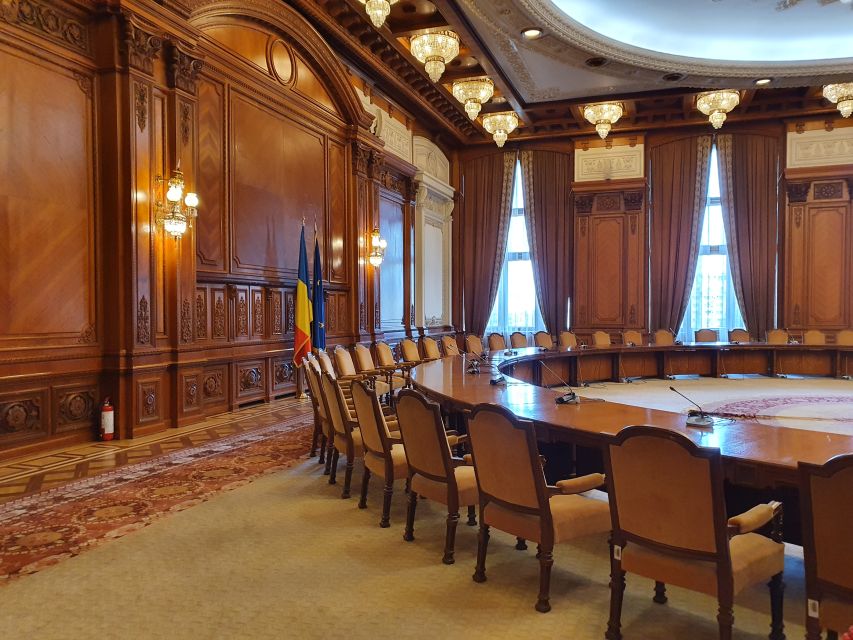
Begin with the building many people associate most strongly with Bucharest. The Palace of Parliament, once called the People’s House, is the world’s second-largest administrative building. Its size is the point. It was designed to project authority, and the result is a huge mass of marble, halls, stairways, and political symbolism.
Inside, the guide places the building in the setting of Ceausescu’s dictatorship. You learn how communist planning cleared large areas of Bucharest and how the building became a symbol of state power and personal ambition. The tone is not simply architectural admiration. The excess is part of the lesson.
Allow about an hour and a half here, including guided sightseeing and the building visit when available. The Palace of Parliament is not just another grand European landmark. It helps explain the damage done when one leader and one political system can command a city without meaningful opposition.
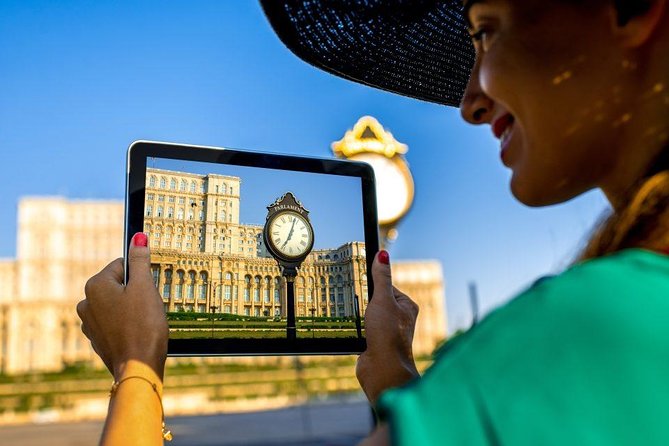
There are practical limits. Entry fees are not included, and access inside can depend on the building’s visiting arrangements. Photography may also require a small additional fee, usually around two or three euros per sight. Ask your guide what is permitted before taking out your camera.
National Village Museum: Romania beyond the capital
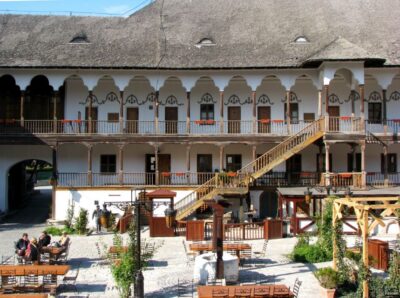
After the heavy political story, the Dimitrie Gusti National Village Museum offers a useful change of mood. This open-air museum presents traditional houses from different parts of Romania, built from wood, adobe, stone, and other local materials.
You walk among homes and rural structures rather than viewing objects behind glass. The setting helps you understand how Romanian villages were organized around practical needs, family life, faith, and local materials. Mills and a wooden church are among the key national symbols you can see.
The museum also gives the tour cultural balance. Bucharest’s monumental buildings can make Romania seem defined by rulers, regimes, and grand architecture. Here, you get a view of ordinary life, including the modest homes and sustainable habits that shaped village communities.
One hour is enough for a guided introduction and a meaningful walk, but not for every corner of a large open-air collection. Wear comfortable shoes. Paths and outdoor walking are part of the visit, and the experience is less suitable if you have difficulty walking or require wheelchair access. The tour is not suitable for wheelchair users.
Calea Victoriei and the contradictions of central Bucharest
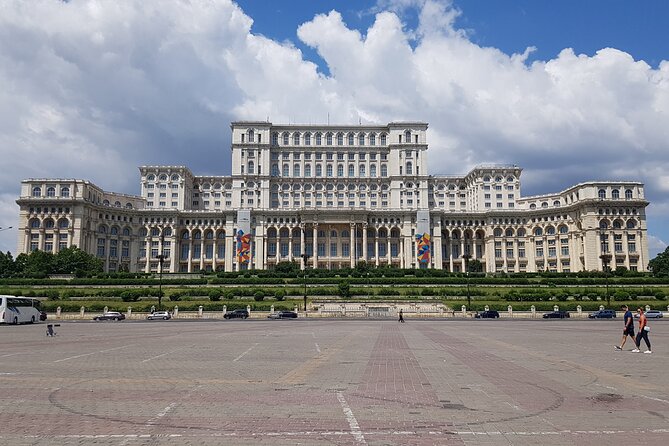
Calea Victoriei, or Victory Avenue, is one of the city’s key historic routes. The tour uses it as a moving lesson in Bucharest’s changing identity, with old churches, royal buildings, museums, theaters, shops, restaurants, and more recent entertainment venues close together.
The most useful point is the contrast. On one side, you can see the Royal Palace and the polished face of monarchy. Elsewhere, you encounter buildings tied to the communist state and the events that eventually brought it down.
The stop is listed as a 30-minute walk, so think of it as a focused introduction rather than a full architectural tour. Your guide can point out details that are easy to miss from a car, while the vehicle lets you cover more ground afterward.
This is also one of the livelier parts of the outing. You may pass music shops, casinos, tea shops, gift stores, and bohemian restaurants. The tour does not promise time for shopping or a meal, so save those plans for later unless you arrange a break with your guide.
Same base, a completely different day:
- Bucharest: Dracula’s Castle, Peles Castle, & Brasov Old Town
★ 4.5 · 17,858 reviews - Bucharest: Dracula Castle, Peles Castle & Brasov Old Town
★ 4.6 · 10,891 reviews - Bucharest: Dracula’s Castle, Peleș Castle & Brașov Day Trip
★ 4.5 · 5,919 reviews - Bucharest: Palace of Parliament Tickets and Guide
★ 4.3 · 3,182 reviews
Revolution Square and the December 1989 uprising
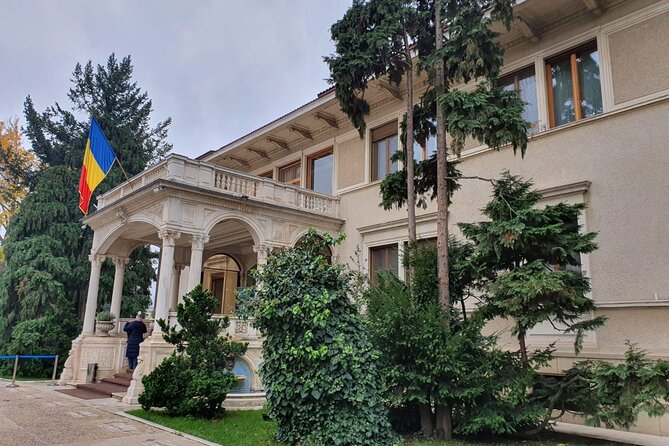
Revolution Square is where the tour’s political story becomes personal and immediate. This is the place connected with Ceausescu’s final public appearance and his escape from Bucharest by helicopter during the December 1989 revolution.
You also see the former Central Committee building, now associated with the Senate, where the uprising began. The guide explains how the protests led to Ceausescu’s removal and why this moment remains so important in modern Romanian history.
The square is worth seeing with context. Without a guide, you might notice a collection of imposing buildings and monuments without understanding the connection between them. With the story in place, the Royal Palace, former party headquarters, and open public space form a clear picture of a country moving from monarchy to communism and then toward a new political era.
Expect about 30 minutes of guided sightseeing and walking. It is enough to orient yourself and ask questions, though not enough for a detailed study of every monument.
Romanian Athenaeum and nearby landmarks
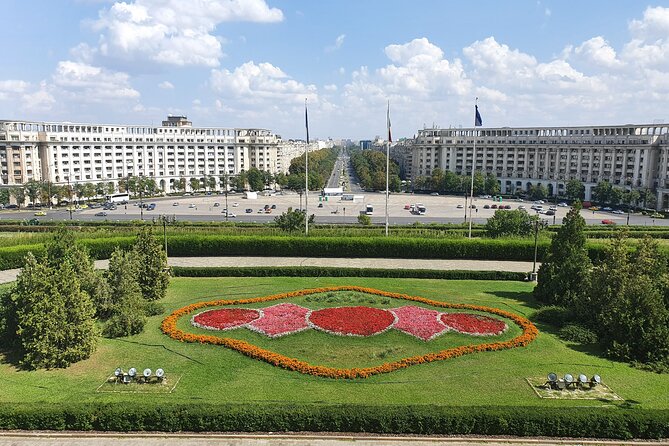
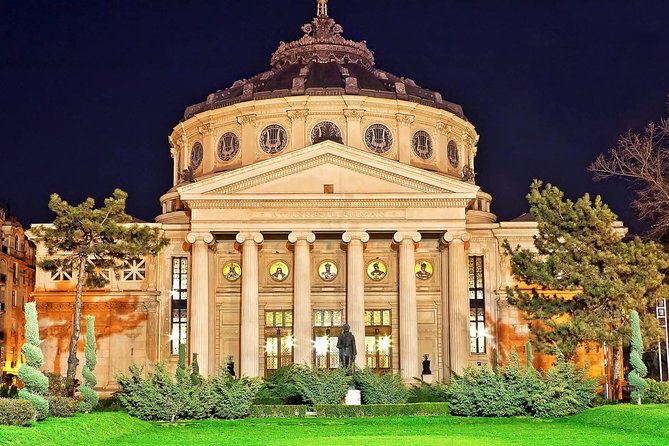
The Romanian Athenaeum gives the tour a more graceful architectural pause. This landmark is known for its ornate design and role in Bucharest’s cultural life. The visit lasts about 30 minutes and may include guided sightseeing inside or around the building, depending on access at the time.
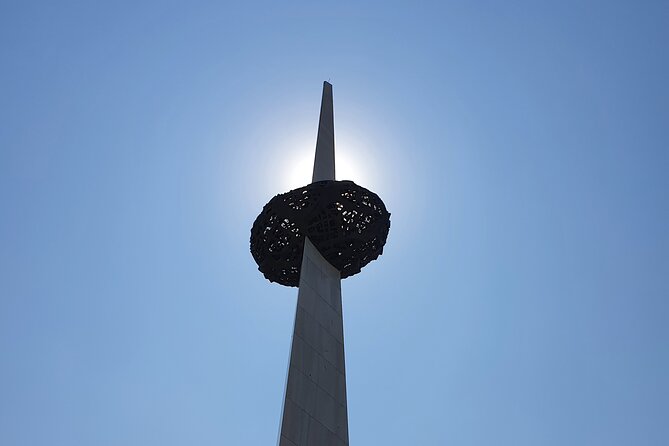
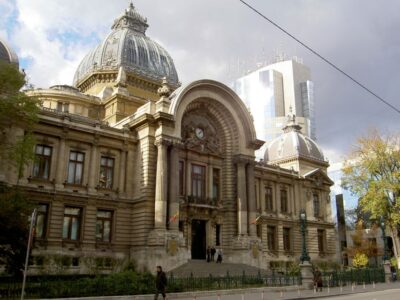
The route also takes in nearby central landmarks such as the National History Museum and the CEC Palace. These buildings help show the range of Bucharest’s architecture, from cultural institutions to grand financial and civic structures.
The Athenaeum is a good place for photographs, but remember that some sights charge a small photo permission fee. Entry arrangements and fees are not included in the tour price, so bring a little local currency or a payment method accepted at the sight.
Old Town: churches, food, and a final walk
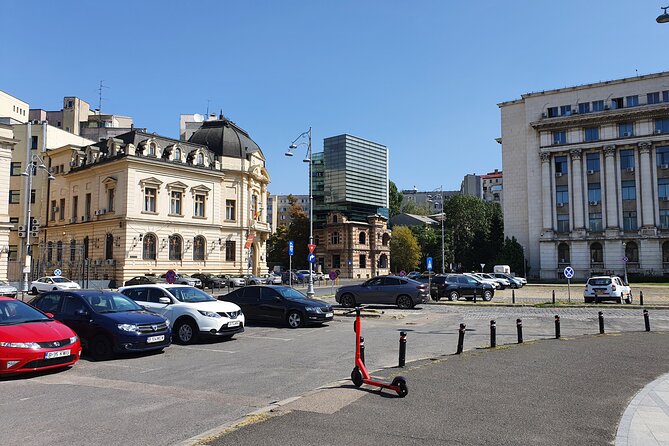
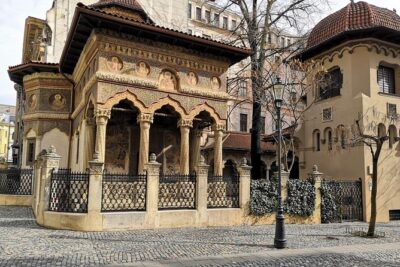
Bucharest’s Old Town closes the sightseeing loop with narrow streets, old Orthodox churches, restaurants, retail shops, and souvenir stores. The guide introduces the area and points out its historical and religious character.
I like this stop because it gives you a more relaxed sense of the city after the formal spaces of the Palace of Parliament and Revolution Square. You can see how Bucharest mixes old churches with cafés, shops, nightlife venues, and modern city life.
The planned visit is about 30 minutes, followed by a break or photo stop. That is enough to get your bearings and mark places for a return visit. It is not a substitute for spending an entire evening in Old Town, especially if you want dinner or time inside the churches and shops.
You should also expect some uneven walking and a fair amount of standing during the day. Comfortable shoes are specifically recommended.
The guide and private-car advantage
The strongest practical feature is the private setup. You are picked up at your hotel or another Bucharest address, ride in an air-conditioned car, and return to an address of your choice in the city. Fuel, parking, road tolls, taxes, and wireless internet are included.
If you arrive at the airport and arrange pickup, a representative waits beside the arrivals information desk with a sign showing your name. The tour can then begin from the airport, and you can be returned to Bucharest or driven back to the airport afterward.
This flexibility is useful for a short stay or a long layover, though you should give the provider your preferred starting time in advance. The tour can also be adjusted during the day. That might mean spending more time on communist history, moving faster through shopping areas, or making better use of the break.
Nicolas receives especially strong praise for being friendly, professional, and adaptable. He is also noted for explaining Bucharest’s geography with a traditional map, a simple touch that can help you understand how the separate sights fit together. His role as both driver and guide means you get one point of contact throughout the outing.
Is $173 per person a fair price?
At $173 per person, this is not the budget way to see Bucharest. The value depends heavily on group size. For one or two people, the price reflects a private vehicle, a dedicated guide, hotel pickup and drop-off, fuel, parking, tolls, and the ability to adjust the route. For a larger private group, the cost may feel more reasonable when compared with booking several separate taxis and a guide.
The price does not include entrance fees, meals, drinks, or some photography permissions. That matters most at the Palace of Parliament and the Athenaeum, where you may want to go inside rather than only view the exterior.
I would compare this tour with the cost of arranging private transport and a guide separately. If you value convenience, a multilingual guide, and a fixed four-hour route, the package is easier. If you are happy using public transport and visiting only a few sights, it may be more than you need.
The best value comes when you have limited time, want historical explanation rather than simple transport, or are traveling with older relatives who would benefit from a private car and fewer logistical hassles.
Who should book this Bucharest tour?
This tour suits first-time visitors who want a broad overview in half a day. It also fits people arriving at the airport, families who prefer a private vehicle, and visitors who want to connect Bucharest’s communist past with Romanian village traditions.
It is a good choice if you like asking questions and shaping the day around your interests. The private group format gives you more room to do that than a large coach tour.
You may want something else if your main goal is a slow museum visit, extended time in Old Town, or a low-cost walking tour. Four hours covers a lot, but each stop is necessarily selective. You should also look elsewhere if wheelchair access is essential.
Final verdict: a strong first look with a clear historical purpose
Book this tour if you want Bucharest explained rather than simply photographed. The Palace of Parliament and Revolution Square provide the strongest historical core, while the Village Museum prevents the day from becoming a single story about dictatorship and grand buildings.
I especially like the private car, flexible itinerary, multilingual guiding, and the chance to work with Nicolas, whose strengths include clear historical explanation and personal attention. Just budget for entry tickets and photo fees, wear comfortable shoes, and accept that four hours gives you an introduction, not a complete exploration.
FAQ
How long does the Bucharest City Tour last?
The tour lasts four hours, including transportation, guided sightseeing, walks, and a break or photo stop.
What sights are included?
The route includes the Palace of Parliament, Dimitrie Gusti National Village Museum, Calea Victoriei, Revolution Square, the Romanian Athenaeum, Old Town, the National History Museum, and the CEC Palace.
Is hotel pickup included?
Yes. Pickup and drop-off from your address in Bucharest are included. You should wait in your hotel lobby or on the sidewalk if you are staying at a residential address.
Can I be picked up at Bucharest airport?
Yes. A representative waits beside the arrivals information desk on the main floor with a sign showing your name. The tour can then begin from the airport, and you can be dropped off in Bucharest or driven back to the airport.
Which languages are available?
The tour is offered in English, Italian, Romanian, Spanish, and French.
Is transportation private?
Yes. You travel in a private, air-conditioned car for your group. Wireless internet, fuel, parking, road tolls, and taxes are included.
Are entrance fees included?
No. Entrance fees required by the itinerary are not included. Some sights may also charge a small fee for photography, usually around two or three euros per sight.
Is the tour suitable for wheelchair users?
No. The experience is listed as unsuitable for wheelchair users. Comfortable shoes are recommended because the tour includes walking at several stops.
Just added around Bucharest
- Bucharest Panoramic City Tour & Street Food★ 5.0 · 4 reviews
- Bucharest City Tour with Village Museum★ 4.6 · 5 reviews
- Bucharest: Communism, Revolution & City Highlights Tour★ 5.0 · 9 reviews
- Bucharest City Tour and Wine Tasting★ 5.0 · 3 reviews
- Bucharest: Private City Tour Guided Experience★ 4.8 · 8 reviews
- Bucharest City Tour – A Day to Remember★ 4.6 · 3 reviews
- Bucharest: Charm of the Belle Époque Private Tour★ 5.0 · 3 reviews
- Bucharest: Carpathian Snowmobile / ATV Adventure Tour★ 5.0 · 8 reviews
City Tours, compared.

Bucharest Panoramic Sightseeing – Private City Tour
Read our review →
SB01 – City Tour Sibiu: Exploring the Heart of Transylvania
Read our review →
Discover Bucharest: Private Highlights and Traditional Food Tour
Read our review →Browse the lists this tour appears in