
Reviewed · MARAMUREȘ & MONASTERIES
Eastern Orthodox Church Art in Bucharest
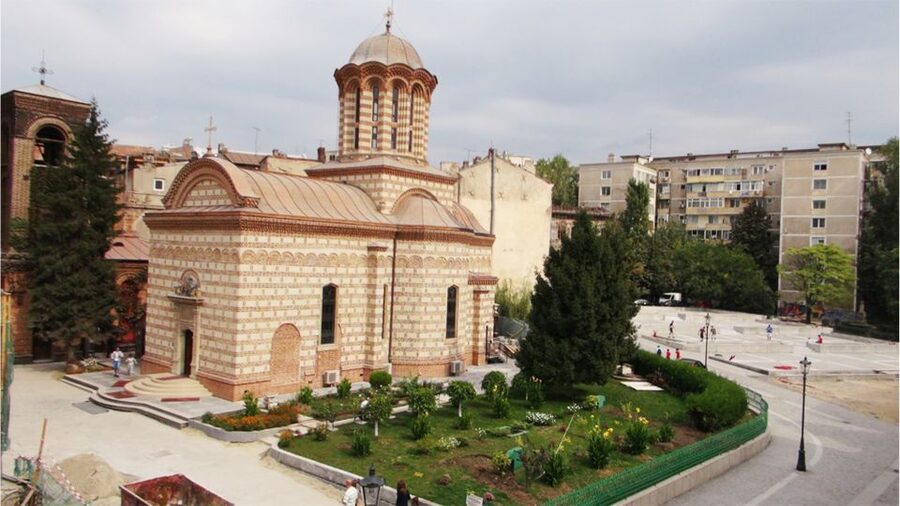
Bucharest’s Old Town is not only cafés, bars, and grand 19th-century buildings. Behind its busy streets are active Orthodox churches filled with frescoes, icons, and centuries of worship. This 2.5-hour walking tour connects six of them, beginning near the Old Princely Court and ending with some of the city’s most distinctive church art.
I like the way the route mixes famous sights, such as Stavropoleos Monastery, with small churches that can be hard to locate on your own. I also like the personal touch from guide Helen, who has adjusted walks for visitors with mobility needs and, on one occasion, helped a guest reach a hotel afterward. The main consideration is that these are working churches, not museums, so modest clothing, quiet behavior, and flexibility are essential.
Key points at a glance
- Six active Orthodox churches: See Saint Anton, Saint George Km0, Saint Elijah, the Lady’s Church, Stavropoleos, and Saint Cyprian, with Saint Demetrios also described as part of the route.
- A close look at church art: Learn about Byzantine and Orthodox painting, Romanian religious art, frescoes, and icon traditions.
- Small groups of up to 10: The size allows more questions and makes it easier for the guide to adjust the pace.
- A central Old Town walk: The meeting point is in front of the Anton icon shop, near the Old Princely Court.
- Several languages: Tours are offered in English, Spanish, and Romanian.
- A respectful church visit: Wear comfortable shoes and modest clothing. Shorts, short skirts, sleeveless shirts, tight or ripped clothing, pets, and strong fragrances are not allowed.
Why this church walk reveals another Bucharest
This tour works because it changes the way you read the Old Town. You are not simply ticking off churches from a list. You are looking at how Wallachian rulers, local artists, Orthodox worship, and later architectural styles shaped the city in a compact area.
The route is especially useful if you have already seen the main streets of central Bucharest and want more meaning behind the façades. A guide can point out what to look for in a painted scene, explain why an icon is arranged in a certain way, and show how a church’s style differs from its neighbor.
The art is the main attraction. Byzantine and Orthodox traditions can seem unfamiliar at first, particularly if you are used to Western European church interiors. The guide helps you read the images rather than merely admire their color. You can expect discussion of Romanian church painters, fresco technique, iconography, and the role of churches as living places of worship.
The tour costs $57 per person. That is a fair price if you want focused interpretation and several church visits in one short walk, especially since the group is capped at 10. It is less appealing if you prefer to wander alone, spend a long time sketching or photographing one building, or treat churches as silent historical displays.
Other monasteries and painted churches from Bucharest:
- Princely Court of Târgoviște and Curtea de Argeș Monastery
★ 4.5 · 50 reviews - Small Group Tour to Mogosoaia Palace & Snagov Monastery
★ 4.4 · 41 reviews - Sacred Monasteries Private Tour: Snagov, Țigănești & Căldărușani
★ 5.0 · 32 reviews
Starting near Saint Anton and the Old Princely Court
Meet in front of the Anton icon shop, close to the Old Princely Court. This gives the walk a fitting start: icons, Orthodox practice, and the medieval rulers of Wallachia are all nearby.
Saint Anton Church is the first stop. It is described as magnificent and connects the tour to the Wallachian Middle Ages. The setting near the old princely residence helps explain why churches were such important parts of political and daily life in medieval Bucharest.
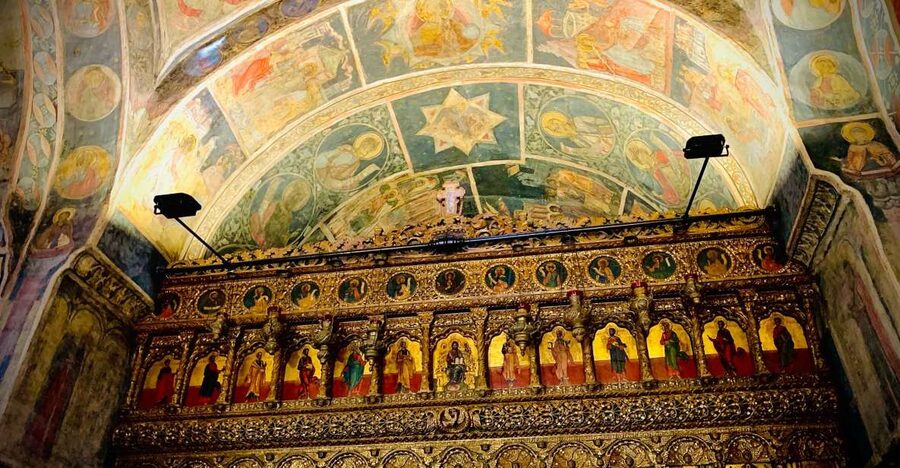
I would pay close attention here to the difference between an icon and a wall painting. They are both religious art, but they serve different roles and have different visual rules. Your guide can help you notice the arrangement of sacred figures, the use of color, and the way worshippers interact with the space.
Because Saint Anton is active, the visit may not feel like a standard museum stop. You may need to keep your voice low, stand to one side, or move along if services or private prayer are taking place. That is not a flaw, but it does mean the itinerary cannot offer total control over timing.
Lipscani Street and the Saint George Km0 Church
From Saint Anton, the route continues along Lipscani Street to Saint George Km0 Church. This section places religious art right in the middle of Bucharest’s best-known historic shopping and restaurant district.
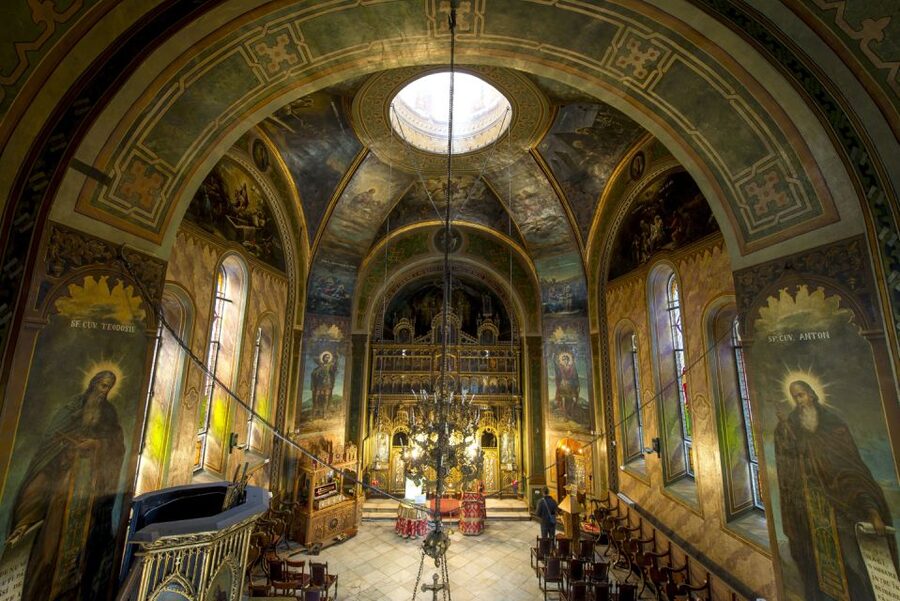
Saint George is important for its fresco by one of Romania’s greatest church painters. The guide’s explanation matters here because the painting is not just decoration. Its style, subject matter, and placement can tell you something about Romanian Orthodox artistic practice.
The name Km0 points to the church’s central position in the city. You get a useful contrast here: the surrounding streets are lively and commercial, while the church interior asks for stillness and attention. I like that change of pace. It makes the visit feel connected to present-day Bucharest without reducing the church to an old building in a tourist zone.
If you want photographs, ask first. The tour takes place in active religious spaces, and rules can vary depending on what is happening inside. A respectful visit is more important than getting a perfect image.
Saint Elijah and one of Bucharest’s Orthodox basilicas
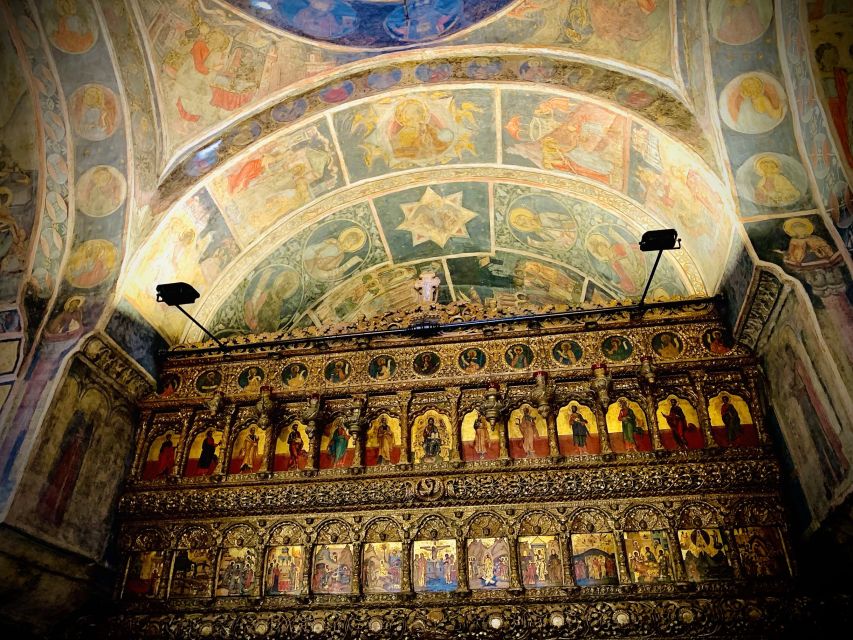
Saint Elijah is one of the harder churches to find, even for locals, according to the tour description. That alone gives this part of the walk a different character from the more familiar Old Town stops.
It is also one of only two Orthodox basilicas in the city. That makes the building valuable for comparison. Rather than seeing every church as simply another decorated interior, you can consider how its plan and scale differ from smaller neighborhood churches.
The stop should appeal to anyone interested in architecture as much as painting. Listen for the guide’s explanation of what makes a basilica distinct within the local Orthodox setting. The church’s relative obscurity also makes a small guided group useful. You are less likely to lose time searching for an entrance or miss a building tucked away from the obvious routes.
Still, do not expect a large museum-like complex. The appeal is the combination of architecture, worship, and the pleasure of finding a place that is easy to overlook. If you need a tour built around major monuments with broad opening hours, this stop may feel less predictable.
Same base, a completely different day:
- Bucharest: Dracula’s Castle, Peles Castle, & Brasov Old Town
★ 4.5 · 17,858 reviews - Bucharest: Dracula Castle, Peles Castle & Brasov Old Town
★ 4.6 · 10,891 reviews - Bucharest: Dracula’s Castle, Peleș Castle & Brașov Day Trip
★ 4.5 · 5,919 reviews - Bucharest: Palace of Parliament Tickets and Guide
★ 4.3 · 3,182 reviews
The Lady’s Church and old preserved frescoes
The Lady’s Church is another place that can be difficult to locate without help. Its key feature is the preservation of some of the oldest original frescoes in Bucharest.
That makes this one of the most important stops for visitors who want to see age and authenticity rather than polished restoration. Old frescoes can show wear, uneven surfaces, and muted colors. Those marks are part of the story. You are seeing surviving material from an earlier period, not a modern recreation designed to look old.
The guide can also put the paintings into context. Orthodox frescoes are meant to support worship and teach through images, not simply provide visual pleasure. Once you understand that purpose, small details become easier to read.
This is a stop where patience pays off. The church may not overwhelm you with size, but its age gives it weight. I would avoid rushing through it just to stay on schedule. At the same time, remember that a 2.5-hour route covering six churches cannot allow unlimited time at every site.
Stavropoleos Monastery, Bucharest’s ornate pause
Stavropoleos Monastery is likely the best-known stop on the route. It is described as eclectic, and it provides a change from the earlier churches. Its architectural character is more decorative and varied, making it a natural highlight in the middle or later part of the walk.
The monastery is also a good place to bring together the themes of the tour. You have Orthodox worship, decorative art, Romanian architectural development, and the relationship between a religious site and the surrounding Old Town.
I like that Stavropoleos is not treated as the only important building. If you visit it alone, you may admire its details but miss the contrasts with Saint Anton, Saint Elijah, or the Lady’s Church. Seen as part of this route, it becomes one chapter in a larger story.
The surrounding area has cafés, bars, and restaurants, so the guide can stop for refreshments if the group wants to. Food and drinks are not included, and this is not a meal tour. Consider that option if you are booking the experience around lunchtime or need a short break.
Saint Cyprian, Saint Demetrios, and the final contrast
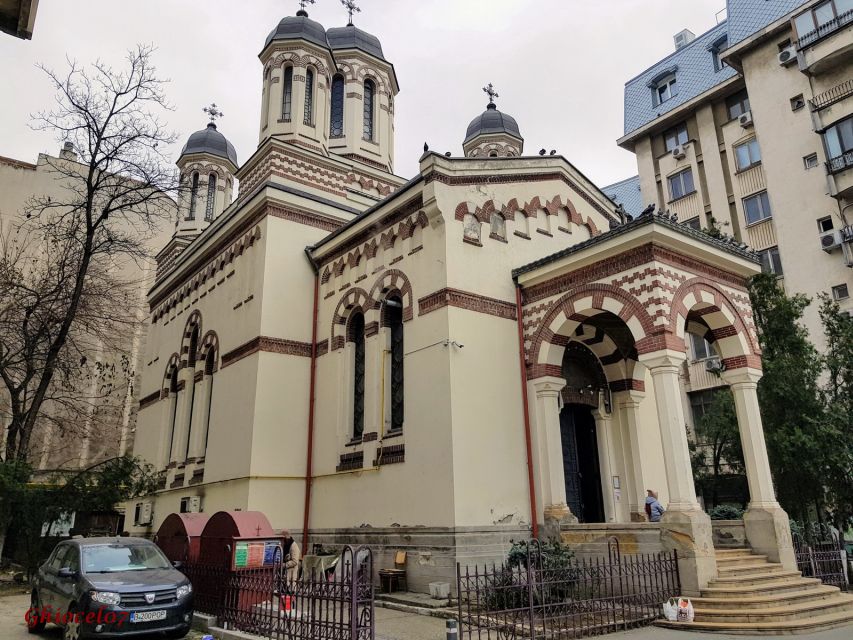
The included stops name Saint Cyprian, while the route description also identifies Saint Demetrios as the final church. Saint Demetrios is described as a 19th-century neo-Baroque church, giving the walk a strong architectural contrast with its medieval and Byzantine-focused churches.
This late stop shows that Bucharest’s Orthodox buildings are not all from one period or style. A neo-Baroque church reflects a later taste and a different architectural vocabulary. It helps you see the city as a layered place, where medieval traditions continued while later builders adopted new forms.
Because the published details name both Saint Cyprian and Saint Demetrios, I would confirm the exact final sequence with Bucharest Break when booking. That is a small but worthwhile check, especially if one church is a priority for you.
The final churches also reinforce the tour’s central lesson: Orthodox art in Bucharest is not a single look. You may encounter older frescoes, basilica architecture, ornate monastic design, and later decorative styles in a short walking route.
What the guide adds to the experience
The guide is the real reason to choose this walk over visiting churches independently. Helen is named as the guide in the strongest personal accounts, and Spanish-language feedback refers to Elena. Tours are available in English, Spanish, and Romanian, so confirm the guide and language when you reserve.
Helen’s strengths are clear from the way the tour has been handled. She has tailored the route for a visitor using crutches and another using a walking stick. She has also helped a guest return to a hotel after the walk. That suggests a flexible approach, although the route still involves walking between several churches and comfortable shoes are essential.
The tour can also become very personal when the group is small. One visitor had a private experience because no one else joined the departure, and the guide included a stop at an icon shop. That kind of flexibility is possible because the group limit is only 10 people.
There is one important caution. A single low-scoring account describes the guide as condescending after learning the visitor was Catholic. I would not ignore that concern, particularly because religious identity can make church tours feel personal. Most of the available feedback praises the guide’s warmth, flexibility, and command of Orthodox art, but you should expect a strongly Orthodox point of view and ask questions respectfully.
Dress, pace, and practical planning
Wear comfortable shoes. Six churches over 2.5 hours means a steady walking pace, even though the route is central.
Dress modestly. Short skirts, sleeveless shirts, tight clothing, ripped clothing, and strong fragrances are not permitted. Since the churches are active, behave as you would during a service: keep your voice down, follow instructions, and be ready to pause or adjust if worship is taking place.
Pets are not allowed. No food or drinks are included, but cafés, bars, and restaurants are available along the route. The meeting point is in front of the Anton icon shop, so allow enough time to find that exact spot.
The tour offers free cancellation up to 24 hours before departure, and you can reserve now and pay later. Starting times vary, so check availability before planning other Bucharest activities around it.
Who should book this Bucharest church tour?
I would choose this experience if you want art explained in context, prefer a small group, and are curious about Orthodox worship beyond the most famous landmarks. It suits visitors who enjoy walking and who would rather see several active churches than spend an afternoon in a single museum.
It is also a good choice for repeat visitors to Bucharest. The route reaches places that are easy to miss, including Saint Elijah and the Lady’s Church, while still including Stavropoleos and Saint George.
I would hesitate if you want a strictly secular art tour, dislike religious settings, or need a fixed schedule with no possible interruptions. The churches are active, and the experience depends on respectful access rather than museum-style control. Catholics and visitors from other Christian traditions can certainly learn from the tour, but you should be comfortable with an Orthodox-centered presentation.
At $57, the value comes from the guide’s explanations and the number of churches covered, not from entrance-ticket savings. If you want to understand what you are seeing, the price is reasonable. If you only want quick exterior photographs, it is more than you need.
FAQ
How long does the Eastern Orthodox Church Art tour last?
The tour lasts 2.5 hours.
How much does the tour cost?
The price is $57 per person.
Where is the meeting point?
Meet in front of the Anton icon shop, near the Old Princely Court.
Which churches are included?
The included churches are Saint Anton Church, Saint George Km0 Church, Saint Elijah, the Lady’s Church, Stavropoleos Monastery, and Saint Cyprian Church. The route description also names Saint Demetrios, so confirm the final stop when booking.
What languages are available?
The tour is offered in English, Spanish, and Romanian.
How large is the group?
The group is limited to 10 participants.
What should I wear?
Wear comfortable shoes and modest clothing. Short skirts, sleeveless shirts, tight clothing, ripped clothing, and strong fragrances are not allowed.
Are food and drinks included?
No. Food and drinks are not included, although the group can stop at a café, bar, or restaurant along the route.
Should I book this tour?
Book it if you want a well-explained look at Bucharest’s Orthodox art, especially the older frescoes and less obvious churches. Confirm the Saint Cyprian and Saint Demetrios details before paying, then arrive in modest clothing and ready to walk. For curious visitors, this is a useful way to see an older, quieter side of the city beneath the Old Town’s busy surface.
Just added around Bucharest
- Winery touring & private wine tasting – one day private tour★ 5.0 · 3 reviews
- Village Museum Bucharest Guided Tour★ 5.0 · 6 reviews
- Bucharest: Dealu Mare Winery Private Trip with Wine Tasting★ 4.9 · 6 reviews
- Traditions in Bucharest: Village Museum and Wine Tasting★ 5.0 · 8 reviews
- Transylvania Tour: Dracula’s Castle, Peles Palace & Brasov★ 5.0 · 19 reviews
- Airport Henri Coanda (Otopeni) to Bucharest – Private Transfer – Driver★ 5.0 · 5 reviews
- Gems of Transilvania: Brasov,Sighisoara,Sibiu,Viscri and more★ 5.0 · 6 reviews
- Discover Medieval Transylvania Small Group Tour – 7 days★ 5.0 · 4 reviews
Maramureș & Monasteries, compared.

3-Castle: Peles,Bran,Rasnov,Sinaia Monastery from Brasov w pickup
Read our review →
Peles Castle, Bran Castle, Rasnov Fortress and Sinaia Monastery Tour from Brasov
Read our review →
Princely Court of Târgoviște and Curtea de Argeș Monastery
Read our review →
Small Group Tour to Mogosoaia Palace & Snagov Monastery
Read our review →
1-Day Bucovina Painted Monasteries tour from Suceava – English
Read our review →
Sacred Monasteries Private Tour: Snagov, Țigănești & Căldărușani
Read our review →Browse the lists this tour appears in