Reviewed · TOURS IN BUCHAREST
Bucharest: Private Three Neighborhoods Tour by Vintage Car
Bucharest looks different from the back seat of a restored Dacia 1310, the boxy Romanian car that once filled the country’s roads. This private 3.5-hour tour uses that car to show you three very different neighborhoods, from Cotroceni villas to communist apartment blocks and the poorer Ferentari area.
I like the social focus, which adds something beyond the usual parade of monuments. I also like the small group format, hotel pickup, and the chance to hear a local guide explain daily life in places you might not reach on a standard city tour. The main drawback is the car itself: it is a vintage vehicle with no air-conditioning, no power steering, no ABS, and a manual gearbox. It is part of the fun, but comfort is basic.
Key points at a glance
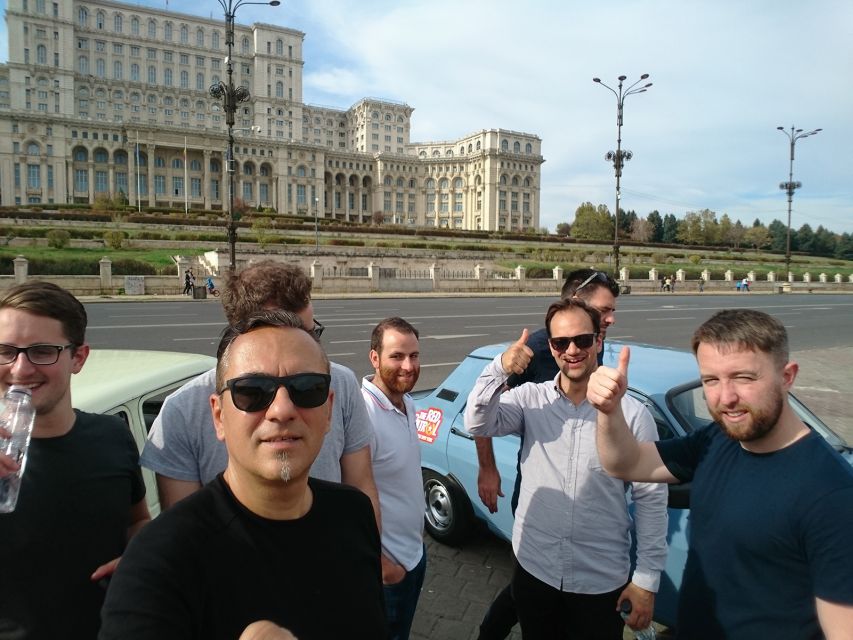
- A restored Dacia 1310: Ride in one of Romania’s best-known cars from the 1970s and 1980s, with photo opportunities along the way.
- Three social settings: Compare the villa quarter of Cotroceni, the working and middle-class blocks of Drumul Taberei, and Ferentari.
- A private English-language tour: Your guide drives, explains the city, and keeps the experience focused on your group.
- Beyond central Bucharest: The route includes Rahova, Toporași Street, Bragadiru Palace, and neighborhood markets and churches.
- Easy hotel transport: Pickup and return in Bucharest are included, along with water and a souvenir.
- A candid, serious subject: Ferentari is presented through poverty and social hardship, so this is not a light sightseeing loop.
Why the Dacia 1310 changes the city tour
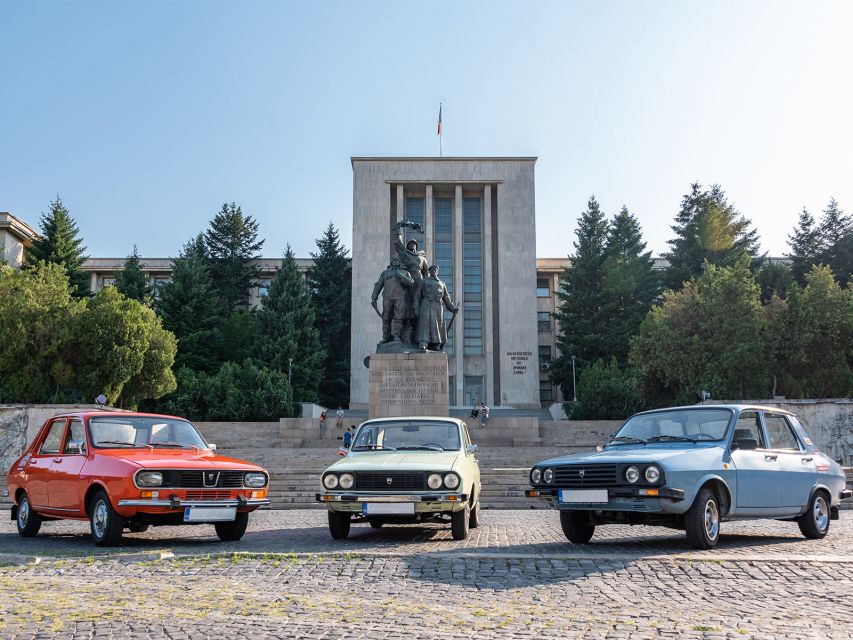
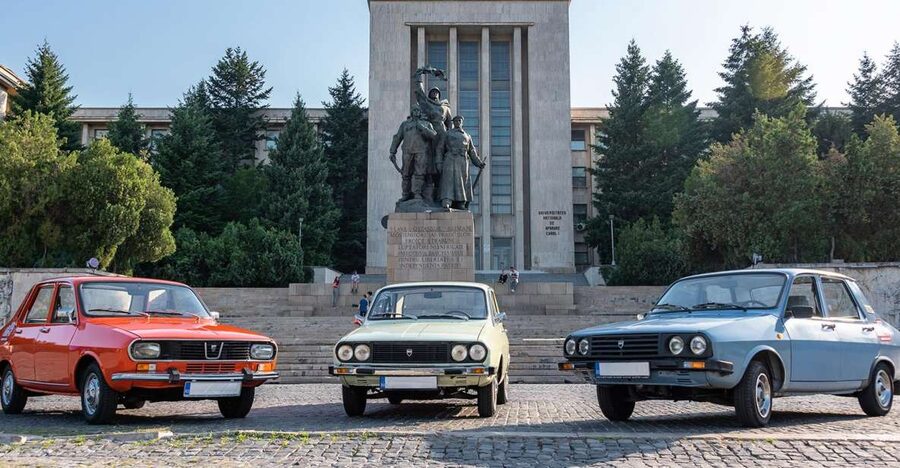
The Dacia is not a polished luxury car. That is precisely why it works here. Built as a Romanian version of the Renault 12, the 1300 and later 1310 became familiar symbols of everyday life during the communist period and after. Riding in a restored example gives the tour a direct link to the people and neighborhoods being discussed.
You do not drive the car yourself. The guide handles the vehicle, and each car holds three people. If your group is larger, a convoy can be arranged. That keeps the outing private while preserving the old-car character.
Expect a slower, more mechanical ride than you would get in a modern sedan. The car has no air-conditioning, ABS, GPS navigation, servo-assisted steering, or automatic transmission. In winter, it is heated. In warm weather, the lack of air-conditioning is worth considering, especially if you are sensitive to heat.
The Dacia also limits what you can bring. Large bags, oversize luggage, pets, smoking, alcohol, and drugs are not allowed. Wear comfortable shoes because the route includes short strolls and stops outside the car.
Other private tours around Bucharest:
- Castles of Transylvania: Private Day Trip from Bucharest
★ 4.5 · 248 reviews - Dracula’s Castle, Peles Castle and Brasov – Private Day Trip from Bucharest
★ 5.0 · 211 reviews - Best of Bucharest | Private Walking Tour
★ 5.0 · 199 reviews
Cotroceni, where Bucharest turns grand
The first major part of the route introduces Cotroceni, one of Bucharest’s most elegant residential areas. Here, villas and older houses sit near important institutions, including the Cotroceni Presidential Palace, the Military Academy, and the Botanical Garden.
The tour does not promise entry into every sight. Instead, you stop for explanations, views, and photographs. That makes this section useful if you want context on how Bucharest’s upper-class residential world fits beside its public buildings.
The itinerary also includes Bragadiru Palace, with about 30 minutes for a guided stop and photographs. The palace adds another layer to the city’s old elite, and the guide can connect the building to the wider story of wealth, status, and changing power in Bucharest.
At Fântâna Costache Negri, you get another short break and photo stop. These pauses matter in a vintage car tour. You are not confined to the back seat for the entire outing, and you have time to look around rather than photograph everything through a window.
Cotroceni is likely to be the easiest section for visitors who want classic sightseeing. It has attractive buildings, formal institutions, and familiar postcard material. The more unusual part comes when the route leaves the villa district and moves into ordinary residential Bucharest.
Drumul Taberei and the everyday city
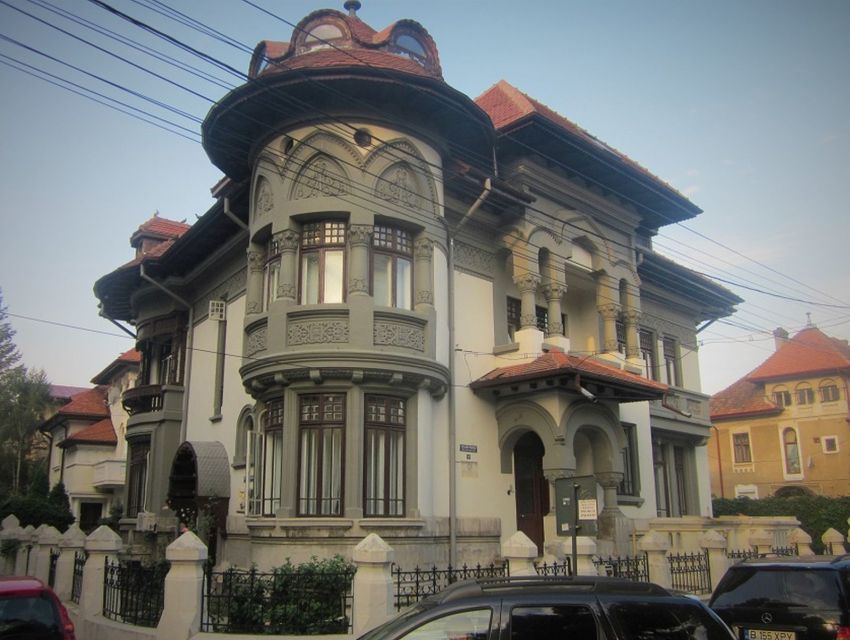
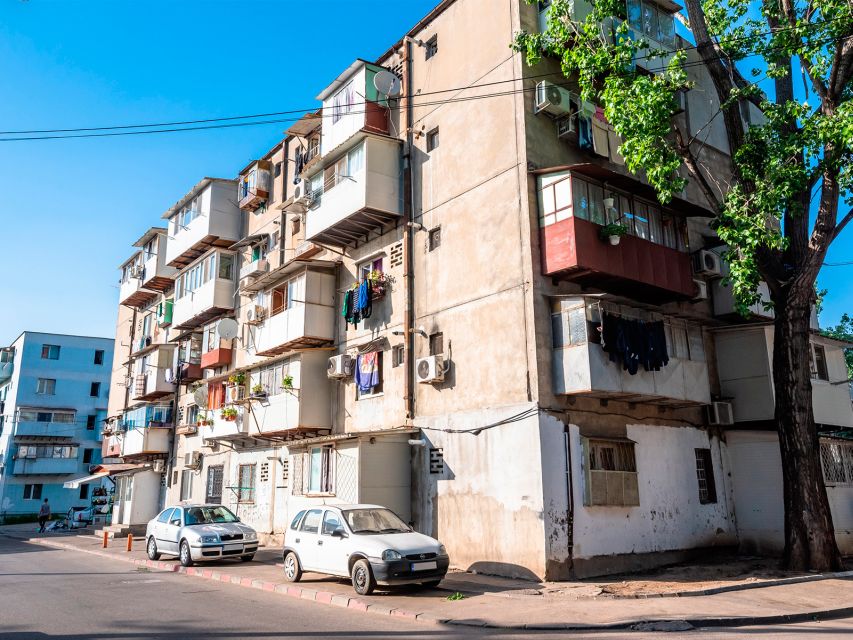
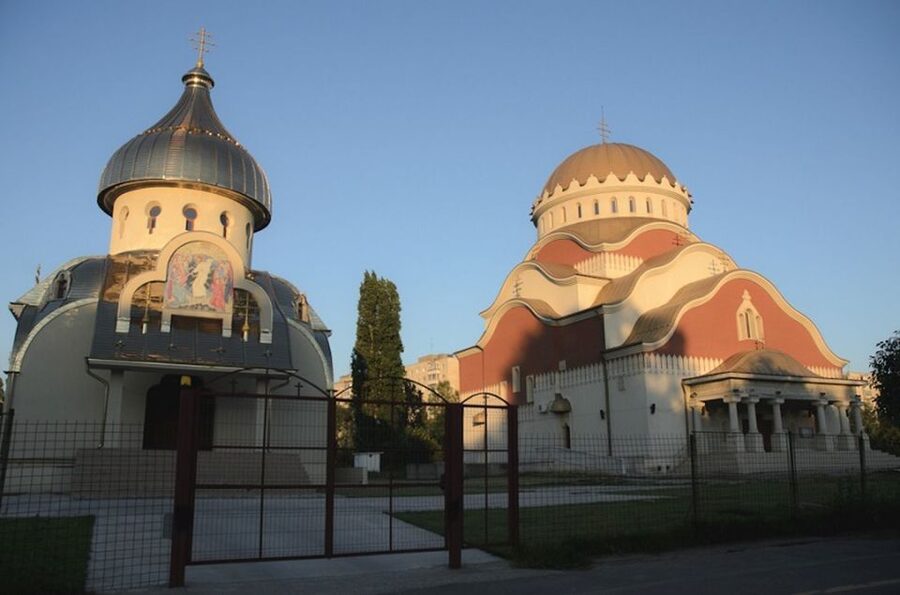
Drumul Taberei represents the average urban Romanian experience in this tour’s structure. It is known for large communist-era apartment blocks, local churches, and everyday shopping areas rather than grand monuments.
The guide takes you through the neighborhood and allows time for a short walk and photo stop. You may see the scale of the housing blocks and get a sense of how densely many people lived during the communist period. The point is not simply to admire architecture. It is to understand the practical side of city life: housing, markets, religious places, and the routines of people who did not live in villas.
This section is valuable because many city tours show Bucharest’s center while skipping the districts where most residents actually live. The blocks can look plain, but they explain a great deal about the city’s shape and social structure.
The route also includes Parcul La Broscuțe, with another short guided stop. The name refers to a local park setting, and the stop breaks up the drive before the tour continues toward Rahova. You should expect brief neighborhood visits rather than long museum-style stops. The experience is built around movement, comparison, and conversation.
If you have already taken a traditional Bucharest tour, Drumul Taberei may add the most useful new perspective. One past participant described pairing a standard historical city tour with this outing focused on social issues, and that is a sensible way to use it. The two formats serve different purposes.
Ferentari, Rahova, and the difficult side of Bucharest
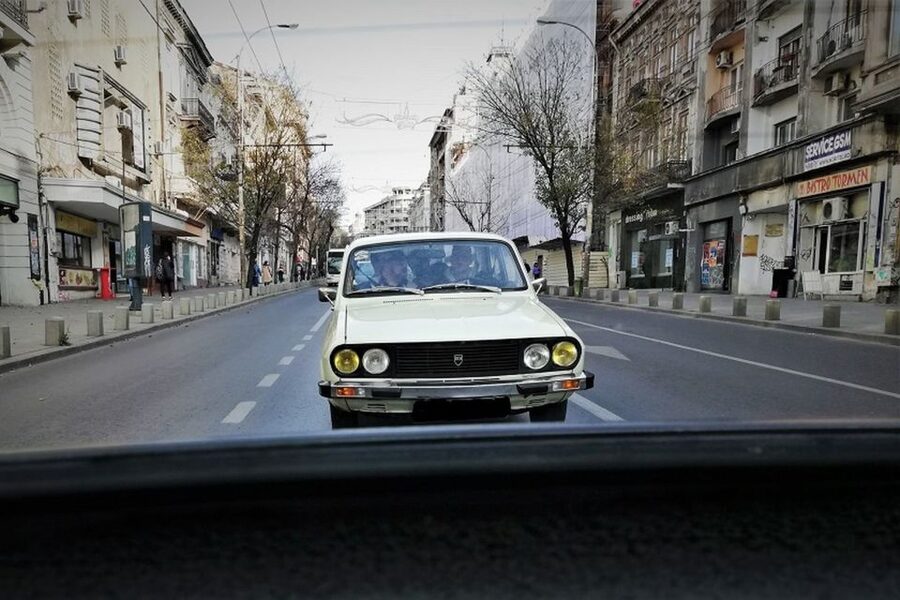
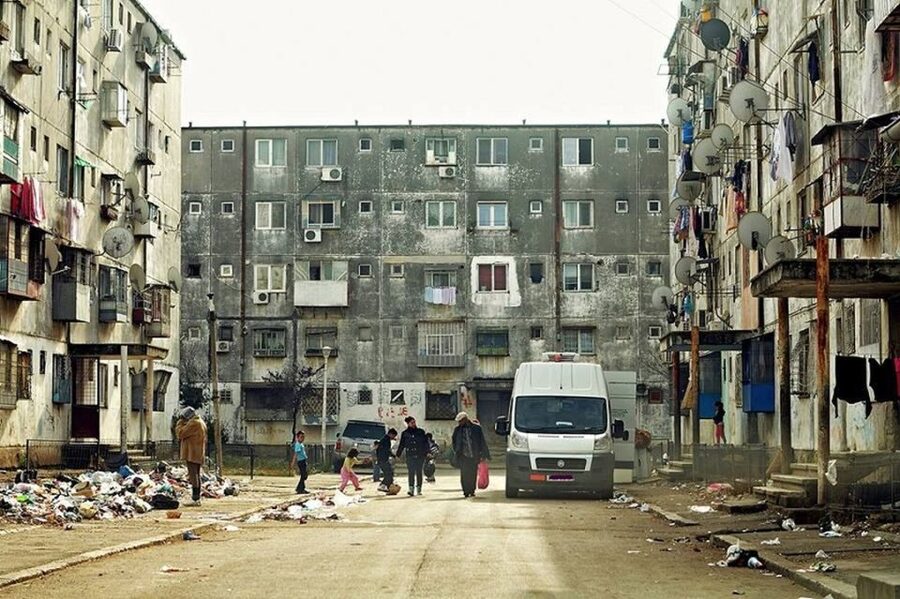
The Ferentari section is the most serious part of the tour. The area is presented as a place of high poverty, with rougher housing and difficult living conditions. It is also described as highly contrasting and visually striking, but the important point is not taking dramatic photographs. It is hearing about the daily struggles faced by people living with poverty and exclusion.
The route includes Piața Rahova and Strada Toporași, each with a short stop. The market area helps connect the social discussion to ordinary public life, while Toporași gives you another view of the district’s buildings and streets.
You should approach this section with respect. A poor neighborhood is not a backdrop or a theme park. The value depends heavily on how your guide explains the area and how you behave during stops. Listen, avoid intrusive photography of residents, and remember that the tour is showing real communities, not a staged attraction.
The information provided for this experience uses stark class categories, including bourgeois, average, and poor Romanians. That framing is direct, but it can also feel simplified. Bucharest’s neighborhoods are not frozen into three neat boxes, and a short route cannot explain every cause of poverty or every difference within a district. I would treat the categories as a starting point for conversation, not a complete portrait of the city.
For visitors who want only pretty buildings, Ferentari may feel uncomfortable. For those interested in how cities work beyond the center, it is likely the most memorable part. The tour asks you to look at Bucharest as a lived-in place, with inequality alongside beauty and history.
Same base, a completely different day:
- Bucharest: Dracula’s Castle, Peles Castle, & Brasov Old Town
★ 4.5 · 17,858 reviews - Bucharest: Dracula Castle, Peles Castle & Brasov Old Town
★ 4.6 · 10,891 reviews - Bucharest: Dracula’s Castle, Peleș Castle & Brașov Day Trip
★ 4.5 · 5,919 reviews - Bucharest: Palace of Parliament Tickets and Guide
★ 4.3 · 3,182 reviews
The route back through major Bucharest sights
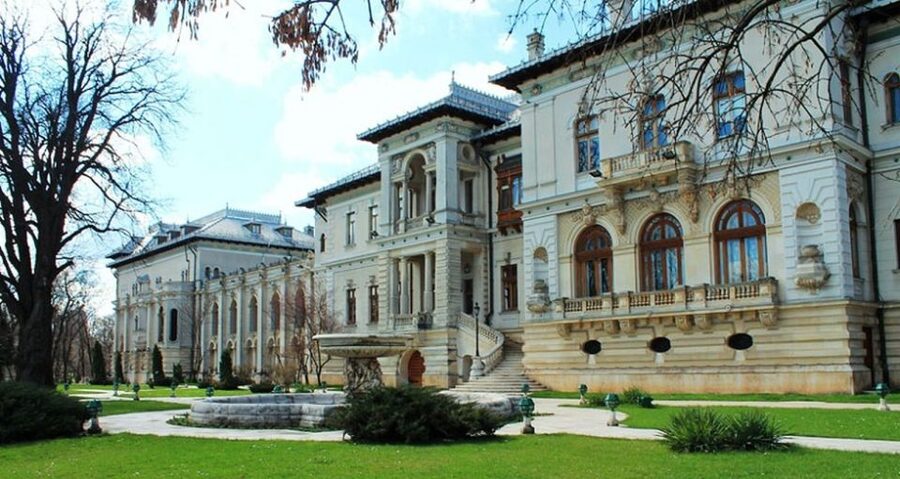
After the neighborhood stops, the Dacia continues toward the Palace of the Parliament. This 20-minute stop provides a strong visual contrast with the residential districts you have just seen.
The Palace is one of Bucharest’s defining landmarks, but on this tour it is not treated as the whole story. It appears after Cotroceni, Drumul Taberei, Rahova, and Ferentari, so you see the monumental center in relation to the ordinary districts around it.
The stop is for sightseeing, photographs, and a guided explanation. The activity details do not promise an interior visit, so plan on viewing the building from outside unless your guide confirms otherwise. You then return to your Bucharest accommodation.
The route also begins and ends in Bucharest, which makes it practical for a half-day schedule. At 3.5 hours, it is long enough to reach several districts without taking up an entire day. Pickup and drop-off reduce the need to work out public transport connections before or after the tour.
The guide matters more than the car
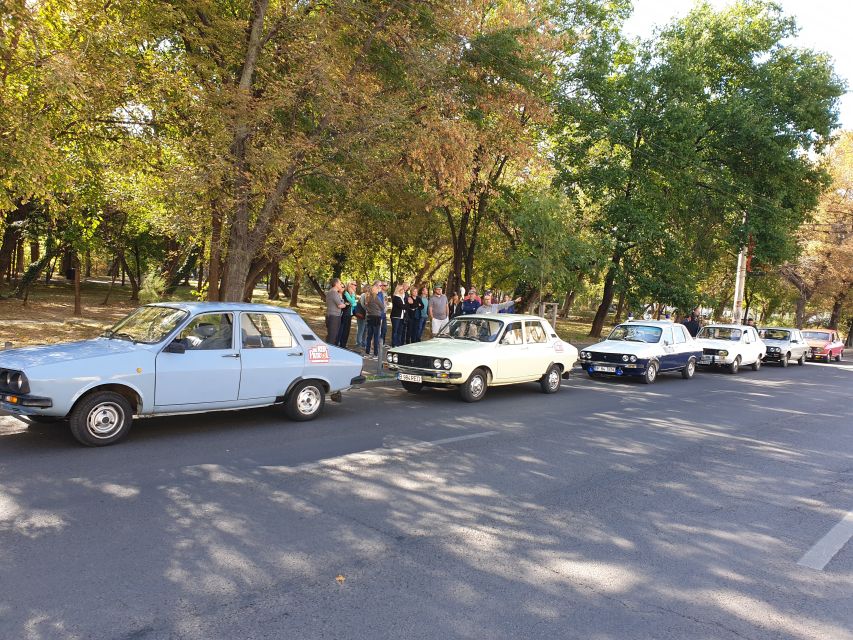
The old vehicle gets attention, but the guide determines whether this is merely a fun ride or a worthwhile city experience. The tour is conducted in English by a live local guide who drives and explains what you are seeing.
Mihai is specifically praised for being friendly, informative, and an excellent driver. That combination matters here. You need someone who can handle an older manual car while also keeping the social and historical discussion clear.
The strongest feedback centers on the guide and the information, not only on the novelty of the Dacia. That is encouraging because the car alone would make a short photo experience, while the commentary gives the route its purpose.
Still, the tour can only cover so much in three and a half hours. If you want detailed political history, museum interiors, or a long architectural walk, choose a more conventional city tour. This experience is better for broad context, neighborhood comparison, and direct conversation.
What the $126 price means
At $126 per person, this is not the cheapest way to see Bucharest. The price makes more sense if you are traveling with one or two other people and value private transport, hotel pickup, and a specialist route that is hard to recreate on your own.
The cost includes the car, the local guide, the guided circuit, water, a souvenir, and pickup and drop-off from Bucharest. A car holds three people, so a full vehicle gives you the best per-person value. A larger group can use a convoy, but the atmosphere may feel less intimate.
You are paying for access to a particular format rather than admission tickets. The experience is built around the Dacia, the driver-guide, and the route through neighborhoods that are not usually the focus of sightseeing tours. If you want a simple list of famous landmarks, the price may feel high. If you want a private social portrait of the city, it is easier to justify.
Free cancellation up to 24 hours before the start and the reserve-now-pay-later option add flexibility. Confirmation is normally provided at booking, though bookings made within five days of travel may be confirmed within 48 hours, subject to availability.
Who should book this vintage car tour
I would choose this for adults and older children who have already seen some of central Bucharest or who want a more unusual first look at the city. It suits people interested in social history, communist-era housing, local life, photography, and conversations with a guide.
It is also a good fit for a couple or a small group that wants a private experience rather than a large bus. The three-person vehicle limit keeps the outing personal, though a larger party can request a convoy.
I would not choose it for children under 10, pregnant women, wheelchair users, or people with mobility impairments. Pets are not allowed either. The short walks, older car, and neighborhood stops make comfortable footwear a sensible choice.
The Dacia is not suitable if you require modern car comforts. There is no air-conditioning, GPS, ABS, servo steering, or automatic gearbox. The car meets necessary traffic safety rules, but it is still a vintage vehicle, and you should book it for character rather than convenience.
Should you book the Dacia neighborhood tour?
Book it if you want Bucharest explained through people and neighborhoods, not just monuments. The combination of Cotroceni villas, Drumul Taberei blocks, Ferentari, Rahova, and the Palace of the Parliament gives you a wider view of the city’s social contrasts.
I especially recommend it after, or alongside, a standard historical city tour. That pairing lets you see both the famous buildings and the ordinary districts that give Bucharest its daily character.
Skip it if your priority is comfort, formal sightseeing, or entry to major attractions. The Dacia is tight and old-fashioned, and the Ferentari section may feel confronting. For the right audience, though, the car is more than a gimmick. It places you inside a Romanian story while the guide shows you how different parts of Bucharest fit together.
FAQ
How long does the Bucharest Dacia tour last?
The tour lasts 3.5 hours, with several guided stops and short breaks.
What neighborhoods does the tour visit?
The route includes Cotroceni, Drumul Taberei, and Ferentari. It also passes through or stops at areas including Rahova and Strada Toporași.
What type of car is used?
The tour uses a fully restored Dacia 1300 or 1310, a Romanian vintage car from the 1970s or 1980s.
Can I drive the Dacia?
No. Participants are not allowed to drive the car. The local guide drives during the tour.
How many people fit in one vehicle?
Each vehicle holds three people. If more people are required, a convoy can be arranged.
Is hotel pickup included?
Yes. Pickup and drop-off from accommodation in Bucharest are included.
Is the tour available in English?
Yes. The tour has a live English-speaking guide.
Is the Dacia comfortable in hot or cold weather?
The car does not have air-conditioning, but it is heated during winter. It also does not have ABS, GPS navigation, servo-assisted steering, or automatic transmission.
Are children and pets allowed?
Children under 10 are not allowed, and pets are not allowed. The tour is also not suitable for pregnant women, wheelchair users, or people with mobility impairments.
Just added around Bucharest
- Winery touring & private wine tasting – one day private tour★ 5.0 · 3 reviews
- Village Museum Bucharest Guided Tour★ 5.0 · 6 reviews
- Bucharest: Dealu Mare Winery Private Trip with Wine Tasting★ 4.9 · 6 reviews
- Traditions in Bucharest: Village Museum and Wine Tasting★ 5.0 · 8 reviews
- Transylvania Tour: Dracula’s Castle, Peles Palace & Brasov★ 5.0 · 19 reviews
- Airport Henri Coanda (Otopeni) to Bucharest – Private Transfer – Driver★ 5.0 · 5 reviews
- Gems of Transilvania: Brasov,Sighisoara,Sibiu,Viscri and more★ 5.0 · 6 reviews
- Discover Medieval Transylvania Small Group Tour – 7 days★ 5.0 · 4 reviews
Tours in Bucharest, compared.
Dracula’s Castle, Peles Castle, & Brasov Old Town
Read our review →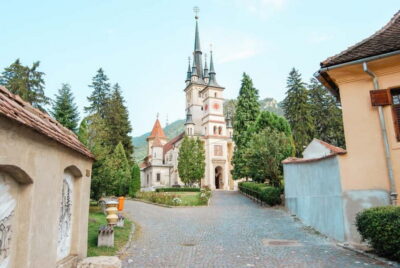
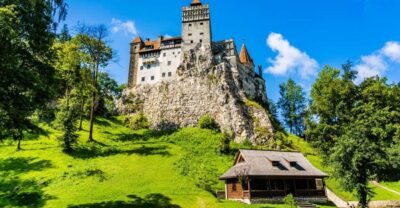
Dracula’s Castle, Peleș Castle & Brașov Day Trip
Read our review →
Day Trip to Dracula Castle, Peles Castle & Brașov
Read our review →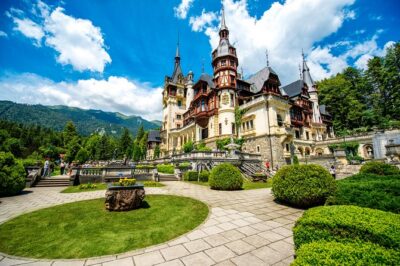
Bucharest to Dracula Castle, Peles Castle and Brasov Guided Tour
Read our review →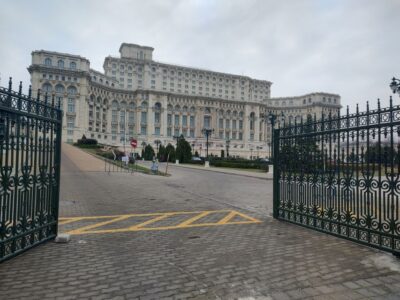
Dracula’s Castle, Peles Castle and Brasov Day Trip from Bucharest
Read our review →