
Reviewed · COMMUNISM & CEAUȘESCU TOURS
Bucharest: Tour of Old Town, Calea Victoriei & Communism
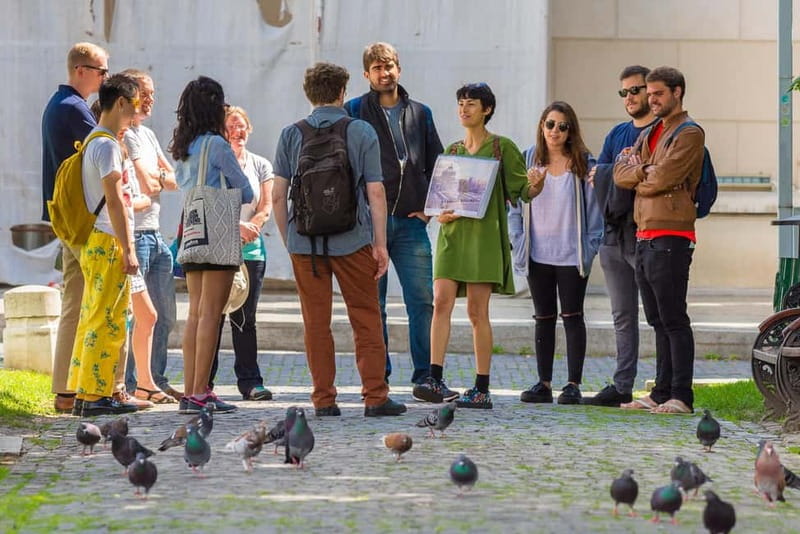
Bucharest’s story turns sharply at Revolution Square. One moment you are looking at royal buildings and grand French-inspired facades. The next, you are hearing how Nicolae Ceaușescu’s Communist regime collapsed in a revolution broadcast live on television. That contrast gives this 2.5-hour walking tour more weight than a simple Old Town stroll.
I like the route for two clear reasons: it links Bucharest’s royal, interwar, Communist, and medieval chapters in one walk, and it includes intimate places such as Stavropoleos Church and Villacrosse Passage, not only big public squares. The main drawback is the pace. You cover a lot of ground on foot, so comfortable shoes are essential, and the tour runs rain or shine.
Key points to know
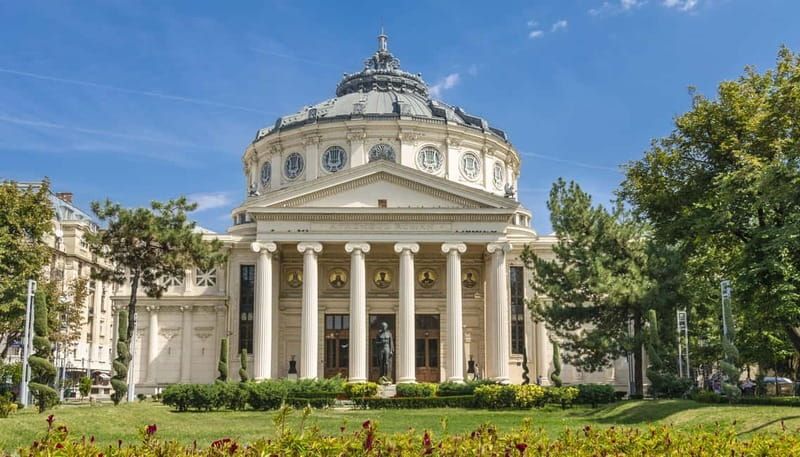
- Start at the Romanian Athenaeum: Meet your guide by the columns on the concert hall steps.
- See Bucharest’s political turning point: Revolution Square explains the fall of Communism and Ceaușescu’s final days.
- Walk Calea Victoriei: This grand avenue brings together Belle Epoque hotels, Art Deco design, royal buildings, and modern city life.
- Explore the Old Town on foot: Cobblestones lead to the History Museum, CEC Palace, Manuc’s Inn, and medieval-style courtyards.
- Pause at Stavropoleos Church: This active monastery offers a quiet break amid the city center.
- Good value at $21: The price includes a professional local guide and a Bucharest map, but not food, drinks, or hotel transfers.
Why this Bucharest walk works
Bucharest can be hard to read at first. Its center mixes 19th-century ambition, royal ceremony, Communist rebuilding, and lively Old Town streets. A building that looks French may sit beside a block from the Communist period, while a medieval inn can be only a short walk from a modern boulevard.
This tour gives you a useful framework for those contrasts. Instead of treating the city center as a collection of unrelated sights, it connects them through the people and regimes that shaped Bucharest. You begin with the monarchy and end among older merchant streets, with the Communist period placed at the heart of the story.
At $21 per person, the value is strong if you want orientation and context rather than a long list of photo stops. You receive a live guide in English or Spanish and a map of Bucharest. The tour does not include museum admissions, meals, drinks, or hotel pickup, but it focuses on outdoor sights and public spaces, so there are no major entry costs built into the route.
The overall rating is 4.9 from 15 reviews, and the available feedback gives useful praise to the guide named Laura. One particularly positive account describes her as professional, friendly, and generous with Romanian history. Since guide quality can shape a walking tour, that personal detail is worth noting, though the guide assigned to your departure may be different.
More of the communist years around Bucharest:
- Bucharest: Palace of Parliament Tickets and Guide
★ 4.3 · 3,182 reviews - Bucharest: Palace of Parliament Tickets and Guided Tour
★ 4.4 · 1,877 reviews - Bucharest: Parliament Palace Skip-the-line Ticket
★ 4.2 · 1,518 reviews
Beginning beneath the Romanian Athenaeum
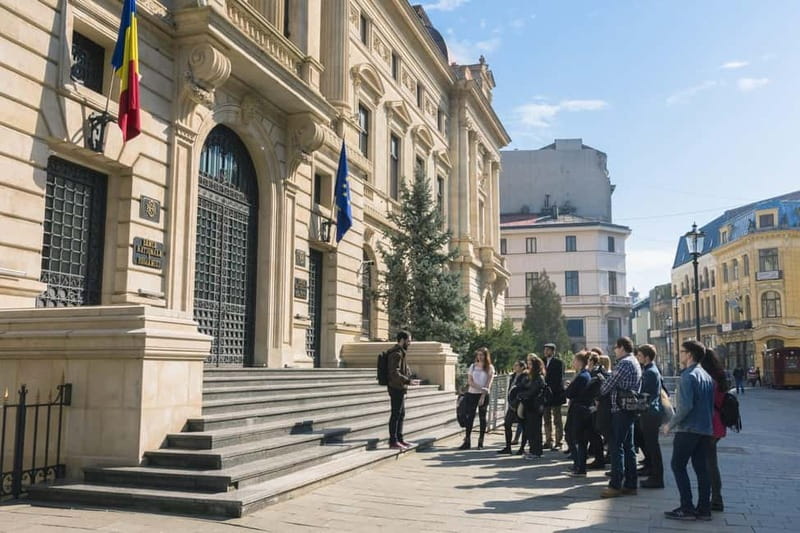
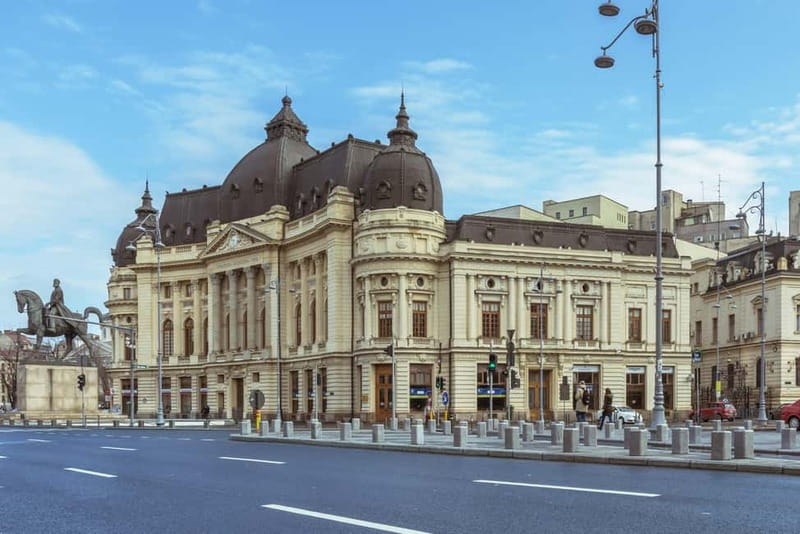
The Romanian Athenaeum is a smart place to begin. You meet your guide directly in front of the building, by the columns on the steps. Look for a name tag. This is a simple meeting point, but arriving a few minutes early will help you find the group without rushing.
The Athenaeum is a neoclassical concert hall and one of Bucharest’s best-known buildings. Around it, you immediately see the city’s royal and French-inspired side. The Royal Palace, the University Library, and the Athenee Palace Hotel help set the tone for the first part of the walk.
This opening is useful because it gives you a visual reference for the city’s pre-Communist ambitions. Bucharest was often called the Paris of the East, and the grand facades around the Athenaeum explain why. You will not spend the whole tour inside these buildings, so enjoy the exterior details while your guide places them in the story of the capital.
The starting point also makes the tour feel focused from the first step. You are not beginning at a generic transport hub or a hotel lobby. You begin in front of a major cultural building, then move through the political center of the city.
Revolution Square and the end of Ceaușescu’s rule
From the Athenaeum, the tour reaches Revolution Square for about 30 minutes of guided walking. This is the point where the tone changes.
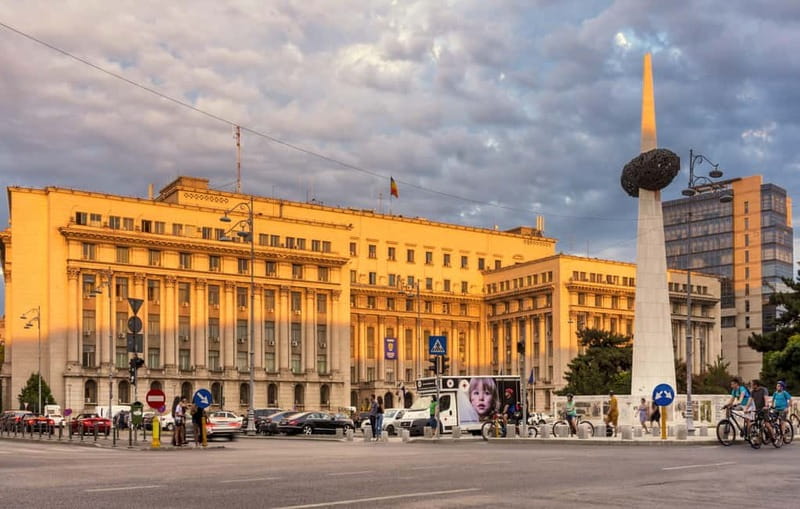
The square is tied to the Communist leadership and the former headquarters of the Communist Party. Between 1950 and 1989, major national decisions were made from this power center. Your guide explains how the regime operated, then turns to the life and rule of Nicolae Ceaușescu.
The most important part of this stop is the connection between architecture and political power. The square is not simply a place to photograph statues and buildings. It is where the public image of the Communist state met its final crisis.
You will hear about the Romanian revolution, including the fact that it was the first revolution in the world to be broadcast live on television. The regime’s collapse ended in bloodshed, a detail that keeps the story from becoming a neat tale of political change. This is likely the tour’s strongest historical section, especially if you want more than a surface-level introduction to Bucharest.
The stop also covers kings and the world wars, with stories told in the shadow of King Carol’s statue. That layering is important. Bucharest’s political identity did not begin with Communism, and the square helps you see the sharp break between royal Romania and the dictatorship that followed.
Calea Victoriei, Bucharest’s grand city avenue
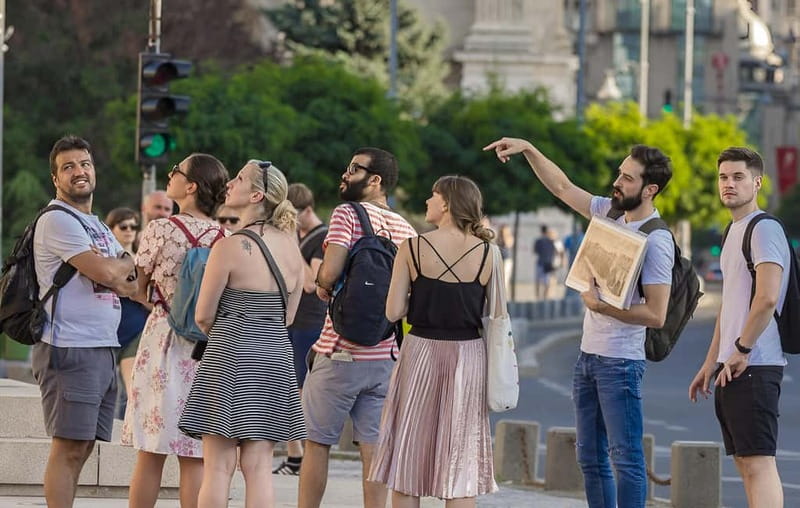
The walk then follows Calea Victoriei for about an hour. This is the longest listed section of the tour, and it gives you time to look closely at the city’s changing architecture.
Calea Victoriei is Bucharest’s most famous and extravagant street. During the interwar years, bourgeois life flourished here among hotels, clubs, offices, and grand residences. The route includes the Grand Hotel Continental, the Telephone Palace, and the Military Club.
These buildings help explain the old nickname Paris of the East without relying on a single landmark. You can compare Belle Epoque decoration with Art Deco lines and later additions. The result is not a perfectly preserved historical street. It is more interesting than that, because the different periods remain visible beside one another.
I like this part of the route because it gives you time to look up. Bucharest’s best details are often above street level: decorative stonework, balconies, cornices, and elaborate entrances. A guide can point out what a quick solo walk might miss.
The one consideration is that the section lasts a full hour and remains part of a walking route, not a bus tour. If you prefer a faster tour built around a few headline attractions, this may feel detailed. If you want to understand how the city’s wealthy and official quarters developed, it earns its place in the schedule.
Other walks through the old town in Bucharest:
- Bucharest: Dracula’s Castle, Peles Castle, & Brasov Old Town
★ 4.5 · 17,858 reviews - Bucharest: Dracula Castle, Peles Castle & Brasov Old Town
★ 4.6 · 10,891 reviews - Bucharest: Peles Castle, Bran Castle, & Brasov Old Town Tour
★ 4.5 · 1,035 reviews - Bucharest Pub Crawl in the Old Town
★ 5.0 · 462 reviews
Villacrosse Passage and the city’s smaller scale
Macca-Villacrosse Passage receives about 15 minutes. This intimate covered passage is a pleasant change after the broad avenue and formal squares.
The passage is connected with the merchant and social life of central Bucharest. Its smaller scale lets you see a different side of the city, one built around enclosed walkways and compact commercial spaces rather than monumental boulevards.
You should treat this as a short atmospheric stop, not a major museum visit. The value comes from the contrast. After hearing about kings, dictators, and state power, you step into a more personal urban setting.
It is also a good place to slow down and take photographs. The tour schedule gives you enough time for a guided explanation and a brief look around, but not an extended break for shopping or a long meal.
Stavropoleos Church, a quiet center-city pause
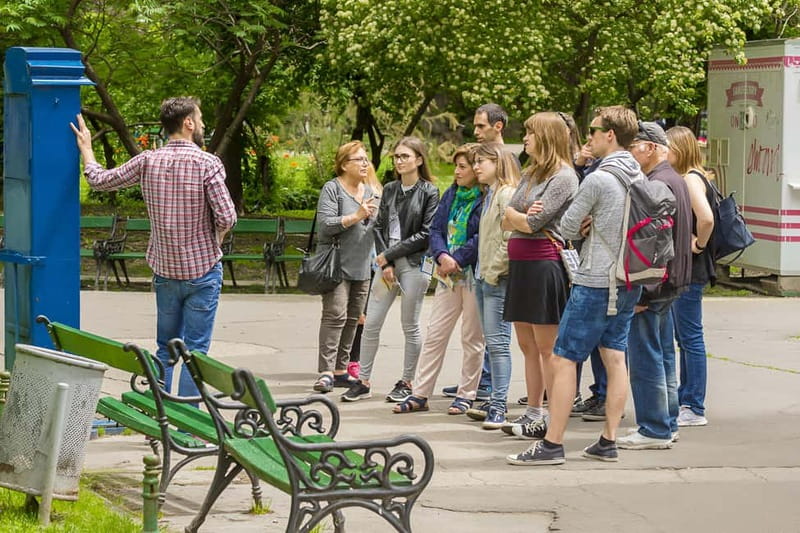
The visit to Stavropoleos Church lasts about 30 minutes and is one of the most appealing parts of the route. It is described as the only active monastery in central Bucharest, and its colorful design provides a calm pause in the middle of the city.
The church is especially useful for understanding that Bucharest’s identity is not only royal, Communist, or commercial. Religious buildings and monastic spaces form another part of the city’s character. Here, the tour shifts from public power to a quieter setting.
Allow yourself time to notice the decoration and atmosphere rather than treating the church as a quick checklist stop. Your guide provides context, while the setting gives you a chance to pause after the longer walk along Calea Victoriei.
Because this is an active religious site, respectful behavior is sensible. The tour data does not specify a dress code, so you should follow any instructions given on arrival and keep the visit considerate.
Old Town streets, the History Museum, and CEC Palace
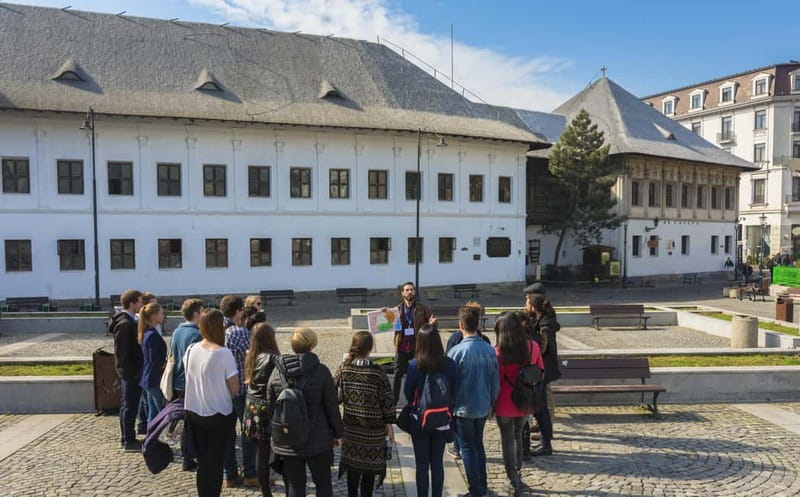
After the larger avenues, the route moves into the cobblestone streets of Old Town. This is where Bucharest feels more compact and layered.
You will see medieval Oriental inns, small 19th-century merchant houses, and imposing palaces. That mix is part of the appeal. The quarter is not defined by one architectural style, and the changing scale keeps the walk interesting.
The History Museum and CEC Palace are among the essential sights covered in this section. The tour does not list museum entry, so expect an exterior-focused visit rather than a long indoor museum session. That keeps the walk within its 2.5-hour schedule, but you should plan a separate visit if you want to explore collections inside.
The Old Town streets can be uneven, especially for anyone who is not used to cobblestones. The experience is listed as wheelchair accessible, but conditions on historic streets can still affect comfort and pace. If mobility is a concern, it is sensible to ask the provider for current route details before booking.
Manuc’s Inn and the route’s final stretch
Manuc’s Inn gives the Old Town section a strong historical anchor. Its inn tradition, merchant connections, and traditional character fit the tour’s focus on Bucharest as a meeting point between different cultures and periods.
The scheduled stop lasts about 15 minutes and includes a photo stop, a visit, and a guided explanation. You will have enough time to take in the courtyard or exterior atmosphere, but this is not designed as a long meal break. Food and drinks are not included, so save your restaurant plans for after the walk.
The formal endpoint is listed at Manuc’s Inn. The wider route description also refers to finishing near the fountains in Unirii Square, so you should confirm the exact end point for your departure. Either way, the final area is well placed for continuing your exploration of central Bucharest.
Pace, languages, weather, and practical comfort
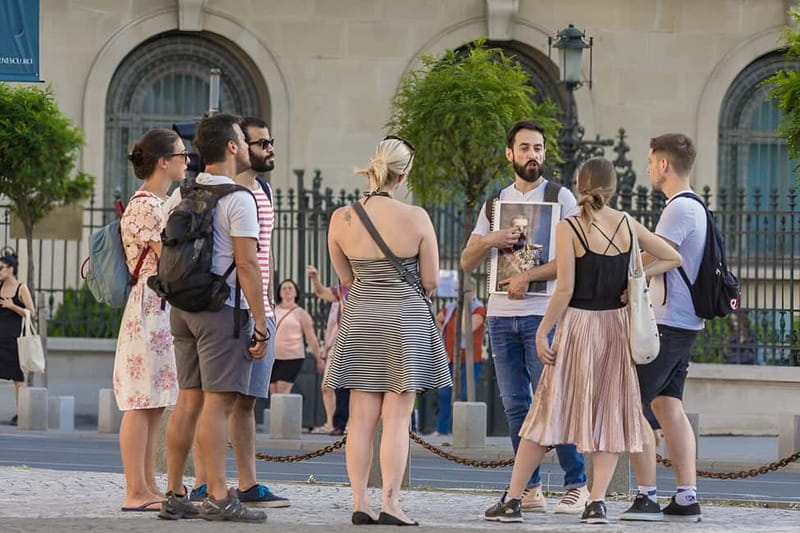
The tour lasts 2.5 hours and takes place rain or shine. That makes your clothing choice important. Wear comfortable shoes, especially for the Old Town cobblestones, and bring weather protection suited to the forecast.
The guide speaks English or Spanish. A live guide is included, along with a Bucharest map. Hotel pickup and drop-off are not included, so you need to reach the Romanian Athenaeum independently.
This is a walking tour rather than a food tour, museum tour, or vehicle tour. You will hear about restaurants, hotels, churches, palaces, and political sites, but meals and drinks are not part of the package. Plan your break before or after the walk.
Free cancellation is available up to 24 hours before the activity for a full refund. You can also reserve now and pay later, which helps if your Bucharest schedule is still changing.
Who will get the most from this tour
I would choose this walk if you are visiting Bucharest for the first time and want a strong introduction to the central districts. It is also a good fit if you are interested in Communist history but still want to see royal buildings, interwar architecture, and Old Town landmarks in the same outing.
The tour should suit you if you prefer stories tied to actual places. Revolution Square gains meaning when you hear what happened there, and Calea Victoriei becomes more than a pretty street when its social and political role is explained.
You may want a different format if you dislike walking for several hours, need long indoor breaks, or want extended time inside museums. The schedule is active, and the route covers several districts and historical periods in a short time.
Spanish-speaking visitors have the option of a live tour in Spanish, while English speakers can choose English departures when available. The guide’s personal style will affect the experience, but Laura’s positive feedback suggests that a warm and professional approach is possible on this route.
Should you book this Bucharest tour?
Book it if you want a compact introduction to Bucharest’s major central stories for $21. The route covers the Romanian Athenaeum, Revolution Square, Calea Victoriei, Villacrosse Passage, Stavropoleos Church, Old Town, and Manuc’s Inn without wasting time on distant transfers.
Its best feature is the contrast. You move from kings and concert halls to Communist repression, then into cobblestone lanes, merchant houses, and a quiet monastery. That range gives you a much clearer sense of Bucharest than an Old Town-only walk.
Skip it if you want a slow architectural study, extensive museum time, or a food-focused outing. For most first-time visitors who can manage the pace and weather, this is a well-priced way to get your bearings and understand why Bucharest can feel so many different cities at once.
FAQ
Where does the Bucharest walking tour start?
The tour starts in front of the columns on the steps of the Romanian Athenaeum. Your guide will wear a name tag.
Where does the tour finish?
The formal activity endpoint is listed as Manuc’s Inn. The route description also mentions the fountains in Unirii Square, so confirm the precise finish point when booking.
How long does the tour last?
The tour lasts 2.5 hours. The listed route includes about 30 minutes at Revolution Square, one hour along Calea Victoriei, 15 minutes at Villacrosse Passage, 30 minutes at Stavropoleos Church, and 15 minutes at Manuc’s Inn.
Which languages are available?
The live guide is available in English or Spanish.
Is the tour wheelchair accessible?
Yes, the activity is listed as wheelchair accessible. The route includes cobblestone streets in Old Town, so you may wish to confirm current route conditions before booking.
What should I bring?
Bring comfortable shoes. The tour takes place rain or shine, and food and drinks are not included.
Just added around Bucharest
- Winery touring & private wine tasting – one day private tour★ 5.0 · 3 reviews
- Village Museum Bucharest Guided Tour★ 5.0 · 6 reviews
- Bucharest: Dealu Mare Winery Private Trip with Wine Tasting★ 4.9 · 6 reviews
- Traditions in Bucharest: Village Museum and Wine Tasting★ 5.0 · 8 reviews
- Transylvania Tour: Dracula’s Castle, Peles Palace & Brasov★ 5.0 · 19 reviews
- Airport Henri Coanda (Otopeni) to Bucharest – Private Transfer – Driver★ 5.0 · 5 reviews
- Gems of Transilvania: Brasov,Sighisoara,Sibiu,Viscri and more★ 5.0 · 6 reviews
- Discover Medieval Transylvania Small Group Tour – 7 days★ 5.0 · 4 reviews
Communism & Ceaușescu Tours, compared.

Parliament Senate Entry Tickets and Guided Tour
Read our review →
Bucharest Essential Tour: Old Town, Calea Victoriei & Communism
Read our review →Browse the lists this tour appears in