
Reviewed · DRACULA & BRAN CASTLE TOURS
One-Day Vlad the Impaler Royal Court Private Tour from Bucharest
Vlad the Impaler’s world comes into focus at Targoviste, where his former court and Chindia Tower provide the clearest opening chapter. From there, this long private day reaches Curtea de Arges, the steep approach to Poienari Castle, and the vast Vidraru Dam.
I like the private car and flexible route, since your guide can adjust the day rather than keep you tied to a fixed group schedule. I also like having an English-speaking driver-guide, especially when the sites are spread far apart and the road time becomes part of the experience.
The main drawback is distance. This is a packed 10 to 11 hours, and admission tickets, food, and drinks cost extra. Poienari Castle has also been closed to tourism at times, so you should confirm its status before setting out.
Key points to know before booking
- Targoviste gives you the strongest Vlad connection, with the medieval princely court and Chindia Tower built during his rule.
- Poienari requires climbing 1,480 stairs, making this a serious physical stop rather than a quick photo visit.
- The private format lets you change the plan, as one group replaced Poienari with Bucharest’s National Military Museum when the fortress was closed.
- Guides Dan and Nicu have received especially warm praise for safe driving, clear explanations, and a helpful approach.
- Vidraru Dam adds a modern Romanian landmark to a day otherwise focused on medieval rulers and churches.
- The $307.61 per-person price makes more sense for a small group, since the vehicle and guide are reserved for your party.
Targoviste: beginning with Vlad’s princely court
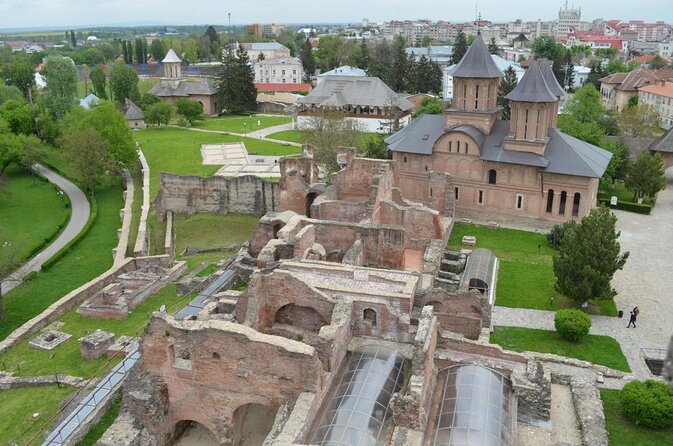
The tour’s best historical start is about an hour from Bucharest at Targoviste Fortress. Before Bucharest became the capital of Southern Romania, Targoviste served that role for centuries. This was not simply a ruined outpost. It was a working princely residence, fortified and expanded as Wallachian rulers gained power.
The court appears in records from 1417 or 1418, during the time of Michael the First, son of Mircea the Old. Mircea built a church here in 1415, while Vlad Dracul later enlarged and strengthened the complex. Vlad the Impaler then made his mark by building Chindia Tower, the site’s most recognizable structure.
I would give this stop the full two hours allowed. The ruins need time to make sense, and the value comes from seeing the court as a connected place rather than rushing to one tower. Your guide can explain how the residence, churches, defensive walls, and royal buildings fit together.
The admission ticket is not included, so set aside extra money for the site. Since the tour is private, you can ask for more explanation here if medieval Wallachia interests you, or move along sooner if your priority is Poienari.
Other Dracula castle trips in Bucharest:
- Bucharest: Dracula’s Castle, Peles Castle, & Brasov Old Town
★ 4.5 · 17,858 reviews - Bucharest: Dracula Castle, Peles Castle & Brasov Old Town
★ 4.6 · 10,891 reviews - Bucharest: Dracula’s Castle, Peleș Castle & Brașov Day Trip
★ 4.5 · 5,919 reviews
Chindia Tower and the view across the old court
Chindia Tower is the symbolic heart of Targoviste. A walk up to its balcony gives you a broad view over the court, including the remains of two princely palaces dating from the 16th and 17th centuries. You can also make out the shape of the church founded in 1415.
This is one of those places where a guide adds real value. Ruins rarely explain themselves, and the tower’s view helps you understand the scale of the old residence. From above, the site becomes easier to read as a former seat of government rather than a collection of scattered stones.
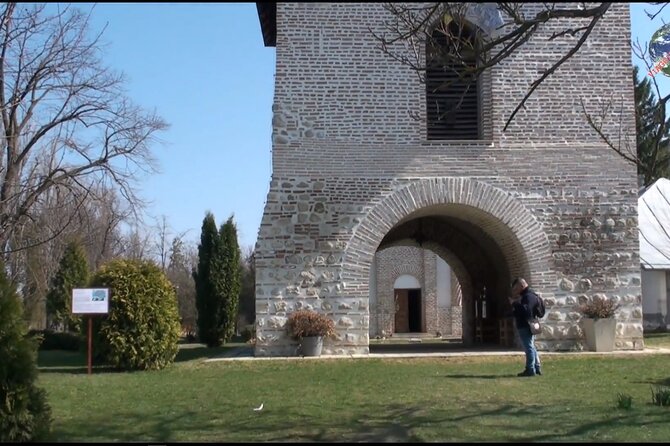
The visit also includes two surviving churches. The small Holy Friday Church sits near the asylum built by Lady Balasa. It is less grand than the Great Princely Church, but its importance is greater than its size suggests. It is described as the only 15th-century monument in Southern Romania still preserved in its original form.
The listed time here is 30 minutes, so expect a focused visit. You will not have endless time for a slow architectural study, but the stop adds a quieter, more personal side to the Vlad story. Admission is again extra.
Curtea de Arges, Romania’s former capital
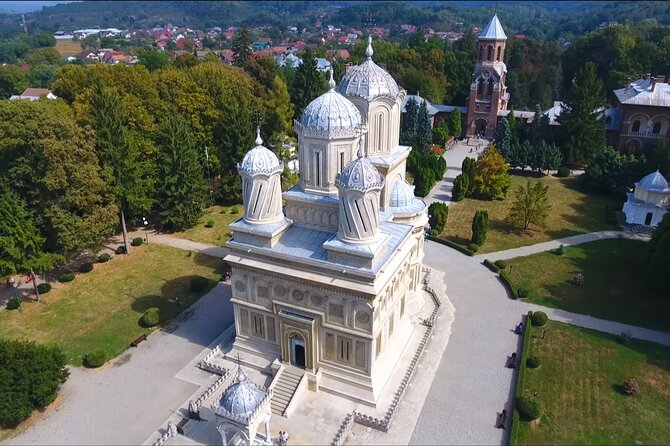
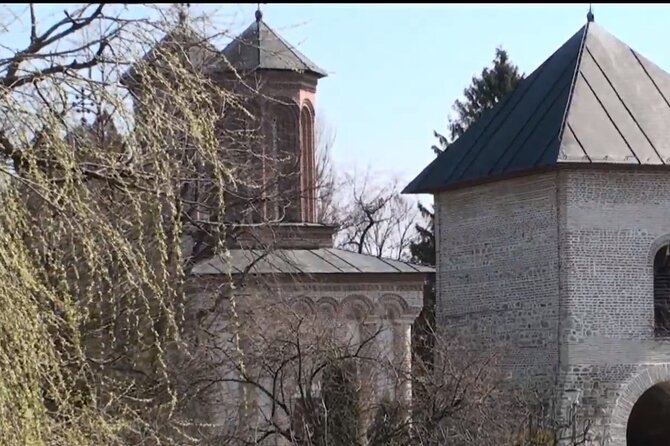
Curtea de Arges shifts the mood from military power to royal ceremony and religious architecture. The city was the first capital of Romania, and the visit includes the ruins of the Wallachian princely court, the 13th-century Royal Church, and the famous Curtea de Arges Monastery.
The monastery is linked to a well-known story of sacrifice and construction. Your private guide will explain the sad tale connected with the building, which gives the monument more meaning than a quick exterior stop would provide.
The scheduled visit is 45 minutes. That makes this an important but relatively brief part of the day. You will get an introduction to the old town’s royal and religious importance, but you should not expect an unhurried exploration of every detail.
This stop also helps break up the Vlad focus. If you are traveling with family or friends who are less interested in Dracula lore, Curtea de Arges offers a different reason to care about the day. It connects the tour to Romania’s royal past, church architecture, and older capitals.
Poienari Castle and 1,480 demanding stairs
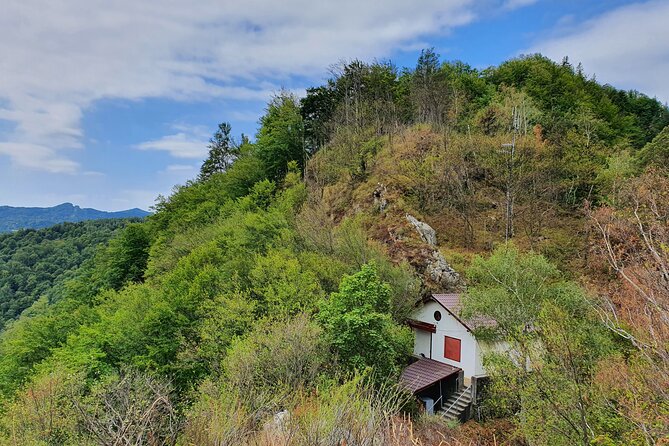
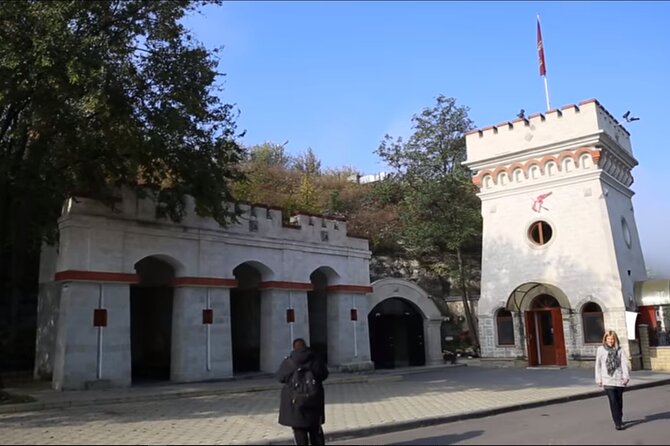
Poienari is the most adventurous stop and the one that most directly appeals to Dracula fans. The fortress is linked with Vlad the Impaler, but reaching it requires climbing 1,480 stairs. That number matters. This is not a short walk from the car park, and the climb can shape the whole pace of the day.
If Poienari is open, you should wear practical shoes and be ready for a sustained climb. The reward is the chance to follow the same route up to a fortress tied to Vlad’s legend, with the setting high above the road and surrounding scenery.
The scheduled time is two hours, which allows room for the climb and the visit. Still, your comfort level matters. If you have limited stamina or simply prefer historic interiors to steep approaches, ask about the current conditions before booking.
There is an important practical warning here. Poienari was closed for tourism when one group took the tour, and the travelers were told in advance during their discussions with the operator. Instead of making the long drive merely to view the fortress from a distance, the group changed the plan and visited Bucharest’s National Military Museum.
That replacement worked well because the tour’s private format allowed a quick change. The museum was described as highly organized, with actual military objects from different periods. The tanks on site were unavailable for repair at that time, so even the alternative had a limitation, but the guide still added useful context.
Do not assume Poienari will be open simply because it appears in the route. Confirm before departure. If it is closed, ask what replacement is available and how much driving remains.
Other trips to Dracula's castle from Bucharest:
- Bucharest: Day Trip to Dracula Castle, Peles Castle & Brașov
★ 4.4 · 3,049 reviews - Bucharest to Dracula Castle, Peles Castle and Brasov Guided Tour
★ 4.5 · 2,933 reviews - Dracula’s Castle, Peles Castle and Brasov Day Trip from Bucharest
★ 4.5 · 1,804 reviews - Transylvania and Dracula Castle Full Day Tour from Bucharest
★ 4.5 · 1,589 reviews
Vidraru Dam adds a modern contrast
Vidraru Dam brings the day into 20th-century Romania. Completed in 1966 on the Arges River, the dam creates Lake Vidraru and was built mainly to produce hydroelectric power.
The figures give you a sense of its size: the dam is 166 meters high, the arch stretches 305 meters, and the reservoir can hold 465 million cubic meters of water. The shoreline extends for 28 kilometers.
The listed time here is three hours, although the description also says the drive back to Bucharest takes about two and a half hours. Treat this part as the final major section of a very full day. You will have time for the dam and surrounding views, followed by a long return ride.
Vidraru is a useful change of pace. After churches, palace ruins, and a fortress climb, the huge concrete structure shows another side of Romania’s past. It also gives you a broad scenic stop without another admission charge, since the dam visit is included.
What the private format really changes
A private tour is not just a smaller bus. Here, it means the car or minibus is reserved for your group, whether that is family, friends, or a small party traveling together. Pickup can be arranged from a hotel, vacation rental, or another point of interest in Bucharest.
The driver-guide remains with you through the day and handles fuel, parking, and road tolls. That removes several small worries, especially when the route crosses multiple parts of southern Romania and includes long stretches between sites.
The flexible departure time is useful if you want to start early or match the day to your schedule. It also gives you a better chance of adjusting the balance between Targoviste, Curtea de Arges, Poienari, and Vidraru Dam.
Still, flexibility has limits. The major sites are far apart, and you cannot turn a 10 to 11-hour route into a relaxed half-day. If you spend extra time at Targoviste, you may have less time later. Speak up early about your priorities.
The guide can make or break a long day
The driver-guide is central to this experience because so much of the day takes place in the car. Dan was praised for careful driving, clear explanations, patience, and a helpful attitude. Nicu was also praised for punctuality, professionalism, safe driving, and strong knowledge of the sites.
Those qualities matter more here than they would on a short walking tour. You need a driver who handles a long route carefully, and you need a guide who can give the ruins context without turning every stop into a lecture.
Nicu also helped with a restaurant stop during one customized day and offered extra Bucharest sightseeing after the group finished its altered route efficiently. The route included the National Military Museum and ended near the Palace of the Parliament. These additions were not fixed parts of every tour, so treat them as examples of what flexibility may allow, not guaranteed stops.
Price, tickets, and the real value
The listed price is $307.61 per person. That is a substantial day-trip cost, but the value depends heavily on the size of your party. You are paying for a private vehicle, an English-speaking licensed guide-driver, fuel, parking, tolls, pickup, and the ability to adjust the route.
For a couple, the price is harder to justify unless the private format matters a great deal. For a family or group of friends, the cost may compare more favorably with booking several separate seats on a group excursion, especially if you value hotel pickup and control over the pace.
Admission tickets are not included. Food and drinks are also your responsibility, so budget for both. The dam itself is listed as free, but the princely court, tower, churches, monastery, and Poienari may require separate entry payments depending on which sites are open and charging admission that day.
The tour carries a listed rating of 4.9 from seven ratings. That is a strong signal, though the small number means you should focus on the practical details: the long driving time, the stairs, the extra ticket costs, and the possibility of a changed route.
Who should book this tour
I would choose this trip if you want several major sites in one day and care about the Vlad connection. It suits people who prefer a personal guide to a large coach group, families who need some schedule control, and history fans who want more than a standard Dracula-themed photo stop.
It also works for visitors with only one free day from Bucharest. You can see Targoviste, Curtea de Arges, Poienari if open, and Vidraru Dam without arranging several separate transfers.
I would think twice if you dislike long car rides, steep climbs, or tightly packed days. Poienari’s 1,480 stairs are the clearest physical challenge, while the overall route asks you to spend many hours on the road.
Before booking, confirm three things: the current status of Poienari Castle, the total admission cost, and the planned order of stops. If Poienari is closed, ask what replacement will be offered. The private format is most valuable when that conversation happens before the tour begins.
Should you book the Vlad the Impaler Royal Court tour?
Book it if you want a private, history-focused day that reaches beyond Bucharest and you are comfortable with a long schedule. Targoviste is the essential stop, Poienari adds the dramatic climb, Curtea de Arges broadens the story, and Vidraru Dam gives the return journey a strong final landmark.
The tour is less suitable for a relaxed day or for anyone who wants guaranteed access to every advertised site. Its best feature is the ability to adapt. Its biggest risk is that distance, closures, and admission costs can change the shape of the day.
Ask for an English-speaking guide such as Dan or Nicu if available, verify Poienari before departure, and travel with a group large enough to make the private price feel worthwhile. Cancellation is free if you cancel at least 24 hours before the start time. Changes or cancellations inside that window are not accepted for a refund.
FAQ
Where does the tour begin?
Pickup is available from hotels, vacation rentals, and points of interest in Bucharest. You provide the pickup location when arranging the tour.
How long does the tour last?
The experience lasts approximately 10 to 11 hours.
Is transportation private?
Yes. Your group travels in a private tourism car or minibus, with fuel, parking, and road tolls included.
Is the guide available in English?
Yes. The tour includes a licensed English-speaking guide-driver.
Are admission tickets included?
No. Entry tickets for the princely court, Chindia Tower, Curtea de Arges sites, and Poienari Castle are not included. Vidraru Dam is listed as free.
Is food included?
No. Food and drinks are not included in the tour price.
How many stairs lead to Poienari Castle?
The route to Poienari Castle includes 1,480 stairs.
What happens if Poienari Castle is closed?
The route can be changed because the tour is private. One alternative used was Bucharest’s National Military Museum, but you should confirm the available replacement before departure.
Just added around Bucharest
- Winery touring & private wine tasting – one day private tour★ 5.0 · 3 reviews
- Village Museum Bucharest Guided Tour★ 5.0 · 6 reviews
- Bucharest: Dealu Mare Winery Private Trip with Wine Tasting★ 4.9 · 6 reviews
- Traditions in Bucharest: Village Museum and Wine Tasting★ 5.0 · 8 reviews
- Transylvania Tour: Dracula’s Castle, Peles Palace & Brasov★ 5.0 · 19 reviews
- Airport Henri Coanda (Otopeni) to Bucharest – Private Transfer – Driver★ 5.0 · 5 reviews
- Gems of Transilvania: Brasov,Sighisoara,Sibiu,Viscri and more★ 5.0 · 6 reviews
- Discover Medieval Transylvania Small Group Tour – 7 days★ 5.0 · 4 reviews
Dracula & Bran Castle Tours, compared.
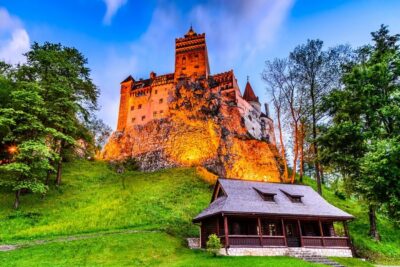
Dracula’s Castle, Peles Castle, & Brasov Old Town
Read our review →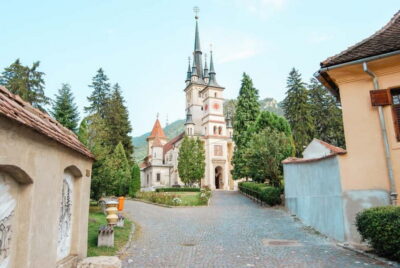
Dracula’s Castle, Peleș Castle & Brașov Day Trip
Read our review →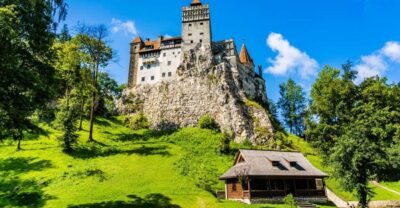
Day Trip to Dracula Castle, Peles Castle & Brașov
Read our review →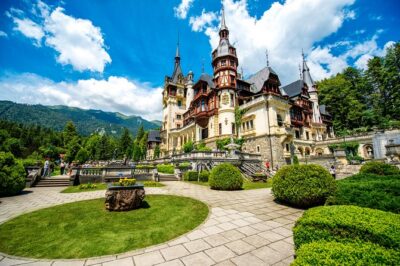
Bucharest to Dracula Castle, Peles Castle and Brasov Guided Tour
Read our review →
Dracula’s Castle, Peles Castle and Brasov Day Trip from Bucharest
Read our review →
Transylvania and Dracula Castle Full Day Tour from Bucharest
Read our review →
Peles Castle, Bran Castle, & Brasov Old Town Tour
Read our review →Browse the lists this tour appears in