
Reviewed · TRANSYLVANIA DAY TRIPS
Transylvanian week
Corvin Castle, Saxon fortified churches, and Vlad the Impaler’s birthplace give this six-day Transylvanian circuit a strong mix of grand sights and quiet village stops. You travel by private air-conditioned vehicle, so you can cover a lot without wrestling with Romanian train schedules or changing hotels every night.
I like the careful balance between famous places and lesser-known ones, especially Malâncrav’s medieval frescoes and the remote village of Viscri. I also like the human touch associated with guide Gelu Trandafir, whose tours are praised for flexibility, care with details, and an ability to connect visitors with ordinary Romanian life. The main drawback is the pace: six days and six nights cover a large area, so several days involve long drives and full sightseeing schedules.
Key details to know before booking
- Corvin Castle and Peles Castle give you two very different castle visits: one is a medieval fortress linked to John Hunyadi, while the other is a lavish royal retreat from the late 19th century.
- The fortified churches are the tour’s most distinctive stops: Biertan, Malâncrav, Viscri, and Prejmer show how Saxon communities protected themselves and their faith.
- Private transportation keeps the route practical: you are picked up in Bucharest or at the airport and travel in an air-conditioned vehicle with only your own group.
- Sibiu is used as a base for two nights: that avoids an unnecessary hotel change while allowing visits to Corvin Castle and Alba Iulia.
- Dracula is put in context: Bran Castle is connected to the legend, but the tour also explains the real story of Vlad the Impaler and his limited connection to the castle.
- The price includes more than sightseeing: at $2,166.68 per person, you receive six nights, breakfast, private transport, guiding, taxes, and at least some entrance fees, but not every meal or photo charge.
Why this route works for a first visit
Transylvania is not one single attraction. It is a wide region of medieval towns, Romanian royal monuments, former Saxon villages, mountain roads, fortified churches, and stories that mix fact with folklore. Planning all of this independently would mean arranging several hotels, checking opening times, and working out transport between places that are not always easy to connect.
This tour solves that problem with a private vehicle and one continuous route. You begin in Bucharest, head north through the Olt River Valley, spend two nights in Sibiu, continue to Sighisoara and Brasov, and then return to Bucharest by way of Sinaia.
That route is efficient, but it is not leisurely every day. You should expect sightseeing blocks of one or two hours, followed by more driving. The reward is variety. One day brings a monastery and elegant city squares. Another brings a Gothic fortress and an ancient cathedral. Later, you move through Saxon villages, mountain resorts, and the Dracula story.
The private format matters. Only your group participates, and the guide can adapt the day more easily than a large coach tour. Past guests specifically valued Gelu’s flexibility, including help with extra needs such as shopping stops. If your group prefers a fixed schedule and plenty of independent time, tell the guide that before departure.
Other days across Transylvania from Bucharest:
- Transylvania and Dracula Castle Full Day Tour from Bucharest
★ 4.5 · 1,589 reviews - Castles of Transylvania: Private Day Trip from Bucharest
★ 4.5 · 248 reviews - 2-Day Medieval Transylvania with Brasov,Sibiu and Sighisoara Tour from Bucharest
★ 4.5 · 145 reviews
Day 1: Cozia Monastery and Sibiu’s old squares
Pickup is offered from your Bucharest hotel or the airport. The road follows the scenic Olt River Valley toward Cozia Monastery, founded in 1388 by Mircea the Elder. That detail gives the first stop an immediate connection to Wallachia’s medieval rulers and to Vlad the Impaler’s family line.
You have about 30 minutes at Cozia. That is enough for a focused visit, but not a long architectural study. Treat it as an atmospheric introduction to Romania’s medieval religious world rather than a major half-day stop.
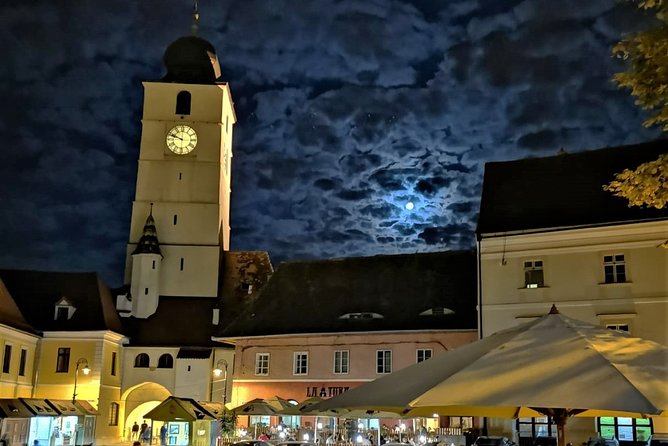
After lunch and a short rest, you reach Sibiu for a two-hour guided walk. The city’s main squares create a clear introduction to Transylvanian urban life. The Grand Square is the broad civic center, while the Small Square feels more intimate. Albert Huet Square is older still, with origins reaching back to the 12th century.
The Council Tower provides a high view over Sibiu after a climb up medieval stairs. This is one of the day’s most useful moments because you can see the city’s layout before walking through it. Be ready for steps and uneven historic streets.
The Orthodox Cathedral adds a different architectural note, with features compared to Saint Sophia’s Basilica in Constantinople. The Evangelical Church then brings you back to the city’s German and Saxon past. Sibiu is a strong overnight base because its center is compact, attractive, and easy to explore after the official tour ends.
Day 2: Corvin Castle and Alba Iulia
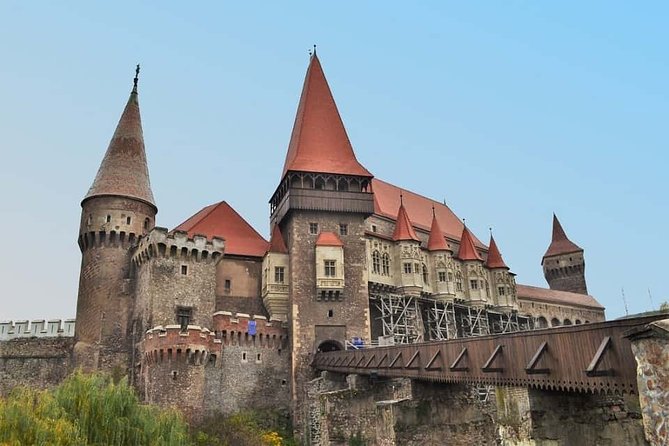
Corvin Castle is one of the tour’s big visual payoffs. Its towers, stone walls, and dramatic setting feel properly medieval, but the story behind it is more important than the Dracula connection that dominates many Romanian tours.
The castle belonged to the Hunyadi family. John Hunyadi became one of the leading military figures and statesmen of the Middle Ages, later serving as regent of Hungary and defeating the Ottoman army at Belgrade. His father, Voicu, received the castle at Hunedoara after being ennobled by King Sigismund of Luxembourg in 1409.
You have about an hour inside the castle. That makes this a concentrated visit, so listen closely to the guide’s explanation of the family, the military role, and the legends. If you prefer to inspect every room and staircase, the allotted time may feel short.
The day continues to Alba Iulia, where you have about two hours at the Alba Carolina fortress. This is a different kind of historic site, with broad fortifications and several layers of the past in one place.
Inside the fortress, Saint Michael Cathedral contains the tomb of John Hunyadi. The cathedral’s construction began in 1004, giving it an age that is hard to grasp until you see its stonework and long architectural development. You also visit the Orthodox Coronation Cathedral and the remains of the Roman castrum linked to the elite 13th Gemina Legion.
You return to Sibiu for a second night. That is a sensible choice. Without it, this day would require another hotel change after a substantial amount of driving and sightseeing.
Day 3: Saxon villages, Malâncrav, and Sighisoara
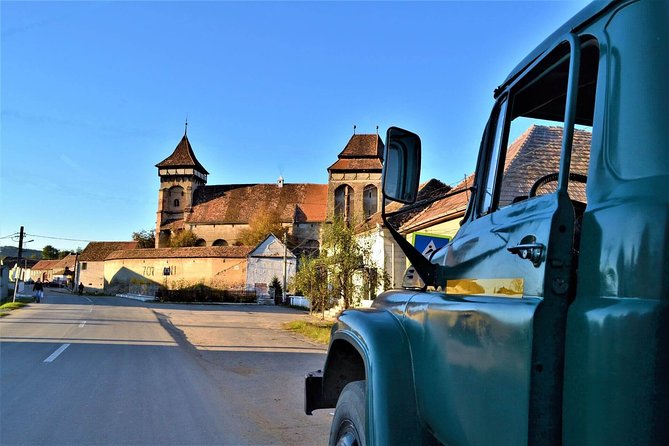
The road from Sibiu to Sighisoara passes through the Hartibaciu Valley, old Saxon villages, and wooded country. The drive is part of the experience because the route shows how scattered these communities are, but it also means you should not expect a quick transfer.
Biertan Fortified Church is the first major stop, with about an hour for a visit. These churches were not only places of worship. Their defensive walls reflect the danger that communities in Transylvania faced from attacks coming across the region.
Malâncrav is the more unusual stop. Its Lutheran church contains a large Gothic fresco discovered beneath layers of chalk paint during restoration work in 1914. The paintings survived the Reformation because they had been covered, and the result is a rare look at medieval religious art that might otherwise have vanished.
The one-hour visit here should appeal to anyone who prefers a quiet site with a strong local story over another grand castle. The village is only about 25 kilometers from Sighisoara, but it feels far removed from the main sightseeing circuit.
You finish in Sighisoara, one of Transylvania’s most memorable medieval towns. The citadel is UNESCO listed, and you have two hours to explore it. The Clock Tower is the obvious landmark, but the narrow streets, colored buildings, and hilltop setting are what make the visit work.
Sighisoara is also associated with Vlad the Impaler’s birthplace. The tour uses the setting to explain the historical figure behind the Dracula legend. That context is useful because it keeps the visit from becoming just a horror-themed photo stop.
You may have additional evening time in the citadel, depending on the day’s road conditions and the group’s pace. The late afternoon setting is especially appealing, but the schedule does not promise a specific amount of free time.
Other week-long trips from Bucharest:
- 7-Day Private Tour of Transylvania from Bucharest
★ 5.0 · 13 reviews - 4×4 Driving Experience at Flying Altitudes – 7 Days
★ 5.0 · 13 reviews - Amazing Romania – Seven day private tour from Bucharest
★ 5.0 · 7 reviews - 7 days Private Romania Grand Tour from Bucharest
★ 5.0 · 6 reviews
Day 4: Viscri, Prejmer, and medieval Brasov
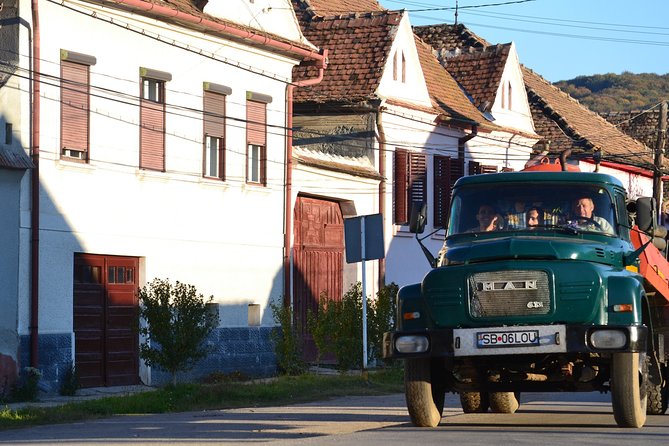
The route toward Brasov includes a view of Saschiz Fortified Church, a UNESCO World Heritage monument with a tower that recalls Sighisoara’s Clock Tower. This is a passing sight rather than a full scheduled visit, so keep your camera ready but do not count on an interior tour.
Viscri offers a slower look at rural Transylvania. Prince Charles helped bring international attention to the village after buying a Saxon house there, a blue 1753 home at number 163. You have about two hours for lunch and the fortified church.
The appeal here is not only the church. It is the chance to see an old Saxon village setting and the kind of rural community that is easy to miss when rushing between major cities. The stop is remote, so the private vehicle is especially useful.
On the way onward, you catch sight of Rupea Fortress, a very old fortification built over earlier Roman and Dacian sites. Again, this is a viewing stop rather than a full visit. The route is full of such reminders that Romania’s past is layered rather than neatly separated into periods.
Prejmer Fortified Church receives about an hour. It is among the seven Saxon fortified churches in Transylvania included on the UNESCO World Heritage list. Its origins are tied to the Teutonic Knights, who were invited into southeastern Transylvania to help defend the area from attacks arriving from the east.
The church and its surrounding defenses were later completed by Saxon settlers after the knights left. That change in ownership and purpose makes Prejmer a useful stop for understanding how military, religious, and community needs came together.
Brasov comes next. After checking in, you explore the medieval fortifications, bastions, and towers, along with Rope Street, one of Europe’s narrowest streets. The city grew around a fortress founded in 1211 during the period of Teutonic Knight influence and later developed through German settlement.
Brasov is one of the liveliest urban stops on the route, with more shops, restaurants, and city activity than the villages. Two hours gives you a good introduction, but not enough for every museum or side street. If you want extra time here, ask whether the guide can adjust the schedule.
Day 5: Carpathian views and the Bran Castle legend
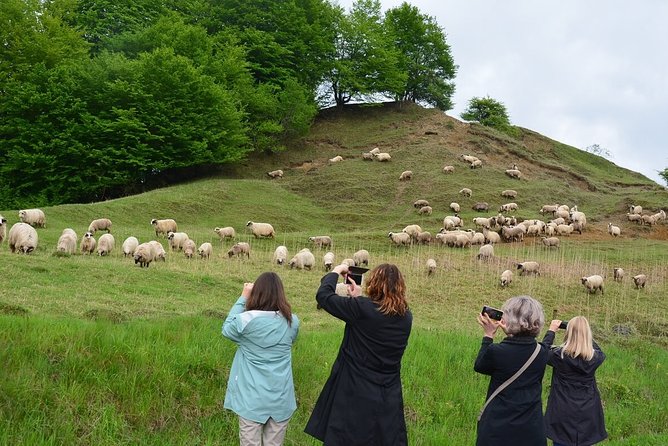
The day begins with the high road to Poiana Brasov, a mountain resort above the city. A cable-car ride can take you to about 1,727 meters, close to Postavaru Peak, if weather conditions allow.
The elevation is a highlight, but it is weather dependent. Clouds can block the Carpathian views, and the plan may need to change. You should also be comfortable with a mountain cable car and some walking.
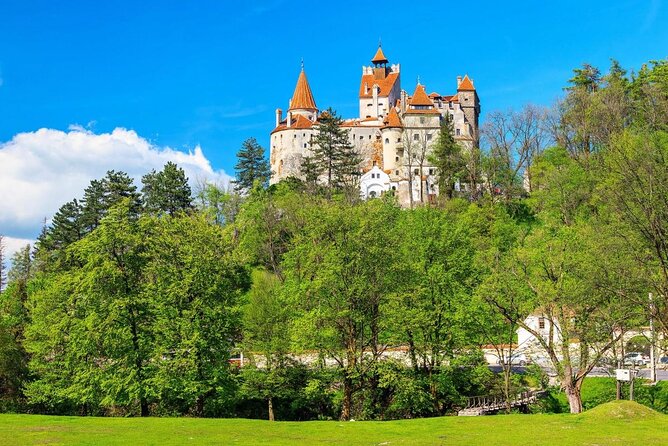
Bran Castle is the day’s headline stop. Built in the 14th century, it guarded a commercial route between Wallachia and Transylvania. Its position on a rocky height helped create the dramatic image that later made it a favorite setting for Dracula stories.
The guide’s explanation is important here. Bran Castle is associated with Count Dracula in popular culture, but the historic connection to Vlad the Impaler is limited. You get more from the visit if you enjoy the castle itself, its defensive role, and the gap between medieval fact and modern legend.
The return toward Brasov includes a distant view of Rasnov Fortress, built in the 13th century, probably during the period when the Teutonic Knights held influence around Brasov. It is another reminder that this route has plenty of fortifications even when time does not allow a full visit.
Back in Brasov, you visit the Black Church, an imposing Gothic church that gives the city a strong final historic stop. The visit lasts about an hour. Combined with the morning mountain trip and Bran Castle, it makes this the most varied day of the week.
Day 6: Peles Castle and Bucharest
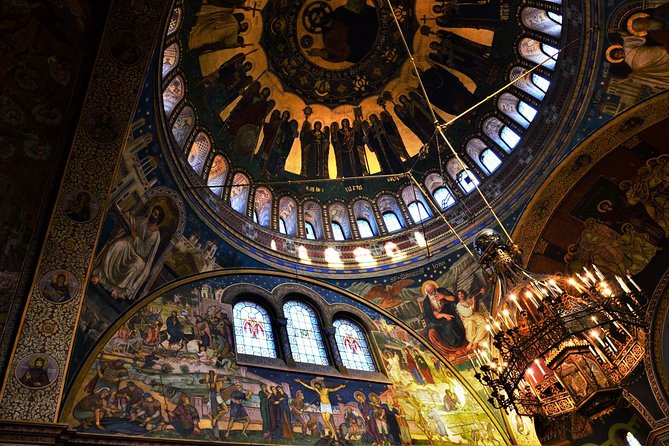
You leave Transylvania through the Prahova Valley toward Sinaia. Peles Castle is the day’s main attraction and one of the most decorative buildings on the route.
Built in the late 19th century, Peles was commissioned by Carol I, Romania’s first king. He was born Carol I of Hohenzollern-Sigmaringen and ruled for 48 years while pushing the modernization of Romania. The castle’s ornate style contrasts sharply with the sober image attached to its founder.
You have about two hours here, which gives enough time for a substantial visit. Peles feels very different from Corvin Castle and Bran Castle. Corvin is a medieval fortress, Bran is a defensive castle later wrapped in Dracula mythology, and Peles is a royal residence designed to display modern European taste and power.
After arriving in Bucharest and checking in, the tour ends with an evening city visit. Stavropoleos Church, built in 1724, is the featured stop. Its position in the city center makes it a fitting final encounter with Romania’s religious architecture after a week of monasteries, cathedrals, and fortified churches.
What the $2,166.68 price really covers
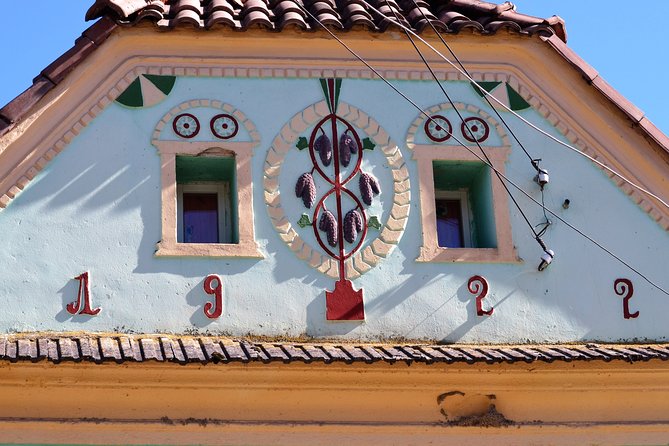
The cost is high compared with a simple group bus excursion, but this is a private six-day route with six nights of accommodation. The price includes a double room in a three-star superior hotel or guesthouse, breakfast, private transportation, an air-conditioned vehicle, taxes, guiding, and listed entrance fees.
Lunch is included, while other meals, photo fees, and flights are not. The exact number of included admissions varies by stop, so budget separately for any attraction or photography charge not covered on the day.
The value improves if you are traveling as a couple or small private group and want the convenience of having transport, lodging, and route planning handled together. It is less compelling if you already have a car, enjoy arranging guesthouses yourself, or want several unstructured days.
Group discounts may be available. Since the tour is private, the final value also depends on how many people share the vehicle and room arrangements.
Who should book this Transylvanian week?
I would choose this tour if you want a broad first look at the region without spending your holiday on logistics. It suits couples, families, and private groups that value a flexible guide and a direct route between places that are awkward to connect independently.
It is particularly good for visitors interested in medieval architecture, religious buildings, castles, Romanian royal history, and the real story behind Dracula. The Saxon villages and fortified churches give the trip more character than a route based only on famous castles.
I would think twice if you need slow mornings, long museum visits, or free afternoons in every city. The schedule is full, and some stops are brief. Also note that the booking is non-refundable and cannot be changed for any reason, so purchase only when your dates and group are firm.
FAQ
How long is the Transylvanian week tour?
The tour lasts approximately six days and includes six nights of accommodation.
Where does the tour begin?
Pickup is offered from your hotel in Bucharest or from the airport.
Where does the tour end?
The route returns to Bucharest on the final day after visiting Peles Castle and Stavropoleos Monastery.
Is transportation private?
Yes. The tour uses private transportation in an air-conditioned vehicle, and only your group participates.
Who guides the tour?
The experience is led by a licensed guide. The tour information identifies Gelu Trandafir as the guide, with George also involved in operating the tour company.
What accommodation is included?
Six nights are included in a double room at a three-star superior hotel or guesthouse, with breakfast.
Are meals included?
Lunch is included. Other meals are not included, and flights are also excluded.
Is Bran Castle connected to Dracula?
Bran Castle is associated with the Dracula legend, but the tour explains the historical background of Vlad the Impaler and the difference between the legend and the documented connection.
Should you book it?
Book this if you want Transylvania’s major castles, fortified churches, medieval towns, and mountain roads in one organized trip, with a private car and a guide who can adjust to your group. The strongest parts are the range of places, the two nights in Sibiu, the Saxon village visits, and the clear historical thread from medieval rulers to Dracula folklore.
Skip it if you want a slow village holiday or prefer to build your own route. At this price, the convenience and private format need to matter to you. For a first visit with limited time, though, this is a well-planned way to see far more of Transylvania than you could comfortably manage on your own.
Just added around Bucharest
- Winery touring & private wine tasting – one day private tour★ 5.0 · 3 reviews
- Village Museum Bucharest Guided Tour★ 5.0 · 6 reviews
- Bucharest: Dealu Mare Winery Private Trip with Wine Tasting★ 4.9 · 6 reviews
- Traditions in Bucharest: Village Museum and Wine Tasting★ 5.0 · 8 reviews
- Transylvania Tour: Dracula’s Castle, Peles Palace & Brasov★ 5.0 · 19 reviews
- Airport Henri Coanda (Otopeni) to Bucharest – Private Transfer – Driver★ 5.0 · 5 reviews
- Gems of Transilvania: Brasov,Sighisoara,Sibiu,Viscri and more★ 5.0 · 6 reviews
- Discover Medieval Transylvania Small Group Tour – 7 days★ 5.0 · 4 reviews
Transylvania Day Trips, compared.
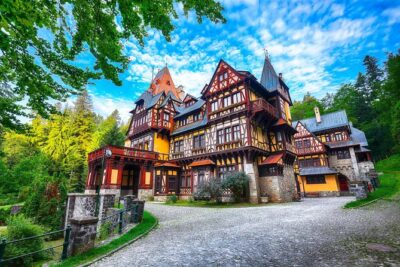
Transylvania and Dracula Castle Full Day Tour from Bucharest
Read our review →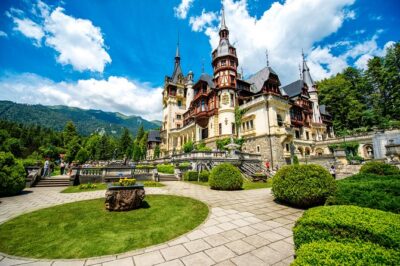
2-Day Medieval Transylvania with Brasov,Sibiu and Sighisoara Tour from Bucharest
Read our review →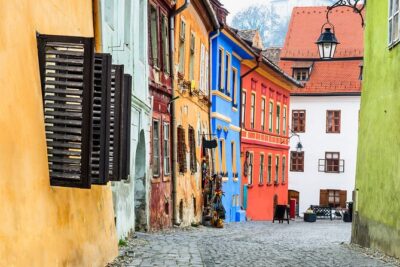
SB01 – City Tour Sibiu: Exploring the Heart of Transylvania
Read our review →
Day trips and excursions in nature, cities in Transylvania, Brasov!
Read our review →
2-Day Transylvania from Bucharest: Brasov, Bran, Sighisoara
Read our review →
4-Day Private Tour in Transylvania from Bucharest
Read our review →Browse the lists this tour appears in