
Reviewed · WALKING TOURS
Bucharest : Highlights & Hidden Gems Walking Tour
Bucharest reveals itself through contrasts: Ottoman-era trading inns, ornate French-style buildings, Orthodox quiet, royal ceremony, and heavy communist architecture all sit within a compact central route. This two-hour private walk gives you a useful first look without burying you in dates.
I especially like the chance to shape the outing around your interests and ask for practical advice about the rest of Bucharest. The guides also seem to make the difference: Alexandra helped one couple arrange Parliament tickets, while Irina, Karim, Zoé, Camélia, and Augustin were praised for warmth, clear explanations, and easy conversation.
The main consideration is time. Six major stops in two hours means a brisk introduction, not a full visit inside every building. Food, drinks, and admission tickets are not included, so you should treat this as an orientation walk and plan separate time for interiors.
Key points to know before you book
- A private walk for your own group: You will not be joined by another group, and the route can be adjusted to suit your interests.
- A strong mix of Bucharest eras: The route links trading inns, Orthodox architecture, banking, royalty, communism, and modern democracy.
- Six central sights in two hours: Expect short guided visits and photo stops rather than long museum sessions.
- Helpful ticket support: The guide can assist with booking tickets for places you want to visit, including Parliament.
- Three guide languages: Tours are offered in English, French, and Spanish.
- Central Lipscani setting: The walk begins at Strada Franceză 60, close to Old Town cafes, restaurants, and major sights.
Why this short Bucharest walk works
Bucharest is not a city that explains itself at first glance. A grand palace may sit beside a worn facade, while a quiet monastery courtyard can be only a few minutes from crowded Old Town streets. A local guide helps connect those pieces.
This experience focuses on central Bucharest, with the historic Lipscani district as its anchor. You get a look at the city’s trading past through Manuc’s Inn and Hanul Gabroveni, then move toward institutions that reflect finance, monarchy, religion, and state power.
The format is especially useful on a first day. You can ask where to eat, which museums deserve your time, and how to arrange other visits. The guide also knows the city through personal familiarity, not just through a fixed script.
The walk costs $29 per person. That is reasonable for a private two-hour experience, particularly if you value questions and route changes. The value is lower if you want lengthy interior visits, since the price does not include food, drinks, or entry tickets.
The tour is listed as private and exclusive, while the activity information also refers to a small-group walking tour. The important practical point is that your group will not be mixed with unrelated participants. Confirm your preferred group arrangement when booking if that distinction matters to you.
Other guided walks in Bucharest:
- Bucharest: City Highlights Guided Walking Tour
★ 4.9 · 1,482 reviews - Bucharest Highlights Walking Tour
★ 5.0 · 469 reviews - Bucharest: Ghost Stories & Romanian Mythology Walking Tour
★ 4.9 · 287 reviews
Starting at Manuc’s Inn and Bucharest’s trading past

The experience is connected with Strada Franceză 60 in the Lipscani district. This puts you in one of the most useful parts of central Bucharest, with the Old Town, the National Museum of Romanian History, and access toward the Palace of the Parliament nearby.
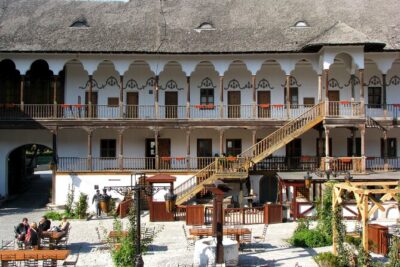
Manuc’s Inn is the natural place to think about Bucharest before it became a capital filled with ministries, banks, and monumental avenues. The inn reflects the city as a trading crossroads, where merchants, carts, and goods passed through a busy commercial center.
You can expect the guide to use the building as a starting point for the city’s early story. Look for the sense of an enclosed inn complex, rather than a single grand palace. That difference matters: Bucharest grew through trade and movement as much as through royal planning.
The attraction is primarily historical and atmospheric. If you expect a long formal museum visit, you may find this section brief. If you want a clear explanation of how the city developed, it gives the route a firm foundation.
Hanul Gabroveni and the city of merchants
Hanul Gabroveni continues the trading theme. This former inn connects Bucharest with the network of merchants who moved through the region, and it helps explain why the old center contains so many layered buildings and passages.
I like this stop because it adds human scale to the city’s story. Large palaces can tell you who held power, but an inn suggests how ordinary commerce worked. Your guide can help you notice the relationship between courtyards, streets, and commercial buildings instead of simply pointing out attractive facades.
The stop is also a reminder that central Bucharest is best read on foot. You are not crossing the city between isolated attractions. The buildings are close enough for the guide to link one period to another as you walk.
Stavropoleos Monastery, a quiet Orthodox pause
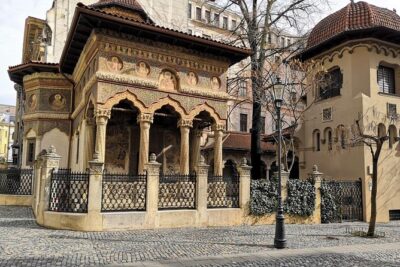
Stavropoleos Monastery is one of the most appealing stops on the route. Its ornate Orthodox design and calm courtyard offer a sharp change from the commercial streets around it.
This is where the tour can slow down emotionally, even if the schedule remains tight. Notice the detailed stone and decorative work, then compare the intimate scale with the larger state buildings later in the walk. The monastery presents a form of Romanian culture that is religious, local, and carefully preserved.
Your guide can also give context for Orthodox traditions and the place of the monastery in Bucharest’s old center. The stop is listed as a guided visit and photo stop, so allow for the possibility that the time here is limited.
You should dress and behave respectfully at a religious site. The supplied details do not specify an entry schedule or interior access, so do not assume the tour guarantees a long visit inside.
Same base, a completely different day:
- Bucharest: Dracula’s Castle, Peles Castle, & Brasov Old Town
★ 4.5 · 17,858 reviews - Bucharest: Dracula Castle, Peles Castle & Brasov Old Town
★ 4.6 · 10,891 reviews - Bucharest: Dracula’s Castle, Peleș Castle & Brașov Day Trip
★ 4.5 · 5,919 reviews - Bucharest: Palace of Parliament Tickets and Guide
★ 4.3 · 3,182 reviews
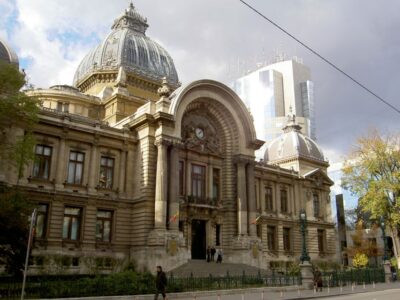
CEC Palace and the look of financial ambition
CEC Palace brings you into a very different Bucharest. The building represents the city’s financial development and makes a strong visual counterpoint to the old inns and monastery.
This is one of the route’s best examples of how Bucharest borrowed and adapted European architectural ideas. The palace has the formal presence of a national financial institution, and your guide can place it within the city’s move toward modern banking and state administration.
You will likely spend time admiring the exterior and learning what the building represented. Entry is not listed as included, so think of this as an architectural stop unless you arrange a separate visit.
The short format works well here. A guide can point out what to look for, explain why the building mattered, and keep you moving before the sightseeing becomes repetitive.
Macca-Villacrosse Passage and layers of modern Bucharest
The Macca-Villacrosse Passage gives the walk a more intimate urban setting. Its covered passage, curved form, and cafe-lined atmosphere show another side of Bucharest’s older center.
This is a good place to ask your guide how the city changed from monarchy to communism and then to democracy. The passage is not only a pretty photo stop. It helps show how streets, shops, and social life continued to evolve around the grand institutions.
The passage can be busy, and the route may not feel as quiet as the monastery. That is part of its appeal, but it also means you should stay close to the guide and leave room for other people using the passage.
The guide’s local advice is useful here. You may get suggestions for nearby cafes, restaurants, or cultural venues, though food and drinks are not part of the tour price.
Royal Palace and Sala Palatului: power in stone
The route also brings you toward the Royal Palace and Sala Palatului, two places that help explain Bucharest’s political changes.
The Royal Palace recalls the monarchy and the period when the royal family shaped national public life. It gives you a way to discuss Romania before the communist era, rather than treating the country’s modern past as one undifferentiated story.
Sala Palatului offers a much heavier visual message. Its Stalin-era architecture reflects the political culture that followed monarchy. The contrast between the two sites is valuable because it lets you see how governments use large public buildings to express authority.
These stops may appeal most to anyone interested in twentieth-century Europe. They are also useful if you plan to visit the Palace of Parliament, since the guide can help place that enormous building within a wider sequence of monarchy, communism, and democracy.
The tour does not include Parliament admission. However, Alexandra has helped visitors with tickets, and ticket-booking assistance is part of the service. Ask about this before your walk if Parliament is high on your list.
Ending in Cismigiu Park
Cismigiu Park provides a gentler finish. As Bucharest’s oldest park, it offers space to step away from stone facades, traffic, and political symbols.
A final stop in the park helps balance the route. You have spent the walk looking at commerce, religion, banking, royalty, and state power. Here, you can reflect on the city as a place where people live and relax, not just a collection of official buildings.
The park is listed as a visit, guided tour, sightseeing stop, and roughly twenty-minute walk. It is a useful place to ask for more local suggestions because the guide can tailor the final conversation to what you still want to see.
The route information presents Cismigiu as the concluding point, while the stop list also places it near the beginning of the sequence. Since the tour is customizable, confirm the exact order and ending point when you book.
What the guide adds to the experience
The guide is the main reason to choose this walk over following a map. The advertised languages are English, French, and Spanish, and named guides include Alexandra, Augustin, Karim, Irina, Zoé, and Camélia.
The feedback is consistent about three qualities: clear history, warmth, and practical help. Karim was praised for his excellent knowledge and pleasant manner. Irina was described as engaging, with a comfortable pace and time for questions. Zoé led a French-language walk focused on Romanian history and Bucharest’s major places.
Alexandra received particular praise for helping with Parliament tickets as well as explaining the city. Camélia was described as an especially pleasant host, and Augustin as attentive and warm. These details suggest that the company can match the tour to different language and personality needs, though a specific guide is not guaranteed unless arranged directly.
You should tell the guide what interests you at the start. If you care about architecture, ask for more detail on CEC Palace and the passage. If political history matters most, request extra context around the Royal Palace, Sala Palatului, and Parliament.
Pace, access, and what to bring
The total duration is two hours, with walking and public transport included unless you select a different option. The central route means you should wear comfortable shoes and bring water, especially in warm weather.
The tour is listed as wheelchair accessible. Still, central historic areas can include older surfaces and busy public spaces, so discuss your specific needs before setting out.
Because the stops are often described as photo stops, guided visits, and walks of around twenty minutes, you should not expect a full tour of every interior. Bring a phone or camera, but keep enough attention for the guide’s explanations. The architecture is only half the experience.
Free cancellation is available up to 24 hours before the activity for a full refund. You can also reserve and pay later, which helps if your Bucharest schedule is still shifting.
Who should book this Bucharest tour?
I would recommend it for a first visit, a short city break, or anyone who wants a quick historical framework before choosing longer museum visits. It suits couples, families, and small private groups that prefer to ask questions without keeping up with a large crowd.
It is also a good choice if you want help in French or Spanish, or if you need advice about Parliament tickets and other city sights. The guide’s ability to customize the walk makes the $29 price easier to justify.
I would look elsewhere if your main goal is extended access to interiors or a slow architectural study. Two hours moves quickly, and admission tickets, food, and drinks are separate.
Should you book it?
Book this walk if you want Bucharest explained through its contrasts: trading inns beside grand banks, Orthodox detail beside state architecture, and royal buildings beside communist-era monuments. The compact route gives you a useful starting point and leaves you better prepared to explore on your own.
At $29 per person, it offers good value for a private introduction, especially when you use the guide for questions, local suggestions, and ticket help. Just confirm the exact route order, tell the guide what matters most to you, and plan separate time for any interiors you want to visit.
FAQ
Where does the tour meet?
The meeting location is Strada Franceză 60 in Bucharest’s historic Lipscani district.
How long does the walking tour last?
The tour lasts two hours.
How much does the tour cost?
The listed price is $29 per person.
Is the tour private?
Yes. The tour is described as private and exclusive, with no one else joining your group. The activity information also describes it as a small-group walking tour.
Which languages are available?
You can take the tour in English, French, or Spanish.
Are food and drinks included?
No. Food and drinks are not included in the price.
Can the route be customized?
Yes. The tour includes customization, so you can discuss your interests with the guide.
Can the guide help with tickets?
Yes. The tour includes help from the team with booking tickets for desired visits. Alexandra has specifically helped with tickets to the Parliament.
Is the tour wheelchair accessible?
Yes. The activity is listed as wheelchair accessible.
What is the cancellation policy?
You can cancel up to 24 hours in advance for a full refund. Reserve now and pay later is also available.
Just added around Bucharest
- Winery touring & private wine tasting – one day private tour★ 5.0 · 3 reviews
- Village Museum Bucharest Guided Tour★ 5.0 · 6 reviews
- Bucharest: Dealu Mare Winery Private Trip with Wine Tasting★ 4.9 · 6 reviews
- Traditions in Bucharest: Village Museum and Wine Tasting★ 5.0 · 8 reviews
- Transylvania Tour: Dracula’s Castle, Peles Palace & Brasov★ 5.0 · 19 reviews
- Airport Henri Coanda (Otopeni) to Bucharest – Private Transfer – Driver★ 5.0 · 5 reviews
- Gems of Transilvania: Brasov,Sighisoara,Sibiu,Viscri and more★ 5.0 · 6 reviews
- Discover Medieval Transylvania Small Group Tour – 7 days★ 5.0 · 4 reviews
Walking Tours, compared.
Ghost Stories & Romanian Mythology Walking Tour
Read our review →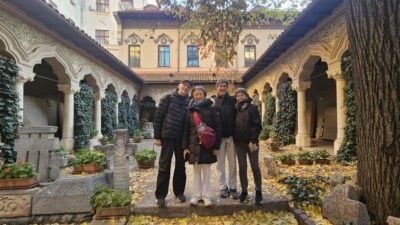
Walking Tour- Delightful Bucharest (Highlights, Stories, Sights)
Read our review →
Browse the lists this tour appears in