
Reviewed · COMMUNISM & CEAUȘESCU TOURS
Relics of Communism: 3-Hours Walking Tour (Small groups)
Bucharest’s communist past is easiest to grasp when you stand in the exact places where power was displayed and challenged. This three-hour walk connects Ceausescu’s last speech, the bloodshed of December 1989, the oversized boulevards of the new socialist center, and the Palace of Parliament. I like the small group of no more than 10 and the way the guide ties buildings to ordinary life, not just dates. The possible drawback is that the walk does not include entry to museums or the Palace of Parliament.
I also like the convenient 11 a.m. start, which leaves your morning free, and the included Romanian snack from the communist period. Guides Mara and Elena have been praised for answering detailed questions about daily life under communism, so this tour should suit you if you want context rather than a quick parade of landmarks.
Key points to know before booking
- Ceausescu’s final speech: Begin at the balcony where Nicolae Ceausescu addressed the crowd before the 1989 Revolution turned against him.
- A maximum of 10 people: The small group gives you a better chance to ask about politics, religion, housing, food, and daily life.
- Five history-rich stops: The route links Revolution Square, Unirii Square, Mihai Voda Monastery, and the Palace of Parliament, with a stop at Piața 21 Decembrie 1989.
- A useful three-hour overview: You get a focused introduction to communist Romania without giving up an entire day in Bucharest.
- One period snack included: Expect a famous Romanian snack associated with communist times, a small but fitting touch.
- No building admissions: The tour is mainly an outdoor walking experience, and museum or Palace of Parliament entry is not included.
Why this Bucharest history walk is worth your morning
Communist Bucharest can be hard to read on your own. A large boulevard may look like a traffic route, and an enormous government building may seem like a strange architectural spectacle. The story becomes clearer when you learn why streets were widened, churches were moved, and whole districts were reshaped around one leader’s power.
That is the main value of this walk. You are not simply checking off famous places. You are following the physical changes made during Romania’s communist period and then seeing how those changes collided with the Revolution of December 1989.
The tour costs $48.06 per person. That is not the cheapest way to walk around central Bucharest, since most stops are free public spaces. Still, the fee pays for interpretation, a small group, an English-speaking guide, and a route that brings several scattered locations into one clear story. I think the price is fair if you want a guided introduction and plan to ask questions.
It is less appealing if you prefer to explore alone, already know Romania’s political history, or mainly want interior visits. The Palace of Parliament is seen from outside on this experience, and museum admissions are not covered.
Other guided walks in Bucharest:
- Bucharest: City Highlights Guided Walking Tour
★ 4.9 · 1,482 reviews - Bucharest Highlights Walking Tour
★ 5.0 · 469 reviews - Bucharest: Ghost Stories & Romanian Mythology Walking Tour
★ 4.9 · 287 reviews
Revolution Square and Ceausescu’s last speech
The tour begins at Revolution Square, Piața Revoluției, at 11 a.m. The first stop is in front of the balcony where Nicolae Ceausescu delivered his final public speech.
This is a strong place to begin because the story is not abstract. You are standing where the regime tried to project control and where that control began to break apart. The guide explains the events of the 1989 Revolution in the same setting, helping you connect the balcony, the square, the crowd, and the sudden collapse of authority.
You spend about 20 minutes here. That is enough time for the basic sequence of events and for questions without turning the opening into a long lecture. If you know little about Ceausescu, this first stop gives you the political frame needed for the rest of the walk.
The square also prepares you for one of the tour’s best features: reading modern Bucharest through its public spaces. The buildings and monuments are not treated as isolated sights. They become evidence of how the city worked under communism and how people responded when the system failed.
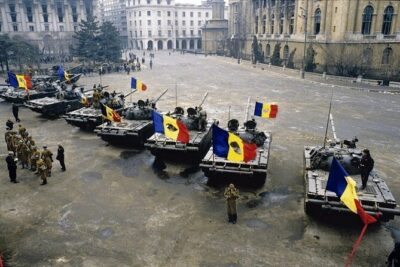
Piața 21 Decembrie 1989 and the human cost of revolt
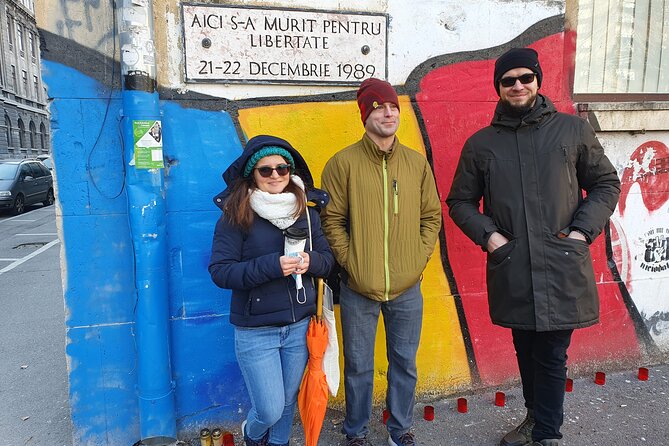
The next stop is Piața 21 Decembrie 1989, another place directly tied to the uprising. Here, the guide focuses on the incidents of December 21, the people who became heroes of the Revolution, and the period that followed the fall of communism.
The distinction matters. Romania’s story did not end when Ceausescu was removed. The tour also addresses the neo-communist period, giving you a chance to think about what changed and what did not change after 1989.
You have around 20 minutes here. The subject can be emotionally heavy, so the guide’s role is important. Mara has been praised for explaining life under communism in detail while answering personal questions, and Elena has been described as giving a thorough overview of the era. If your guide is one of them, you can use this stop to ask about how ordinary people experienced the final days of the regime.
Do not expect a museum-style display or a large collection of objects. This is an outdoor history lesson, and its strength comes from the location and the conversation.
Unirii Square, the planned center of socialist Bucharest
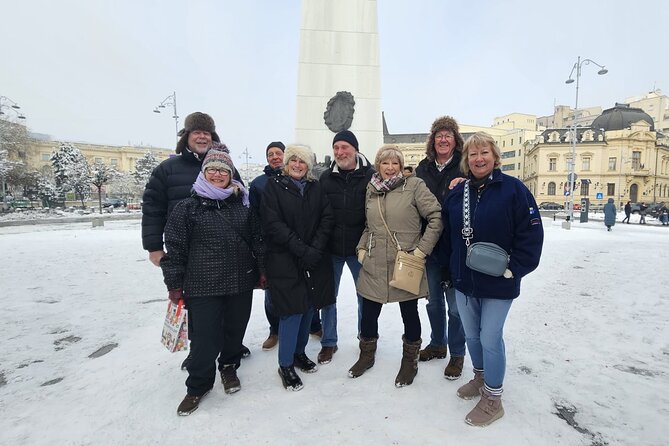
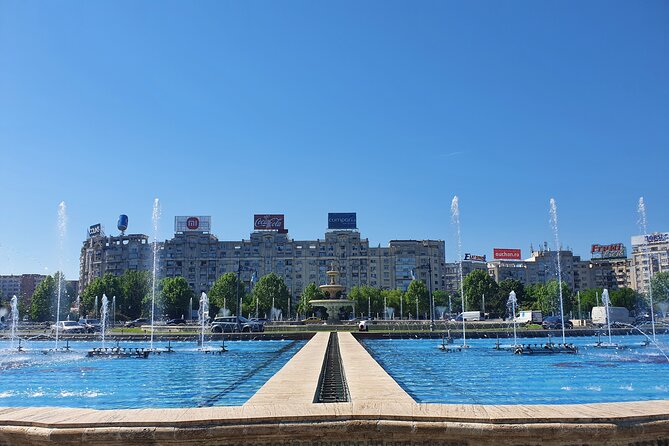
At Unirii Square, the scale of communist planning becomes easier to see. The square was developed as a new city center during the communist period and is cut through by the broad Unirii Boulevard.
The guide uses this stop to explain the rise of Romania’s communist party and the growth of Ceausescu’s personality cult. That pairing is useful. The boulevard and square show how urban design could serve political power, while the cult of personality shows how that power was attached to one man.
You spend about 20 minutes here. Look beyond the traffic and open space. The important point is not simply that the square is large. It is that the city was reshaped to create room for grand public displays, official movement, and a central image of authority.
This is where the walk can change how you see Bucharest for the rest of your visit. Streets that seem oversized begin to look deliberate. Open spaces feel less accidental. The city’s proportions tell part of the political story.
The practical limitation is that Unirii Square is a busy urban area, and the experience remains outdoors. You will need to listen closely to the guide and keep up with the group rather than linger at every angle or take a long break.
More of the communist years around Bucharest:
- Bucharest: Palace of Parliament Tickets and Guide
★ 4.3 · 3,182 reviews - Bucharest: Palace of Parliament Tickets and Guided Tour
★ 4.4 · 1,877 reviews - Bucharest: Parliament Palace Skip-the-line Ticket
★ 4.2 · 1,518 reviews - The Real tour of Communism
★ 5.0 · 666 reviews
Mihai Voda Monastery and religion under communism
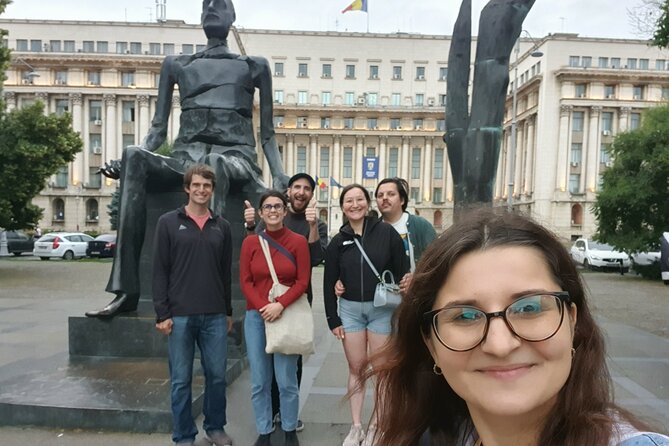
Mihai Voda Monastery gives the tour a change of mood and subject. Instead of focusing only on speeches, crowds, and monumental avenues, the guide discusses Bucharest’s churches and the communist government’s relationship with religion.
The stop is presented as a chance to discover one of the city’s less obvious churches. It also shows that communist policy was not only about party offices and public squares. Religious buildings, traditions, and institutions had to exist within a system that wanted public loyalty directed toward the state and its ideology.
You have another 20 minutes here. I consider this an important part of the route because it broadens the story. A tour centered only on Ceausescu’s buildings could make the period seem like a tale of architecture and political theater. Mihai Voda Monastery brings in faith, preservation, and the pressure placed on older parts of the city.
The supplied information does not promise an interior visit, so plan to experience this as an outdoor stop unless the guide explains otherwise. The tour includes no museum admissions, and you should not book it expecting a series of indoor exhibits.
Unirii Boulevard and the Palace of Parliament
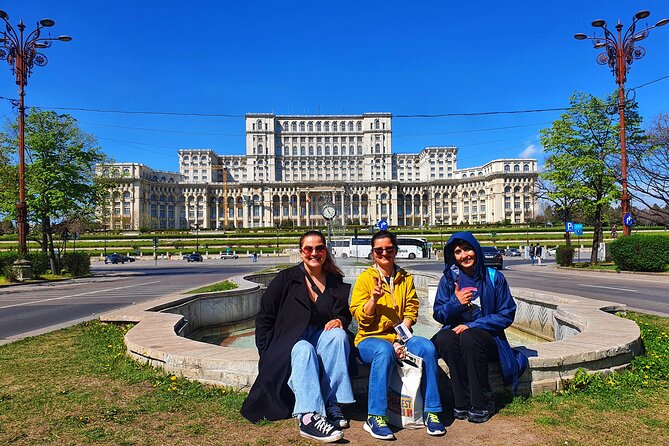
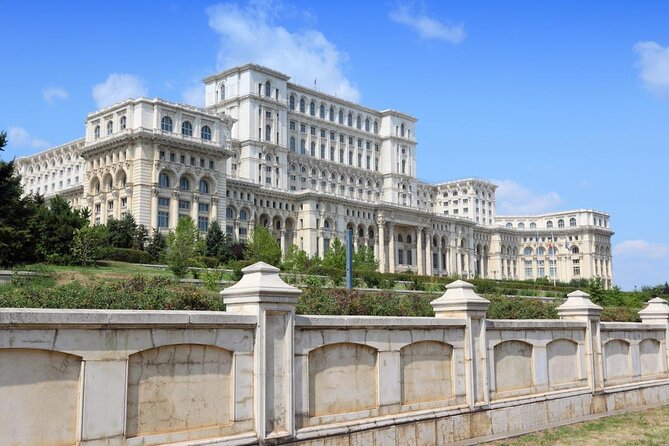
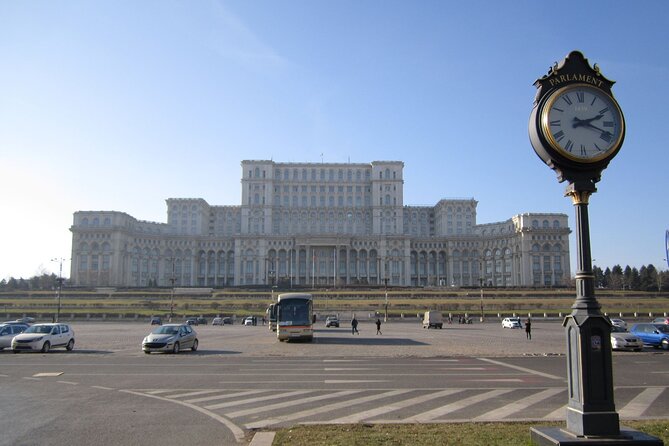
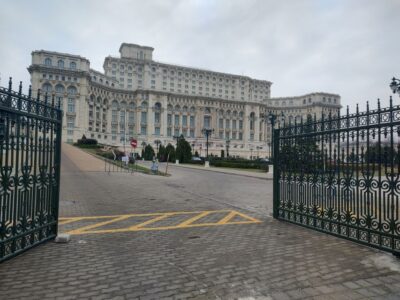
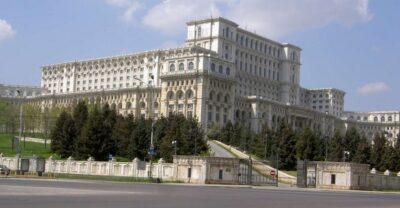
The final part of the walk leads to the new socialist districts and the Palace of Parliament. The guide explains the idea of socialist realism, the rebuilding along Unirii Boulevard, and the decision to make the Palace the absolute center of power.
This is the largest and most dramatic subject on the route. The Palace of Parliament is famous for its size, but size alone is not the point. The building represents the reach of the state, the resources directed toward one monumental project, and the way the surrounding city was changed to support a political vision.
The tour ends in Constitution Square, in front of the Palace. You spend about 20 minutes on this final stop, learning some of the building’s lesser-known details and its place in Ceausescu’s system.
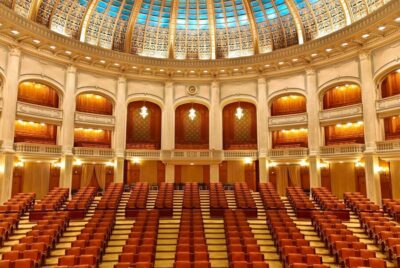
You will not enter the Palace as part of this experience. Admission is not included, and the tour is designed as a walking introduction rather than a building visit. If seeing the interior is a top priority, you will need to arrange that separately and account for the additional cost and time.
Ending here works well. The route has moved from the place where Ceausescu lost control to the building that expressed his greatest concentration of control. You finish with a physical image of the communist state rather than a vague closing lecture.
How the small group changes the experience
The group limit is 10 people. That is small enough to make questions practical, especially at the Revolution sites where personal stories and political details may lead the discussion in different directions.
A larger group could make this route less effective. Several stops are public spaces rather than ticketed attractions, so the guide’s explanation is the main reason to book. If you are at the back of a large crowd, the value drops. With a maximum of 10, you should have a better chance of hearing the story and speaking directly with the guide.
Mara and Elena are the guide names connected with the experience. Mara has been described as personable and able to answer detailed questions about life during communism. Elena has been praised for giving a detailed overview of the period. The specific guide may vary, but the experience is clearly built around conversation and explanation.
The tour is offered in English. That makes it a useful choice if you want political and historical context without trying to piece together Romanian-language signs or online information as you walk.
Walking, timing, snacks, and practical comfort
The total duration is about three hours, with roughly 20 minutes allocated to each of the five stops. Since the stops alone account for about 100 minutes, the remaining time is used for walking between locations and moving through the city.
You should have a moderate level of physical fitness. The information provided does not give a total distance, number of stairs, or exact walking pace, so it is sensible to wear comfortable shoes and prepare for a continuous city walk. Service animals are allowed, and the starting point is near public transportation.
The tour starts at Revolution Square and ends at Constitution Square, in front of the Palace of Parliament. That one-way arrangement is useful because you do not need to return to the starting point. It also places you near one of Bucharest’s most recognizable sights at the end of the walk.
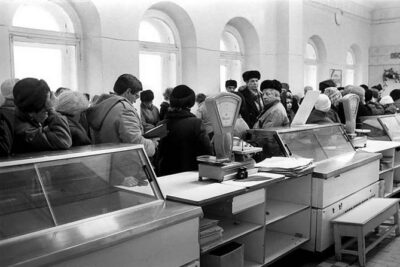
One Romanian snack from the communist period is included. It is not a full meal, so eat breakfast or plan lunch afterward. Still, the snack adds a small taste of everyday life to a tour that otherwise focuses on buildings and political events.
The experience requires good weather. If poor weather forces cancellation, you are offered another date or a full refund. You can also cancel for a full refund up to 24 hours before the start time, but late cancellations and late changes are not accepted.
Who should book this experience
I would choose this walk if you are visiting Bucharest for the first time and want a clear introduction to the communist era. It is especially useful if you tend to pass monuments without knowing why they matter.
It also suits you if you like asking questions. The small group and guides such as Mara or Elena make this more personal than a basic audio guide. Ask about daily routines, political fear, religion, food, housing, or the years after 1989. Those questions are likely to make the public spaces feel more human.
History-minded visitors will get the most from it, but you do not need a strong background in Romania. The route begins with the final speech and the Revolution, then works backward and outward through the city’s political design.
You may want a different plan if you need indoor attractions, dislike walking, or want to enter the Palace of Parliament. The tour does not include museums, and the Palace is viewed from outside. It is also not ideal for a wet-weather day, since the experience depends on walking through public spaces.
Should you book the Relics of Communism walking tour?
Book it if you want Bucharest’s communist past explained through the actual streets where it happened. The strongest parts are the small group, the direct connection to the 1989 Revolution, and the guide’s attention to daily life as well as grand buildings.
At $48.06, the price makes sense for a focused, English-language history walk with a maximum of 10 people. It is not the right value if you mainly want admission-based sightseeing, since no museums or Palace entry are included.
My practical advice is to schedule it early in your Bucharest stay. The route gives you a useful way to read the city afterward, especially around Unirii Square, Unirii Boulevard, and Constitution Square. Bring comfortable shoes, eat something before the 11 a.m. start, and treat the included snack as a historical detail rather than lunch.
FAQ
Where does the tour start?
The tour starts at Revolution Square, Piața Revoluției, in Bucharest.
Where does the tour end?
It ends in Constitution Square, in front of the Palace of Parliament.
What time does the walking tour begin?
The start time is 11 a.m.
How many people can join the tour?
The group has a maximum of 10 people.
Is admission to the Palace of Parliament included?
No. The tour explores the Palace from the outside, and admission to the Palace or any museum is not included.
What happens if the weather is poor?
The experience requires good weather. If it is canceled because of poor weather, you can choose another date or receive a full refund.
More walking tours in Bucharest
- Bucharest: Guided Walking Tour with Romanian Snack
★ 4.9 · 228 reviews - Best of Bucharest | Private Walking Tour
★ 5.0 · 199 reviews - Walking Tour- Delightful Bucharest (Highlights, Stories, Sights)
★ 5.0 · 145 reviews - 4h Bucharest Private Tour (2h by Car and 2h Walking in Old Town)
★ 5.0 · 90 reviews
Just added around Bucharest
- Winery touring & private wine tasting – one day private tour★ 5.0 · 3 reviews
- Village Museum Bucharest Guided Tour★ 5.0 · 6 reviews
- Bucharest: Dealu Mare Winery Private Trip with Wine Tasting★ 4.9 · 6 reviews
- Traditions in Bucharest: Village Museum and Wine Tasting★ 5.0 · 8 reviews
- Transylvania Tour: Dracula’s Castle, Peles Palace & Brasov★ 5.0 · 19 reviews
- Airport Henri Coanda (Otopeni) to Bucharest – Private Transfer – Driver★ 5.0 · 5 reviews
- Gems of Transilvania: Brasov,Sighisoara,Sibiu,Viscri and more★ 5.0 · 6 reviews
- Discover Medieval Transylvania Small Group Tour – 7 days★ 5.0 · 4 reviews
Communism & Ceaușescu Tours, compared.
Parliament Senate Entry Tickets and Guided Tour
Read our review →
Bucharest Essential Tour: Old Town, Calea Victoriei & Communism
Read our review →Browse the lists this tour appears in