
Reviewed · HISTORICAL TOURS
Private Tour – Food, Culture, History & Traditions
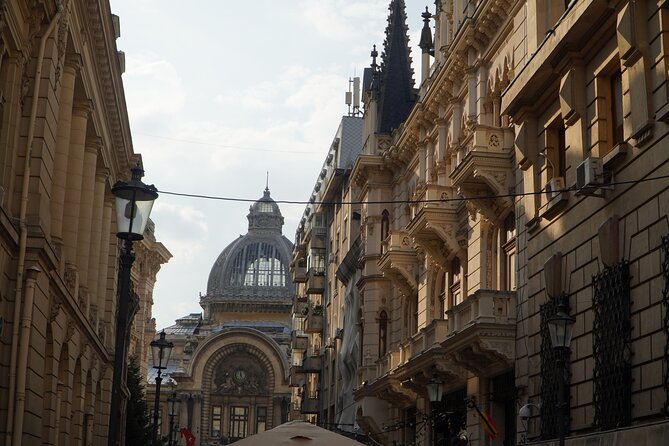
Bucharest makes the most sense when you connect its food, buildings, and political past in one walk. This private 6 km route moves from the Old Town to Calea Victoriei, Revolution Square, elegant villas, and the Armenian Quarter, with guide Bianca explaining the city in a personal, easygoing way.
I like the way the tour combines Romanian food with local history, rather than treating lunch as an afterthought. I also like the flexible pace, which lets you stop for photos, adjust the start time, and spend longer where your group is curious.
The main thing to consider is the distance. Six kilometers over four to five hours is not a hard hike, but you need decent walking fitness, and a soft-spoken guide can sometimes be difficult to hear beside busy streets.
Key points to know before booking
- A private Bucharest introduction: Your group has Bianca to itself, so the pace and conversation can adjust to your interests.
- Food with context: The two-course meal includes Romanian starters such as cheeses and charcuterie, followed by a main course.
- A wide historical range: The route covers medieval trade, royal Bucharest, eclectic architecture, communist rule, and the 1989 Revolution.
- Fourteen city stops: You see major landmarks such as the Romanian Athenaeum and Royal Palace, along with less familiar streets in the Armenian Quarter.
- A proper walking route: Expect about 6 kilometers, not a short Old Town stroll.
- Useful group audio: If more than four people join, audio devices are supplied so you can hear the guide more clearly.
Why this walk gives Bucharest a clear shape
Bucharest can feel scattered at first. One street has ornate nineteenth-century buildings, the next has Communist-era blocks, and a quiet lane may reveal an old church or villa. This tour helps you connect those pieces instead of seeing them as unrelated sights.
You begin at Bulevardul Ion C. Brătianu 36 and finish at University Square, also known as kilometer zero of Bucharest. That ending is practical if you want to continue exploring on foot, but remember that this is a point-to-point walk. You are not returning to the starting place.
The route lasts roughly four to five hours. That includes the walking, explanations, photo stops, and a full meal. It is a useful first-day activity because it gives you an overview before you choose which museums, churches, or neighborhoods deserve a longer visit.
Bianca is the named guide for the experience. Her background as a former journalist helps explain why the tour places such weight on stories, context, and personal discussion. She is also willing to adapt the pace and route emphasis, which matters when one person wants architecture and another wants political history.
More of the past around Bucharest:
- Bucharest: 3-Hour Dark History Tour with a Local
★ 4.9 · 301 reviews - Bucharest: Small Group History, Art & Secrets Tour
★ 4.7 · 152 reviews - Guided Walking Tour of Historical Bucharest
★ 5.0 · 84 reviews
Old Town, mici, and the city’s trading past
The first stop is Bucharest’s Old Town, where you spend about 30 minutes. The focus is not just on pretty façades or café terraces. You hear about the trading business that once flourished here and the place associated with the invention of mici, Romania’s familiar grilled meat rolls.
That food connection gives the Old Town a more useful frame. Instead of treating local dishes as something to sample without context, you learn how food fits into the city’s commercial life and social habits. If you are new to Romanian cuisine, this is a good moment to ask Bianca about ingredients and regional differences.
The Old Town is also where you start to see Bucharest’s mix of styles. The area has an appealing, uneven feel, but some streets can be busy and noisy. Stay close to the guide and keep comfortable shoes on.
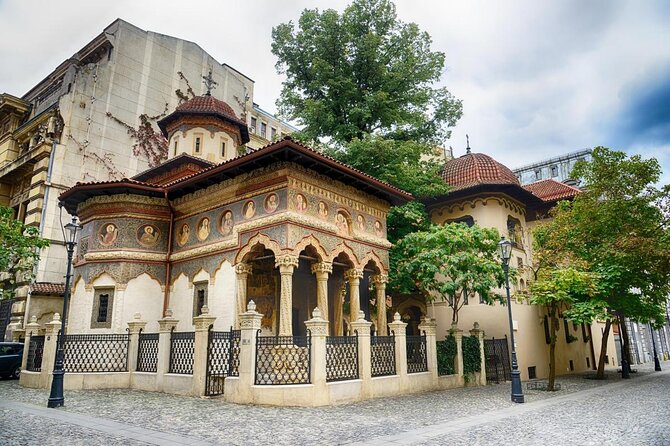
A short visit to Stavropoleos Monastery follows. This eighteenth-century Romanian Renaissance monastery is a small but important stop, especially for travelers who want a sense of Bucharest’s religious architecture. The scheduled visit is only about three minutes, so expect a focused explanation rather than a long church tour.
CEC Palace and the passages of old Bucharest
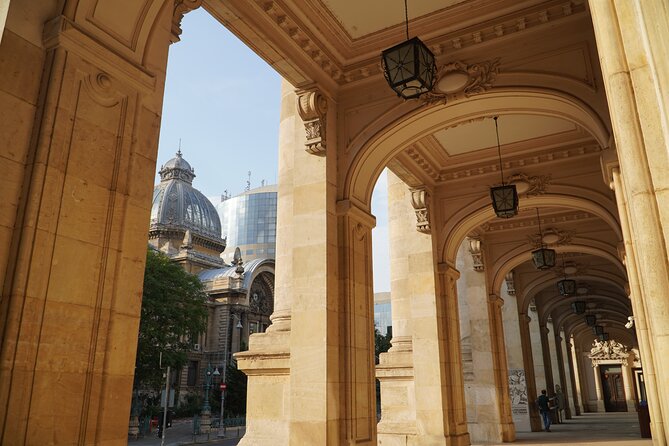
Palatul CEC, the former CEC Bank palace, gives you a quick lesson in late nineteenth-century ambition. Its eclectic design reflects a period when Bucharest was building institutions meant to look modern, prosperous, and European.
The stop is brief, around three minutes, and the value is mainly visual. Your guide helps you read the building as part of the city’s financial and civic story, not just as a striking façade.
Next comes Macca Villacrosse Passage, a covered passage often described as one of Bucharest’s most beautiful. You have about five minutes here. It is a small stop, but it breaks up the broad avenues with a more intimate architectural space.
The route then touches the BNR Palace, associated with the National Bank of Romania, and the former Marmorsch Blank Bank, now used as a hotel. Together, these buildings point to Bucharest’s banking past and its changing uses. Five minutes is enough to understand the setting, though not enough for an interior visit.
Calea Victoriei and Bucharest’s grand avenue
You spend about 30 minutes on Calea Victoriei, the city’s historic heart since the nineteenth century. This is one of the most useful sections of the walk because architecture and politics sit close together along the same avenue.
Look for the shift from commercial buildings to grand civic and cultural landmarks. Bianca can explain how the avenue became a stage for Bucharest’s changing fortunes. The route is not simply a procession of façades. It shows how the city presented itself to residents, rulers, bankers, and foreign visitors.
Pasajul Victoriei brings a darker and more colorful story. Along with Pasajul Englez, it was linked to a former brothel with a discreet rear entrance. The setting allowed members of the royal household and high society to enjoy private amusements away from the formal avenue.
This story adds some humor and scandal to the tour, but it also explains how public respectability and private life could occupy the same small part of town. The stop lasts about five minutes, so the guide’s storytelling does most of the work.
Other private tours around Bucharest:
- Castles of Transylvania: Private Day Trip from Bucharest
★ 4.5 · 248 reviews - Dracula’s Castle, Peles Castle and Brasov – Private Day Trip from Bucharest
★ 5.0 · 211 reviews - Best of Bucharest | Private Walking Tour
★ 5.0 · 199 reviews - Bucharest Panoramic Sightseeing – Private City Tour
★ 5.0 · 128 reviews
Revolution Square and the final days of Ceaușescu
At Revolution Square, you spend about ten minutes learning about Nicolae Ceaușescu’s last speech and the beginning of the bloody 1989 Revolution. This is one of the tour’s most important historical stops.
The square helps you place Romania’s Communist period in a real urban setting. Rather than hearing only a broad account of dictatorship and revolt, you stand where a major public moment unfolded. That physical connection is especially valuable if Romanian twentieth-century history is new to you.
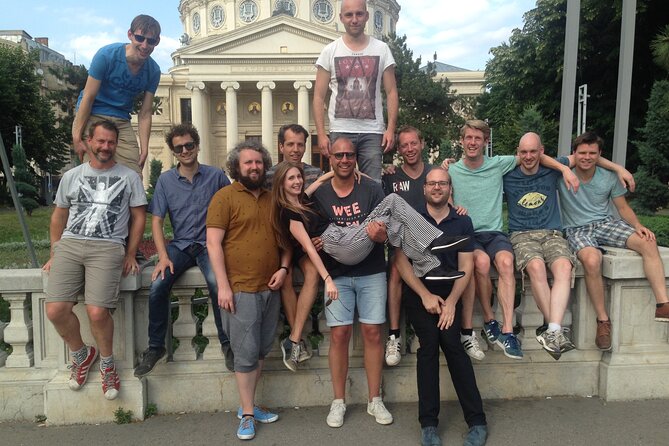
The nearby Romanian Athenaeum is given about five minutes. You can admire one of Bucharest’s most beautiful buildings and hear about its role in the city’s cultural life. The stop is short, and the tour does not promise an interior visit, so treat it as an exterior introduction.
The former Royal Palace, now home to the National Art Museum, comes next. Again, the scheduled time is only about three minutes. You will learn how monarchy, state power, and art connect in this part of central Bucharest, but you should plan a separate museum visit if you want to see the collections properly.
Villas, school stories, and the Armenian Quarter

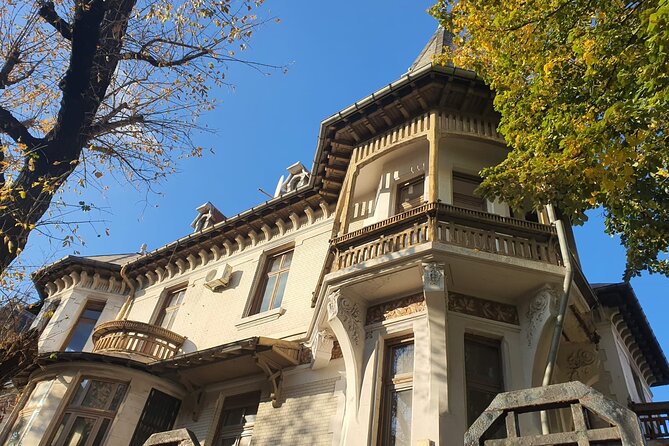
The route then leaves the main avenue for Bulevardul Dacia, where you spend about 20 minutes looking at grand villas and examples of Neo-Romanian architecture. This is a strong part of the walk for anyone who likes residential streets more than famous monuments.
Neo-Romanian design draws on local forms and historical references, and the villas give you a chance to see that style at a human scale. You are not rushing from one landmark to another. You are looking at entrances, proportions, decorative details, and the way an entire street expresses a period of national identity.
Colegiul Național Școala Centrală is a short five-minute stop. This nineteenth-century boarding school for girls comes with eerie stories and a more mysterious tone than the grand avenues. The stop is a reminder that Bucharest’s past is not only made of kings, banks, and revolutionaries. Schools and everyday institutions also carry layers of memory.
The Armenian Quarter receives about 30 minutes, making it one of the longer neighborhood sections. Here you explore a district shaped by Armenian history, local traditions, older buildings, and less obvious corners of the city.
I particularly like this part of the route because it moves beyond the standard central sights. The neighborhood lets you see Bucharest as a lived-in city rather than only a collection of official monuments. The guide’s stories matter here, since the appeal is found in connections and details rather than one single landmark.
Icoanei Garden and stories of witches

The final stop is Gradina Icoanei, where you spend about ten minutes. The garden is tied to stories of witches casting spells not so long ago. You should hear this as local folklore and social history, not as a promise of anything supernatural.
It is a fitting ending because the tour has already moved through finance, monarchy, communism, religion, food, and neighborhood life. Icoanei Garden adds the city’s imaginative side. Bucharest is not only what appears in official guidebooks. It also includes rumors, fears, stories, and odd memories passed through generations.
The tour ends at University Square on Bulevardul Regina Elisabeta. This is a central finish and a useful place to continue your day, but your included meal may be scheduled along the route rather than at the very end. Ask about the meal timing when you meet the guide if you need to plan another activity afterward.
What the Romanian meal adds
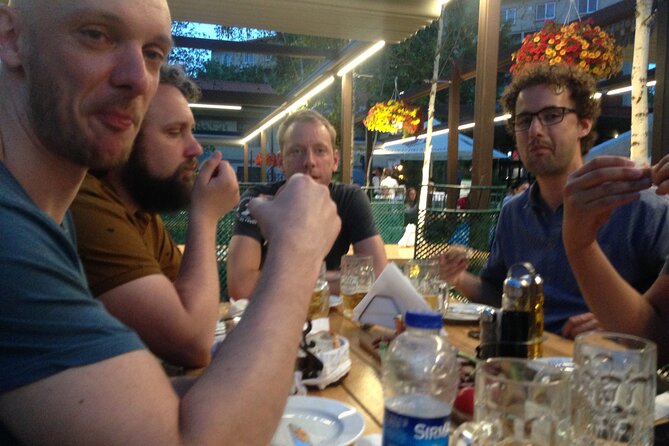
Lunch or dinner is included as a full two-course meal. You receive a platter with cheeses, charcuterie, and/or other Romanian starters, followed by a main course. Alcohol, soda, and other drinks are not included, so allow extra money if you want beverages.
This is more useful than a quick tasting because you get enough food to make it part of your day. It also creates time to ask Bianca about Romanian eating habits, regional dishes, and what you should order elsewhere during your stay.
The meal is one of the strongest value points at $114.14 per person. You are paying not only for a restaurant meal, but also for four to five hours of private guiding, a tailored walking route, and a broad introduction to Bucharest. For a solo traveler or couple, the private format can be costly compared with a large group tour. For a family or small group, group discounts may make the price easier to justify.
The food is not a substitute for a dedicated Romanian cooking class. If you want hands-on preparation or a long tasting menu, choose another type of experience. Here, the meal supports the city tour.
Pace, sound, and practical comfort
The route is about 6 kilometers, with many short stops. Wear shoes you can walk in for several hours and expect city surfaces, traffic noise, and pauses at busy streets.
For groups larger than four, audio devices are provided so everyone can hear the live guide while keeping a comfortable distance. That is a useful feature, especially on Calea Victoriei or near central traffic. In a very small group, Bianca’s soft speaking voice may be harder to catch when the street is loud, so stay close when she begins an explanation.
The tour is offered in English. Service animals are allowed, public transportation is nearby, and most people can participate, but the stated minimum fitness requirement matters. This is not a vehicle tour with occasional short walks.
The experience depends on good weather. If poor weather forces cancellation, you are offered another date or a full refund. You can cancel for a full refund up to 24 hours before the start time. Changes or cancellations inside that window are not accepted and are not refunded.
Who will get the most from this Bucharest tour
I would choose this walk for a first visit, especially if you want help sorting out Bucharest’s many architectural styles. It also suits couples, families, and small private groups that prefer conversation over a fixed script.
Families may appreciate the flexible pace. Bianca has worked well with a four-year-old, and the route includes varied stories rather than a long lecture at one site. Still, six kilometers can be a lot for a young child, so bring a realistic plan for breaks.
This is also a good match for people who want more than the Old Town. The Armenian Quarter, Bulevardul Dacia villas, and Icoanei Garden show parts of Bucharest you might miss if you only follow the main monument route.
I would be more cautious if your main goal is museum interiors. The Athenaeum, Royal Palace, and other buildings receive short exterior visits. You get useful context, but you will need separate time if you want to enter and explore them.
Should you book it?
Book this tour if you want a private, food-centered introduction to Bucharest that connects architecture with monarchy, banking, communism, folklore, and daily life. Bianca’s flexibility is a real advantage, and the two-course meal adds solid value to the price.
Skip it if you want a short stroll, a museum-heavy itinerary, or a tour with no physical demand. For most first-time visitors who can comfortably walk 6 kilometers, this is a thoughtful way to get your bearings and see a more varied Bucharest in one half-day.
FAQ
How long does the Bucharest private tour last?
The experience lasts approximately four to five hours.
How far do you walk?
The route is approximately 6 kilometers, so a minimum level of physical fitness is required.
What language is the tour offered in?
The tour is offered in English.
Is this a private tour?
Yes. Only your group participates in the activity.
Who is the guide?
The named guide is Bianca. She has a background as a former journalist and can adjust the pace and focus to suit your group.
Is lunch included?
Yes. Lunch or dinner includes two courses: a platter of cheeses, charcuterie, and/or other Romanian starters, followed by a main course.
Are drinks included with the meal?
No. Alcoholic beverages, soda, and other drinks are not included.
Where does the tour start and finish?
It starts at Bulevardul Ion C. Brătianu 36 in Bucharest and ends at University Square on Bulevardul Regina Elisabeta.
Can I cancel for a refund?
You can cancel at least 24 hours before the start time for a full refund. Cancellations or changes made less than 24 hours before the start time are not accepted or refunded.
Just added around Bucharest
- Winery touring & private wine tasting – one day private tour★ 5.0 · 3 reviews
- Village Museum Bucharest Guided Tour★ 5.0 · 6 reviews
- Bucharest: Dealu Mare Winery Private Trip with Wine Tasting★ 4.9 · 6 reviews
- Traditions in Bucharest: Village Museum and Wine Tasting★ 5.0 · 8 reviews
- Transylvania Tour: Dracula’s Castle, Peles Palace & Brasov★ 5.0 · 19 reviews
- Airport Henri Coanda (Otopeni) to Bucharest – Private Transfer – Driver★ 5.0 · 5 reviews
- Gems of Transilvania: Brasov,Sighisoara,Sibiu,Viscri and more★ 5.0 · 6 reviews
- Discover Medieval Transylvania Small Group Tour – 7 days★ 5.0 · 4 reviews
Historical Tours, compared.

Bucharest Jewish Heritage | Holocaust Memorial | Private Car Tour
Read our review →
Private Bucharest: History & Food with Traditional Meal
Read our review →
Discover Romania’s Wine Heritage in Brasov’s Historic Center
Read our review →Browse the lists this tour appears in