
Reviewed · WALKING TOURS
Bucharest in a nutshell – Half Day Private Walking Tour
Bucharest becomes much easier to understand once you see it as two cities in one: the old capital of churches, inns, and grand avenues, and the scarred 20th-century city reshaped by dictatorship and revolution. This private walk connects those pieces without stuffing you into a large group or rushing you from photo stop to photo stop.
I like the way the route links famous sights with the stories behind them, especially the 1989 anti-communist revolution and the rebuilding of central Bucharest. I also like the flexible format and Razvan Trancu’s ability to adjust the conversation to subjects such as Jewish history, architecture, politics, and Romanian society.
The main drawback is that the tour is a walking overview, not a museum visit. Most stops are outside, admissions are not included, and three to four hours can feel short if you want long visits inside the National Art Gallery or the Romanian Athenaeum.
Key points to know
- See Bucharest’s two eras together: Medieval Old Town and communist-era scars form one connected story.
- Walk with Razvan Trancu: Expect polished English, careful storytelling, and a route shaped around your interests.
- Follow the 1989 revolution: University Square and Revolution Square provide the political heart of the tour.
- Finish at the Romanian Athenaeum: The final stop is one of Bucharest’s most graceful cultural landmarks.
- Private value for groups: The $216.74 price covers up to 10 people, making the cost more reasonable when shared.
- Plan for an outdoor visit: Bring comfortable shoes and allow extra time if you want to explore interiors afterward.
Bucharest explained through its old streets and modern scars
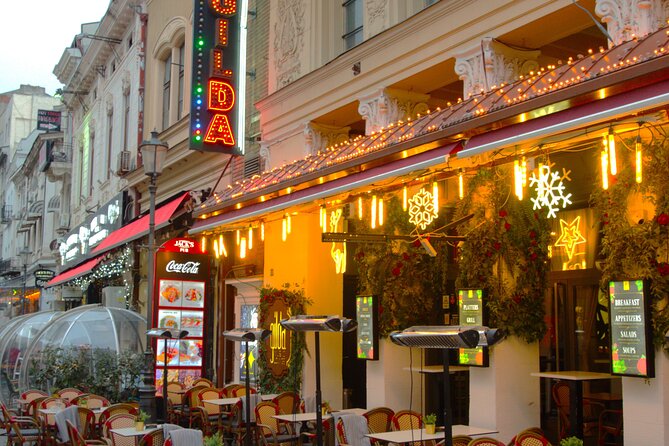
I like this tour because it does not treat central Bucharest as a string of unrelated buildings. You begin at Manuc’s Inn, one of the city’s most atmospheric starting points, then move through Old Town, University Square, Calea Victoriei, Revolution Square, the former Royal Palace, and the Romanian Athenaeum.
That route gives you a useful sense of the city’s changing identity. Bucharest began as a smaller settlement and grew into Romania’s capital. Its center later gained grand public buildings, royal institutions, and wide avenues. Communist rule then demolished or altered major parts of the city, leaving awkward gaps and powerful reminders of what disappeared.
Razvan’s role matters here. His explanations are not limited to dates and names. He connects buildings with education, politics, religion, Jewish life, architecture, and everyday Romanian experience. His excellent English makes the tour a good choice if you want more than a basic orientation walk.
The experience is private, so you can ask questions without holding up a busload of people. If you are interested in a particular subject, such as the 1989 revolution or Romania’s communist period, you have room to shape the discussion.
Other guided walks in Bucharest:
- Bucharest: City Highlights Guided Walking Tour
★ 4.9 · 1,482 reviews - Bucharest Highlights Walking Tour
★ 5.0 · 469 reviews - Bucharest: Ghost Stories & Romanian Mythology Walking Tour
★ 4.9 · 287 reviews
Manuc’s Inn and the first steps through Old Town
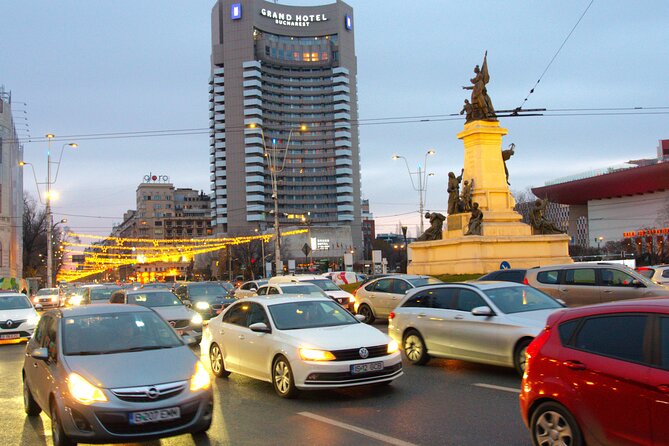
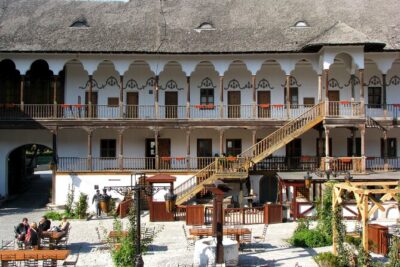
The walk begins at Hanul lui Manuc, or Manuc’s Inn, at Strada Franceză 62. This is a fitting place to start because the Old Town story is tied to trade, travel, and the growth of Bucharest as an important city.
You spend roughly an hour in the Old Town and Lipscani area. Expect a broad introduction to the city’s foundation, its older streets, later redevelopment, and the damage caused by communist planning. The central point is not simply that Bucharest has attractive old buildings. It is that the city’s present form reflects several layers of rebuilding.
I would give this part your full attention. It sets up the rest of the walk, and it helps you notice why a graceful old façade may sit beside a neglected building or a modern replacement. Razvan can also adjust the emphasis here, which is useful if you want to focus on architecture, local history, or Jewish heritage.
The tradeoff is that Old Town is a popular entertainment district, and a walking tour cannot explain every lane or building in detail. You will get a strong framework rather than an exhaustive study. If you plan to return later for restaurants or nightlife, this first hour will help you make sense of the area.
University Square and the National Theatre
University Square is the next major stop, with about 30 minutes devoted to its past and its role in Romanian public life. Here, the tour turns toward education and the recent political story of Bucharest.
You learn about Romania’s education system and the events connected with the anti-communist revolution. This is an important shift from the older commercial world of Lipscani. University Square represents a more modern civic center, where students, intellectuals, and ordinary citizens became part of the city’s political story.
The nearby Ion Luca Caragiale National Theatre receives about 20 minutes of attention from the outside. Razvan explains its connection to anti-communist resistance events, giving you another way to understand how public spaces became politically charged.
I appreciate the choice to include the theatre even without an interior visit. The building is not treated as an isolated cultural attraction. Instead, you see it as part of the city’s wider public life. Still, if you are especially interested in theatre or performance, you should not expect a performance, backstage visit, or admission.
Cercul Militar and the long story of Calea Victoriei
The Cercul Militar Național takes about 10 minutes. This elegant eclectic building is one of the city’s most handsome architectural stops, and Razvan explains its unusual story while you admire it from outside.
Ten minutes may sound brief, but that is sensible for a walking overview. The tour keeps moving rather than spending too much time at one façade. You can note the details, take photographs, and ask questions before continuing along Calea Victoriei.
Calea Victoriei has been Bucharest’s main street for roughly 300 years. The stop itself is listed at about 10 minutes, but the avenue continues to shape the walk. You get a sense of how royal, civic, commercial, and cultural Bucharest gathered along one route.
I like this stretch because it gives the city a more polished face after the uneven texture of Old Town. At the same time, the guide does not pretend that every important story is on the surface. Razvan points out lesser-known details and corners that are easy to miss if you simply walk the avenue alone.
For you, the practical value is orientation. Calea Victoriei helps connect the Old Town with the cultural center around Revolution Square and the Athenaeum. It is also a useful reference point for exploring central Bucharest on your own after the tour.
Same base, a completely different day:
- Bucharest: Dracula’s Castle, Peles Castle, & Brasov Old Town
★ 4.5 · 17,858 reviews - Bucharest: Dracula Castle, Peles Castle & Brasov Old Town
★ 4.6 · 10,891 reviews - Bucharest: Dracula’s Castle, Peleș Castle & Brașov Day Trip
★ 4.5 · 5,919 reviews - Bucharest: Palace of Parliament Tickets and Guide
★ 4.3 · 3,182 reviews
Revolution Square and the difficult story of 1989
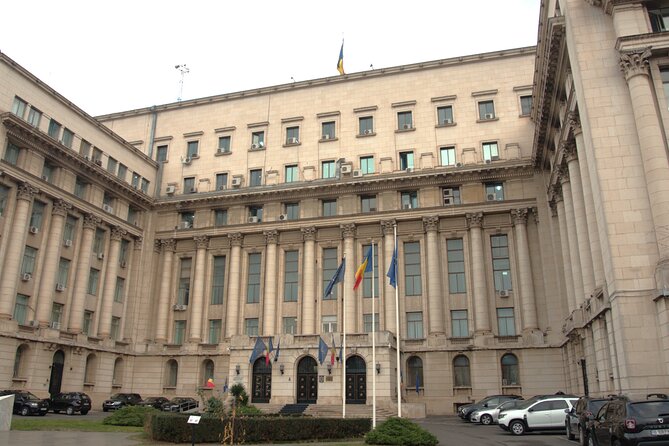
Revolution Square is the emotional center of the walk, with about 40 minutes devoted to the area. This is where the route deals most directly with Romania’s communist dictatorship and the events that brought it to an end.
The square includes the former Central Committee headquarters of the Communist Party, references to the secret services, and the Revolution Memorial. Together, these places give you a physical setting for one of the most painful chapters in modern Romanian history.
Razvan’s approach is especially valuable here because he places the buildings and memorials within a wider social story. You are not simply told where an important event happened. You are given context about power, fear, resistance, and the public reaction that changed Romania.
This section may feel heavy, and that is part of its value. Bucharest is not only a city of ornate buildings and café streets. Its recent past still shapes how people understand authority, freedom, and national memory. A guide who can explain those tensions with care makes a real difference.
The square is also a good place to slow down and ask questions. If the communist period is a main reason you chose this tour, tell Razvan at the start. The private format gives you a better chance to spend more time here if the schedule allows.
The former Royal Palace and the National Art Gallery
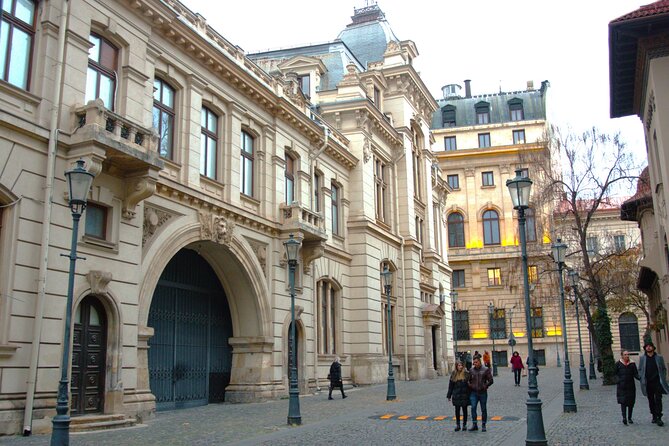
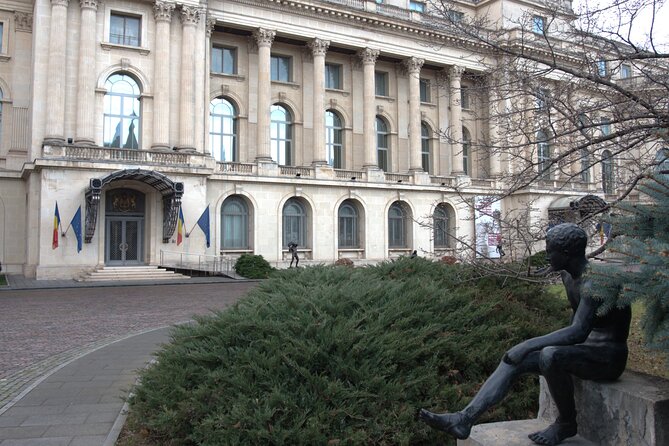
The Muzeul Național de Artă al României occupies the former Royal Palace. The planned stop is about 20 minutes, focused on the building’s past and its role in Bucharest.
The palace helps balance the Revolution Square section. After hearing about communist power and political violence, you turn to the monarchy and the cultural institutions that shaped the capital before and after that period. You see how one central building can carry several different national stories.
The tour does not include an admission ticket, so the visit is primarily an exterior introduction. That is useful if you have only half a day, but you may want to return independently if Romanian art is a major interest.
I would treat this stop as a preview rather than a museum visit. You get the context needed to appreciate the building, then you can decide if you want a longer interior visit later. Because the tour ends nearby, it is easy to make that choice after the walking portion.
The Romanian Athenaeum as the closing scene
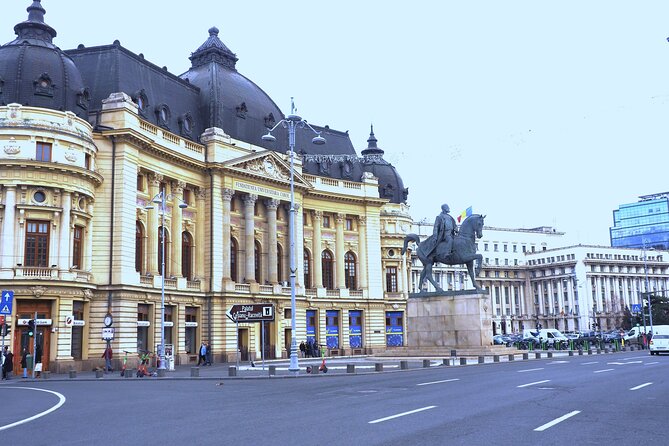
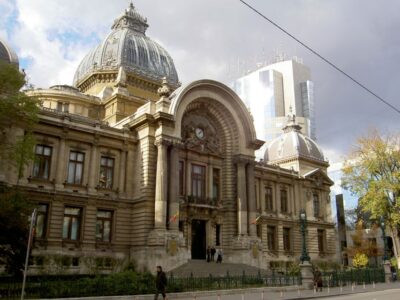
The Romanian Athenaeum is the final stop, with about 20 minutes to appreciate its architecture, symbolism, and place in Bucharest’s cultural life. The tour ends at Strada Benjamin Franklin 1 to 3, across from the National Art Gallery and next to the InterContinental Athénée Palace Hotel.
This is a satisfying finish. The Athenaeum gives the walk a cultural and visual high point after the darker political sections. Razvan explains why the building is associated with music and the arts, and he draws attention to its symbolic details rather than stopping at a quick photograph.
You should check your plans before booking because this is the endpoint, not the starting point. The location is central, near public transportation, and well placed for continuing your day in the city center.
As with the gallery, the experience does not promise an interior tour. If you want to attend a concert or see more of the building inside, plan that separately. The walking tour gives you the background and the setting, while your own schedule determines whether you stay longer.
What Razvan brings to a private Bucharest walk
Razvan Trancu is the main reason this experience feels more personal than a standard city orientation. He is described as a history scholar, an excellent storyteller, and a guide with strong English. He also speaks Italian well, which may help Italian-speaking visitors.
His strength is range. He can discuss architecture, politics, education, Romanian and Jewish history, and the changes that followed the collapse of communist regimes in Eastern Europe. He also offers practical city advice, including recommendations for bars, clubs, and fine dining.
That mix is useful because Bucharest is not a city you understand from monuments alone. You need the political background, the social context, and some help reading the buildings. Razvan’s calm, considerate manner also suits visitors who prefer conversation over a rehearsed speech.
The private format gives you more control. You can ask for more detail on one period, adjust the pace, or request a route that fits your interests. Pickup is flexible and optional, and if you are staying downtown, you can arrange to begin closer to your accommodation.
Price, timing, and who gets the best value
The price is $216.74 per group of up to 10 people. That looks expensive for one person, but the calculation changes quickly for a couple, family, or group of friends. The cost works out to about $21.67 per person for 10 people, before any other expenses, and about $54.19 each for four people.
The price covers the private guided walking tour. Snacks, coffee, tea, fees, and taxes are not included, and the listed stops do not include admission tickets. Since most of the route is outdoors and the key attractions are viewed from the outside, you should budget separately if you want museum or concert visits.
The advertised duration is three to four hours. That is enough for a useful introduction, but not enough to explore every building at length. The schedule is flexible, which helps, yet flexibility does not create extra time. If you stop for long photographs or detailed discussions, some stops may receive less attention.
This tour suits you best if:
- You are visiting Bucharest for the first time.
- You want historical context rather than a simple photo walk.
- You prefer a private guide and the ability to ask questions.
- Your group has several people who can share the cost.
- You are interested in communism, the 1989 revolution, architecture, or Jewish history.
- You want a central orientation before exploring museums and neighborhoods alone.
It may be less suitable if you want a full museum visit, a food tour, or a vehicle-based overview of areas beyond central Bucharest. The route stays focused on the historic and cultural core.
Practical details before you set out
Wear comfortable shoes. The tour lasts several hours and moves between multiple central districts, even though the exact walking pace can be adjusted. Check the weather, since the experience is primarily outdoors.
The meeting point is Manuc’s Inn, Strada Franceză 62, Bucharest. The endpoint is the Romanian Athenaeum. Downtown pickup is optional and flexible, so contact the provider if beginning near your accommodation would make the morning easier.
The tour is offered in English and is available daily from 7:00 AM to 7:00 PM during the stated operating period. Confirmation is provided when you book. Service animals are allowed, public transportation is nearby, and most people can participate.
Free cancellation is available if you cancel at least 24 hours before the start time. Changes or cancellations made within 24 hours are not accepted for a refund, and the cut-off uses Bucharest local time.
Should you book this Bucharest walking tour?
Book it if you want Bucharest explained by a thoughtful local guide rather than reduced to a list of buildings. The route is particularly strong for first-time visitors who want to connect Old Town with the royal, cultural, and communist stories of central Bucharest.
I would recommend it most strongly to small groups who can share the private rate and to curious visitors who enjoy asking questions. Tell Razvan what interests you before the walk, especially if you want more time on Jewish history, the 1989 revolution, architecture, or modern Romanian politics.
Skip it if your priority is entering every attraction or covering a large part of the city by vehicle. For a focused half-day introduction, though, the combination of Old Town, Revolution Square, Calea Victoriei, and the Romanian Athenaeum gives you a clear first picture of Bucharest, with enough context to make your own exploring far more rewarding.
FAQ
How long does the Bucharest walking tour last?
The tour lasts approximately three to four hours.
What is the price of the private tour?
The price is $216.74 per group, for up to 10 people.
Is the tour private?
Yes. Only your group participates in the activity.
Who is the guide?
The experience is provided by Razvan Trancu, a local tour designer and guide.
What language is the tour offered in?
The tour is offered in English. Razvan is also described as speaking excellent Italian.
Where does the tour begin?
The standard meeting point is Manuc’s Inn, Hanul lui Manuc, at Strada Franceză 62 in Bucharest.
Where does the tour end?
The tour ends at the Romanian Athenaeum, on Strada Benjamin Franklin 1 to 3, across from the National Art Gallery and next to the InterContinental Athénée Palace Hotel.
Is hotel pickup available?
Pickup is flexible and optional. If you are staying downtown, the tour can begin from there.
Are admission tickets included?
The private guided walking tour is included, but the listed inclusions do not include admission tickets. Snacks, coffee, tea, fees, and taxes are also not included.
Can I cancel for a full refund?
Yes. You can cancel for a full refund if you cancel at least 24 hours before the experience begins. Changes or cancellations made less than 24 hours before the start time are not accepted for a refund.
Just added around Bucharest
- Winery touring & private wine tasting – one day private tour★ 5.0 · 3 reviews
- Village Museum Bucharest Guided Tour★ 5.0 · 6 reviews
- Bucharest: Dealu Mare Winery Private Trip with Wine Tasting★ 4.9 · 6 reviews
- Traditions in Bucharest: Village Museum and Wine Tasting★ 5.0 · 8 reviews
- Transylvania Tour: Dracula’s Castle, Peles Palace & Brasov★ 5.0 · 19 reviews
- Airport Henri Coanda (Otopeni) to Bucharest – Private Transfer – Driver★ 5.0 · 5 reviews
- Gems of Transilvania: Brasov,Sighisoara,Sibiu,Viscri and more★ 5.0 · 6 reviews
- Discover Medieval Transylvania Small Group Tour – 7 days★ 5.0 · 4 reviews
Walking Tours, compared.
Ghost Stories & Romanian Mythology Walking Tour
Read our review →
Walking Tour- Delightful Bucharest (Highlights, Stories, Sights)
Read our review →
Browse the lists this tour appears in