Reviewed · TOURS IN BUCHAREST
Bucharest Old Centre Tour
Bucharest’s Old Centre makes the most sense when someone explains what you are seeing. In one compact hour, this private walking tour links Vlad the Impaler’s former court, medieval inns, Orthodox churches, Lipscani Street, and Stavropoleos Monastery. Alina’s local connection is a real asset: she grew up nearby and can point out places you might otherwise walk past.
I like the small private format, which keeps the walk personal, and the choice of morning or afternoon departure. Pickup and drop-off from selected central hotels can also save time. The main drawback is the short running time. One hour gives you a useful introduction, not a full study of Bucharest.
Key points at a glance
- Vlad the Impaler’s former court: See the ruins of one of Bucharest’s oldest buildings.
- Historic inns and courtyards: Learn how the Old Centre worked as a trading and lodging district.
- Stavropoleos Monastery: Visit a 1724 religious site known for its long story and central setting.
- Local perspective: Alina grew up in the area and adds personal knowledge to the walk.
- Private one-hour format: Your group has the guide’s attention, but the pace is brisk.
- Practical footwear matters: The route crosses old flagstones, so sturdy shoes are wise.
A fast introduction to Bucharest’s Old Centre
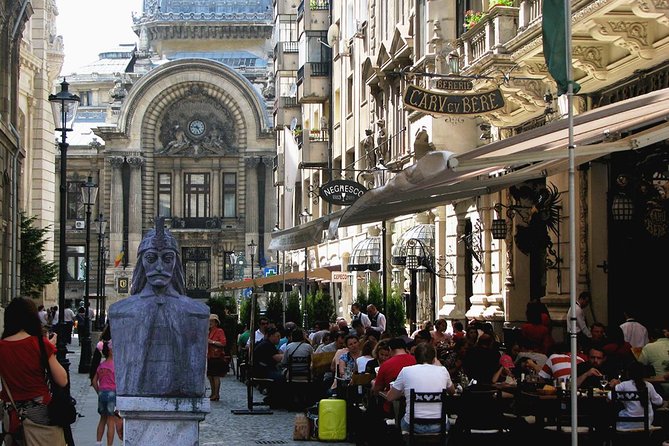
This walk is best viewed as an orientation tour. Bucharest’s historic core is not a single preserved medieval quarter with one grand avenue. It is a mix of ruins, churches, old inns, banks, museums, shops, and later buildings layered together in a small area.
That mixture is part of the appeal. You may pass a grand institution, turn into a narrow street, and then find fragments of an older building tucked beside modern cafes. A guide helps connect those pieces. Without that context, the Old Centre can look like a pleasant pedestrian district with a few ornate facades. With the story, it becomes a record of Wallachian rulers, merchants, religious life, trade, and changing city government.
The tour begins at the National Museum of Romanian History on Calea Victoriei 12. That is a central and recognizable meeting point. If you arrange hotel pickup, check that your hotel is among the selected central properties and confirm the exact pickup details before setting out.
The walk is private, so only your own group takes part. That matters in a tight historic district. You can usually hear the guide more easily, and the explanation can stay focused on your interests, though the supplied details do not promise a customized route or extra time at each stop.
Other days travellers book out of Bucharest:
- Bucharest: Dracula’s Castle, Peles Castle, & Brasov Old Town
★ 4.5 · 17,858 reviews - Bucharest: Dracula Castle, Peles Castle & Brasov Old Town
★ 4.6 · 10,891 reviews - Bucharest: Dracula’s Castle, Peleș Castle & Brașov Day Trip
★ 4.5 · 5,919 reviews
The Princely Court and the story of Vlad the Impaler
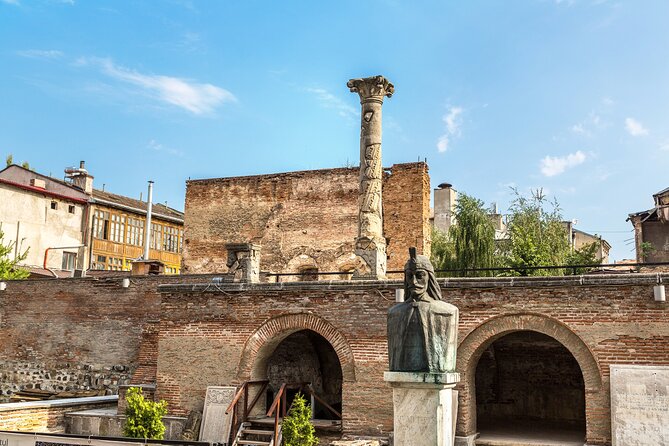
The ruins of the Old Princely Palace are the historical anchor of the walk. This was one of Bucharest’s oldest buildings and was once associated with Vlad the Impaler, the Wallachian ruler whose name is often linked with Dracula lore.
The value here is not just the connection to a famous figure. The ruins help explain why Bucharest developed in this location and how power operated in earlier Wallachia. You will hear about the former princely residence and see surviving remains rather than a complete palace interior.
That distinction is important. If you expect a restored castle with furnished rooms, this stop may feel modest. If you enjoy seeing fragments in their actual urban setting, it is a useful beginning. The guide’s explanation supplies the missing structure, helping you picture a court that no longer survives intact.
The tour also covers the wider Old Centre around the court, including the Old Coffee House, Gabroveni Inn, Linden Tree Inn, and the ruins of Șerban Voda Inn. These names point to a city shaped by movement and commerce. Inns were not decorative side notes. They gave merchants, officials, and other visitors places to stay near the center of local business.
St. Anton Church and Wallachian rulers
St. Anton Orthodox Church sits in the heart of the Old Centre and is linked with the Wallachian rulers. It gives the tour a different tone after the political story of the court.
The church helps place religion within the daily life of historic Bucharest. The route is not limited to rulers and grand institutions. It also shows how worship and public life were woven into the same compact district.
You should expect historical explanation rather than an extended church service or a long interior visit. The supplied tour details identify the church as a key stop but do not promise a special ceremony, reserved access, or a detailed architectural examination. If the church is open during the walk, your guide can help you understand its place in the area. The timing of access is not specified, so do not book this tour solely for guaranteed interior viewing.
Bucharest’s old inns, where trade met city life
The historic inns are among the most interesting parts of the route because they make the Old Centre feel like a working town rather than a collection of monuments. You will hear about Bucharest’s oldest and most famous inn, as well as another ancient inn in the oldest part of the city.
The tour also points out Gabroveni Inn, Linden Tree Inn, and the remains of Șerban Voda Inn. Some survive as buildings or identifiable sites, while others are represented by ruins. That variety gives you a more honest picture of Bucharest. Time has not preserved every important place in perfect form.
This section may be especially useful if you like urban history. An inn tells you about commerce, travel, food, lodging, and social contact all at once. It also explains why the Old Centre has such a dense layout. Streets developed around exchange and movement, not around a later museum plan.
The limitation is time. The tour lasts about an hour, and several locations are included. You will get the essential story at each place, but you should not expect long stops, extensive photography time, or a slow architectural survey. If a particular inn catches your eye, note it and return later.
Same base, a completely different day:
- Bucharest: Palace of Parliament Tickets and Guide
★ 4.3 · 3,182 reviews - Bucharest: Day Trip to Dracula Castle, Peles Castle & Brașov
★ 4.4 · 3,049 reviews - Bucharest to Dracula Castle, Peles Castle and Brasov Guided Tour
★ 4.5 · 2,933 reviews - Bucharest: Palace of Parliament Tickets and Guided Tour
★ 4.4 · 1,877 reviews
Lipscani Street and the changing Old Centre
Strada Lipscani is the heart of the modern Old Centre and one of the clearest places to see Bucharest’s past and present side by side. The street is part of the historic district, but it also functions as a popular central route today.
The guide uses Lipscani to explain how the district changed over time. This is where the walk becomes less about isolated ruins and more about the shape of the city around you. The street connects the stories of trade, inns, public buildings, and religious sites.
You may find the atmosphere more active here than at the quieter ruins. That can add energy, but it can also make it harder to listen or move at a measured pace. A private group helps, since the guide does not need to manage a large crowd, but the tour still follows a one-hour schedule.
I would treat Lipscani as a place to orient yourself for later independent exploring. The tour gives you the historical frame. You can then decide which street, building, or cafe deserves another look after the walk.
The National History Museum and former Post Office
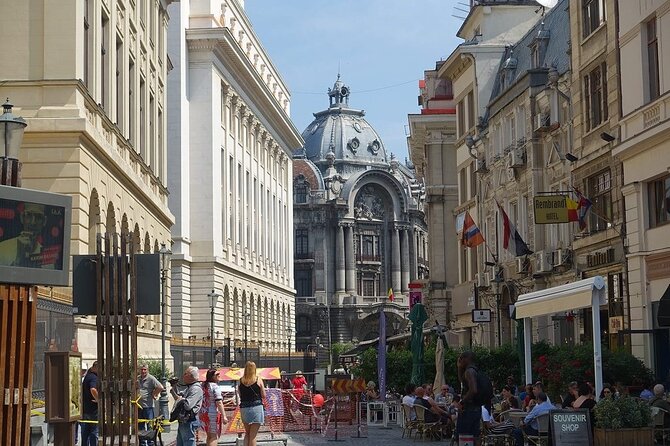
The National Museum of Romanian History is part of the opening section of the route. The tour explains the history of the building, which was formerly the Post Office.
This is a useful stop because it broadens the story beyond medieval Bucharest. The building represents a later civic phase, when the city needed large public institutions and formal urban architecture. It also gives you a visual contrast with the ruins and old religious sites nearby.
The tour does not list museum admission or an interior visit as part of the experience. Food and drinks are not included either, though that is less important on a one-hour walk. If you want to visit the museum inside, plan that separately and allow additional time.
Starting at the museum also makes practical sense. Calea Victoriei is a central address, and the building is easier to identify than a small street entrance. Arrive with enough time to locate the meeting point, particularly if you are not using hotel pickup.
The National Bank and the remains of Șerban Voda Inn

The National Bank of Romania adds another layer to the walk. You will see the grandeur of the bank and hear about its history, while also being shown the ruins of the former Șerban Voda Inn nearby.
The pairing is telling. One site represents formal financial power and the modern state. The other recalls an older commercial world of inns, travelers, and trade. In a few steps, you can see how Bucharest’s center changed from a place organized around lodging and markets into a city of banks and government institutions.
This is the kind of connection a guide can make better than a self-led stroll. You might notice the bank’s scale and the nearby remains, but the historical relationship between them is less obvious. The tour keeps the comparison grounded in what you can actually see.
Again, the visit is primarily an outdoor walking explanation. The details provided do not include access inside the National Bank or the ruins, so plan on viewing them from the route.
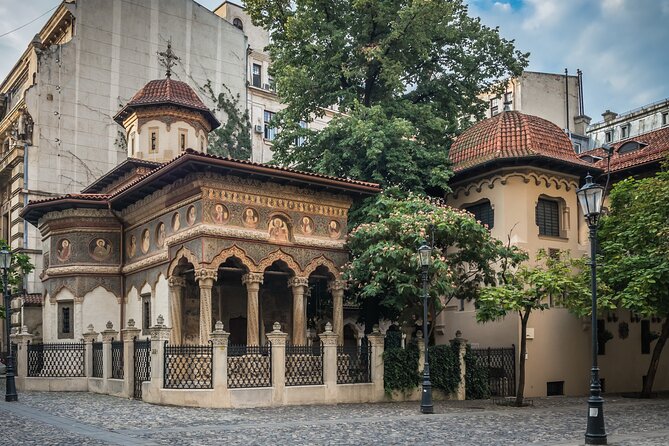
Stavropoleos Monastery, built in 1724
Stavropoleos Monastery is the final major highlight listed for the walk. Built in 1724, it brings the tour back to religious history and gives the route a strong architectural and cultural finish.
The monastery is important not only because of its age. Its presence in the Old Centre shows how religious institutions survived alongside commercial streets, banks, inns, and civic buildings. Your guide explains its story so you can place it within the larger development of Bucharest.
The stop may be the most visually memorable part of the route, but the available details do not guarantee a particular interior program or special access. Treat it as a historical and architectural stop on a guided walk, not as a full monastery visit.
Because the tour moves quickly, take note of the monastery if you want to return for a longer look. This is one of the benefits of taking the walk early in your Bucharest stay: you can use the guide’s route to choose where to spend more time later.
What the guide adds to the experience
The strongest feature is the human explanation. The tour is led by a local professional guide, and Alina is specifically associated with the experience. She grew up in the area and brings personal familiarity with places that are easy to miss.
The feedback attached to the tour gives Alina special praise for covering different eras of Bucharest, showing lesser-known places, and making the walk funny and engaging. That points to a guide who does more than recite dates. You can expect connections between the visible buildings and the wider story of the city.
The exact guide may vary, so do not assume Alina will lead every departure. Still, her local background shows the kind of perspective the tour aims to provide. The best question to ask during the walk is not just what a building is, but how its use and meaning changed over time.
Price, pace, and practical value at $16.77
At $16.77 per person, the tour offers reasonable value if you want a short introduction with a private guide. You are paying for local explanation, a planned route, and the convenience of selected hotel pickup and drop-off, not for entrance tickets, a meal, or a long sightseeing session.
The price looks strongest for a first afternoon in Bucharest, when you want to get your bearings without giving up half a day. It also works well for a short stay, since the route covers several major Old Centre themes in about an hour.
The tradeoff is depth. A one-hour walk through this many places must keep moving. You will hear the main stories, but you will not have much time for long pauses or detailed examination. If you already know the Old Centre well, the tour may feel too brief. If the area is new to you, the compact format is more useful.
The tour offers morning and afternoon departures. That flexibility helps you fit it around other plans. Hotel pickup is available from selected central hotels, and the experience ends back at the meeting point according to the listed details. Because both pickup and a fixed meeting point are described, confirm the exact arrangement when booking.
Wear sturdy shoes. The old flagstones can be uneven, and one hour of walking is enough for poor footwear to become a nuisance. Children may participate but must be accompanied by an adult. Most people can take part, though the tour does require walking outdoors in weather that permits the activity.
Cancellation and weather details to keep in mind
You can cancel for a full refund up to 24 hours before the experience start time. Changes or cancellations made less than 24 hours before the start are not accepted for a refund.
The activity requires good weather. If poor weather causes cancellation, you will be offered another date or a full refund. Cutoff times use local time, so check Bucharest time when making changes.
Confirmation normally arrives when you book. If you book within one day of the tour, confirmation comes as soon as possible and depends on availability. That is a small but important reason not to leave this booking until the last minute if your schedule is tight.
Who should book the Bucharest Old Centre Tour?
I would choose this walk if you want a quick, private introduction to the historic core and prefer local stories to a self-guided route. It suits first-time visitors, short-stay visitors, and anyone who wants to understand the area before returning on their own.
It is also a good fit if you enjoy seeing how different periods share the same streets. The Princely Court, old inns, St. Anton Church, Lipscani Street, the National Bank, and Stavropoleos Monastery create a useful sequence of political, commercial, religious, and civic history.
I would hesitate if you want a slow architectural tour, guaranteed interior access, or extensive time at each site. The route is short and information-focused. For the best value, book it near the start of your stay, wear solid shoes, and use the walk as a map for further exploring.
FAQ
How long does the Bucharest Old Centre Tour last?
The tour lasts approximately one hour.
What is the price of the tour?
The listed price is $16.77 per person.
Where does the tour start?
The meeting point is the National Museum of Romanian History, Calea Victoriei 12, București 030026, Romania.
Where does the tour end?
The activity ends back at the meeting point.
Is hotel pickup available?
Pickup and drop-off are offered from selected central hotels only. Confirm that your hotel is included and check the exact arrangement when booking.
Is the tour private?
Yes. Only your group participates in this private activity.
Which sites are included on the route?
The walk covers the Old Centre, the Princely Old Court, the ruins of the Old Princely Palace, St. Anton Orthodox Church, historic inns, Lipscani Street, the National History Museum building, the National Bank, the former Șerban Voda Inn ruins, and Stavropoleos Monastery.
Are food and drinks included?
No. Food and drinks are not included.
Can I cancel for a full refund?
Yes, if you cancel at least 24 hours before the experience start time. Poor-weather cancellations offer a different date or a full refund.
Should you book it?
Book this tour if you want a focused first look at Bucharest’s Old Centre, especially with a local guide such as Alina who can connect the city’s visible ruins, churches, inns, and banks. At $16.77, it is a fair introduction for a short visit. Just remember that one hour moves quickly, and sturdy shoes are part of the plan.
Just added around Bucharest
- Winery touring & private wine tasting – one day private tour★ 5.0 · 3 reviews
- Village Museum Bucharest Guided Tour★ 5.0 · 6 reviews
- Bucharest: Dealu Mare Winery Private Trip with Wine Tasting★ 4.9 · 6 reviews
- Traditions in Bucharest: Village Museum and Wine Tasting★ 5.0 · 8 reviews
- Transylvania Tour: Dracula’s Castle, Peles Palace & Brasov★ 5.0 · 19 reviews
- Airport Henri Coanda (Otopeni) to Bucharest – Private Transfer – Driver★ 5.0 · 5 reviews
- Gems of Transilvania: Brasov,Sighisoara,Sibiu,Viscri and more★ 5.0 · 6 reviews
- Discover Medieval Transylvania Small Group Tour – 7 days★ 5.0 · 4 reviews
Tours in Bucharest, compared.
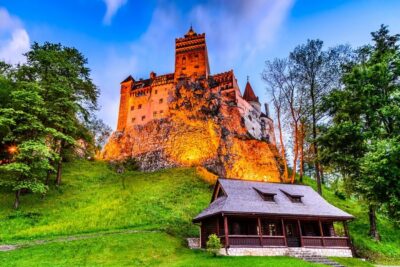
Dracula’s Castle, Peles Castle, & Brasov Old Town
Read our review →
Dracula’s Castle, Peleș Castle & Brașov Day Trip
Read our review →
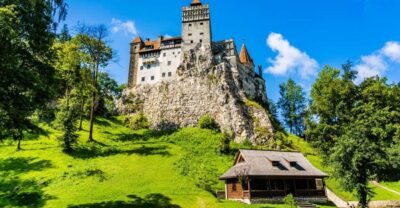
Day Trip to Dracula Castle, Peles Castle & Brașov
Read our review →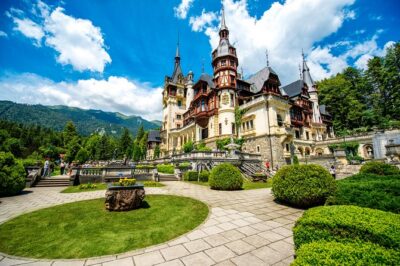
Bucharest to Dracula Castle, Peles Castle and Brasov Guided Tour
Read our review →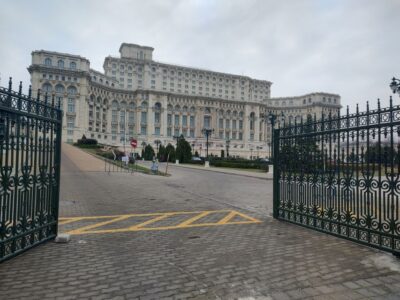
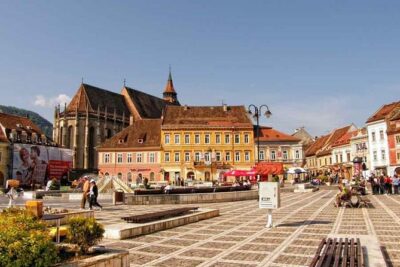
Dracula’s Castle, Peles Castle and Brasov Day Trip from Bucharest
Read our review →