
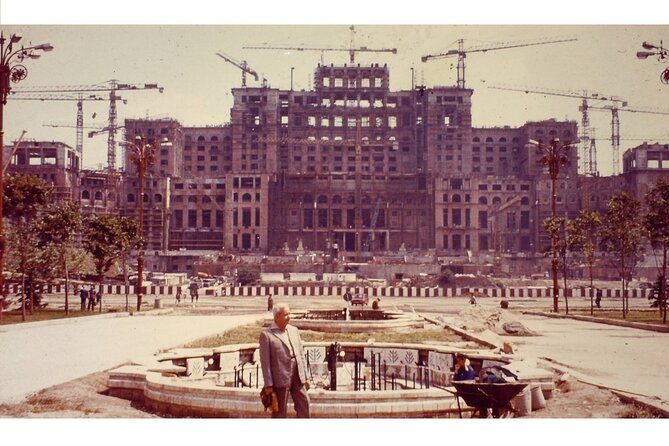
Reviewed · COMMUNISM & CEAUȘESCU TOURS
Communism Walking Tour from Lenin to Ceausescu in Bucharest
The most striking feature of this Bucharest walk is its route through a city reshaped by Nicolae Ceausescu’s grand communist projects and then shaken by the 1989 revolution. You move from the huge Palace of Parliament to quiet Antim Monastery, abandoned Old Town, and the square where Ceausescu gave his final speech.
I like two things in particular: the tour links famous sights to the people and events behind them, and it covers a wide sweep of central Bucharest without charging extra admission fees. Guides Alex and Lucia are named as English-speaking options, and Alex is especially praised for clear storytelling, humor, and adapting to a mixed-age group. The main consideration is that this is a serious history walk, not a general city tour, and a group of up to 25 can make discussion less personal.
Key points to know before booking

- The route connects two eras: You begin near the Palace of Parliament and finish at Revolution Square, moving through royal, religious, communist, and post-communist Bucharest.
- The story is about daily life as well as politics: Your guide explains both the good and bad effects of communism on Romania.
- University’s Square carries the heaviest emotional weight: It was a major site of deaths during the bloody 1989 revolution.
- The Palace of Parliament is seen from outside: The tour includes no admission ticket, so this is not an interior visit.
- The English commentary matters: Alex and Lucia are named guides, but strong English comprehension will help you follow the political details.
- The $24 price covers about two and a half hours: With no food, drinks, or paid entries included, the value rests mainly on the guide and route.
Bucharest’s communist story begins with a giant building
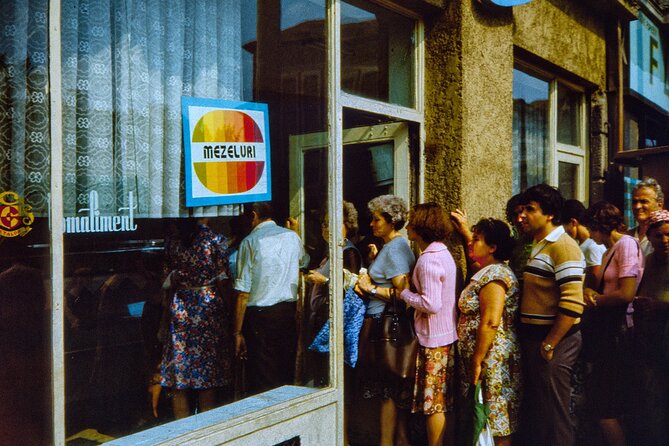
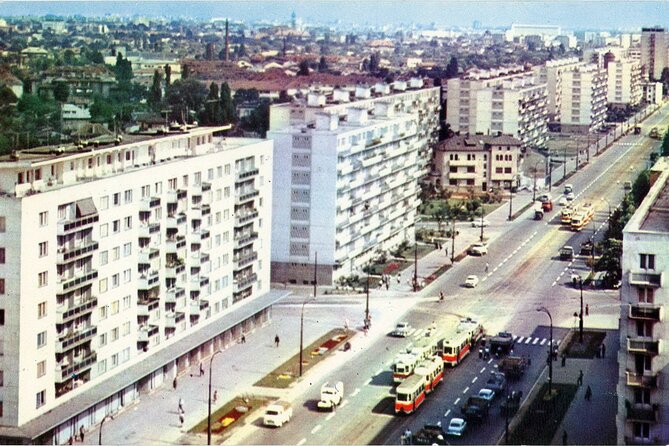
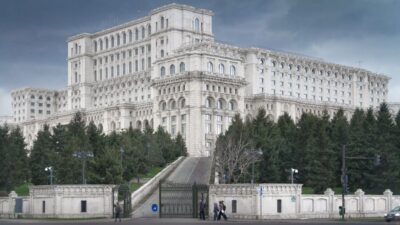
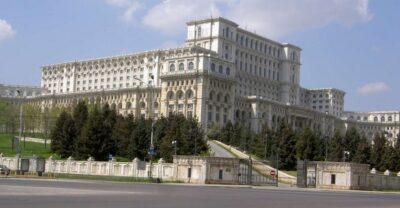
The walk starts at Bulevardul Unirii 5, in the area of the Palace of Parliament, at 10:30 a.m. The building is the natural opening chapter. It was part of Ceausescu’s final, outsized urban project and is described as the second-biggest administrative building in the world.
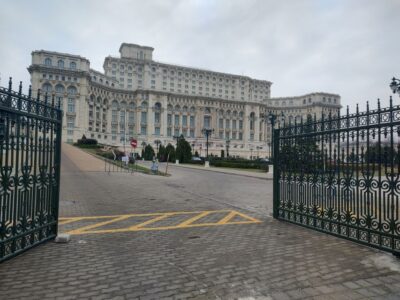
You do not enter the Palace of Parliament on this experience. Instead, your guide uses the exterior and its setting to explain the scale of the communist regime’s ambitions. This is useful because the building is not simply a large government office. It represents a plan to remake central Bucharest around power, ceremony, and control.
Allow about 20 minutes here. That is enough time for an introduction and a clear explanation of why the building matters, though not enough for a detailed architectural tour. I would treat this stop as the visual starting point rather than the main event.
From here, the walk turns toward parts of the city that survived, or nearly survived, the communist redesign. That contrast gives the route its shape. One moment you are looking at a symbol of state power. Soon after, you are considering a monastery that almost disappeared for the sake of a new boulevard.
Other guided walks in Bucharest:
- Bucharest: City Highlights Guided Walking Tour
★ 4.9 · 1,482 reviews - Bucharest Highlights Walking Tour
★ 5.0 · 469 reviews - Bucharest: Ghost Stories & Romanian Mythology Walking Tour
★ 4.9 · 287 reviews
Antim Monastery and the cost of Socialist Victory Boulevard
Antim Monastery receives about 15 minutes. It was part of Bucharest’s older city and was nearly demolished to make way for Socialist Victory Boulevard.
This is one of the most useful stops because it turns an abstract planning policy into a physical choice. A boulevard can look impressive on a map, but widening or extending it meant cutting through established neighborhoods and putting historic buildings at risk. At Antim, your guide can show how the old city and the communist project pressed against each other.
The stop is short, so do not expect a full religious or architectural visit. The value comes from the context: you learn what was threatened, why it was threatened, and how the city was changed. If you care about architecture, preservation, or urban planning, this may be one of the more revealing parts of the route.
Patriarchal Palace links religion, democracy, and communism
The next stop is Palatul Patriarhiei, or the Patriarchal Palace, with about 20 minutes allocated. Its design was inspired by the Garnier Opera in Paris, giving the building a distinctly grand public character.
The site also connects to both the beginning of democracy in Romania and the beginning of the communist movement. That unusual pairing is exactly why a guide adds value here. A building can serve different political purposes over time, and the tour uses this place to show how Romanian public life shifted before, during, and after communism.
This is not a tour of separate monuments with unrelated facts. The route keeps asking how power used buildings, squares, and streets. At the Patriarchal Palace, the discussion moves beyond Ceausescu alone and places communism within the larger political story of Romania.
Piața Unirii shows the planned face of the 1980s
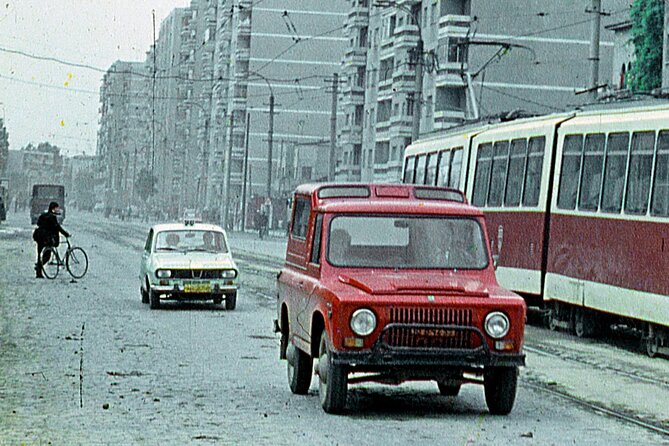
Piața Unirii was built during the 1980s as part of Socialist Victory Boulevard. The stop lasts about 20 minutes, and today the square is also known for its Dancing Fountains.
That contrast is worth noticing. The square began as part of a planned communist urban scheme, while its fountains now function as a popular city attraction. Your guide can help separate the present-day appearance from the purpose the area served under Ceausescu.
I like this kind of stop because it prevents the tour from becoming a simple list of grim events. Bucharest is not frozen in 1989. The same spaces have new uses, new meanings, and new layers. Piața Unirii gives you a visual pause and helps you see how an ideological project can become ordinary city infrastructure over time.
The route covers a lot of ground, so wear comfortable shoes. The tour lasts roughly two and a half hours, and the total experience is best approached as an urban walk rather than a series of indoor museum visits.
More of the communist years around Bucharest:
- Bucharest: Palace of Parliament Tickets and Guide
★ 4.3 · 3,182 reviews - Bucharest: Palace of Parliament Tickets and Guided Tour
★ 4.4 · 1,877 reviews - Bucharest: Parliament Palace Skip-the-line Ticket
★ 4.2 · 1,518 reviews - The Real tour of Communism
★ 5.0 · 666 reviews
Old Town reveals what the regime left behind
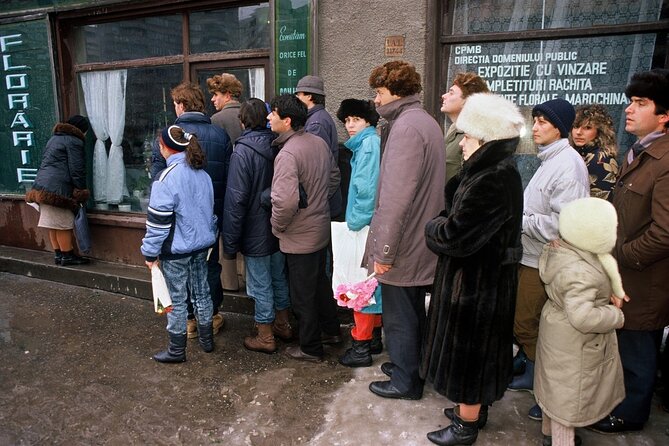
The route then enters Bucharest’s Old Town, which is described as a symbol of the old regime and as an area that became abandoned during the communist period. The stop lasts about 15 minutes.
Old Town is often treated as a lively sightseeing district today, but this tour asks you to picture a different version of it. Under communism, the area did not receive the same attention as the new boulevards and state projects. That neglect is an important part of the story.
This stop also breaks up the scale of the earlier monuments. After the Palace of Parliament and broad planned avenues, you encounter a district made up of older streets and buildings. The discussion helps explain what was pushed aside when the regime favored monumental construction.
Do not expect time to explore Old Town independently during the walk. The group moves on according to a fixed route, so save restaurant browsing or extended photography for another part of your day.
University’s Square is the tour’s most painful stop
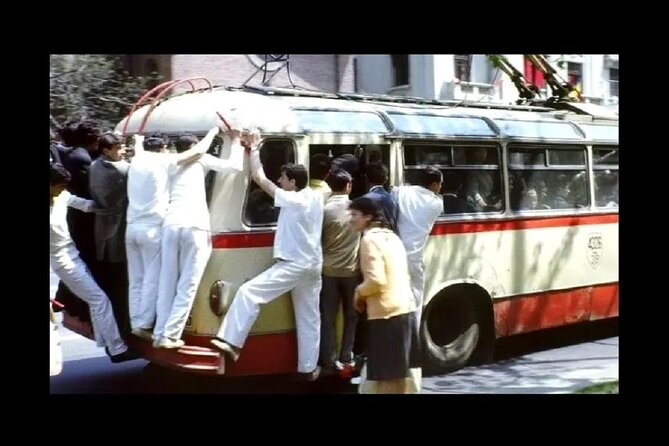
University’s Square receives about 15 minutes, but its importance is far greater than the clock suggests. Romania was the only country in the communist bloc where the regime ended in a bloody revolution, and many victims were shot in this square.
This is where the tour’s emotional center arrives. The earlier stops explain systems, buildings, and plans. Here, the focus turns to people confronting the regime and paying a terrible price.
You should expect a sober explanation rather than a light sightseeing stop. The subject is difficult, and the square may look like a normal central city space while you are there. That contrast can be unsettling. It also shows why a walking tour can be more effective than reading a short timeline: the events are tied to the actual streets where they happened.
The tour does not appear to include a memorial visit or a separate museum admission. Instead, the guide provides the setting and narrative. Alex is praised for connecting events clearly and adding humor when appropriate, but this part of the route naturally calls for a more serious tone.
The Royal Palace shows how power changed hands
At the Royal Palace, now home to the National Art Museum, you spend about 15 minutes. The building once served as the winter residence of Romania’s royal family. During the early communist years, it became the Palace of the Republic and a protocol building.
This is a compact lesson in political replacement. The building did not simply change occupants. Its name, purpose, and symbolism changed as Romania moved from monarchy to communist republic.
The stop is especially useful if you are interested in how regimes reuse existing institutions. Communist authorities did not need to erase every grand building. They could take over familiar spaces and assign them new meaning. Your guide connects the architecture to that shift, making the palace more than a photo stop.
The National Art Museum itself is not included as an interior visit. If you want to see its collections, plan a separate visit outside the walking tour.
The Romanian Athenaeum adds a cultural note

The Ateneul Român, or Romanian Athenaeum, gets only about five minutes. It is one of Bucharest’s most representative buildings and appears on the five-leu banknote.
Because the stop is brief, expect a quick explanation and a look at the exterior rather than a full cultural tour. The building gives the route a different tone. Much of the walk concerns state power, demolition, protest, and violence. The Athenaeum reminds you that Bucharest’s identity also rests on music, art, and civic culture.
Five minutes may feel short if you want photographs or architectural detail. Still, the stop works as a brief bridge before the final and most important location, Revolution Square.
Revolution Square brings Ceausescu’s final speech into focus
The walk ends at Piața Revoluției, or Revolution Square, after about 25 minutes there. The main building in the square was the Central Committee of the Communist Party. From its balcony, Nicolae Ceausescu gave his last speech to the Romanian people.
This is a strong ending because so many earlier themes come together here. The square carries the political authority of the regime, the public performance of leadership, and the collapse of that authority. It also gives you a clear endpoint at a place directly linked to the revolution.
The tour finishes here, so you can continue independently afterward. The ending is practical as well as meaningful: you are left in a central Bucharest location rather than returned to the starting point. The supplied information identifies Revolution Square as the endpoint, but it does not include onward transport or a follow-up activity.
What the guide adds to a $24 walking tour
At $24 per person, the price is reasonable if you want a focused introduction to Romania’s communist period. The tour includes a local guide, lasts about two hours and 30 minutes, and takes you to nine important locations. You pay no separate admission fees during the walk, though food and drinks are not included.
The key question is not the number of stops. It is the quality of the explanation between them. A route through Bucharest can easily become a parade of large buildings and solemn squares. The strongest part of this experience is the guide’s ability to connect those places to the human and political story.
Alex receives particularly strong praise for storytelling, scientific knowledge, humor, and adapting to a group that included three generations. Lucia is also identified as a capable guide. If your English is limited, keep in mind that the tour is offered in English, and one Italian-speaking participant found that Google translation did not provide enough help to follow everything. This is a detail worth taking seriously. The political content depends on understanding the spoken explanation.
The maximum group size is 25. That is not a tiny group, so you may not receive much individual attention, especially at busy squares. On the other hand, the route is easier to organize than a private tour, and the price stays accessible.
Who will get the most from this walk
I would choose this tour if you want Bucharest’s recent political story explained in place, not just summarized in a museum caption. It suits first-time visitors who want a clear framework for understanding the Palace of Parliament, Ceausescu, and the 1989 revolution.
It is also a good choice for families with older children or mixed-age groups. The route includes visual landmarks, short stops, and a narrative that can connect across generations. Alex’s ability to adjust to a three-generation group is a useful sign for families.
You should think twice if you want to enter major buildings, spend long periods taking photographs, or hear a broad survey of all Bucharest history. This walk stays focused on communism and its aftermath. It also includes difficult material at University’s Square, so it is not a casual sightseeing stroll.
The start time is 10:30 a.m., which leaves room for breakfast beforehand and other sightseeing later. The experience is near public transportation, service animals are allowed, and most people can participate. Confirmation is provided at booking. Free cancellation is available until 24 hours before the start time, but changes or cancellations inside that window are not accepted, and a minimum number of participants is required.
Should you book the Communism Walking Tour?
Book it if you want a focused, guide-led explanation of Bucharest’s communist past and are willing to spend two and a half hours walking between outdoor sites. The Palace of Parliament, Antim Monastery, University’s Square, the Royal Palace, and Revolution Square give you a strong range of places, while the stories connect them into one political journey.
At $24, the tour offers good value for an English-speaking introduction, especially if Alex or Lucia leads your group and you enjoy a clear, story-based approach. Skip it if you prefer indoor attractions, private guiding, or a general overview of Bucharest. For the right visitor, this is a thoughtful way to understand how Romania moved from royal rule, through communism, and into the uncertain days after 1989.
FAQ
Where does the tour start?
The meeting point is Bulevardul Unirii 5 in Bucharest, near the Palace of Parliament area.
What time does the tour begin?
The tour starts at 10:30 a.m.
Where does the tour end?
It ends at Revolution Square, Piața Revoluției, in Bucharest.
How long does the walking tour last?
The experience lasts approximately two hours and 30 minutes.
What language is the tour offered in?
The tour is offered in English.
Which guides may lead the tour?
The provided information names Alex and Lucia as guides associated with the experience.
Is entry to the Palace of Parliament included?
The tour visits the Palace of Parliament area, but no admission ticket is included for entry inside.
Are food and drinks included?
No. Food and drinks are not included in the tour price.
How large can the group be?
The tour can have a maximum of 25 participants.
Can I cancel for a full refund?
Yes. You can cancel at least 24 hours before the start time for a full refund. Cancellations or changes made less than 24 hours before the start are not accepted for a refund.
More walking tours in Bucharest
- Bucharest: Guided Walking Tour with Romanian Snack
★ 4.9 · 228 reviews - Best of Bucharest | Private Walking Tour
★ 5.0 · 199 reviews - Walking Tour- Delightful Bucharest (Highlights, Stories, Sights)
★ 5.0 · 145 reviews - 4h Bucharest Private Tour (2h by Car and 2h Walking in Old Town)
★ 5.0 · 90 reviews
Just added around Bucharest
- Winery touring & private wine tasting – one day private tour★ 5.0 · 3 reviews
- Village Museum Bucharest Guided Tour★ 5.0 · 6 reviews
- Bucharest: Dealu Mare Winery Private Trip with Wine Tasting★ 4.9 · 6 reviews
- Traditions in Bucharest: Village Museum and Wine Tasting★ 5.0 · 8 reviews
- Transylvania Tour: Dracula’s Castle, Peles Palace & Brasov★ 5.0 · 19 reviews
- Airport Henri Coanda (Otopeni) to Bucharest – Private Transfer – Driver★ 5.0 · 5 reviews
- Gems of Transilvania: Brasov,Sighisoara,Sibiu,Viscri and more★ 5.0 · 6 reviews
- Discover Medieval Transylvania Small Group Tour – 7 days★ 5.0 · 4 reviews
Communism & Ceaușescu Tours, compared.
Parliament Senate Entry Tickets and Guided Tour
Read our review →
Bucharest Essential Tour: Old Town, Calea Victoriei & Communism
Read our review →Browse the lists this tour appears in