
Reviewed · DRACULA & BRAN CASTLE TOURS
8h Bucharest Communism Tour – Best of Bucharest with Dracula’s Tomb
The most striking part of this Bucharest tour is the clash between Ceaușescu’s grand communist projects and the modest wooden homes at the National Village Museum. In one day, you move from a huge administrative palace built through forced demolition to a monastery on an island linked with Dracula.
I like the private vehicle and hotel pickup, which make a long day much easier, and I like the strong focus on recent Romanian history rather than a quick parade of old buildings. The main drawback is cost: at $297.38 per person, this makes the most sense for a small group that values a private guide and transport. Entrance fees and meals are extra, too.
Key points to know before booking
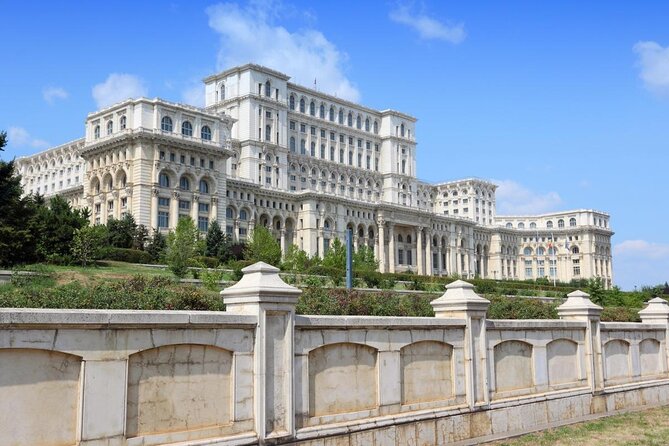
- The Palace of Parliament takes center stage, with roughly two hours devoted to one of the world’s largest administrative buildings.
- Snagov Monastery adds a memorable twist, reached about 40 minutes outside Bucharest on an island and linked with Dracula’s tomb.
- The private format keeps the day flexible, with only your own group taking part.
- Nicolas and Răzvan are among the guides associated with the experience, and the strongest praise centers on clear history, humor, flexibility, and care.
- Tickets are not included, including admission to the Palace of Parliament, Snagov Monastery, and Ceaușescu Mansion.
- The tour connects dictatorship with everyday life, pairing communist-era power sites with village homes, churches, crafts, and older Bucharest landmarks.
Why this eight-hour route works
Bucharest can be hard to read at first. Its grand avenues, Orthodox churches, nineteenth-century buildings, communist blocks, and new cafes often sit close together without an obvious story tying them together.
This route gives you that story. You start with the machinery of power, move through older national traditions, then follow the events that brought Nicolae Ceaușescu’s rule to an end in December 1989. The final stops shift from political history to personal space and legend.
A private format matters here. You are not simply being dropped beside a building and handed a date. The driver-guide can explain why a site matters, answer questions as you go, and adjust the pace within the day’s limits. The vehicle also saves you from arranging separate transport to Snagov.
Guides connected with this experience include Nicolas and Răzvan. Nicolas is described as friendly, funny, flexible, and well informed about Bucharest. Răzvan is also noted for professional service and strong historical explanations. One practical detail comes through clearly: the vehicle is clean, air-conditioned, and fitted with comfortable seats and large windows.
Other Dracula castle trips in Bucharest:
- Bucharest: Dracula’s Castle, Peles Castle, & Brasov Old Town
★ 4.5 · 17,858 reviews - Bucharest: Dracula Castle, Peles Castle & Brasov Old Town
★ 4.6 · 10,891 reviews - Bucharest: Dracula’s Castle, Peleș Castle & Brașov Day Trip
★ 4.5 · 5,919 reviews
Palace of Parliament: the scale of communist ambition
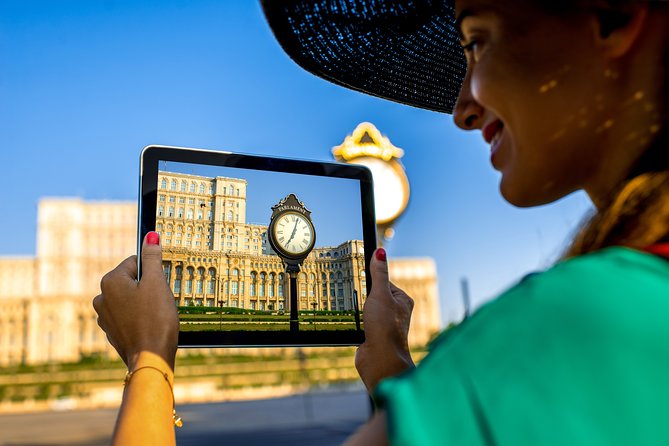
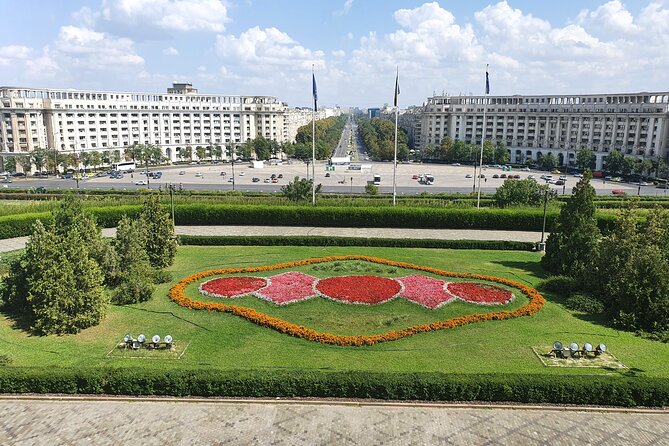
Allow about two hours at the Palace of Parliament, also known as the People’s House. This is the tour’s clearest lesson in how power can turn into architecture.
The building is the second-largest administrative building in the world after the Pentagon. That fact alone gives you a sense of its scale, but the bigger point is the human cost behind it. Ceaușescu ordered a vast redevelopment of central Bucharest, and the project required the destruction of homes, churches, and older neighborhoods.
Inside, the size can feel almost absurd. The building was created to project authority and permanence, yet it also reveals the waste and vanity of a dictatorship. Rooms and corridors were made on a scale that ordinary people could hardly relate to. Your guide’s explanation is important here, since the building can otherwise become just another grand interior.
Admission is not included. You should check the current entry arrangements when booking, since access to major government buildings can require set procedures. The tour information allows two hours for this stop, which is useful because a quick exterior photograph would miss the main point.
I would not choose this tour only for grand architecture. Choose it if you want to understand how the building fits into Ceaușescu’s rule and the reshaping of Bucharest. The emotional effect comes from that contrast: impressive construction, destructive purpose.
National Village Museum: a needed change of scale
The National Village Museum provides a sharp change from the People’s House. Instead of giant halls and political power, you see traditional Romanian homes gathered in one place.
The collection includes houses made from wood, adobe, stone, and other local materials. You can also see structures such as mills and wooden churches. The point is not simply to admire old buildings. The museum shows how rural communities organized daily life around available materials, local skills, family needs, and religious practice.
I like this stop because it keeps the communist story from swallowing the entire day. Romania is more than the dictatorship that ruled it from 1965 to 1989. The village homes offer a picture of older customs and a simpler relationship with the land, buildings, and community.
The information provided does not specify the exact time here, so the pace may depend on the day’s traffic, entry arrangements, and your group. If traditional architecture interests you, ask your guide for enough time to look beyond the first few houses. The museum covers styles from different parts of Romania, so the details change as you walk through it.
The museum is also a useful counterpoint to Ceaușescu’s grand projects. A traditional house may be small and practical, but it tells you how people actually lived. The People’s House tells you what a ruler wanted the state to look like.
Calea Victoriei: Bucharest’s contradictions on one avenue
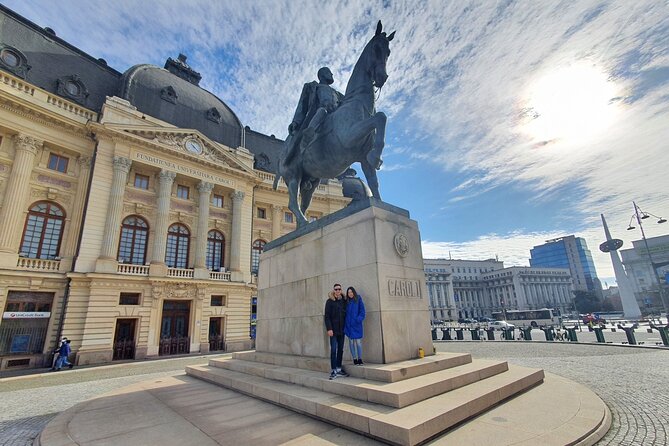
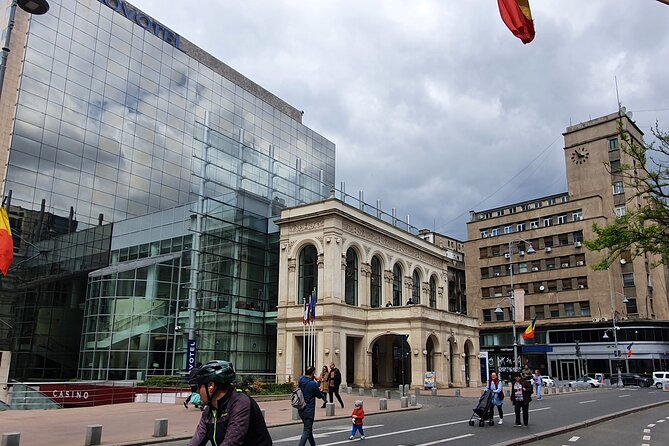
The 45-minute visit to Calea Victoriei gives you a compact look at Bucharest’s mixed character. This historic avenue brings together royal, religious, cultural, commercial, and communist associations.
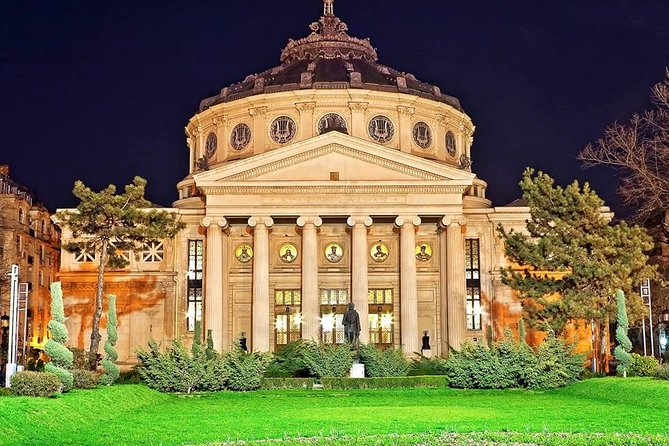
Your guide points out the Royal Palace on one side and the former Central Committee of the Romanian Communist Party nearby. That pairing makes the street a useful lesson in changing power. You may also see Orthodox churches, the National History Museum, the Romanian Athenaeum, CEC Palace, theaters, restaurants, music shops, casinos, tea shops, retail stores, and souvenir shops.
The strength of this part is the variety. You are not confined to a single period or style. Bucharest’s older buildings and newer commercial life appear together, often with little warning. The avenue helps explain why the city can feel elegant, strange, worn, and lively within a short walk.
The limitation is time. Forty-five minutes is enough for orientation and exterior views, but not for a serious museum visit or a long stop inside every landmark. Treat this as a guided introduction. If the Romanian Athenaeum, National History Museum, or CEC Palace catches your eye, note it for another visit.
Admission is listed as free for this section, though that refers to the route itself, not optional entry into museums or other buildings.
Other trips to Dracula's castle from Bucharest:
- Bucharest: Day Trip to Dracula Castle, Peles Castle & Brașov
★ 4.4 · 3,049 reviews - Bucharest to Dracula Castle, Peles Castle and Brasov Guided Tour
★ 4.5 · 2,933 reviews - Dracula’s Castle, Peles Castle and Brasov Day Trip from Bucharest
★ 4.5 · 1,804 reviews - Transylvania and Dracula Castle Full Day Tour from Bucharest
★ 4.5 · 1,589 reviews
Revolution Square: where the regime cracked

Revolution Square is the most important stop for understanding the end of Ceaușescu’s rule. Allow about 30 minutes.
Your guide explains how the Central Committee building became tied to the December 1989 uprising. This was the place from which Ceaușescu addressed the crowd before the situation turned against him. He eventually fled by helicopter, and the regime that had ruled Romania for decades collapsed soon after.
The square also carries the weight of sacrifice, fear, and uncertainty. The end of communism was not a neat ceremony. People were killed, the state security service remained part of the public debate, and questions about wealth and offshore accounts continued after the fall.
Thirty minutes may sound brief, but a focused explanation can give the square real meaning. Without context, it is simply another urban space. With context, the buildings around you become part of a turning point that changed Romania.
I would pay close attention here, even if political history is not your main interest. The Palace of Parliament shows what the regime built. Revolution Square shows how that regime lost control.
Snagov Monastery: an island, a monastery, and Dracula’s tomb
Snagov Monastery is the route’s surprise stop. It lies about 40 minutes outside Bucharest, on an island, and is associated with the tomb of Dracula.
The Dracula connection refers to Vlad the Impaler, the historical figure linked with the later vampire legend. The provided tour details describe the site as the place where Dracula’s tomb is located. That makes Snagov a very different experience from the communist sites in central Bucharest.
Allow about an hour here, not counting the drive. The island setting gives the stop a more remote feeling than the city locations, while the monastery adds religious and architectural interest. You should expect a site with a strong legend attached to it, not a theatrical vampire attraction.
Admission is not included. Since this stop requires travel outside Bucharest and access to an island, the private vehicle is especially useful. It also prevents you from having to piece together separate transport for a destination that sits outside the city’s main sightseeing zone.
This is likely to appeal most if you enjoy unusual historical connections and local legends. If your main interest is twentieth-century Romania, Snagov may feel like a detour. If you want the day to include something unexpected, it gives the route a welcome change of mood.
Ceaușescu Mansion: private life behind public power
The Ceaușescu Mansion was the private home of Nicolae and Elena Ceaușescu and their children, Nicu, Zoia, and Valentin, from 1965 to 1989. The visit lasts about one hour and 20 minutes.
The residence was first built in the mid-1960s, then enlarged between 1970 and 1972. It was known as the Spring Palace. Aron Grimberg-Solari designed the residence, while Robert Woll worked on the architecture, furniture, and gardens with landscape engineer Teodosiu.
This is one of the most useful stops for understanding the gap between public communist ideals and private privilege. The Palace of Parliament shows state power on a huge scale. The mansion lets you see how the ruling family lived away from public crowds and official speeches.
The setting also adds personal detail to an otherwise political story. Instead of only hearing about Ceaușescu as a dictator, you see the domestic surroundings created for his family. The mansion can help you think about the contrast between ordinary Romanian life and the comforts available to the country’s leaders.
Admission is extra. The allocated time is generous enough to make this more than a quick look, although the precise visit may depend on the day’s schedule and access arrangements. If you want a fuller picture of Ceaușescu, this is more revealing than seeing only his official buildings.
What the private vehicle adds
Hotel pickup and drop-off are included, along with a private vehicle, driver-guide, local guide, fuel surcharge, and facility fees. Only your group takes part, and group discounts are offered.
That arrangement is valuable because the route covers central Bucharest, an island outside the city, and several sites with separate admission arrangements. You do not need to arrange local transport between each stop or work out how to reach Snagov yourself.
The private format also helps with questions. Guides such as Nicolas and Răzvan are praised for being flexible and entertaining, as well as for explaining Bucharest’s past. A sense of humor can make a heavy subject easier to handle, especially when the day includes dictatorship, forced redevelopment, and violent political change.
Still, private transport does not remove traffic. Eight hours is an approximate duration, and Bucharest’s roads can affect how long you have at each stop. If you want lengthy museum visits, this route may feel packed. If you want a broad overview with a guide tying the pieces together, the timing makes sense.
Is $297.38 per person a fair price?
At $297.38 per person, this is not a budget sightseeing tour. The price is easier to justify when you are traveling as a small private group and would otherwise pay separately for a car, driver, guide, and transport to Snagov.
The inclusions are practical: hotel pickup and drop-off, private transport, a driver-guide, a local guide, fuel, and facility fees. You also get a full eight-hour route rather than a short city introduction.
The price does not include entrance tickets, food, or drinks. That matters because the Palace of Parliament, Snagov Monastery, and Ceaușescu Mansion all list admission as extra. Set aside additional money and confirm the ticket arrangements before the day begins.
For one person or a couple, the cost may feel steep. For a group that wants a private day and values historical explanation, it can offer reasonable value. Group discounts may improve the calculation, so ask about them if several people are booking together.
Who should book this Bucharest tour?
I would recommend it to you if:
- You want Bucharest’s communist past explained clearly, not just photographed.
- You prefer a private guide and vehicle to public transport or a large group.
- You want both major city sights and an unusual stop outside Bucharest.
- You are interested in the contrast between traditional village life and Ceaușescu’s grand projects.
- You enjoy combining political history with architecture, family life, and local legend.
I would think twice if you want a slow museum day. The route covers six major stops, and some visits are necessarily short. It is also less suitable if the price does not fit your budget or if you do not want to pay separate admission fees.
The strongest reason to book is the combination of sites. Few city tours place the People’s House, Revolution Square, Ceaușescu’s residence, traditional Romanian homes, and Dracula’s supposed tomb in the same day. The route gives you a broad understanding of Bucharest, provided you are comfortable with a full schedule.
FAQ
How long does the Bucharest tour last?
The tour lasts approximately eight hours.
Is hotel pickup included?
Yes. Hotel pickup and drop-off are included.
Is this a private tour?
Yes. Only your own group participates in the private tour.
Is transportation included?
Yes. Transport is provided by private vehicle, and a driver-guide and local guide are included.
Are entrance tickets included?
No. Entrance tickets are not included. The listed attractions with admission charges include the Palace of Parliament, Snagov Monastery, and Ceaușescu Mansion.
Is food included?
No. Food and drinks are not included.
How far is Snagov Monastery from Bucharest?
Snagov Monastery is described as about 40 minutes outside Bucharest. It is located on an island.
What is special about Snagov Monastery?
The monastery is associated with Dracula’s tomb.
Can service animals join the tour?
Yes. Service animals are allowed.
What is the cancellation policy?
You can cancel up to 24 hours before the experience for a full refund. Cancellations or changes made less than 24 hours before the start time are not accepted for a refund.
More communism tours in Bucharest
- Bucharest: Palace of Parliament Tickets and Guide
★ 4.3 · 3,182 reviews - Bucharest: Palace of Parliament Tickets and Guided Tour
★ 4.4 · 1,877 reviews - Bucharest: Parliament Palace Skip-the-line Ticket
★ 4.2 · 1,518 reviews - The Real tour of Communism
★ 5.0 · 666 reviews
Just added around Bucharest
- Winery touring & private wine tasting – one day private tour★ 5.0 · 3 reviews
- Village Museum Bucharest Guided Tour★ 5.0 · 6 reviews
- Bucharest: Dealu Mare Winery Private Trip with Wine Tasting★ 4.9 · 6 reviews
- Traditions in Bucharest: Village Museum and Wine Tasting★ 5.0 · 8 reviews
- Transylvania Tour: Dracula’s Castle, Peles Palace & Brasov★ 5.0 · 19 reviews
- Airport Henri Coanda (Otopeni) to Bucharest – Private Transfer – Driver★ 5.0 · 5 reviews
- Gems of Transilvania: Brasov,Sighisoara,Sibiu,Viscri and more★ 5.0 · 6 reviews
- Discover Medieval Transylvania Small Group Tour – 7 days★ 5.0 · 4 reviews
Dracula & Bran Castle Tours, compared.
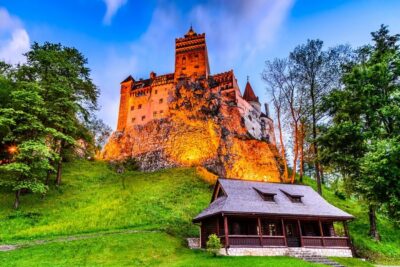
Dracula’s Castle, Peles Castle, & Brasov Old Town
Read our review →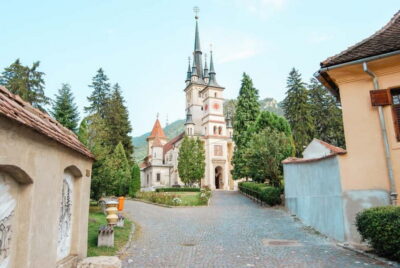
Dracula’s Castle, Peleș Castle & Brașov Day Trip
Read our review →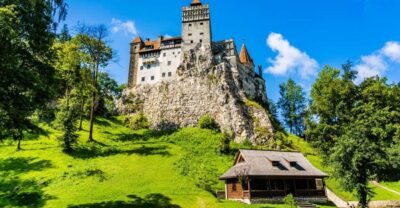
Day Trip to Dracula Castle, Peles Castle & Brașov
Read our review →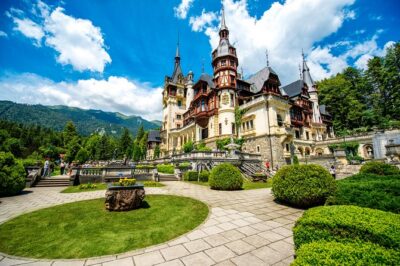
Bucharest to Dracula Castle, Peles Castle and Brasov Guided Tour
Read our review →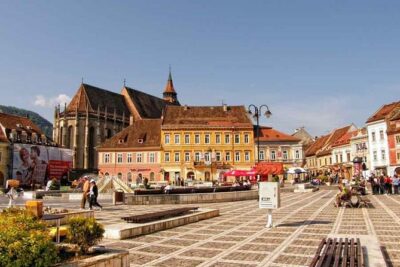
Dracula’s Castle, Peles Castle and Brasov Day Trip from Bucharest
Read our review →
Transylvania and Dracula Castle Full Day Tour from Bucharest
Read our review →
Peles Castle, Bran Castle, & Brasov Old Town Tour
Read our review →Browse the lists this tour appears in