
Reviewed · COMMUNISM & CEAUȘESCU TOURS
8-Hour Private Tour to Bucharest Communism
The most striking part of this tour is the sharp contrast between Ceaușescu’s colossal Palace of Parliament and the modest wooden homes at the National Village Museum. In one day, you move from totalitarian excess to rural traditions, then follow the streets where Romania’s 1989 revolution began.
I like the private car and flexible schedule, since you are not tied to a large group or a fixed pace. I also like the broad historical reach: Revolution Square explains the fall of communism, while Ceaușescu’s former home shows how the ruling family lived behind the official slogans.
The main drawback is the ambitious route. Eight hours is enough to see all six areas, but not to linger everywhere. Admission fees are extra, including about 30 euros per person in total, and traffic can make the day feel tight.
Key points to know before booking
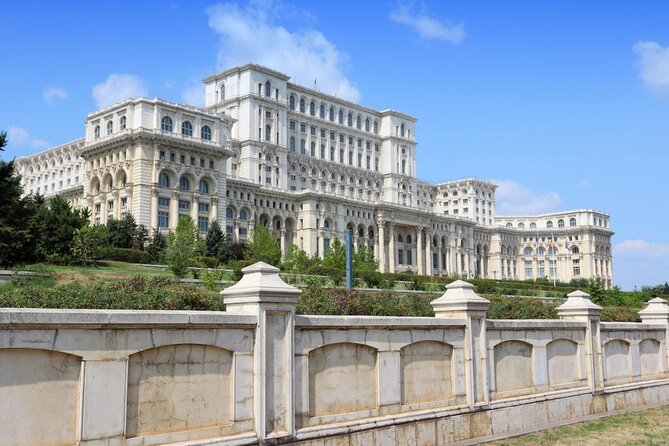
- The Palace of Parliament anchors the day: Allow about two hours for one of Europe’s most imposing political buildings, with admission paid separately.
- Snagov Monastery adds a surprise outside Bucharest: It sits on an island about 40 minutes from the city and is associated with Dracula’s tomb.
- The private format suits families and friends: Only your group participates, and the guide can adjust the route during the day.
- Communist history is shown through places, not just speeches: Revolution Square, the former Communist Party headquarters, and Ceaușescu’s mansion give the subject physical form.
- The day includes more than communism: Calea Victoriei, the Village Museum, and the Romanian Athenaeum broaden the picture of Romania.
- Budget for separate entrance charges: The car, fuel, parking, road tolls, taxes, and guide are included, but food, drinks, and admissions are not.
Why this private Bucharest route works
This is not a narrow tour of communist monuments. It uses communism as the central thread, then places that era beside older Romanian customs, royal architecture, Orthodox faith, and Bucharest’s cultural life.
That matters because Romania’s 20th-century story makes more sense when you see what existed before Ceaușescu and what survived after him. A private guide can connect those pieces as you move through the city instead of leaving you with a row of disconnected photo stops.
You travel in a private tourism car or minibus with an English-speaking licensed guide and driver. Your group has the vehicle to itself, and the schedule can be adjusted after the tour begins. That is useful here, since the Palace of Parliament and Ceaușescu Mansion can take more time than expected, while outdoor stops may be quicker.
Guides named in the available information include Nicolas and Razvan. Nicolas is also associated with a carefully chosen music selection during the drive, a small detail that can make a long day in the car feel more personal.
The price is listed at $266.07 per person. That is not a cheap sightseeing loop, especially once you add the approximately 30 euros per person in entrance fees. Still, the value improves for a small group because you are paying for a private vehicle, a full-day guide, fuel, parking, tolls, and the ability to shape the pace. Group discounts are offered, so check the final price for your party before deciding.
More of the communist years around Bucharest:
- Bucharest: Palace of Parliament Tickets and Guide
★ 4.3 · 3,182 reviews - Bucharest: Palace of Parliament Tickets and Guided Tour
★ 4.4 · 1,877 reviews - Bucharest: Parliament Palace Skip-the-line Ticket
★ 4.2 · 1,518 reviews
The Palace of Parliament and the cost of excess
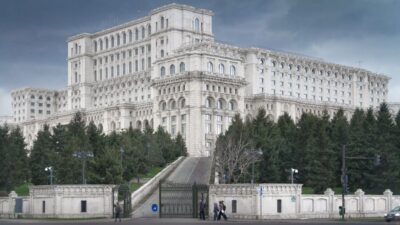
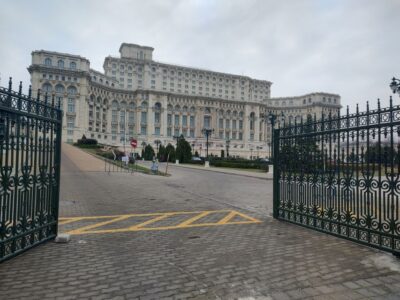
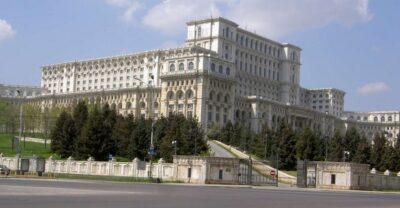
Begin with the building once called the People’s House, now known as the Palace of Parliament. The planned visit lasts about two hours, making it the largest single block of the day.
The building is famous for its scale and for the human cost behind its construction. Under Nicolae Ceaușescu, large sections of central Bucharest were demolished to create a monumental government district. The result is a building designed to project state power on a scale that can feel almost absurd.
That is the point of seeing it with historical explanation. You are not simply admiring grand halls. You are considering how political power, forced priorities, and personal vanity can reshape an entire capital.
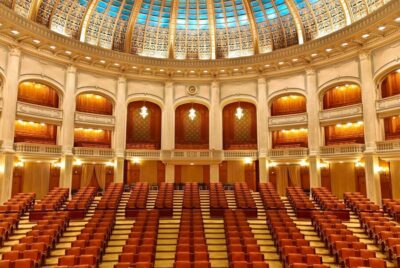
The tour information describes it as the second-largest administrative building in the world after the Pentagon. Whether you find the architecture impressive, oppressive, or both, the interior gives the day its strongest lesson about communist rule.
Admission is not included. The stated entrance cost for the full tour package is about 30 euros per person, but the information does not break down the fee by attraction. Confirm current entry arrangements when booking, since major public buildings may have their own visiting rules.
Allow extra mental space here. Two hours inside a building this large can be tiring, and the route is not the place for a quick ten-minute photo stop. If monumental architecture is not your interest, tell your guide early so the rest of the day can be balanced to suit you.
The National Village Museum and the Romania before communism
The National Village Museum changes the mood completely. Set in Bucharest, it brings traditional houses from different parts of Romania together in an outdoor setting.
You can expect homes made from wood, adobe, stone, and other local materials, along with examples of mills and wooden churches. The value of this stop is not just visual. It gives you a way to picture village life, local building methods, religious customs, and household routines before the communist period transformed much of the country.
This is also where the word ecological has a practical meaning. Traditional communities used local materials and built around the resources available to them. The homes are modest, but their design reflects climate, work, family life, and regional customs.
The museum helps prevent the tour from becoming a one-note account of dictatorship. After seeing the state’s oversized ambitions at Parliament, you see a much smaller scale of life, shaped by craft and local need.
The supplied schedule does not give a precise time for this stop. That is worth checking with the guide, especially if you want enough time to enter buildings rather than simply walk among them. Admission arrangements should also be confirmed because entrance fees are excluded.
Calea Victoriei, where royal and communist Bucharest meet
Calea Victoriei is the city walk and drive that ties several eras together. The planned visit lasts about 45 minutes, with no separate admission charge for the avenue itself.
The most useful way to approach this street is to watch for its contrasts. The Royal Palace represents the monarchy, while the former Central Committee of the Romanian Communist Party and Revolution Square recall the final days of Ceaușescu’s rule.
Along the route, you may see Orthodox churches, museums, theaters, restaurants, casinos, music shops, tea rooms, retail stores, and souvenir shops. The Romanian National History Museum, CEC Palace, and Romanian Athenaeum are among the major landmarks connected with this stretch of Bucharest.
The avenue is valuable because it shows that Bucharest cannot be reduced to communist blocks and government buildings. It has layers of royal, religious, cultural, and commercial life, often within a short distance of one another.
Forty-five minutes is enough for an introduction, not a full architectural tour. I would treat this as a guided orientation rather than free time for shopping or museum visits. If one building catches your attention, the private format gives you a better chance of discussing it or adjusting the pace.
Other private tours around Bucharest:
- Castles of Transylvania: Private Day Trip from Bucharest
★ 4.5 · 248 reviews - Dracula’s Castle, Peles Castle and Brasov – Private Day Trip from Bucharest
★ 5.0 · 211 reviews - Best of Bucharest | Private Walking Tour
★ 5.0 · 199 reviews - Bucharest Panoramic Sightseeing – Private City Tour
★ 5.0 · 128 reviews
Revolution Square and the end of Ceaușescu’s rule
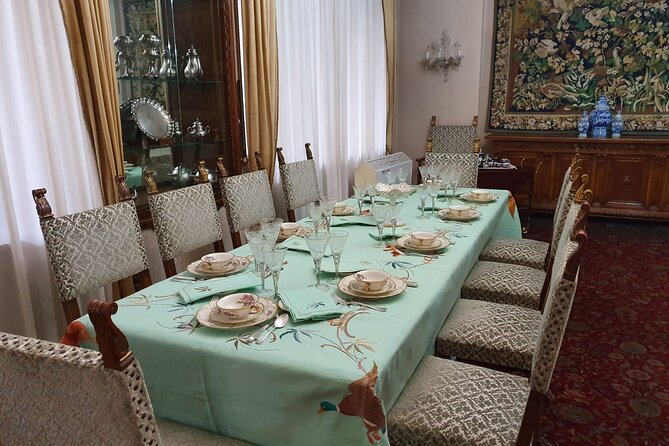
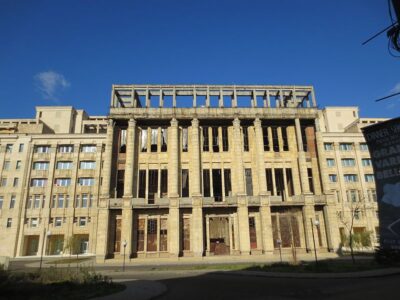
At Revolution Square, the political story becomes personal and immediate. The former headquarters of the Central Committee of the Romanian Communist Party is the key building here.
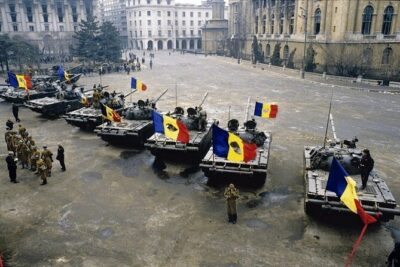
This is where the December 1989 revolution began, leading to the removal of Nicolae Ceaușescu. The tour connects the square with the moment he fled by helicopter, an image that remains central to Romania’s break with communist rule.
The planned stop lasts about 30 minutes and is free to enter because it is an outdoor public area. That short time can work well. The square is best understood through explanation from the guide, followed by a look at the surrounding buildings and memorials.
Do not expect a museum visit at this point. This is a place of political memory, and its power comes from standing where events unfolded. The story includes controversy around Ceaușescu’s fortune, Romania’s security service, and alleged offshore accounts, so ask your guide which points are established fact and which remain disputed.
Snagov Monastery and the Dracula connection
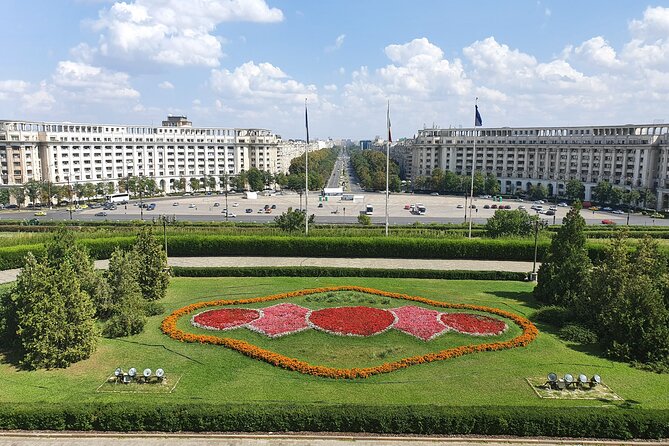
Snagov Monastery is the day’s surprise detour. It is about 40 minutes outside Bucharest, located on an island, and is associated with the tomb of Dracula.
The visit lasts about one hour, with admission not included. The monastery adds a religious and legendary layer to a tour otherwise focused on modern political history.
The Dracula connection should be treated carefully. The site is presented as the tomb of Dracula, but the legend surrounding Vlad the Impaler is part of the attraction. If you are interested in separating medieval history from later storytelling, this is a good place to ask questions rather than accept every detail at face value.
The travel time matters. Snagov is not a quick city-center stop, and the route can feel like a major change of subject after Revolution Square. That is either a strength or a weakness. I like the variety, but anyone seeking a tightly focused communism tour may prefer more time in Bucharest instead.
The island setting also makes this stop feel different from the city streets. Still, the information provided does not promise a particular boat ride or special access, so do not assume those are included. Confirm the exact entry and transport arrangements before you go.
Ceaușescu Mansion and private life behind the slogans
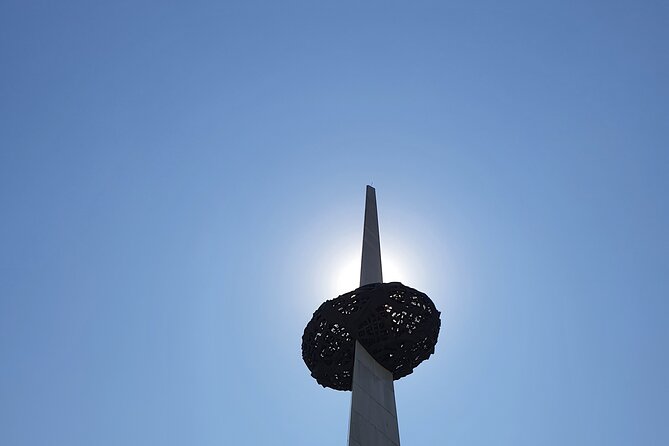
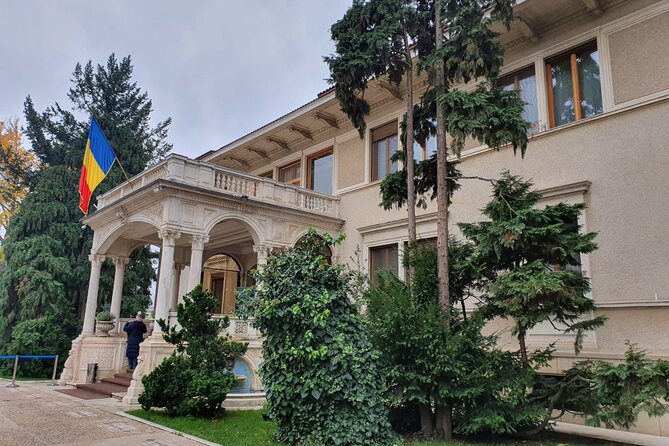
The former Ceaușescu residence is one of the most revealing stops because it brings the ruling family down from the scale of national monuments to the scale of domestic life.
Known as the Ceaușescu Mansion, it was the private home of Nicolae and Elena Ceaușescu and their children, Nicu, Zoia, and Valentin, from 1965 to 1989. The planned visit lasts about 90 minutes.
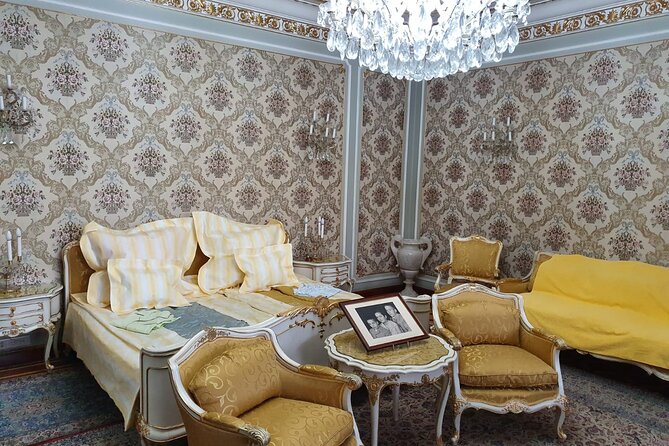
This is where you can consider the gap between public communist ideals and private privilege. The Palace of Parliament shows the regime’s public face. The mansion lets you look at how the ruling family lived away from official ceremonies and speeches.
An hour and a half gives this stop room to breathe, but admission is extra. The available information does not list the rooms or objects included in the visit, so ask what the current route covers. If you want a clearer picture of daily life at the top of the regime, this may be the most useful indoor stop after Parliament.
The mansion also gives the guide a chance to explain the family structure and the roles of Elena, Nicu, Zoia, and Valentin. That personal angle can make the political story easier to understand, though it is worth keeping the wider Romanian experience in view rather than letting the family story dominate everything.
The Romanian Athenaeum and Bucharest’s cultural face
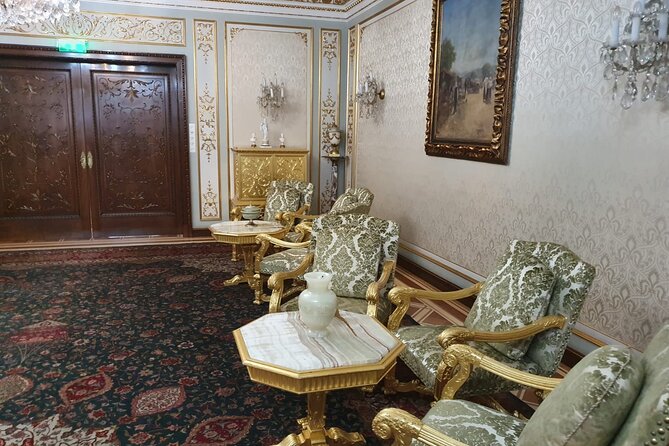
The Romanian Athenaeum is included as another highlight on Calea Victoriei. It is often treated as a symbol of Bucharest and Romanian culture, and it belongs to the European Heritage list of historical landmarks.
The building provides a welcome counterpoint to the Palace of Parliament. Both are important architectural symbols, but they communicate very different ideas. The Athenaeum is linked to music, civic culture, and national identity, while Parliament reflects the scale and control of the communist state.
The information provided does not specify a separate visit length or guarantee interior admission. Think of this as a planned sight and discussion point unless your guide confirms entry. If you have a special interest in concert halls or architecture, ask about the exact access included on your date.
Timing, comfort, and what to budget
The advertised duration is about eight hours. The listed stop times add up to roughly seven hours and 45 minutes before allowing for driving, pickup, traffic, or changes to the route. That tells you the day is full.
Pickup is offered, and transport costs are covered. Since Snagov lies outside Bucharest, the private vehicle is more than a comfort feature. It is what makes this combination of city sights and an island monastery practical in one day.
Food and drinks are not included. Plan for your own meal and refreshments, though the exact meal arrangement is not specified. The private format may allow the guide to adjust the day, but do not assume a restaurant stop unless you arrange it.
Most people can participate, and service animals are allowed. The experience is near public transportation, though the included pickup and private vehicle make public transport less important for the tour itself.
Cancellation is free up to 24 hours before the start time. Inside that window, the amount paid is not refunded, and changes are not accepted. Use the local start time when calculating the deadline.
Who should book this Bucharest tour?
I would choose this tour if you have one full day in Bucharest and want a private guide to connect the city’s communist past with older Romanian culture.
It is a good fit for:
- Families or friends who want their own vehicle
- First-time visitors who prefer a broad city introduction
- People interested in Ceaușescu, the 1989 revolution, and political history
- Visitors who want both urban sights and a short trip beyond Bucharest
- Small groups that can benefit from the listed group discounts
- Anyone who values flexibility more than a slow, single-neighborhood tour
I would hesitate if you want a relaxed day with long museum visits. The route covers a lot, and each major stop has a different subject. Snagov also adds driving time, while admission fees increase the final cost.
Should you book it?
Book this private Bucharest tour if you want the city’s biggest historical questions explained in one day: how traditional Romania looked, how communist power reshaped Bucharest, how the dictatorship ended, and how the Ceaușescu family lived.
The strongest reasons to go are the private transport, the flexible schedule, and the pairing of the Palace of Parliament with Revolution Square and the Ceaușescu Mansion. Add the Village Museum and Romanian Athenaeum, and you get a fuller picture than a communist-monument tour alone.
Before paying, confirm the assigned guide, the current admission costs, the exact pickup point, and how much time will be given to Snagov. If you accept the packed schedule and extra fees, this is a practical way to see a wide range of Bucharest in a single day.
FAQ
How long does the Bucharest private tour last?
The tour lasts approximately eight hours.
What locations are included?
The route includes the Palace of Parliament, the National Village Museum, Calea Victoriei, Revolution Square, Snagov Monastery, Ceaușescu Mansion, and the Romanian Athenaeum.
Is transportation included?
Yes. A private tourism car or minibus is provided for your group, along with fuel, parking, road tolls, and taxes.
Are entrance fees included?
No. Entrance fees are excluded. The stated additional cost is about 30 euros per person.
Is food included?
No. Food and drinks are not included in the tour price.
Is this a group tour?
No. It is a private activity, so only your group participates.
Can I cancel for a full refund?
Yes, if you cancel at least 24 hours before the experience start time. Cancellations made within 24 hours are not refunded, and changes within that period are not accepted.
Just added around Bucharest
- Winery touring & private wine tasting – one day private tour★ 5.0 · 3 reviews
- Village Museum Bucharest Guided Tour★ 5.0 · 6 reviews
- Bucharest: Dealu Mare Winery Private Trip with Wine Tasting★ 4.9 · 6 reviews
- Traditions in Bucharest: Village Museum and Wine Tasting★ 5.0 · 8 reviews
- Transylvania Tour: Dracula’s Castle, Peles Palace & Brasov★ 5.0 · 19 reviews
- Airport Henri Coanda (Otopeni) to Bucharest – Private Transfer – Driver★ 5.0 · 5 reviews
- Gems of Transilvania: Brasov,Sighisoara,Sibiu,Viscri and more★ 5.0 · 6 reviews
- Discover Medieval Transylvania Small Group Tour – 7 days★ 5.0 · 4 reviews
Communism & Ceaușescu Tours, compared.
Parliament Senate Entry Tickets and Guided Tour
Read our review →
Bucharest Essential Tour: Old Town, Calea Victoriei & Communism
Read our review →Browse the lists this tour appears in