
Reviewed · TRANSYLVANIA DAY TRIPS
6 Days Transylvania and Bukovina Small Group Tour from Bucharest
Romania’s best sights are spread far beyond Bucharest, and this tour links them by road in one ambitious loop. You’ll pass from Wallachian monasteries to Saxon towns, painted churches, Carpathian gorges, Bran Castle, and the royal rooms of Peles. The small maximum of seven people is a real plus, especially when your guide is also handling the driving.
I like the mix of famous stops and less obvious places such as Marginea’s black pottery workshop and Cozia Monastery. I also like the historical range: Hungarian, Saxon, Romanian, Orthodox, Catholic, and Protestant influences all appear along the way. The main drawback is the pace. Six days cover a great deal of ground, and entrance fees, lunches, and the single-room supplement cost extra.
Key points to know before booking
- A six-day route with a big reach: You cover Sibiu, Sighisoara, Bucovina, Brasov, Bran, Sinaia, and Bucharest in one road trip.
- Maximum seven people: The minivan or small coach setting should feel more personal than a large bus tour.
- Guide-driver George: The guide is named George, and his enthusiastic storytelling about Romania has been singled out as a highlight.
- Five breakfasts included: Hotels, transport, and the licensed guide-driver are covered, but entrance tickets and most meals are not.
- Painted monasteries are the artistic centerpiece: Moldovita, Sucevita, and Voronet provide the strongest reason to make the long trip north.
- Pack proper clothing: Churches and selected museums require covered knees and shoulders, with no shorts or sleeveless tops.
A six-day route through Romania’s biggest contrasts
The pleasure of this tour is its variety. You are not spending six days looking at one kind of monument. The route moves from medieval city squares to mountain roads, from royal palaces to working craft shops, and from Dracula folklore to serious religious art.
The schedule also explains the need for a guide. Romania’s regions have layered identities, and a good guide can connect the architecture, politics, faiths, and legends as you go. George is the named guide associated with this experience, and the available feedback describes him as proud of Romania, highly prepared, and especially enthusiastic when explaining the country.
There is one practical point to clear up before paying. The experience is titled as a six-day tour, and the detailed schedule also runs from Day 1 through Day 6. One general description refers to eight days. I would confirm the exact duration and hotel nights with Trip2Ro before booking, particularly if you are coordinating flights.
Other days across Transylvania from Bucharest:
- Transylvania and Dracula Castle Full Day Tour from Bucharest
★ 4.5 · 1,589 reviews - Castles of Transylvania: Private Day Trip from Bucharest
★ 4.5 · 248 reviews - 2-Day Medieval Transylvania with Brasov,Sibiu and Sighisoara Tour from Bucharest
★ 4.5 · 145 reviews
Day 1: Cozia Monastery and medieval Sibiu
The first morning begins at 8:00 a.m. from Bucharest, heading toward the Olt Valley. Cozia Monastery provides an early taste of Wallachian history. Founded in the fourteenth century by Mircea the Old, the monastery was later restored by the Cantacuzino family. Its facade includes Armenian decorative details, while the interior contains frescoes.
The stop is scheduled for about 30 minutes, so expect an introduction rather than a long, quiet visit. You will need to move efficiently, but that short pause breaks up the first drive and gives the route a strong historical opening.
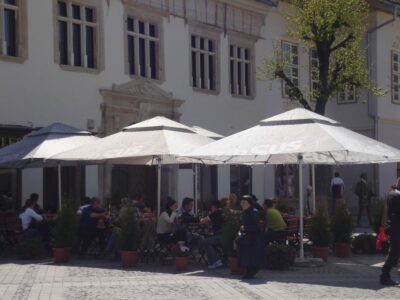
Sibiu receives about three hours, enough to walk through its main squares and get a feel for the old center. The Big Square, Small Square, and Huet Square create the city’s medieval core, with towers, remnants of fortifications, museums, and the famous houses with eye-shaped roof windows.
Sibiu’s value is not only visual. The city reflects the long coexistence of Romanians and Saxons, with Catholic, Orthodox, and Protestant buildings showing how different communities shaped the same town. You will also see one of Transylvania’s major Gothic evangelical churches.
Sibiu was European Capital of Culture in 2007 and hosts a large theater festival. Those details matter because the city feels like more than a preserved old town. It is a living cultural center, though three hours will give you an overview rather than time for every museum.
Day 2: Sighisoara, Targu Mures, and Bistrita
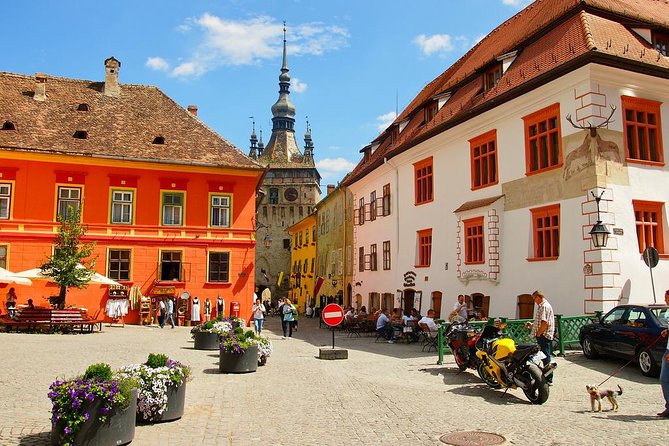
Sighisoara is one of the route’s strongest stops. Its historic center has UNESCO status and remains inhabited, which gives the citadel more life than a purely restored monument. The Clock Tower is the obvious landmark, but you will also see the Church on the Hill, the covered schoolchildren’s staircase, the Shoemakers’ Tower, and the Catholic church connected with the town’s Hungarian community.
The visit lasts about two hours. That should be enough for a guided walk, photographs, and a quick look around, but the steep staircase may be tiring for some people. Lunch at the house associated with Vlad the Impaler’s birth is optional and not included. It is a clear example of the Dracula connection: historically grounded in Vlad’s name, but presented with a strong dose of tourism.
Targu Mures follows with a short 30-minute visit. The Palace of Culture is the key sight, and the city’s architecture reflects its Hungarian cultural influence. This is a brief orientation stop, not a full museum visit, so treat it as a chance to see the main square and hear how the region’s communities shaped its buildings.
Bistrita receives about an hour for a walking tour. The Lutheran church is the main monument, combining fourteenth-century Gothic origins with Renaissance changes made in the sixteenth century. This stop adds another piece to the Saxon and Protestant story of Transylvania.
Day 2 is busy, with three towns in one day. I like the range, but you should not expect long, unstructured time in any of them. The tradeoff is that you see far more of northern Transylvania than you could comfortably cover by public transport.
Day 3: Bucovina’s painted monasteries
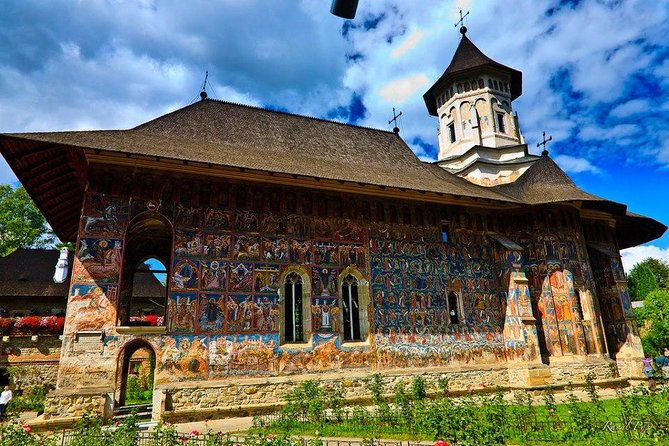
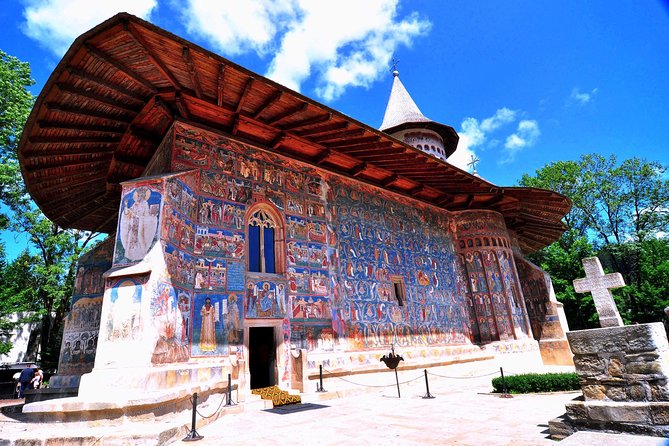
Day 3 is the artistic high point. Moldovita and Sucevita monasteries show the distinctive Moldavian style, where Gothic and Byzantine elements meet. Both were founded by important ruling families, and both are known for religious frescoes on their interiors and exteriors.
You get about an hour at each monastery. That is enough to study the main walls and listen to the story behind the paintings, but you may wish for more time if religious art is a major interest. Entrance fees are not included, and the churches require suitable clothing.
Sucevita is especially notable for the frescoes on its northern wall. Protective walls helped preserve them, while at other sites weather and exposure have caused more damage. Small details like this are exactly where a guide earns his keep, since the paintings can look decorative until you understand their subjects and survival.
At Marginea, the focus changes from old religious art to living craft. Local artisans make the area’s famous black pottery, and you can enter a workshop to see the stages of production. Painted eggs and other traditional objects are also available to buy.
The stop is only about 15 minutes, so do not count on a long demonstration or a leisurely shopping session. Still, it breaks up the monastery visits and gives you contact with a craft tradition rather than another formal monument.
Voronet completes the day. Founded by Stephen the Great, it is widely known for its striking blue fresco color and is often called the Sistine Chapel of the Carpathians. The comparison is catchy, but the real reason to visit is the combination of vivid exterior painting and the monastery’s place in Moldavian religious culture.
You will have around an hour there. Bring patience for the pace and modest clothes for the church visits. Also remember that the three monastery entrance fees are extra, so carry a payment method accepted locally.
Other six-day trips from Bucharest:
- 6 Days Private Tour in Romania Spectacular Places from Bucharest
★ 5.0 · 9 reviews - Private 6-Day Dracula Tour in Transylvania from Bucharest
★ 5.0 · 4 reviews - Transylvania & Bucovina Private Tour – 6 days
★ 5.0 · 3 reviews
Day 4: Bicaz Gorges, Red Lake, and the Carpathian road
Day 4 is the most scenic driving day. There is a short stop in Piatra Neamt, a mountain resort town with a fifteenth-century citadel linked to Stephen the Great and an eighteenth-century synagogue. With only 15 minutes scheduled, you should see this as a quick pause rather than a complete visit.
The road then reaches the Bicaz Gorges, where cliffs press close to the route and a stream runs alongside the road. The gorge is experienced from the vehicle and short stopping points, not through a long hike. A market along the road sells local handicrafts and souvenirs, which adds a commercial note to an otherwise dramatic natural setting.
Red Lake brings a different kind of mountain story. It formed after a landslide blocked a valley, leaving tree trunks visible in the water. The lake’s name and appearance have inspired local legends, and your guide will explain those stories during the one-hour stop.
After Red Lake, the route continues toward Miercurea Ciuc through the Carpathians. The area is known for low temperatures and is sometimes called the Siberia of Romania. This is a day for scenery and storytelling, but the long road time may feel tiring if you prefer slow travel.
Day 5: Brasov and the Dracula connection
Brasov is one of the most appealing city visits on the route. Its old center combines German-influenced architecture with Gothic, Baroque, and Renaissance details. The town was once fortified and grew as a cultural and commercial center, so the streets offer more than a single monument.
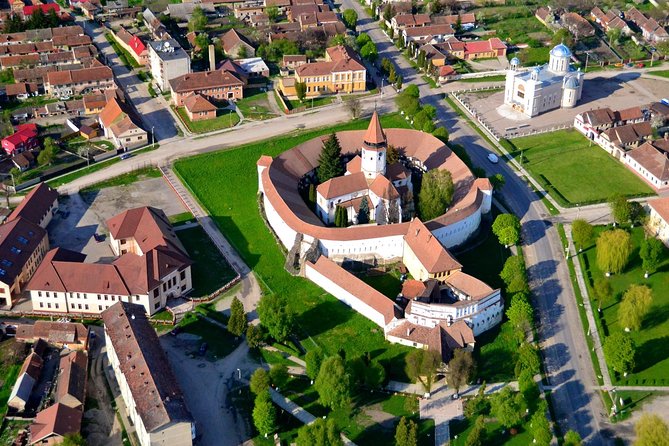
The tour includes the old Schei district, historically associated with the Romanian population of Brasov, along with Catherine’s Gate and Schei Gate. You will also visit the First Romanian School and the Black Church, the city’s major Gothic landmark.
The stop lasts about two hours, which works well for a guided introduction. It is not enough for every museum, side street, and viewpoint, so decide in advance if you want to focus on architecture, religious history, or the city’s medieval defenses.
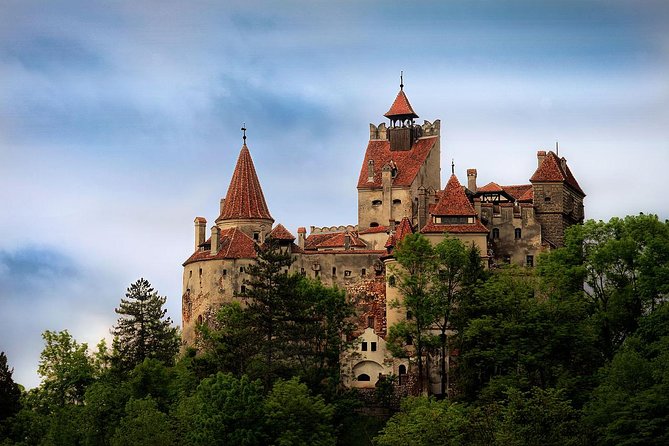
Bran Castle follows with another two-hour visit. Its popular name, Dracula’s Castle, brings crowds and fantasy, but its original purpose was defensive. Bran sat near the former border between Wallachia and Transylvania, and Brasov’s inhabitants had a practical reason to maintain a stronghold there.
The castle is worth seeing, but keep your expectations in check. The Dracula link is part of the attraction, while the building’s real historical role is more complicated. You will get more from the visit if you treat the legend as an entry point and pay attention to the border, trade, and defense story.
The day ends with arrival in Sinaia late in the evening. That late finish is one of the tour’s harder stretches, especially after a full Brasov and Bran program. The benefit is that Peles Castle is ready for the next morning rather than requiring another long detour from Bucharest.
Day 6: Peles Castle and Bucharest’s landmarks
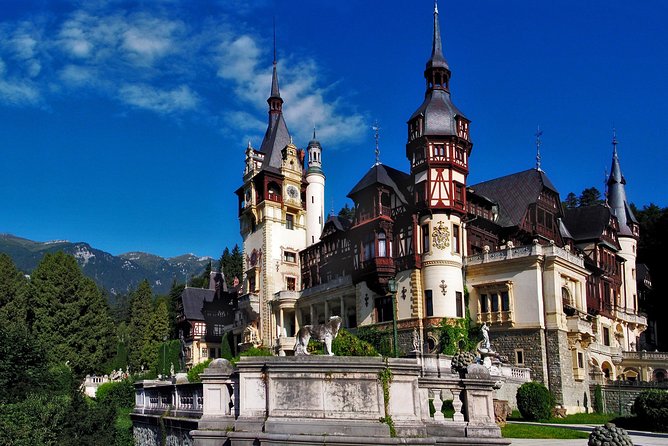
Peles Castle was the summer residence of Romania’s first king, Carol I of Hohenzollern. Built between the nineteenth and twentieth centuries, it was designed by a Czech architect and was considered highly modern for its time.
The castle’s appeal lies in its changing interiors. Rooms are arranged in different styles, including a Florentine room with a Renaissance feel. You receive about two hours, which gives you time to appreciate the rooms without rushing through the whole visit.
Entrance is not included, so budget for the castle ticket. The exact admission cost is not provided, and it is sensible to confirm current fees before departure.
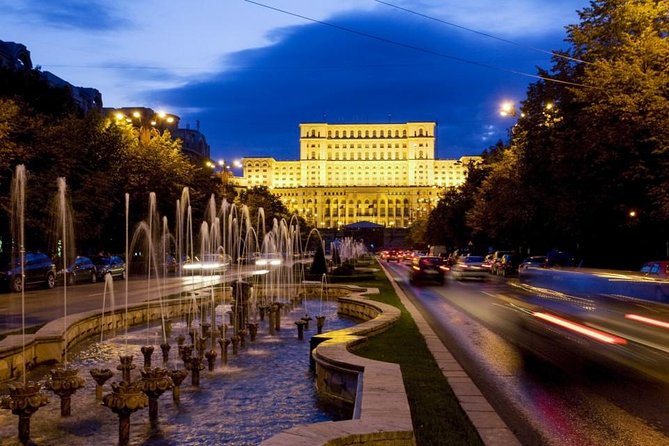
The route then returns to Bucharest for a panoramic city tour. You will see the Triumph Arch, the Romanian Athenaeum, Revolution Square, and the Parliament Palace from the outside or during a panoramic pass, depending on the guide’s arrangements. After five days of regional towns and mountain roads, this final city overview gives you a useful frame for Romania’s capital.
What the $1,163.56 price really covers
At $1,163.56 per person, the tour is not a budget bus ride, but the price includes several costly elements: five nights of 3- or 4-star accommodation, transport for six days, a licensed guide-driver, and five breakfasts.
The small group matters here. With a maximum of seven people, you should have a better chance to hear explanations, ask questions, and manage short stops without the delays of a large coach. It also means the guide is doing two jobs, so the quality of the experience depends heavily on the individual guide. George is the named guide, and his energy and pride in Romania are important positives.
You still need money for monastery, castle, museum, and church entrance fees, along with lunches and dinners. A single room costs an additional 120 euros, payable locally by cash or card. If you are traveling alone, include that supplement in your real budget.
The value is strongest if you want transport and hotels arranged while covering many regions. It is weaker if you prefer to spend two or three days in one town, choose your own restaurants, or skip paid attractions.
Who should book this tour
I would choose this trip if you have limited time in Romania and want a wide introduction to the country beyond Bucharest. It suits you if you enjoy medieval towns, religious art, castles, folklore, and long scenic drives.
It is also a good fit if you prefer not to rent a car or work out rural transport between Bucovina, the Carpathians, and southern Transylvania. The guide-driver structure removes much of that planning burden.
You should think twice if you dislike early starts, late arrivals, or frequent hotel changes. The schedule is full, and several stops are short. People with limited mobility should also ask about walking surfaces, stairs, and the schoolchildren’s staircase in Sighisoara before booking.
The dress code is firm at places of worship and selected museums. Both men and women must cover shoulders and knees, with no shorts or sleeveless tops. Pack a light layer or scarf so you are ready at every monastery.
The experience is non-refundable and cannot be changed after booking. If bad weather causes cancellation, or if the minimum of two participants is not reached, you are offered another date or experience, or a full refund. Confirmation is provided at booking, and pickup is offered.
Should you book the Transylvania and Bukovina tour?
Book it if your priority is seeing a large portion of Romania in a short, organized trip. The painted monasteries, Sighisoara, Sibiu, Brasov, and Peles Castle give the route real substance, while the gorges, pottery, and village-region stops keep it from becoming a simple castle checklist.
I would be especially comfortable booking it for a couple or small group that values a guide’s stories and does not mind a brisk pace. The maximum of seven is attractive, and George’s reported enthusiasm gives the tour a human center.
Skip it if you want deep time in each city or a flexible food-and-museum schedule. Before paying, confirm the six-day duration, ask for the current entrance-fee total, and decide if the single-room supplement affects the budget. For the right kind of visitor, this is a practical way to meet Romania’s history, art, mountains, and legends in one well-packed trip.
FAQ
How long is the tour?
The detailed schedule runs for six days, beginning at 8:00 a.m. on Day 1 and ending in Bucharest on Day 6. One general description refers to eight days, so confirm the exact duration with Trip2Ro before booking.
Where does the tour start?
The tour starts in Bucharest, with pickup offered. The listed start time is 8:00 a.m.
What is the maximum group size?
The tour has a maximum of seven travelers.
What accommodation is included?
Accommodation is provided in 3- and 4-star hotels.
Are meals included?
Five breakfasts are included. Entrance fees, tips, and the single-room supplement are not included. Lunch and dinner costs should be planned separately.
Is a tour guide included?
Yes. A professional licensed tour guide also serves as the driver. The named guide associated with the experience is George.
Are entrance fees included?
No. Entrance fees for places such as the monasteries, Bran Castle, Brasov attractions, and Peles Castle are not included.
Is there a single-room supplement?
Yes. A single room costs an additional 120 euros, payable locally by cash or credit card.
What happens if the tour is canceled?
If poor weather causes cancellation, or if the minimum of two participants is not reached, you are offered a different date or experience, or a full refund. If you cancel or request an amendment yourself, the experience is non-refundable and cannot be changed.
Just added around Bucharest
- Winery touring & private wine tasting – one day private tour★ 5.0 · 3 reviews
- Village Museum Bucharest Guided Tour★ 5.0 · 6 reviews
- Bucharest: Dealu Mare Winery Private Trip with Wine Tasting★ 4.9 · 6 reviews
- Traditions in Bucharest: Village Museum and Wine Tasting★ 5.0 · 8 reviews
- Transylvania Tour: Dracula’s Castle, Peles Palace & Brasov★ 5.0 · 19 reviews
- Airport Henri Coanda (Otopeni) to Bucharest – Private Transfer – Driver★ 5.0 · 5 reviews
- Gems of Transilvania: Brasov,Sighisoara,Sibiu,Viscri and more★ 5.0 · 6 reviews
- Discover Medieval Transylvania Small Group Tour – 7 days★ 5.0 · 4 reviews
Transylvania Day Trips, compared.
Transylvania and Dracula Castle Full Day Tour from Bucharest
Read our review →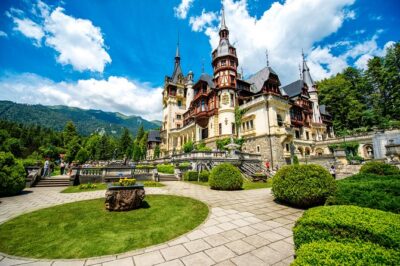
2-Day Medieval Transylvania with Brasov,Sibiu and Sighisoara Tour from Bucharest
Read our review →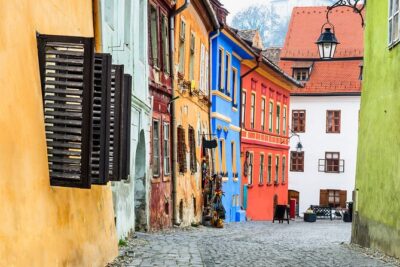
SB01 – City Tour Sibiu: Exploring the Heart of Transylvania
Read our review →
Day trips and excursions in nature, cities in Transylvania, Brasov!
Read our review →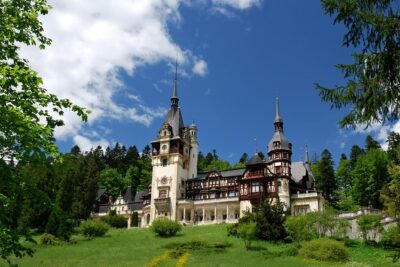
2-Day Transylvania from Bucharest: Brasov, Bran, Sighisoara
Read our review →
4-Day Private Tour in Transylvania from Bucharest
Read our review →Browse the lists this tour appears in