
Reviewed · TRANSYLVANIA DAY TRIPS
11-Day Romania Tour from Bucharest with Transylvania & Bucovina
Romania packs a surprising amount into this 11-day journey. You move from Bucharest’s grand Communist-era buildings to Transylvania’s fortified towns, then cross the Carpathians for Bucovina’s painted monasteries and Maramures’ wooden churches. The route is ambitious, but it reaches places most short Romania trips skip.
I like the private format, since your guide can explain local history without forcing your group into a fixed public schedule. I also like the balance of famous sights and quieter ones, especially the painted eggs workshop, village churches, and the Mocanita steam railway.
The main consideration is the amount of time spent on the road. This is a broad national circuit, not a slow stay in one region. Some days include several short visits, and admission fees, lunches, dinners, and souvenirs are extra.
What makes this Romania route worth considering
- Bucharest begins the trip with three very different sights: the Palace of Parliament, the Village Museum, and the Old Town.
- Transylvania gets more than a Dracula stop: you see Brasov, Sighisoara, Biertan, Sibiu, Bran, and Rasnov.
- Bucovina’s painted monasteries are a major highlight, including Voronet’s famous blue exterior fresco.
- Maramures feels distinctly rural, with wooden churches, Barsana Monastery, Merry Cemetery, and a steam train ride.
- The tour is private and includes transport, breakfasts, accommodation, and airport transfers, which removes much of the trip planning.
- The $2,367.30 price reflects a full-service circuit, but you should budget separately for many entrance tickets and most meals.
Bucharest begins with Communist grandeur and village life
Your first day sets up the contrasts that make Romania interesting. At the Palace of Parliament, you’ll walk through the huge administrative building commissioned by Nicolae Ceausescu. Marble, gold leaf, stained glass, oak paneling, mosaics, chandeliers, and thick carpets fill its grand rooms.
The building is physically impressive, but the story behind it matters just as much. It was created under a Communist regime that demolished large parts of Bucharest to make room for monumental government projects. Your guide can help connect the polished interiors with the political period that shaped modern Romania.
The Palace visit lasts about 90 minutes, and admission is not included. Bring your passport, since a current valid passport is required for the tour day and may be relevant at major sights.
Next comes the Dimitrie Gusti National Village Museum beside Lake Herastrau. This open-air museum presents around 50 traditional buildings from across Romania, including homes and other rural structures. It is a useful counterpoint to the Palace: instead of one oversized symbol of state power, you see the scale and craft of ordinary village life.
The final Bucharest stop is the Lipscani Old Town. The walking tour covers the historic center, where older streets and buildings now mix with restaurants, shops, and renovated facades. It is a good first look at the capital, though the area has a more urban, social feel than the quiet villages later in the trip.
Other monasteries and painted churches from Bucharest:
- Princely Court of Târgoviște and Curtea de Argeș Monastery
★ 4.5 · 50 reviews - Small Group Tour to Mogosoaia Palace & Snagov Monastery
★ 4.4 · 41 reviews - Sacred Monasteries Private Tour: Snagov, Țigănești & Căldărușani
★ 5.0 · 32 reviews
Sinaia and Brasov bring the Carpathians into view
Day two heads north toward Sinaia and Brasov. At the Sinaia Monastery, you get a short introduction to Orthodox religious architecture and to the mountain resort that grew around the site. The stop lasts only about 20 minutes, so think of it as a brief visit rather than a full religious tour.
Peles Castle gets much more time. Built in a German Renaissance style and set against the Carpathian Mountains, it is one of Romania’s most polished royal sights. Inside, you’ll see carved wood, ornate rooms, and decorative details that feel very different from the medieval fortresses later in the trip.
Admission is not included, and opening arrangements can affect the visit. Your private guide is useful here because the castle is not simply a photo stop. The royal setting, architecture, and mountain location explain why Sinaia became such an important resort.
In Brasov, allow yourself to enjoy the streets rather than treating the city as a checklist. The historic center includes Council Square, the Black Church, Ecaterina’s Gate, the White Tower, the Black Tower, and remnants of the old citadel.
The two-hour walking tour gives you enough time to see the major sights, but not enough for a full museum visit or an unhurried exploration of every lane. The city’s Gothic, Baroque, and Renaissance buildings make it one of the most rewarding urban stops on the route.
Bran and Rasnov show the real story behind Dracula
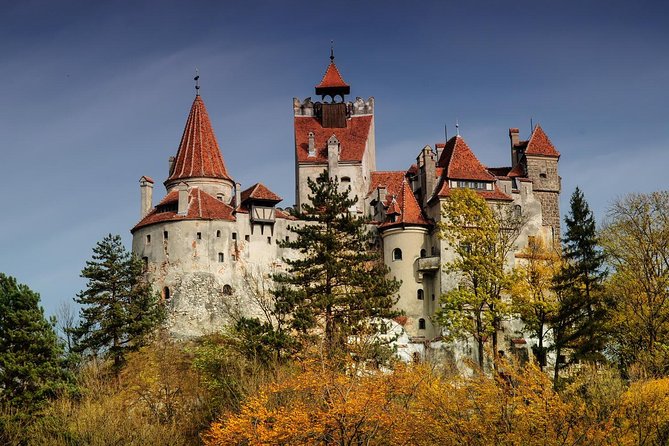
Bran Castle is the tour’s most famous stop, but the Dracula connection needs some care. Bram Stoker’s fictional Dracula is linked in popular culture to Vlad the Impaler, while Vlad was a 15th-century ruler remembered in Romania for resisting the Ottoman Empire and enforcing his rule with brutal methods.
The castle itself is a medieval building dating from the 14th century. It is atmospheric, photogenic, and popular, but it is not a direct record of the fictional vampire. I recommend paying attention to the fortress’s actual role and architecture instead of expecting a Dracula theme park.
You’ll have about two hours at Bran, with admission extra. That gives you time to explore the rooms and grounds, though busy conditions can affect the pace.
Rasnov Citadel provides a different kind of fortress experience. Built to protect local people and villages from invasion, it was a refuge where residents could bring their cattle during wartime. Its position above the town offers broad views, and the site helps explain how medieval communities survived in this region.
The Rasnov stop is scheduled for about an hour. Ask your guide about current access arrangements, since fortress access and nearby transport can change. The tour description specifically includes the garden and panoramic view, so the visit may be more about the setting than a long indoor examination.
Biertan and Sighisoara preserve Saxon Transylvania
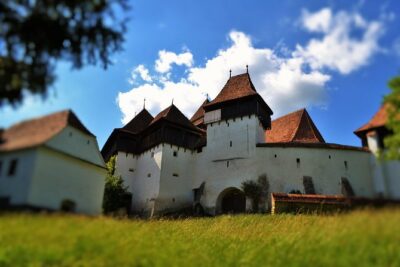
Day four moves into the fortified villages and towns of Transylvania. Biertan’s fortified church is one of the route’s strongest history stops. Its church and defensive walls preserve the architecture of the Transylvanian Saxons, German-speaking settlers who shaped many towns in the region.
The church complex is listed by UNESCO, and the surrounding village deserves attention too. Take the suggested stroll after the church visit. The quiet streets give you a better feel for the settlement than a quick photo from the vehicle.
Sighisoara is more substantial. Its fortified medieval center includes the Clock Tower and History Museum, the Church on the Hill, the covered Schoolchildren’s Stairway, Central Square, and the house associated with Dracula lore. The two-hour visit allows a useful walking tour, although admission to some attractions is not included.
The town is charming, but its steep streets and stairways require comfortable shoes. The covered staircase is especially memorable, and the Clock Tower gives the old town a clear visual center. Sighisoara is one of the places where you should resist rushing to the next stop.
Other days across Transylvania from Bucharest:
- Transylvania and Dracula Castle Full Day Tour from Bucharest
★ 4.5 · 1,589 reviews - Castles of Transylvania: Private Day Trip from Bucharest
★ 4.5 · 248 reviews - 2-Day Medieval Transylvania with Brasov,Sibiu and Sighisoara Tour from Bucharest
★ 4.5 · 145 reviews - 2-Day Transylvania from Bucharest: Brasov, Bran, Sighisoara
★ 5.0 · 60 reviews
Crossing the mountains into Bucovina
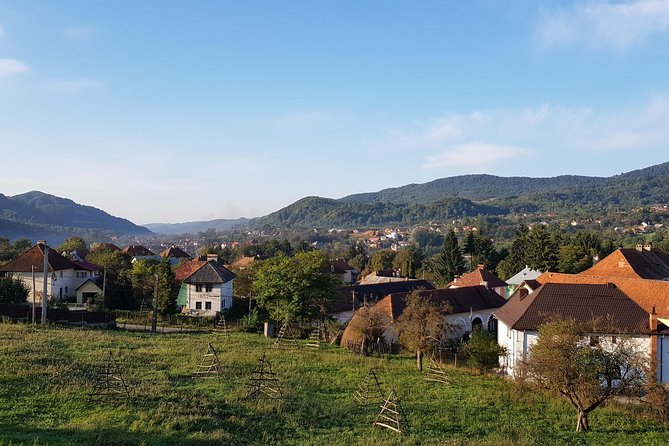
Day five is one of the route’s more scenic travel days. The road through Bicaz Gorge cuts between tall limestone cliffs and twists through the Hasmas Mountain National Park. The scheduled stop is only about 15 minutes, so you’ll mainly get a photo break rather than a hike.
Red Lake gives you more time to pause. The lake formed as a natural storage basin, and tree stumps rise from the water, creating an unusual, slightly eerie scene. You have about an hour here, including time for lunch with a lake view and a short walk.
Lunch is not included, so this is one of many days when you’ll pay locally for food. Feeding ducklings is mentioned as an option, but use common sense and follow local guidance about what is safe for wildlife.
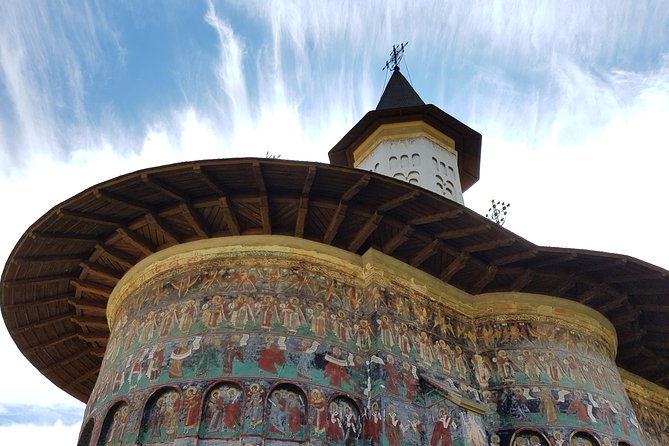
Voronet Monastery is the first of Bucovina’s painted churches. Its exterior frescoes show religious scenes, saints, angels, demons, heaven, and hell. The blue pigment on the Last Judgment fresco is the feature that gives Voronet its international reputation.
The visit lasts about 40 minutes, with admission extra. That is enough to see the church and hear the main explanation, but art lovers may want more time than the schedule allows. Look closely at the outside walls, since the exterior painting is the point of the visit.
Bucovina’s monasteries reward close attention
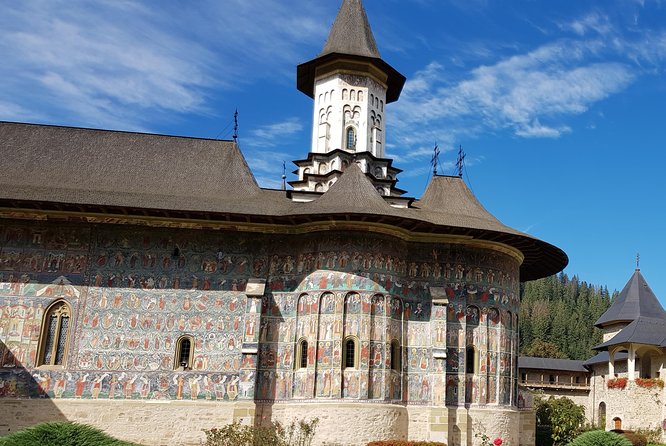
Day six brings a concentrated series of religious and craft stops. Humor, Sucevita, and Moldovita are all painted monasteries associated with the UNESCO-listed Bucovina tradition. Each visit lasts about 30 minutes, so your guide’s explanations will help you understand the scenes before you move on.
The paintings were designed to communicate religious stories to communities in which many people could not read. Their colors, figures, and scenes make the churches visually striking, but the real interest comes from seeing how art, worship, and local identity work together.
Marginea adds a hands-on local tradition. The village is known for black pottery, a craft with roots dating back to around 1500. You can see the regional style and buy a piece if you want a practical souvenir. This is a better shopping stop than a generic gift store because the object has a clear connection to the area.
The Painted Eggs Museum, created by Letitia Orsivschi, is another unusual stop. Its collection includes more than 3,000 decorated eggs, including eggs from birds and animals ranging from emu and ostrich to tiny partridge and sparrow eggs.
You can see the workshop and learn about Bucovina’s symbols and patterns. Admission is not included. The stop adds variety after several churches and gives you a direct look at a living craft tradition rather than only historic buildings.
Maramures keeps rural traditions close at hand
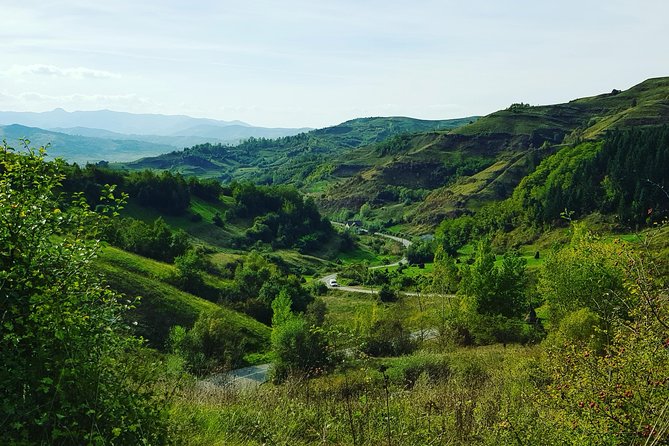
The journey to Maramures is long, but the change in scenery and culture makes it worthwhile. The region is known for villages, pastures, meadows, traditional gates, and a rural way of life that has survived more visibly than in many other parts of Europe.
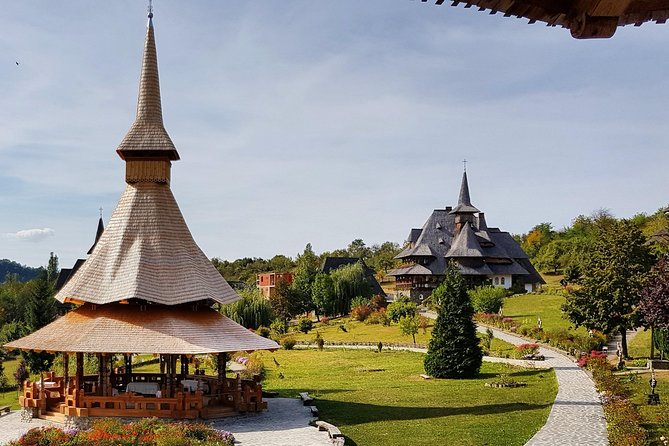
The wooden churches are the main draw. Barsana Monastery includes a striking two-level wooden church, while Rozavlea and Ieud offer further examples of the region’s timber architecture. Ieud Deal is described as the oldest of the wooden churches on the route, dating to the 14th century.
These churches are not interchangeable. Give your guide time to explain the building methods, local customs, and religious purpose of each one. Some admission fees are extra, while the Barsana and Ieud stops include free entry according to the schedule.
This day includes several short visits, so you will spend plenty of time in the vehicle. That is the tradeoff for reaching Maramures in a single circuit. If your priority is rural Romania rather than city museums, the long transfer pays off.
The Mocanita train and Merry Cemetery add character
The Mocanita steam train is one of the tour’s most distinctive experiences. It runs from Viseu de Sus along a narrow-gauge railway through the mountain valleys, covering about 30 miles. The line was built for logging access, and the train still feels tied to that working purpose rather than designed only for sightseeing.
The journey takes about three hours, and the train may stop for firewood, water, or railway operations. You’ll see settlements that are otherwise reached only on foot or by rail. Admission is not included, so confirm the current train arrangements and cost when planning your budget.
Sapanta’s Merry Cemetery is another memorable stop. Brightly painted wooden crosses show scenes from the lives of the dead, along with humorous verses that include both virtues and faults. The place presents death with a directness and warmth that differs from the solemn cemetery style many visitors know.
The nearby Sapanta-Peri Monastery includes one of the tallest wooden churches in the world. The complex is set in a dendrology park and remains an active monastic site. Together, the cemetery and monastery show two different sides of Maramures spirituality.
Cluj and Sibiu bring the route back to grand cities
Cluj-Napoca provides a short urban pause after Maramures. The tour covers Union Square, St. Michael’s Church, the Opera House, the historic center, and the Orthodox Cathedral. The 90-minute visit is best treated as an orientation walk.
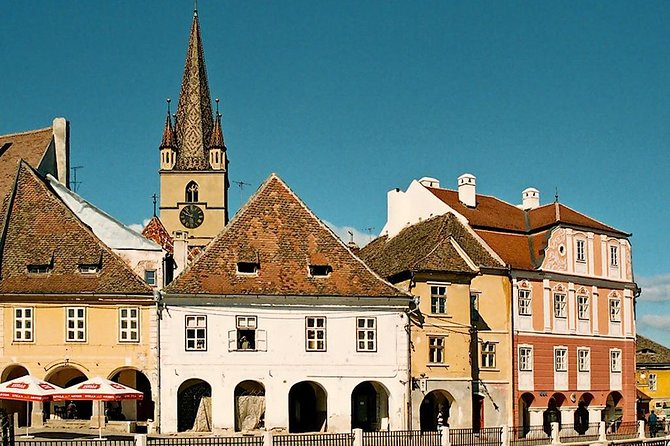
Sibiu gets a similar amount of time. Its Great Square, Little Square, medieval walls, Bridge of Lies, Stairs Passage, churches, and old guild buildings make it one of Romania’s most attractive historic cities.
The German influence is clear in both Sibiu and Sighisoara, but the two cities feel different. Sibiu has broader squares and a more civic, trading-town character. If you want to visit the Brukenthal Museum or linger in shops, you may need to use free time carefully because the scheduled city tour is limited.
Curtea de Arges closes the loop toward Bucharest
Curtea de Arges is associated with the former Wallachian capital and sits along the Arges River below the Carpathians. The walking tour includes the Princely Church, Old Court ruins, the Episcopal Church, and the painted Olari Church.
This final sightseeing day is less famous than Bran or Peles, but it helps connect the regions visited earlier. You see Wallachian religious architecture after spending time with Transylvanian and Bucovinian traditions.
Day eleven is set aside for the transfer to Bucharest’s Otopeni Airport. The airport ride is listed at about 30 minutes, but your departure time should be checked carefully with the operator because the tour’s daily start time is 9 a.m. and flight schedules vary.
What the $2,367.30 price really covers
At $2,367.30 per person, this is not a budget trip. The price makes more sense if you value a private vehicle, an English-speaking licensed guide and driver, ten nights of accommodation, ten breakfasts, airport transfers, and support throughout a long national route.
You are also paying to avoid arranging several one-way hotel stays, regional transfers, and complicated connections to Bucovina and Maramures. A private guide can explain the sites in context and adjust the pace within the limits of the schedule.
The price does not cover food and drinks, souvenirs, or many entrance tickets. Palace of Parliament, Peles Castle, Bran Castle, Rasnov, the painted monasteries, the egg museum, the wooden churches, and the Mocanita train may all require extra payment according to the individual stop details.
Hotels can change based on availability, with a similar replacement provided if needed. That is normal for a long multi-city route, but ask about the planned hotels if room location, style, or facilities matter to you.
Who should book this private Romania tour?
I would choose this tour if you want to see a large portion of Romania in one trip and prefer having the transport and route handled for you. It suits families and small groups that value privacy, airport pickup, and a guide who can explain the country as you move through it.
It is also a strong fit if you care more about cultural variety than long stays in one city. You’ll see royal architecture, Communist history, medieval fortresses, Orthodox monasteries, folk crafts, rural churches, and a working steam railway.
I would hesitate if you dislike long drives, short stops, or frequent hotel changes. The schedule is full, and the country is large. You will not have unlimited time for museums, meals, shopping, or independent wandering.
Past guides connected with this operator include Chris, Christian, Gabriel, and Gabriel Florea. Since guide assignments can vary, you can ask at booking who is available for your dates. The strongest praise attached to this operator focuses on careful organization, flexible planning, and guides who explain Romanian history with personal attention.
The cancellation terms are fairly clear: a full refund is available if you cancel at least three full days before the start time. Changes or cancellations inside that window are not accepted or refunded.
Should you book it?
Book this tour if you want the broadest practical introduction to Romania without building the route yourself. The best parts are not only the famous Dracula sights, but also Voronet’s blue fresco, Bucovina’s crafts, Maramures’ wooden churches, Merry Cemetery, and the Mocanita railway.
Skip it if you want a relaxed city break or a trip centered on one region. For everyone else, the private format, included transport, and wide range of places make the $2,367.30 cost defensible, provided you budget for admissions and meals beyond the included breakfasts.
FAQ
How long is the Romania tour?
The tour lasts approximately 11 days and includes ten nights of accommodation.
Where does the tour begin?
The tour is based in Bucharest, with the listed daily start time at 9:00 a.m. Free hotel pickup is included.
Is airport transfer included?
Yes. Round-trip airport transfers are included, including a transfer to Bucharest’s Otopeni Airport on the final day.
Is this a private tour?
Yes. Only your group participates in the private tour or activity.
What kind of transportation is provided?
Transportation is provided by a comfortable air-conditioned car or van with an English-speaking licensed guide and driver.
Are meals included?
Ten breakfasts are included. Food and drinks beyond the included breakfasts are not included.
Are attraction entrance fees included?
Many entrance fees are not included. The individual stops specifically list extra admission for places such as the Palace of Parliament, Peles Castle, Bran Castle, Rasnov Citadel, painted monasteries, the egg museum, wooden churches, and the Mocanita train.
Is a passport required?
Yes. A current valid passport is required on the day of travel.
Just added around Bucharest
- Winery touring & private wine tasting – one day private tour★ 5.0 · 3 reviews
- Village Museum Bucharest Guided Tour★ 5.0 · 6 reviews
- Bucharest: Dealu Mare Winery Private Trip with Wine Tasting★ 4.9 · 6 reviews
- Traditions in Bucharest: Village Museum and Wine Tasting★ 5.0 · 8 reviews
- Transylvania Tour: Dracula’s Castle, Peles Palace & Brasov★ 5.0 · 19 reviews
- Airport Henri Coanda (Otopeni) to Bucharest – Private Transfer – Driver★ 5.0 · 5 reviews
- Gems of Transilvania: Brasov,Sighisoara,Sibiu,Viscri and more★ 5.0 · 6 reviews
- Discover Medieval Transylvania Small Group Tour – 7 days★ 5.0 · 4 reviews
Transylvania Day Trips, compared.
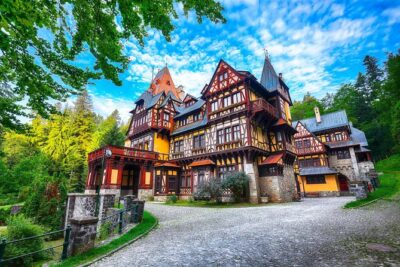
Transylvania and Dracula Castle Full Day Tour from Bucharest
Read our review →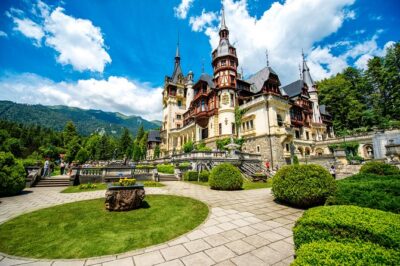
2-Day Medieval Transylvania with Brasov,Sibiu and Sighisoara Tour from Bucharest
Read our review →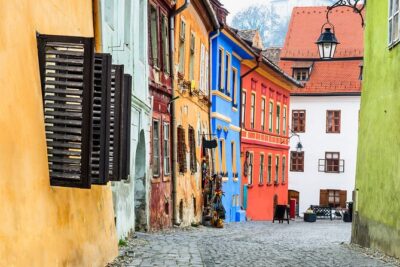
SB01 – City Tour Sibiu: Exploring the Heart of Transylvania
Read our review →
Day trips and excursions in nature, cities in Transylvania, Brasov!
Read our review →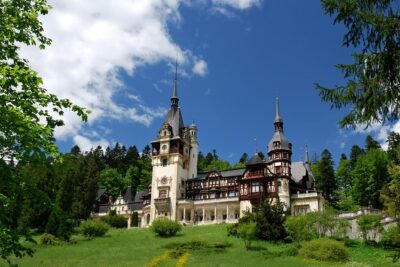
2-Day Transylvania from Bucharest: Brasov, Bran, Sighisoara
Read our review →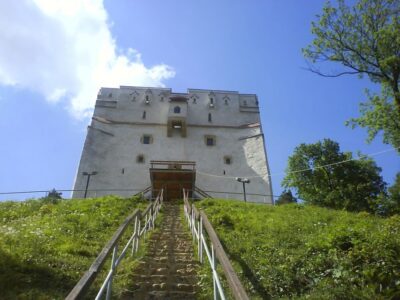
4-Day Private Tour in Transylvania from Bucharest
Read our review →Browse the lists this tour appears in